The Human Edge: Why EQ and Lived Experience Remain Unbeatable in the Age of AI
- AI as a Tool, Not a Replacement for Thought
- Emotional Quotient: Humanity's Unique Advantage
- Leveraging Lived Experience in an AI-Driven World
As artificial intelligence rapidly transforms industries and workflows, a critical insight emerges: humanity's greatest asset isn't threatened by AI, but rather amplified by it. The key lies in understanding AI's fundamental limitations and leveraging our uniquely human qualities.
While AI proves invaluable for testing, clarifying, and elevating our thinking, it must never replace it. The core distinction lies in emotional quotient (EQ). AI, being mere software, lacks emotions and has no lived experience. It has never navigated the complexities of human interaction, felt joy, or struggled with everyday tasks like folding a fitted sheet.
This fundamental gap means that humans possess an irreplaceable advantage. Our lived experiences and emotional intelligence provide a depth of understanding and creativity that AI cannot replicate. When we combine our unique human perspective with AI as an additive tool, it enhances our lives and improves our experiences, rather than diminishing them.
The true power of AI unfolds when we view it as a collaborative partner. Its purpose isn't to replace us, but to automate the repetitive and mundane aspects of our work that don't bring us joy. By offloading these tasks to AI, we free ourselves to focus on the remarkable, the innovative, and the deeply human elements of our roles. This creates a beautiful paradox: the more advanced AI becomes, the more it empowers us to embrace and express our humanity.
Ultimately, being human is not a flaw in the age of AI; it is our most potent feature. Our capacity for emotion, empathy, and lived experience ensures that while AI can augment our capabilities, it can never truly supersede the essence of who we are.
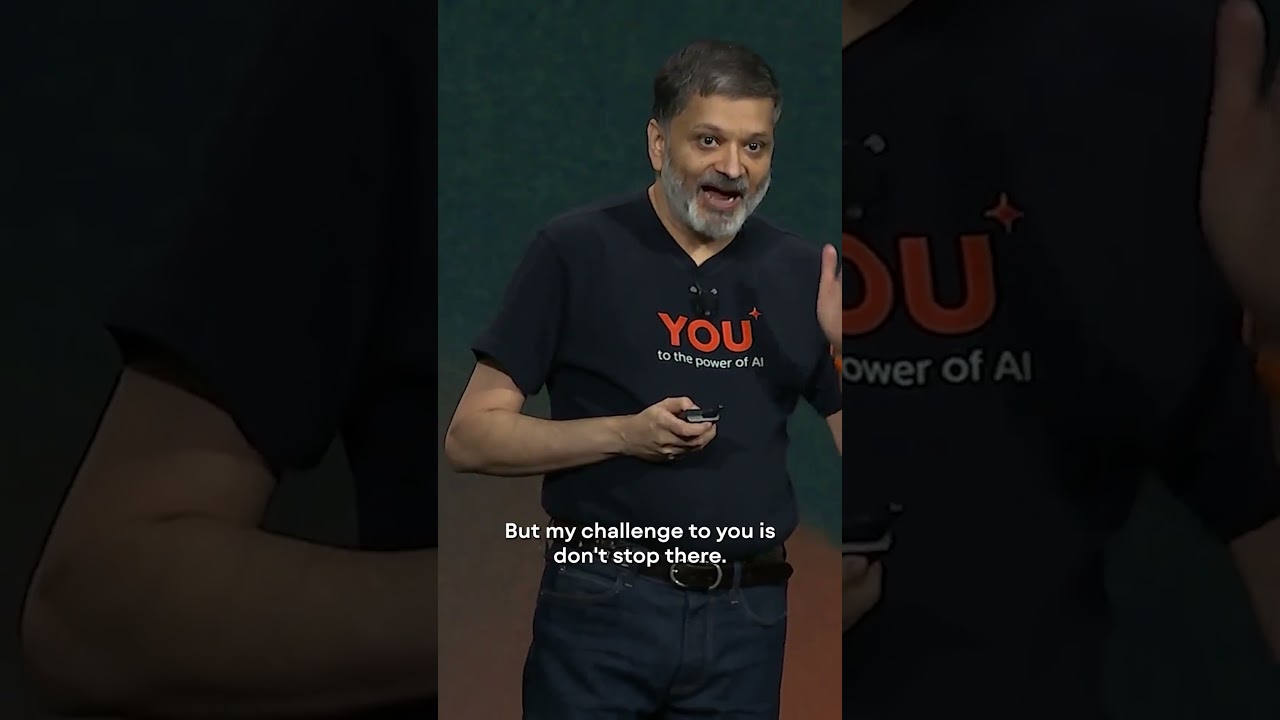
“As smart as AI is, humans win on EQ because EQ is emotional quotient. And as it turns out, AI is software. It does not have emotions.”
- Dharmesh Shah,