
- Traditional valuation metrics are no longer sufficient.
- Startups remain reliant on foundational global tech.
- AI's rapid evolution defies easy prediction.
- Efficiency and burn rate are critical indicators for VCs.
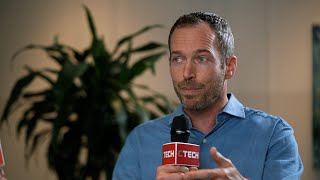
In a candid discussion, Aya Peterburg, founder and managing partner of S Capital, sheds light on the shifting paradigms in venture capital and technology. From the complexities of company valuation in 2026 to the true nature of tech independence and the unpredictable trajectory of AI, Peterburg offers a grounded perspective on the future of innovation.
Peterburg emphasizes that relying solely on traditional metrics like Annual Recurring Revenue (ARR) and overall revenue is no longer sufficient for valuing companies. While these remain indicators of growth, investors must now critically assess burn rate and overall operational efficiency. This shift reflects a more mature and cautious investment climate, where sustainable growth and responsible resource management are paramount. The ability of a company to scale efficiently, rather than just grow revenue at any cost, has become a key determinant of its value.
The notion of "sovereign tech" – startups building entirely independent technology stacks – is largely a myth, according to Peterburg. She highlights the inherent reliance on foundational global technologies such as OpenAI for models, AWS and Azure for cloud infrastructure, and Microsoft for enterprise solutions. Furthermore, the exit strategies for many startups heavily depend on acquisitions by these same global companies. This interconnected ecosystem means true technological independence is often impractical, and strategic integration with major platforms is a more realistic path for growth and eventual acquisition.
When pressed about an overlooked trend for 2026, Peterburg humorously admits that VCs, like anyone else, lack a crystal ball. She points to the recent, unexpected explosion of Large Language Models (LLMs) and AI agents as a prime example of how quickly the tech landscape can change. Just a few years ago, AI investments were focused on deep learning and machine learning, but the transformative power of LLMs was largely unforeseen. This underscores the challenge of predicting the "next big thing" and reinforces the need for agility and adaptability in the investment world, rather than rigid adherence to anticipated trends.
“So, there's no one metric that you can count on. Obviously, ARR and revenue has always have always been the metric that you look on an company when it's growing and as an indicator, but investors cannot only rely on that anymore.”
- Aya Peterburg, Founder and Managing Partner of S Capital