סטארט-אפים בחלל: בוגרי MIT חושפים סודות למיזמים בשווי מיליארדי דולרים!
בפאנל SpaceTech 2026 שנערך לאחרונה, קבוצה מכובדת של בוגרי MIT שיתפה את עבודתם פורצת הדרך ואת חזונם לעתיד החלל. מפיתוח מחשבי לוויין בעלי ביצועים גבוהים ועד לחומרים חלוציים לבתי גידול ירחיים, יזמים אלה לא רק חולמים בגדול; הם בונים באופן פעיל את התשתית להתרחבות האנושות אל הקוסמוס.
“אנחנו צריכים לוודא שיש לנו תשתית השקעות בארצות הברית ובחו"ל שתומכת ב-IRRs מסוג 14, 18, 21 שנים. אחרת, אנחנו פשוט ניקח רעיונות נהדרים ונהרוג אותם כי אנחנו נחנקים מחוסר הון מספיק בשלב מוקדם.”
גלו כיצד בוגרי MIT משיקים מיזמי חלל פורצי דרך. פאנל זה צולל אל האתגרים וההצלחות של בניית חברות בתעשיית החלל, ממבנים בהרכבה עצמית ועד לחומרים מהדור הבא. למדו לקחים מרכזיים ממסעותיהם היזמיים ומה צופן העתיד לאנושות בחלל.
I I have the easiest job at MIT, which is not a place known for easiest jobs, and all I have to do is introduce Dava Newman, who is going to chair our panel, who's who co-starred in many of the videos you saw, and probably the person in this room who needs the least introduction. So, um and really looking forward to this panel on uh the startup ecosystem. Thanks. Thanks, Dave. How's everyone doing? Okay? Okay, we got to we got to pick up the energy here. Uh >> [applause] >> we're going to involve all of you. I am
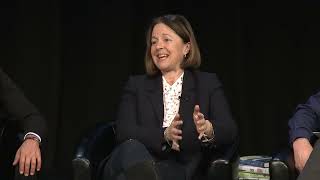
Dava Newman, the Apollo Professor. Like Ollie, there's a few Apollo Professors, but seriously, if we could just like take 30 seconds and breathe and think about, you know, our astronauts coming back from the moon. It's just a you know, I don't know about you all, but I've been I think working on this my entire life. And we're there. Like, you know, we got the moon. We got the moon. We're back. The most important thing is for our students. Right? It's for It's the next generation. We just pay this forward and the astronauts are safe and we'll get them home safe. So, I don't know, but I'm pretty sure this is like the best day to be alive ever. And you know, it's just going forward from here. We will get uh we'll be living in space. Hopefully, a lot of people will get uh back to the moon to stay, as we say from Space Exploration Initiative. And then uh it's to Mars. If you know me, I'm a Mars freak. We've got to find life. And our best hope clear, you know, nearby is is let's get to let's get our crew and rovers and robots to Mars as well to search for life. So, we have an amazing panel and we just keep adding because our MIT alum and colleagues, we just can't speak highly enough about them. So, let me introduce really quickly, and um we're going to maximize our time. So, um Ariel, Rodrigo, Jordan, Mike, and Stevie. Now, I'm going to let them all say a quick a 1-minute hi and bio. I have long bios for them, but we're going to have more fun. And then I have some questions for everyone, and then they have some individual questions. We'll try to save a little bit of time for you all as well. Dr. Ariel Ekblaw. Thank you, Dava. It's
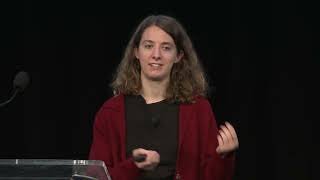
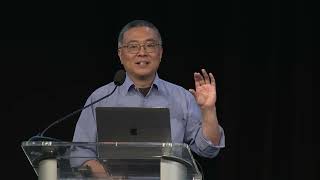
lovely to be here. Very much an honor to come for the AeroAstro Day. I did my PhD here at MIT, co-advised between Dava Newman and Joseph Paradiso, who's a professor here at the Media Lab, focusing on autonomous self-assembly using robotics to build really large-scale space systems that are bigger than your biggest rockets. So, how do we begin to do large-scale infrastructure in space? And then I spun out of my work at MIT, first the Space Exploration Initiative. So, I ran that for 7 years, kind of overlapping with while I was a graduate student. And then now, more recently, I'm running Aurelia, which is a combination of a nonprofit research institute and a VC fund that invests in space companies, including an amazing company sitting right next to me. We'd love to support MIT spinouts. So, happy to talk more with you guys. There's a tesserae in the lobby, so you can't miss it. >> [laughter] >> [laughter] >> Aurelia's work is in the lobby. It's amazing. Okay. Thank you very much for the invitation. >> thank you for joining us. Yep. My name is Rodrigo Diaz. I'm the CEO and co-founder of Novo Space. We develop high-performance computers for satellites. satellites. Um Um my expertise lies on electronics for communications and radar systems. I got my master's degree from MIT. Then I was pursuing my PhD in AeroAstro when I decided to put it on pause to focus on the company. Now, students out there, did you hear that? >> [laughter] >> Plug your ears. Too many of my grad students >> Too many students. No, it's okay, but we'll just put you in touch with the entrepreneur folks. But please, please, students, stay and get your master's and PhDs with us. You know, life is short. So, but he's been super successful. We're going to hear more from Rodrigo. >> [laughter] >> And Jordan. >> And Jordan. Hi. Pleasure to be here. My name is Jordan Wax. I'm co-founder and CEO at SpaceRyde, which is a company spinning out of one of the labs here at AeroAstro, specializing in very small form factor optical communication technologies. We're really leaning into the small form factor, the mass, you know, producibility, manufacturability to make a multi-domain networking play that allows a complementary way to move information that, you know, is different from radios, but will work with existing radio systems. Seeing a lot of need for that in places like Ukraine, places like Iran right now, as well as in heavy industry. We've got a couple of partnerships that we're getting ready to announce in different areas, including in the space domain. So, my background, I've done everything from is this physically possible proof-of-concept R&D for, you know, for instance, for NASA Innovative Advanced Concepts. I was an NIAC fellow in 2018. Um worked at Ball Aerospace on things like James Webb. I heard TEMPO mentioned earlier. Uh did operations and and commissioning for JPSS. So, I've done everything from is this physically possible, the full design cycle to operations and commissioning of billion-dollar assets on orbit. Um was working at Draper while I did my grad work here under Kerri Cahoy at MIT. And I saw an opportunity there to start to expand beyond just the development of the technology to include the development of technology for emerging markets. And in my view, innovation really it starts with science, the scientific discovery and invention, but it doesn't actually conclude until you get products out in the hands of users. And so, the startup here has been a really great opportunity at SpaceRyde for us to identify what are the users that would benefit from these advanced technologies. How do we get them out into different people's hands in different domains? And how do we leverage things that we can do on the ground much more quickly so that we can be better positioned for space when the market really arrives. Thank you. We'll hear more about that, too. And astronaut Mike Fink. Yes. What are you up to these days? Uh well, I just returned from flying in space, and boy, my arms are tired. >> Safely. Yes, back from back from low Earth orbit. Thank you. Uh yeah, we splashed down about 2 and 1/2 months ago, but I started here, home. Um and in fact, we saw East Campus open up again. That was really cool. [laughter] So, class of 1989, course 16, course 12. I'm a colonel retired in the United States Air Force. I was an ROTC cadet here. And then I uh what, maybe 7 years later, well, stopped at test pilot school, and then then at got into NASA program in 1996. And then first flight in 2004, and then have been flying since then. Along the way, I stopped for a little bit, still active-duty astronaut, but stopped with and helped the NASA's commercial crew program after post-shuttle, how do we get humans back into space? And all the things I learned here at MIT and test pilot school really helped us to get the successful Dragon, and we're still working on Starliner. Go, Starliner. And so, in the meantime, they said I hadn't flown for a while, so I just got to go back to the International Space Station and work on a lot of a lot of really neat new things that are out there that we'd worked on a lot more commercial payloads than I did last time. Some that have that you know, from companies here. I'm very excited about the commercialization of low Earth orbit. Al Gore had it right. We've got to get low Earth orbit to be boring and a lot more people up there. It's got to be cost-effective, and people got to make a lot of money, and that's going to be great for our country and our planet. The end. >> [laughter] >> [laughter] >> To be continued. Stevie, how are you doing? TV Steiner, Dr. Stevie Steiner. >> That's right. I'm great, and thank you for having me and adding me last minute. So, I am a graduate of MIT's material science program for master's, and I did my PhD in AeroAstro here. While I was doing my PhD, I got the entrepreneurship bug, which MIT is so famous for instilling, and decided to start my own company in commercializing the subject that I know best, which is aerogels, the world's lightest solid materials. And so, after my post-doc here, I ended up becoming full-time at Aerogel Technologies. And since then, we've had over 20,000 customers to date. We're an eight-figure company. And we sell materials that are next-generation versions of the blue holographic frozen smoke you may think of when you hear the word aerogel. Materials that are now durable like plastics, that you can machine, that are waterproof, that are fireproof. And so, now these materials are making airline interiors lighter. They're preventing cryopumping accidents on launch vehicles. And they're making all sorts of technological possibilities that were not possible before possible for the first time. So, I encourage you if you're interested in entrepreneurship to you know, go for it and give it a shot. But I caution you, there's a big difference between a startup and a scale-up. And those are some of the bumps in the road that I encountered because I I didn't know many people that got that far in entrepreneurship, especially with manufacturing. So, manufacturing. So, there's a lot more out there than just the 100 K business plan stage of entrepreneurship. Happy to help if you have any questions. Absolutely. We'll definitely talk about scaling. So, coming back here. Now, this
is a question for all of you. We're going to do kind of a bit of a lightning round so that you all get to participate. But um I want to know the most exciting, maybe the most impactful project that your company, the agency is working on this year. 2026. 2026. Ariel. Ariel. So, we just spun out a company out of Aurelia Institute called Rendezvous Robotics. It's taking forward my MIT PhD patent. My long-term vision is human habitats, but before we get to habitats, one of the most impactful things we're working on is national security and defense applications for massive aperture radars. So, really, really large communication antennas or really large arrays. And and it's interesting to finally get to the point where we can build massive structures that do not have to be folded up in an origami way and squeezed into a rocket like James Webb Space Telescope, but actually build something that is finally science fiction worthy. Um, that is really the much grander space structure. I get asked a lot if we will go from that to building AI data centers in space. And I think we could have a interesting chat in this room and on this panel about the pros and cons and why that has garnered so much media attention, but we're at this cusp of being able to find beachhead markets for massive scale self-assembly of large-scale infrastructure orbit. So, super excited about that for Rendezvous. Very cool. Please, we're going to go down the go down the panel. >> Yeah, um Just one, you know, wonderful project for 2026 so we can share that with the We usually signed NDAs with all the companies, so let me tell you a very small bit about three different projects very very uh fast. The first one is uh we are part of the uh of our communications uh satellite constellation that is providing direct-to-phone communications. So, the next time you're in the middle of nowhere, probably your call is going to be connected to the satellite directly. >> I hope so. Yeah. Um, uh the second one is uh we are going to be part of a massive orbital telescope that is going to try to explain why the universe is expanding in the way it is. Um, probably the third one that is very very exciting uh is that we are going to the moon uh with NASA through another company. So, I cannot >> mission? is Artemis. Uh, but I cannot give too much uh details about that, but we are going to be part of a rover landing landing on the moon. Yeah. Here it comes. Here it comes. Jordan. Um, yeah, so I've been working in laser communications off and on for a number of years and they've always been these large high cost exquisite systems. Um, I think the most exciting thing that we're doing right now is is stemming from sort of an experiment we did internally with our our laser terminals were going to be so small that we thought it'd be fun to put them on a drone. So, we put them on a on a very small drone, uh got links between drones while they were in flight, and as apparently actually happens in real life, US government heard about it and reached out to us. Um, US Central Command said that they had issues with communications between their drones that they're using to collect video surveillance. The radios that they were using to communicate between the drones were getting jammed and people were dying because of it. And so, they put us on contract immediately uh to start building small form factor laser terminals that can connect these drones to protect the people that that use these systems abroad. Um, and very I think it's very exciting and I come from Draper from Ball uh to be able to to help the the warfighter as you know, people are over there putting their lives on the line. And then from the company's perspective, it really allows us to start understanding what does it mean to orchestrate complex networks of these laser systems so that when we do go back to space, we're not thinking about one or two links at a time. We can start thinking about tens of thousands of links perhaps in you know, with multiple different customers and multiple different domains all in the same way. So, it's very interesting and very exciting to see how that can expand back up to space. >> Thank you. Super important work. >> So, on behalf of my brothers and sisters who served, thank you uh for helping to protect lives and keeping communications going. So, I represent the largest company in the room. And you guys got more money than that. >> NASA? >> than the United States government. Yeah. So, but what's really neat about it is yeah, Artemis is the biggest thing going on right now, but we're still doing space station uh and some of our commercial lunar landers are really cool. But uh the point is is that uh um government and NASA specifically uh in 2026, we're going to be investing in a whole bunch of small companies and mid-size companies. We really need to get you know, keep the industry going. Seed money is very valuable to everyone. And the cool thing is is unlike Shark Tank, we don't take you know, they're non-diluted investments. We don't take any and we should probably should, but we don't uh uh take any equity in the companies cuz we were here to succeed. Our biggest uh uh great story to tell is uh SpaceX. Uh we helped them to get the reusable launches and now everybody pays a lot less to go to orbit. Exactly. Great great year for NASA and we'll keep going. So, uh in 2026, uh our company is um going to the procurement phase, meaning we're actually buying the stuff to assemble our next generation pilot plant. So, that'll allow us to make advanced aerogel materials continuously at ambient conditions roll to roll first uh for for the first time. And so, some of the specific projects I alluded to before is this the stuff called non-cryopumping insulation, the cryotank uh of vehicles like like Blue Origin uh rockets, for example. Um, you have to insulate these cryotanks that that contain the propellants. But, um what can happen is that the insulation that wraps it can um essentially draw liquid air into its pores. And if there's a a methane leak, for example, or hydrogen leak and that gas contacts the liquefied air in the insulation, it can create a massive energetic explosion. And so, uh there's a lot of paranoia uh going into uh avoiding uh propellant leaks, but we have a a new type of insulation that prevents um that that cryopumping phenomenon that draws the liquid air in the insulation and would dramatically improve the safety of launch vehicles. So, that's a really exciting thing that our new capacity will allow us to address at scale. Great. Thanks, everyone. So, how many
students are are in the room with us? I hope raise your hands. Oh, fantastic. It's like 50%. Okay. So, this is my next question for everyone. Um since you're all MIT alum, if you could please share one one maybe two we'll get to, but I want to experiences lessons you learned um you know, when you were a student and uh that helped you in your successful careers. Um, so you know, maybe it was studying with your peers, maybe it was failure. I gave a failure award at NASA, right? Here in the media lab, we had Flubruary. So, uh if you don't mind, you know, just um kind of share with all the students um some you know, something that's really memorable from you know, again, when you were a student with your peers and and what you think really helped you um to where you are today. Who wants to start? We can go in random order now. We don't have to go down the line. We need to mix it up to keep them keep them guessing. >> I'll start cuz I've been waiting. All right. So, uh >> [laughter] >> [laughter] >> and I'm probably the oldest, so there we go. Uh so, class of '89 uh and then we that's when we graduated. Uh we course 16, we did unified. In fact, one of my TAs is here. Alf, thank you for putting up with us. But our class ended up doing super well. We've we've have you know, a couple astronauts. We have people who you know, titans of industry. It's been it was pretty neat. What did we learn in unified? Well, we learned how to learn. And this being able to bring in a lot of information, process it, and to run with it is a key figure that key ability that helps us to be astronauts. So, thank you unified, said nobody ever, but I'm saying thank you. The other other part is that we We um senior year senior year Dan Hastings, I think I saw you here, sir. You put up with me and Karen Koyama for making a liquid fuel rocket engine. We had some we were told I think with Professor Kerbrock, head of the department, don't build it, it's dangerous, it'll blow up, but you still let us build it. I don't know how, but we we were safe. We got the safety lesson. Ali, you talked about building safety into uh the curriculum here. It it is super important. Uh so, and then also we worked for one of our capstones was building a modular um um uh rocket system uh to to bring cost of launch to to [clears throat] [clears throat] be a lot less. So, thank you, MIT. Thank you, course 16. Yeah. No, you're welcome. Thank you. Lessons learned. I got one. You can go for Okay. Well, um I came uh from [clears throat] a chemistry background and I did material science for my master's and and both of those disciplines are are sort of ego driven. You know, first author papers are the primary objective of success. And um you know, in some ways I was very solitary as a student. I I I didn't collaborate very much with other students in my learning process. And when I got to Air Astro, there was just a real shift in the ethos. Uh I had a real sense of teamwork. Um, I guess the term the department uses succeeding together. And not just sort of in in group projects, but also just in class. And I started uh doing p-sets, problem sets that we call them at MIT uh in uh a group and working with other students. And I learned so much better and so much quicker when I had that shallow breakthrough of working with other people to learn. And so, that's something I would really encourage students to do is just work in a group as much as you can. Um, it's you'll benefit and they'll benefit in so many different ways. The other lesson I think I learned, too, was during the course of my PhD. There was there was one point where I really disagreed with my advisor on something and I went ahead and I did it anyways and it proved to be a real breakthrough. So, I think that's a really important part for graduate students at some point is to realize at some point you're going to intellectually depart from your mentor. And if you do, that's that's a success. That means that you have now crossed an academic bridge no one has crossed before and you are now adding new value to to the the academy and to the intellectual contributions of our field. So, don't be afraid to to take that step when when you know the time is right. Great. Thanks, Jordan. Um, so before I got to MIT, I'd been at a number of different places in industry, had other degrees from other places. They were primarily in, you know, fields that were intellectually very interesting. So, applied physics, electrical engineering, um, very rigorous, very rigorous, but also reductionist in in many ways. And when I came to MIT, the the course that I took, SDM, is the exact opposite of that. And so, what I really learned here was how to go from thinking about isolating yourself and your system from confounding variables and confounding details to identify, you know, I did a lot of work with non-linear quantum systems. So, particular non-linear term in Schrödinger's equation, and I would spend months on it. Versus what I did when I came to MIT, which is what do you What happens when you look at a system that's so complex that people are also a significant part of it. You These socio-technical systems. They're not uninteresting, they're not not rigorous, they're just very very different. And the more that I learned about them, the more that I saw that they could be extremely impactful. And that really led uh to a fundamental shift in the way that I approached things in my career. And I don't know that, you know, the SDM program is something that really has an analogy many other places. It's a pretty unique thing here at MIT. And And I did my thesis under, you know, Kerri Cahoy, Course 16. But the coursework, uh the problem sets, lots of problem set horror stories. Um, >> [laughter] >> the problem sets were all in SDM, and it was all about thinking bigger and thinking about complex systems where the final value of the system emerges in a way that you can't just predict by looking at the pieces alone. Thank you. Rodrigo, please. >> Oh. Yeah, my Yeah, my my story is also about systems thinking, um, but from a different angle. When I was, um, at MIT, I was doing research and the Professor Professor Kerri Cahoy as well in the StarLab. And I was part of this team of, uh, 20 people working in the design of a full system of a full satellite. And that's quite unique because usually when you are in the industry, you work in a very specific part of the satellite, in a very specific subsystem. And you don't have the full view of the system. And there, in this around this table, you you have the the full understanding of how a complex space system works. And that's quite useful to me today, even though NovaSpace develops computers, uh, those computers are connected to everything else on board the satellites. So, having that, um, holistic view helps me to somehow shape the road map of the company, and also it helps me to engage with customers because I can speak the same language as I do. Fantastic. Yeah, real quick story here. I'll interject when I was a junior faculty member and they were threatening the AeroAstro important. Like, we were a smallish medium-small department. And I stood up with all my courage and I told the chair of EECS, I said, "We're the systems engineering. MIT can't live without that." And uh he later came back and and thanked me. So, it's really important. Again, we think we want to be and and we think we are, um, you know, systems is a discipline and holistically cuz, right? Our airplanes don't fly, our spacecraft don't fly, and vice if you don't look at the whole system. Well, one component is never enough. Absolutely. Ariel, so lessons learned from your student days and your peers. >> Will do. Uh, two really stand out for me. So, I came to MIT originally with a background in physics, and I had worked in particle physics beforehand, so very theoretical. And then I came to MIT deciding that I wanted to become an aerospace engineer, um, much more applied. And the two lessons that I took away that I still use uh day-to-day in our work designing prototypes and hardware for Aurelia, the first is rapid prototyping and iterative engineering. So, I took an amazing class here at MIT that completely changed my life called How to Make Almost Anything. So, for the students in the classroom, very concrete piece of advice, please sign up for that class if Neil Gershenfeld, you know, has room. He always reserves room for members from all different departments across the campus. And you learn everything from how to make your own printed circuit board. You go and you mill the traces in the copper yourself. You pick out the components. You really learn electronics at a fundamental level, all the way up to, you know, much larger scale engineering uh skill sets. And I do think in the future, those type of embedded hardware skills will help bolster your ability to remain relevant in the face of AI. Um, there's a huge question education right now, and I do think having a deep understanding and being able to call pardon my French, on a, you know, particular AI answer that you get in engineering, comes from that level of amazing MIT education that you can get here for truly being hands-on engineers and iterative prototyping and and rapid manufacturing. And then the other one for me was something straight out of AeroAstro, which was what I learned uh from David and Kerri and, um, the folks that I took classes with, build and test as you fly. I had an amazing opportunity as a PhD student to send a mission to the International Space Station with my capstone PhD research. And the way that I architected that test campaign to make sure that my little magnet-mediated tiles would get up there and float and self-assemble. And we had a successful mission, the first mission, is because of the learnings that I got out of MIT AeroAstro about build and have a rigorous test campaign like you intend to fly. Um, and we still do that today at Aurelia when we're thinking about our, um, free space demonstrations and missions. >> Thank you. Yeah, no substitute for testing, right? People ask all the time. And we have unbelievable successful entrepreneurs up here, but, uh, never can test test test. Can't take any shortcuts or save some money. Never. Please please please, all you entrepreneurs, for students when you're learning things, you know, you always have to test and then test more and test test test again. Uh, else we can't, you know, do the hard stuff that we want to do. So, thank you all. Um, this is fun. Hope you're enjoying, audience. I'm having fun
asking questions. Okay, now I'm going to ask, uh, we have time for one one individual question so you hear a little bit more, too, about our esteemed panel. So, Ariel, I'm going to start with you. And so, tell us a little bit more about uh Aurelia Institute. There's so much we can talk about. I got to give a shout out to Ariel for our space exploration initiative. She started that. You know, but tomorrow, hopefully, many people are are joining us for that. But Aurelia, now, uh, the startup that you've heard a little bit about, but it has an educational mission. So, that's what, you know, gets me in the heart. So, tell us a little bit more. I think you're playing such an important role with Aurelia's educational mission and just opening that up to everyone who wants to see themself maybe in space. Thank you. Um, so the thing that got me out of particle physics and into being an aerospace engineer was in undergrad, NASA used to have this program where undergraduates could apply to build a project, design your own research, and fly on a zero-gravity flight. And then they canceled the program. I think I was one of the last years to get to do it. >> NASA 6 months too late. Or what I kept that $6 million program. >> [laughter] >> Else I would have resigned. 6 months too late. Yeah, a stunning program. There are so many people in my generation, I think Jordan, you said too, this is what gets us into human spaceflight because the experience of floating on a microgravity flight is sublime. It completely, um, you know, affected the rest of my trajectory. So, when I was here during the MIT Space Exploration Initiative, we developed this program, the zero-gravity flight course, which we still teach. We're going to teach it again this fall. So, students in the audience, we'd love to have you sign up for it. And we have now taken that also out into Aurelia Institute and tried to expand it as broadly as possible. So, MIT graduate students are still welcome. We're super excited to support, um, some faculty and students in MIT AeroAstro. But we also fly, you know, students from all across the world. We fly teachers, we fly artists, um, just a really broad swath of humanity to show people what it could look like to really meaningfully participate in the future of human spaceflight and humanity's horizons. And so, we use this zero-gravity flight program within Aurelia, um, inspired by Starfleet Academy. If anybody here Star Trek fans, what would it look like to really scale up Starfleet Academy and maybe have a zero-gravity flight as the early experience for thousands, if not hundreds of thousands, if not even more students. So, that's the educational mission of Aurelia. And then we also focus on some space architecture education cuz we're really excited to scale up the field of space architecture and life in space. Yeah, we really want more people to fly in space. Thank you. Yeah, thank you. And we're just at the beginning, right? We're just at the beginning. This is just starting to to realize it. It's amazing. Um. >> And it's a real offer. So, if anybody here wants to get involved with the program, come talk to me after. We do fly people, new people that I meet every year to try to get your projects and your research and opportunities to fly. Um, Rodrigo, so tell us a little bit
more about NovaSpace cuz I I need to learn more about it, too. Uh, for sure data, you know, advanced technology and data's the, you know, the new currency. So, just tell us a little bit more about the the company and and specifically, actually, both Rodrigo and Jordan have a in the question, please tell us how your business case closes. If you would share that because that's the toughest part of of kind of getting this right. Okay. Uh, we started in 2019. 2019. >> And we are developing these uh high-performance, high-reliability computers for satellites. computers for satellites. But we are targeting, um, not CubeSats, but bigger satellites. Um. >> How many kilos? Anything above 10 kg or 20 kg. But we are in a 2-ton satellite, 2,000 or so. There is no higher limit uh high limit. When you are designing computers or electronics for for CubeSats, usually, uh, there is a very well adopted standard area that is a PC/104. I I'm getting a little bit technical here because we are at MIT. I think they can handle it. Everyone can handle the technical. Go ahead. With bigger satellites, there is no such a standard. You know, it's usually a satellite are like several boxes full of electronics with a lot of connections. So, there is no standardization there. And usually because of that, the computers are designed from scratch or heavily adapted because you need to connect so many different interfaces and you need this amount of memory and this processor and this redundancy. So, in the end it's a very custom computer. We are trying to avoid that. We are creating an ecosystem of plug-and-play modules that can be combined in different ways in order to provide a tailor solution without redesign. So, in a very simple words is just modularity. It's It's much more than that because we have a hyper configuration technology to reuse the same printed circuit board with different chips. And we have a patented technology to increase reliability. But you can think about our technology like this modular ecosystem that can be combined in different ways. And now the other 50% of the solution is an online design tool for satellites. So, it's By the way, it's a free tool. You can get access to the tool just by getting into nova.space and requesting access. It's a free tool by which you can design a full satellite. We have a library there with a third-party components. You can just drag and drop and connect everything there. We run all the checks for you. The connection with our computers is that when you have many blocks there and you don't know how to connect them because you have too many interfaces, we are going to synthesize a custom computer for you based on our components. So, that's the other 50%. Um it's in beta, by by the way. Going to your question, the the the the how we What's the business model? Um Right now, we sell the computers, meaning hardware plus the infrastructure software. >> Right, you have the hardware software combined. >> Yeah, like like the laptop like a laptop. You receive a laptop with operating system, the drivers, the and the hardware. In the future, this is a compute system like your phone or your computer. So, there are many revenue streams we could implement. Probably the next one is going to be not the infrastructure software but the application software, proprietary software, and third-party software compatible with our computers. Makes a business case. Thank you.
Jordan. So, space is hard. Yeah. And Space Rake, sorry, did have I mean, you you know, you can do the business case, but I just have to in my preparation. So, I actually love Space Rake's vision in in your LinkedIn, right? Secure unjammable laser networks. To me, that's like, you know, insanely great. Like like you need those three things, let's do it. So, I just wanted to, you know, preface that and then ask you a little bit more about that in your business case as well. Yeah, thanks. I think that sums it up pretty well. I mean, people need to move bits around. It's getting harder to move bits wirelessly, whether it's, you know, on the battlefield or at a port or to mine. Jamming or interference, they're all playing they're all all basically wreaking havoc on our systems. And the more we see the emergence of autonomy, the more reliance we see on those networks. So, it's getting to be more important, not less, ironically, as systems get to be more autonomous. Just start to bring in alternative pathways to route data. Um and and like I just said a minute ago, you know, we are we're called Space Rake, right? We are a we're going to be a we're a space company, that's the direction we want to go, but you may have noticed my my my maybe I'll agree with this, but it's hard it's hard hard to get stuff in space. >> But but at least everybody wants more bandwidth. Yeah. That makes it harder. Yeah, exactly. And so, it's it's um difficult and as Ali has started it, you know, was mentioning earlier, bringing in safety and reliability, especially in space systems, is absolutely crucial. But the the combination of very difficult and the need for high reliability drags out timelines in a way that's really difficult to manage. So, a lot of the companies that are selling really big visions in space and we're going to start in space and the first thing and the last thing we're going to do is in space, a lot of them are really learning just how hard it is to do things in space. And so, that's part of the reason that we're focusing on problems that can be solved in the next 6 to 18 months, not in the next 6 to 6 to 10 years, um in these mines and these ports and with our Department of Defense colleagues and customers. Um Um but at the end of the day, everybody needs bandwidth. Everybody needs the to move data around [snorts] back and forth. And we're seeing a lot of these proliferated lower earth orbit constellations start to emerge. Um SpaceX tends to do everything vertically integrated and and Amazon Leo, Kuiper, whatever it's called now, is going to do the probably people with a similar model, but there is going to be a lot of room for not Elon Musk and Jeff Bezos in space. [clears throat] And those people as they start to put together constellations or or maybe it's individual satellites for whatever their business case is, whatever their business model is, they're going to need to be able to move information. Relatively easy to move it between satellites, but getting it back down to the ground is very very difficult. So, the our path back to space, we start by learning how to manage complex mesh networks of optical systems. Then we include ground to satellite terminals and then we can start to include the space terminals again as well as that market really grows up in the space domain. Thanks. I'm going to Can't come back yet. Hold on, I got to get to to Mike. What's the startup you
want to start to unlock the moon? Yes, so yeah, we we need to unlock lower earth orbit. That is absolutely true. But we keep talking about going to the moon and it's really cool. But what are we going to do once we get there? And why is it going to be everything doesn't have to be economically closing, but we can definitely you know, make the moon really awesome. And it's at in situ resource utilization. But we there's a lot of ideas out there, but I haven't seen any that are really going to close it. But it's the company that that can take the regolith and make it into things that we need and to do it in a manufacturing way, to do it in a agile way, in a quick way, which are all things that NASA's not always as good at. But it's a company that can do that. They're going to you know, they're going to be like the Levi Strauss of of everything because everyone else will be able to to build their build their beautiful lunar bases and to be able to go very far forward to do all the cool things that humans are going to do on the moon if we know how to to manufacture the materials that people need. So, count on some of these, you know, if they're Leo or Neo or you know, some of the in-space companies to make it for the moon, yeah, I'm not sure the business case closes, but I got a lot of basalt. Yes. And Stevie, you might be able to do something with that basalt that and manufacture it and maybe scale it up cuz I need a lot of mass, I need a lot of infrastructure. Nope. I'm telling you you got to Don't take it for granted. >> [laughter]
>> I got it. >> on. >> on. Yeah, Yeah, in situ resource utilization is something that I I've been thinking a lot of a lot about. So, uh our company is making materials that push the performance envelope. So, everything from millimeter wave communications that are ultra high bandwidth, insulation that's three times thinner, vibroacoustic insulation that's 10 to 1,000 times better than than any other material. So, when you want to get the most performance with the least amount of weight, the least amount of space, that's the things that my company does. And what we've thought about now for the next generation of products and and technologies we want to develop, um orbital debris collection and ISRU are are two of the the big areas. In fact, uh aerogel materials, many of them are mineral based and basalt is a fine starting material that could be used to make super insulating lightweight structural materials for the moon. for the moon. And specifically on the moon, right? So, on materials processing is is another thing that science is still being worked out. But you can't always just translate what we do in on the Earth into not only just microgravity, but lunar gravity. Things change. Um orbital debris collection, I think, is is a major upcoming problem. You know, we talk about sustainability here on Earth, but low Earth orbit has its own sustainability problems. And there's a lot of debris and it will only increase in the future the the amount of debris that we have to deal with. So, aerogel-based collectors that can soften high momentum particles and ejecta to stop in a very small thickness and efficiently clean out those those orbits and those those areas of criticality. This is a technology that's within reach. We recently had materials flown on the ISS and are now space worthy. And so, the next next step of these mechanically durable aerogels is to to do the development for for actual orbital debris collection. Was that the Missy experiment? Actually, I'm not sure which one it was. Well, ISS a great testing ground. Yeah, it's great. Redrigo, go back to you. >> I was going to add this just that um this problem is somehow related to the problem we are solving the two companies because it's quite well known that probably 90% of the data remains in space because it's quite easy to have a high resolution instrument in space, but it's not so easy to send that data down to to ground. So, you can either kind of increase the size of the pipe, that is what they are doing, or you can reduce the size of the information with more processing power in space. So, there are these two different ways to tackle the same problem. Yeah. Can I jump in >> Absolutely. Please. Mike was talking about ISRU on the moon. There's a company Interlune, which is Rob Myerson's company. So, he used to run Blue Origin for Bezos for 15 or 20 years. And they have succeeded in raising pretty serious venture capital funding in Silicon Valley to go get helium 3 off the moon, which would have felt completely preposterous maybe even 5 years ago. But with the success of the clips commercial landers for the moon, um Rob now has a multi-million either double digit or triple digit million dollar off-take agreement with two quantum companies to say, "If you can get helium 3 back, we will pay for it." Um he just won a major NASA phase 3 award for $6.9 million. So, I think there's really some um momentum towards being able to get resources off the moon and bring it back. And then the next step is resources in situ on the moon and build it there. And We need a lot of people to help us with this. That's why Yeah. These are great questions. >> Yeah. These students are going to [clears throat] are going to lead the way. Yeah. And there's so much interest too in innovation, entrepreneurship. And um good. We're doing great on time, I think. We They gave us maybe some extra time. And so, get ready for your questions cuz I just have a few more questions and then we'll have have It looks like we have time for from the audience as well. We're going to do a lightning round because this is just
fun. And I don't know what you're going to say. Okay. So, favorite space song. Go. >> Major Tom. Major Tom? Rocket Man. What? Rocket Man. What? Rocket Man. >> Rocket Man? >> Rocket Man? Space Oddity. Space Oddity. 4 3 2 1 Earth below us. I think I forget what that's called though, but it's my favorite. Fly me to the moon. All right. All these are goodies. Yeah. This is good. Okay. Um now we have to do one and we'll go from this end this one. Um favorite space movie. Uh Uh >> I need some audience participation. This is going to be like the one of those meters, you know? So, so clap loud if they say your favorite space uh movie, okay? [laughter] Hands down Apollo 13. Apollo 13? Timely. I was a zero-gravity uh parabolic flight director for 21 years. And that movie was actually filmed aboard uh KC-135 parabolic aircraft. Hands down. Absolutely. Okay, Mike. Favorite space movie? >> with The Martian. Talk about your in situ resource utilization. Okay. How's the clap meter? I don't know. Maybe they tied. >> I got to say the scene in Apollo 13 where they say, "We got to get this to fit into this using nothing but that." That's what makes that whole movie for me. That's what I love. >> it. I love it. That's a great scene. And that's that's actually a project I gave in my graduate class. This this and that? >> Yeah. Round cylinders life support, right? So, we got to figure this out, right? One more for Apollo 13. Yeah. Ah. Oh, there's too much agreement. >> [applause] >> All right, Ariel. Contact. Yeah. Yeah. Oh, man. Jill Tarter's Contact. I love So, they're all good. There's so many. Gravity, anyone? Sure. Sandra Bullock, yeah. Yeah. They didn't get the physics right. I was really kind of cool. >> 2001 Space Odyssey. >> They had too long. And now our students, you know what they You know what? The students, okay, you get to you know, vote too. But 2001 Space Odyssey, we opened it up in What is that? 26 uh What is that? 150 where we see the movies? And students walked out cuz it was boring at the front and it didn't have good graphics. They're old and everything. I'm like, "Wait. This was 2001 Space Odyssey." >> My Russian crewmate fell asleep while we were watching it on the space station. It's a great movie. I know. It's just Oh, Stanley. For everything. I know. It was great. Still in the favorite. So, now this is going to be a show of hands. And it's for us and for the audience, okay? So, we only get to vote once, right? And so, the question is is it going to It's Star Wars, right? Or um Star Trek. Okay. So, ready? Everyone gets to vote. Okay. Star Wars? And then the alternative? Oh, yeah. Oh, yeah. >> Star Trek? >> Star Trek? >> Star Trek. It's like I don't know. I can't tell. Maybe a little bit more for Right. Right. Both. All right. All right. So, do we have any questions from the audience? This is your chance. Be courageous, especially students. What do you want to know about innovation, about space startups, about all the failures that all of us on this up here We're passing the mic here. We got Mike coming to you. Great. Hi. I'm Dan. I'm here kicking the tires
on um the MIT programs for grad and PhD. I just wanted to ask this one question. >> Please. Timeline. And I'm not saying you have to commit to this, but just ballpark it. How long will you guys take to get to the success you're looking for? And it And the reason I'm asking the question, which is important, >> [clears throat] >> [clears throat] >> a lot of the things that we're going to have to do to become a space uh faring species in our solar system, it's going to take a lot of time, money, and effort. So, I'd love to hear your uh short-term picture. Okay, good. So, we'll go down the row row. And I get to participate, too, just to for fun. So, I'm going to you know, I'm going to work until we get humans be one of our students boots on Mars. And we're going there to find life. So, I hope that's in the 2030s. Yeah. Yeah. Um I think in 5 years we will be able to launch a closing ball, a self-assembling ball in orbit, no humans. If it goes well, 2 years after that, maybe crewed as part of a attachment to another person's space station, like a CLD space station. So, for me, I started working on this 10 years ago, 2016. So, it'll be 15 years that I will have been working on it if we achieve that in 5 years from now. Hope so. Hope so. Rodrigo. Yeah. I don't know exactly. I know that between 2030 and 2040, there are going to be so many uh different missions and so many different applications going on in space beyond just satellites orbiting our planet like in space manufacturing asteroid mining and tourism and so on and so forth. I don't know when exactly each of those are going to happen. Yeah. George, none of us knows the future, but it's good to you know. Yeah. I'd have a different business model if I knew exactly the future. Um but there's estimates by 2030 there'll be something between 25 and 100,000 satellites. Unless you talk to some people, then it's a million. Um but the [laughter] the more conservative estimates are in the tens of thousands of satellites by 2030. And my company, we're really leveraging terrestrial markets to be in the position to be the key player for helping those companies with those satellites move their data down to the ground and in between other satellites in orbit. So, we're really positioning ourselves to be lined up for that 5 to 8-year timeline. Everything slips in space. But whenever that whenever those large numbers of satellites are ready, we'll be waiting for them. I'm going to skip over. Go ahead, Stevie, timing-wise. >> There's something really important to remember about questions like this, which is that, you know, we don't take suitcases full of millions of dollars, put them into orbit, and then blow them up. You know, like the money is spent here on Earth. So, it's it's important to remember that when we think about timelines for the space industry, it is really talking about timelines that happen here on Earth. Building hardware, launching, raising capital. My company is a manufacturing company that supports the aerospace base. And so, we're at a state of technological maturation. Um there's a sort of S-curve theory about innovation, which many of you have heard about. Um I may I minored in innovation in aerospace here. And um one of the things I learned through that minor was that this this idea of exponential technologies, Moore's law, uh has really influenced how venture capital uh is is done in America. And And 95% of the funds are 5-year funds, which means people looking for ROIs or or exit opportunities in less than 5 years typically. So, my company um in in consistent with McKinsey's study on chemical and materials technologies took about 15 years to reach its technological maturation, which you could define as when you you get the internal rate of return or when when we're now, you know, uh technologically at scale and profiting and and moving forward. But not necessarily as innovative as those early years. A lot of the things that that we're talking about today are still in that earlier innovation stage. And so, I don't know that we know what the ultimate timeline for a lot of these business ventures is going to be, but it is not 5 years. And we need to make sure that we have an investment infrastructure in the United States and abroad that supports 14, 18, 21-year type IRRs. Uh or otherwise, we're just going to take great ideas and and and kill them off because we stifle from uh having enough capital early on. If I can You wanted to add on that. >> wanted to add on to I think that's an amazing point. And to say for our VC fund, so with my other hat, where we raised our own capital to be able to invest in space and space-adjacent companies, I had to really fight for it, but we got our investors to our LPs to agree to a 10-year fund term plus one plus one. And I fully intend to use the full 12 years because that is the time frame that I think better fits deep tech and robotics and hardware in space. Super important. Ready for the next
question. But Mike, I'm going to change the question for you. So, uh cuz it can be a timing one. So, uh one thing we need to do is get students like a semester abroad. So, it's an education question for Mike, bring in Ariel. Um I helped found the International Space University way back when. So, our students have gone through that. But I say one thing we got wrong is we haven't sent any students a semester abroad. So, I'm going I want students to the moon, uh space station, you know, not just the lucky few, but Yeah, so a great point, great question. Um 600 I think Jeremy Hansen, uh who's on the Artemis, was the 675th person uh humans to orbit the moon. Uh we launched in April of 1961 the first human uh to go into orbit. Uh that means we haven't done a very good job. Next uh 10 years, I hope we uh have uh we we uh 10x that. Uh and the next 15 to 20 years, I hope we 100x that. That means uh it was That means the first class of MIT'ers uh who uh who who get to spend a semester abroad in low Earth orbit is the class of uh maybe 2049, but hey, if we do it uh in 2044, that'd be awesome. Yes, we have to move that to the left. I want >> [laughter] >> We're going to retire sometime soon. Okay, thanks everyone. So, we uh can take another Good, we have a Oh, good, we have lots of hands. Right. Hello, everyone. My name is Ruth Davis. I'm a third-year graduate student in the Next Lab. Um and I wanted to ask about each of your experiences finding your founding team. Um did you experience any difficulties with this and do you feel like it affected the success or maybe the future success of your companies? Yeah. Yeah. Happy to start. I think I got insanely lucky. I founded with two other women, which made us very unusual in the space industry at the time and probably still pretty unusual today. Um Danielle DeLot who was an MIT AeroAstro alum undergrad had been um going to work at Draper, so she left Draper to come work with us and co-found Aurelia. And then Sana Sharma who was a friend of mine from undergrad at Yale. Um amazing designer had studied physics, went into architecture. Um I did handpick them and I do think it really matters to have some combination of deep admiration and respect for the talents of the people that you're bringing in cuz you will end up inevitably arguing. It's like getting married. Um not that I'm married, so I don't really know, but I suspect it's like being married. Um and then I think you also want to have as best of a friendship as you can with them, too. And I got really lucky with those two exemplary women that I really respect and admire them um and I also just enjoyed their company and it made it really work out well. >> Go ahead. Please. Yeah, I met my co-founder like 15 years ago. Um I was leading the design of the main computer for a big satellite with a the satellite with the biggest active antenna back then and he was uh in the team I was leading. So, we spent several years working together. Um then uh we've been working all over the world, but we kept talking and then we decided to start the company because we didn't find uh that solution in the industry. So, that was uh uh uh uh uh uh a successful story. The other The other times that I tried to bring someone else to the company just making some small interviews, I failed. So, it's it's not that easy. Way better if you know that person uh from something you've been working on for quite a long time if possible. Jordan, go ahead. Well, I know Danielle quite well as well. I was at Draper when she left. She's absolutely fantastic. [laughter] Um Um so, you got a real winner there. I think the founding team is everything at a company because the idea that you start with probably won't be the idea you execute with. Uh but the people that you start with will, if things go even reasonably well, will be with you for a very long time. Um for Space Ryde, we were really fortunate um to have Kerri as an anchor point, Kerri Cahoy, professor of AeroAstro. She's Of course, she's brilliant. She's an MIT faculty. She's also extraordinarily nice and easy to work with as a person. And as we've been growing over the last number of years, it's been it's been increasingly clear to me that degree to which that latter part matters. The The as a person, who you bring on, who are their personalities, um you can train for technical competence, but you cannot train somebody's personality or somebody's character. So, if you need to trust somebody, you you need to have both character and competence. You can hire You have to hire for the character and you can train the competence. Thank you. I'm going to um take one more question, hopefully from a a student or this gentleman up front who has a key there. We just have time for one more, so Thank you. Harry Allen, I'm an MLK
Visiting Scholar here at MIT and I came here because I'm going to put a monument to hip-hop culture in space and this was the best sync of ability and talent that I could find in the universe. So, um Michael, the title you were looking for was Major Tom Coming Home. That's Peter Schilling. Uh Peter Schilling, yep. Thank you. Um 100 years ago last month, uh Robert Goddard put a liquid-fueled rocket into space. Um Um what What do you think he would think of the quality or the state of space if he were alive today to see it? And where do you think What do you think we'll be looking at in March of 2126? 2126. Great question. Okay. Okay. We'll have to be quick, but we can all That Who Who wants to take it? 21 March 2126, yeah. Yeah, Stevie go We'll go down this way. Uh I think anyone that was uh a visionary like like Goddard and and all the other folks that developed these advanced launch vehicle concepts when everyone thought that that was complete fiction, um would be really proud of what humanity has accomplished and and and figured out how to do uh navigating bureaucracy and capital and wars and and all these other things. But, you know, in 2126, I I think that we're we're going to be on Mars and looking, you know, well into the solar system. But, I firmly believe in the next century that we're going to have some breakthroughs in physics where the way that we approach space is going to radically change. And I think that we'll be thinking much more broadly than the solar system by 2126. Mike, what do you think? Uh I think Goddard would say, "What Why Why are you guys going so slowly? Uh we've done so super well um and I and I really think by 2126, maybe humans will figure out how to stop fighting each other and go explore the stars together." I'm with you, man. Yeah, let's do it. Yeah. You guys want to add? Who wants to add? Um yeah, I'll I'll jump in there. I the the he would be really I think buoyed by the fact that these enormously complex systems, these rockets, the space station, they're NASA makes them look so easy that they have to hire PR firms. And that is an enormous accomplishment. Um and I don't think it can be overstated. >> Great answer. Rodrigo. >> I'll give you my time, too. >> Yeah. Ariel, 21 You're You're a futurist. You're a futurist. >> Yeah, I love the physics point because I think in 100 years, if you think about how different society looks today than 1926, um or even like the the late 1800s, just absolutely hard to imagine. So, I think that that's the issue is can we even really fully imagine the the shape of that change curve for the next 100 years between quantum and the fact that what dark matter and dark energy is now 97% of the known universe, so maybe in the next 100 years we discover something that's profoundly different in new physics and it's a completely different world. >> we'll have found life elsewhere. I think we'll be on Mars becoming interplanetary and it's not option B. Sorry, Elon. It's to learn about humanity here. So, I hope in 100 years I could tell Robert Goddard that we got it right. We're all astronauts. We're living on spaceship Earth and we figured this thing out, right? We're and we figured this out and we took care of our home planet and uh had more of a peaceful outcome. Thank you all. You've been amazing and thanks to all the panelists. >> [applause] >> Thank you, Danielle. What a great presentation.
רגעים מובילים
שיגורי חלל בטוחים יותר
מהפכת חיבור ישיר לטלפון
הגנה על חיים בחו"ל
הרכבה עצמית אוטונומית
הון ראשוני לחלל
מעבר לקרנות של 5 שנים
הבא בתור