
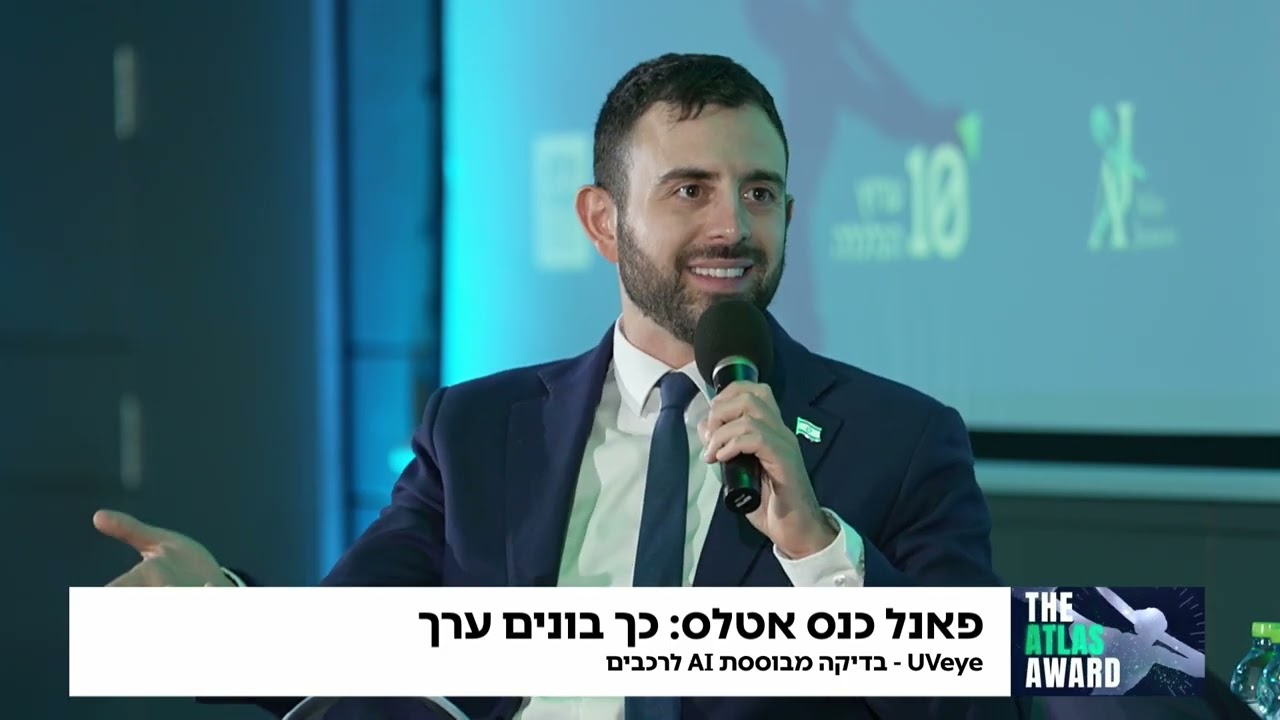
- Atlas Panelists reveal critical early decisions that shaped their companies.
- Founders discuss navigating geopolitical instability and wartime challenges.
- Insights into maintaining startup agility within large organizations.
- Key traits founders look for in future unicorn potential.
In a compelling Atlas Panel discussion, leading unicorn founders and past Atlas winners offered an unfiltered look into the defining moments of their entrepreneurial journeys. From initial product-market fit to scaling globally amidst unprecedented challenges, these leaders shared the critical decisions that forged their success.
The session kicked off with founders reflecting on their earliest, most impactful decisions. Moovit, for instance, highlighted its unique strategy of building a community of a million volunteers to map public transportation data, a move that proved indispensable for achieving massive scale. Augury's Gal emphasized an 'unpopular' but critical decision to pursue enterprise solutions with hardware in an era dominated by mobile apps, eventually pivoting from HVAC systems to industrial production lines.
Extand's journey took an unexpected turn from remote tourism to defense drones, a pivot driven by a pressing national security need. Similarly, UBI initially focused on defense before shifting to the automotive sector, where it established a new standard for vehicle scanning from factory to second-hand sales. These early adaptations underscore the dynamic nature of startup growth.
Recent years presented unique challenges, particularly for Israeli companies. Panelists detailed the profound impact of geopolitical events and the October 7th crisis. Moovit described splitting its workforce to support reservists and home-front efforts while meticulously managing international partnerships, some of which faced political pressures. Augury recounted navigating global recession fears, tariffs, and the rise of AI, leading to a strategic shift towards sustainable growth, a significant $80 million funding round, and establishing an India site to mitigate local operational disruptions. The resilience of Israeli teams, working through alarms and disruptions, was highlighted as a unique and powerful asset.
Finally, the discussion turned to the transition from a nimble startup to a structured company. Moovit, acquired by Intel under Mobileye, shared how they consciously fought to retain their agile, startup DNA, a strategy endorsed by Mobileye CEO Amnon Shashua. Augury spoke about evolving from personal trust in founders to trust in robust systems and processes, fostering internal innovation. Extand, on the cusp of going public, articulated the challenge of balancing transparent reporting with continuous technological innovation. The consensus among the founders was clear: success hinges on passionate entrepreneurs who possess both a strong vision and the courage to pivot, adapt, and embrace failure as a part of the journey.
“Founders who are capable of looking deeply, strongly into the vision with great passion, but also capable of making pivots and adaptations within the market – I think that is success.”
- Nir Bezalel, CEO of Moovit