
- Sued the CFTC over election markets after years of regulatory delays.
- Achieved $10.4 billion in monthly volume, growing 11x in six months.
- Pioneering "infinite markets" for real-world outcomes, from sports to GPU compute.
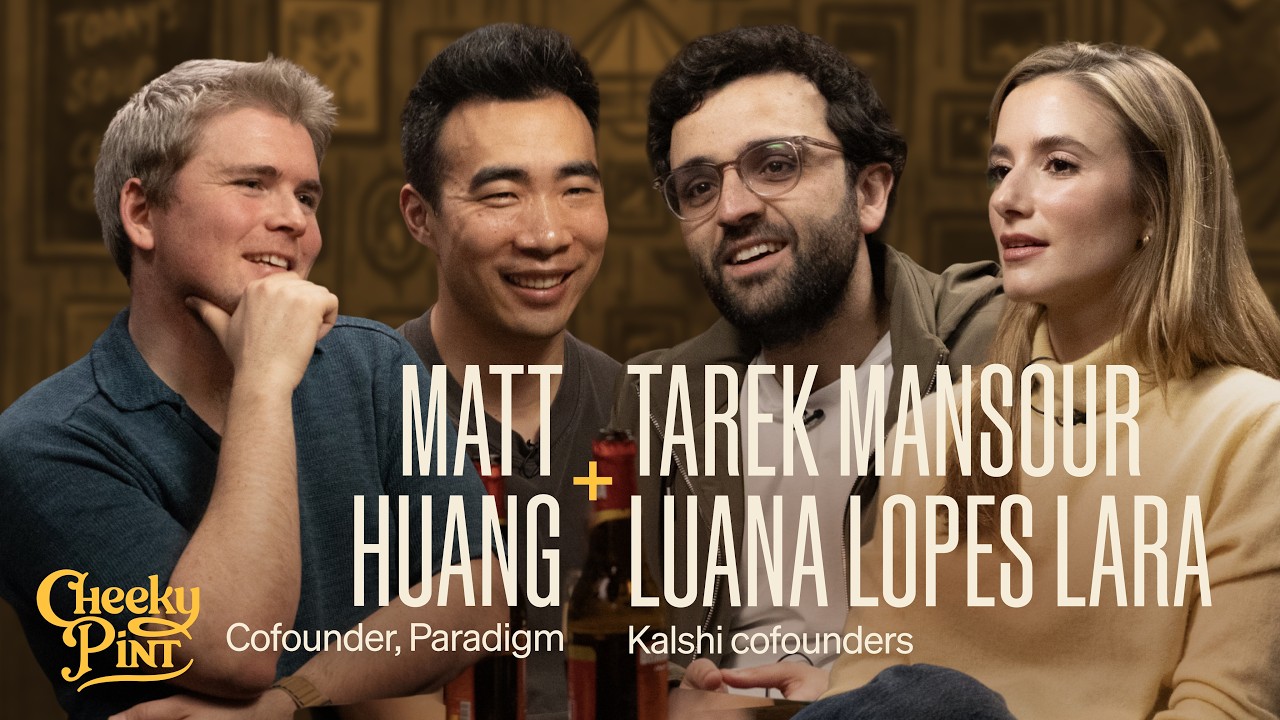
Tarek Mansour and Luana Lopes Lara, co-founders of Kalshi, shared the extraordinary journey of building the first CFTC-approved prediction market in the US. Their story is one of unwavering conviction, regulatory confrontation, and a vision to democratize information through market-driven truth.
Kalshi's inception was far from typical. Unlike the "ask forgiveness, not permission" ethos often seen in Silicon Valley, Mansour and Lara adopted a regulatory-first approach, recognizing the critical difference when dealing with people's money. This led to a four-year battle for CFTC approval, culminating in a landmark lawsuit against their own regulator over the right to list election markets. Despite internal doubts and board resistance, their persistence paid off, proving their legal interpretation correct and paving the way for unprecedented growth. Kalshi now processes over $10 billion in contracts monthly, a testament to the surging demand for regulated prediction markets.
A significant driver of Kalshi's rapid expansion is its unique market-making structure. Contrary to traditional financial exchanges dominated by institutional players, over 95% of Kalshi's liquidity comes from individual "super forecasters." These are not Wall Street veterans but everyday people—from an Ariana Grande fan who turned his hobby into a six-figure income to a tax accountant who made a fortune shorting Doge by deeply researching tax codes. This dispersed, community-driven liquidity model allows Kalshi to price a vast array of dynamic, real-world events, from pop culture to economic indicators, much faster and more accurately than traditional methods. The platform also actively explores the integration of AI, with many traders already using agentic models for research and execution, hinting at a future where AI plays a significant role in market prediction.
Kalshi's founders are not only building a financial product but also advocating for a new paradigm in information and governance. They believe prediction markets act as a powerful antidote to societal polarization and distrust in traditional information sources, offering an unbiased, real-time feedback loop. This "depolarizing" effect is evident in political races, where market odds can reveal true sentiment beyond party lines. Looking ahead, Kalshi envisions "infinite markets," expanding beyond binary contracts to futures on novel commodities like GPU compute. Their policy stance is pro-innovation within a pro-regulation framework, emphasizing fairness, transparency, and robust customer protection—even advocating for stricter insider trading rules for government officials than currently exist in traditional markets.
Despite the challenges, including the inability for their own employees to trade on the platform due to regulatory constraints, Mansour and Lara remain committed to their mission. They see prediction markets as a vital tool for better decision-making, from corporate strategy to public policy, by providing a clearer, more incentivized understanding of future outcomes. Their journey with Kalshi underscores the transformative potential of regulated, accessible prediction markets to shape a more informed and efficient world.
“The law applies to companies, but it also applies to the government.”
- Tarek Mansour, Co-founder