
- Tech bubbles are notoriously hard to predict, with 'Category 2 errors' (missed opportunities) being the most painful.
- Silicon Valley's 'high trust' culture is ironically fueled by FOMO and a 'frontier spirit' that tolerates risk and failure.
- AI is heralded as 'Computer Industry V2,' poised to democratize power and productivity on an unprecedented scale.
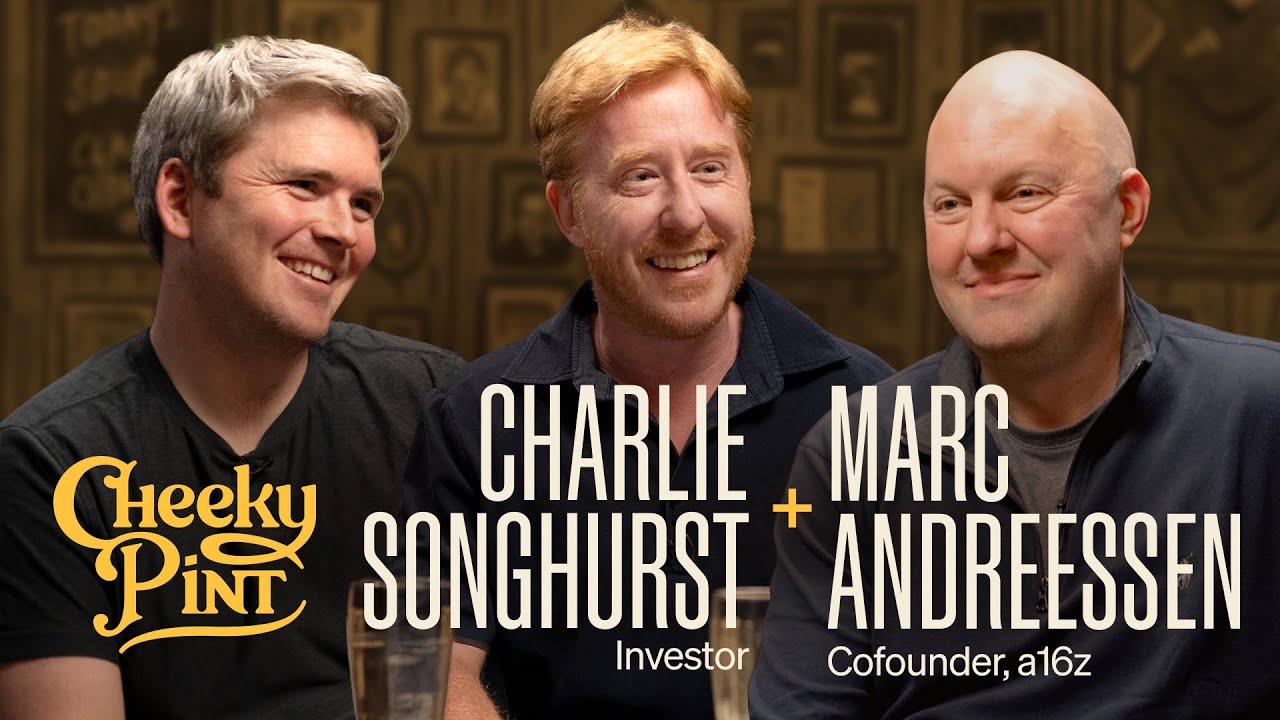
In a candid and wide-ranging discussion, venture capitalist Marc Andreessen and investor Charlie Songhurst dissected the foundational elements of Silicon Valley, offering profound insights into the cyclical nature of tech, the transformative power of AI, and the societal implications of an increasingly transparent world.
The conversation began by challenging the common perception of tech bubbles. Andreessen highlighted that predicting market crashes is a fool's errand, with economists famously predicting 'nine of the last two bubbles.' He emphasized that the real pain point for investors is not losing money in a downturn, but rather the 'Category 2 error' – missing out on a massive success. This fear of missing out (FOMO) paradoxically underpins Silicon Valley's high-trust environment, where quick, handshake deals are common, driven by the understanding that the upside of a successful venture far outweighs the risk of a small loss. This cultural phenomenon, coupled with a 'frontier spirit' rooted in the region's history, fosters a unique ecosystem of risk-taking and innovation, distinguishing it from more established East Coast or European hubs.
The discussion pivoted to the monumental impact of Artificial Intelligence, which Andreessen described as 'Computer Industry V2.' Unlike the internet, which was a network technology, AI represents a fundamental reinvention of computing itself, akin to the invention of the computer. This new paradigm is already demonstrating unprecedented democratic distribution, with platforms like ChatGPT reaching hundreds of millions of users faster than any prior technology. The speakers predicted an 'AI pyramid,' where a few large, powerful models coexist with countless smaller, specialized, and often open-source AI applications embedded in everyday devices, from door knobs to cars. This widespread adoption is expected to dramatically increase individual productivity, potentially leading to a future of hyper-deflation in goods and services, where 'everything becomes oversupplied,' challenging traditional economic models and societal structures.
Andreessen and Songhurst also delved into the unique management philosophy of figures like Elon Musk, characterized by ruthless truth-seeking, an engineer-first approach, and a deliberate cultivation of a 'cult of personality.' This method, while not easily replicable, prioritizes direct engagement with technical problems and fosters an extreme sense of urgency. The conversation concluded by exploring the broader societal shifts driven by technology, particularly the rise of true free speech. They argued that this unprecedented transparency acts as a 'fundamental solvent,' dissolving centralized institutional authority by exposing flaws and preventing the 'show' that governments and large corporations once relied upon. This era of hyper-democratized information, reminiscent of colonial America's media landscape, is leading to a profound political realignment and a rebalancing of power between individuals and institutions.
“True transparency, true free speech is a fundamental solvent at basically dissolving all centralized institutional authority.”
- John Collison, Host