- Agent Script: Blending LLM Flexibility with Business Predictability
- Headless 360: Empowering Developers with Unrestricted Tool Choice
- Slack: The Unified Layer for Human and AI Collaboration
- Full Lifecycle Agent Development for Enterprise Solutions
The TDX 2026 conference showcased groundbreaking innovations poised to redefine how businesses leverage artificial intelligence and how developers build next-generation solutions. From intelligent agent control to open development platforms and unified collaboration hubs, the future of work is being reshaped, moving from mere inspiration to practical, enterprise-grade implementation.
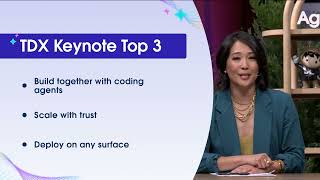
The keynote highlights centered on three pivotal advancements: Agent Script, Headless 360, and the evolution of Slack as a core engagement layer. Susanna Plaisted introduced Agent Script, a revolutionary tool that allows developers and even administrators to control AI agents with unprecedented precision. It masterfully blends the probabilistic, creative nature of Large Language Models (LLMs) with the deterministic predictability required for critical business processes. This means developers can define agent tasks and transitions in a single, version-controlled file, while admins can utilize natural language or low-code drag-and-drop tools. The announcement that Agent Script is now open source further democratizes access to this powerful technology.
Ryan Shellack then illuminated the impact of Headless 360, a move that liberates developers by opening up the entire Salesforce platform. This initiative grants developers the freedom to build solutions using their preferred tools and SDKs, whether it's Claude code or Vibe 2.0. By exposing the platform's core systems—work, engagement, agency, and context—Headless 360 empowers the creation of over 60 new MCP tools and 30+ coding skills. This paradigm shift ensures that solutions can be deeply tailored to customer needs and business objectives, fostering a new era of innovation and customization.
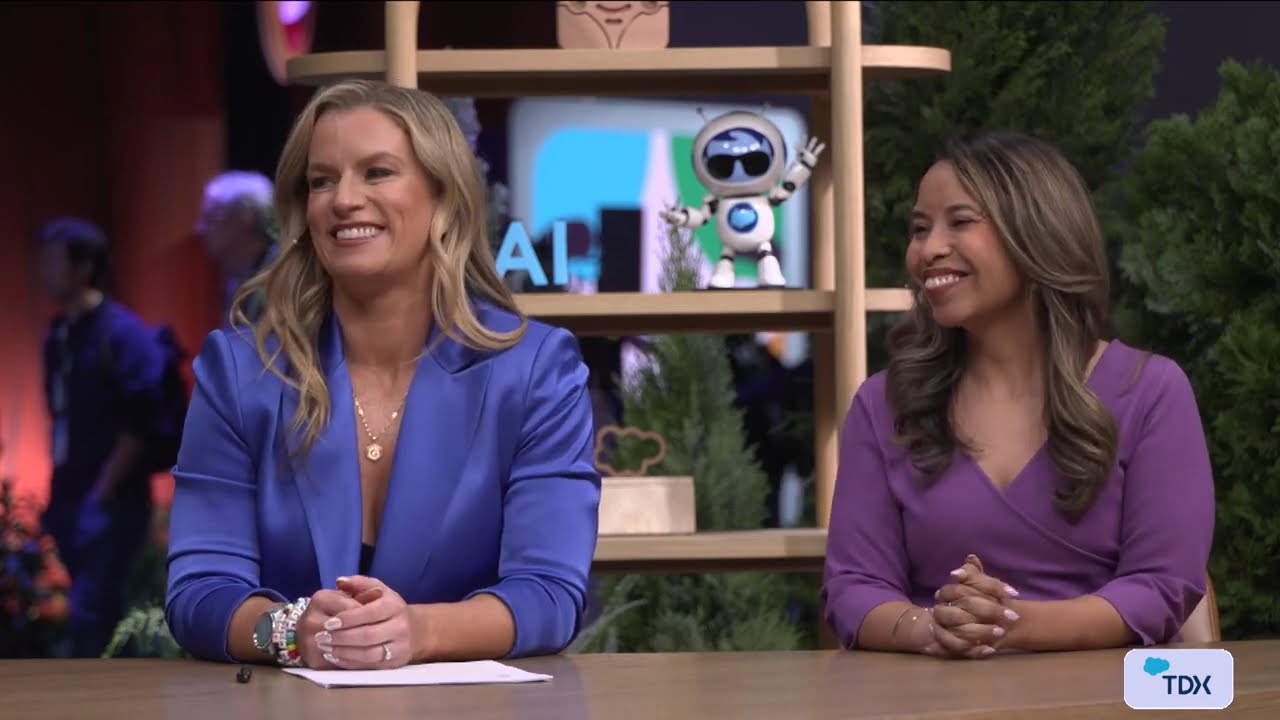
Jillian Bruce highlighted Slack's transformation into the ultimate system of engagement, serving as the central nervous system for both human and AI teams. While Slack has long been part of the Salesforce ecosystem, TDX 2026 positioned it as the true engagement layer, capable of deploying agents to virtually any service, including WhatsApp and ChatGPT. Crucially, Slack becomes the single environment where all agents—whether Agent Force or third-party tools like Linear, Cursor, or Claude—converge, enabling seamless collaboration and efficient workflow completion. This unified approach ensures that the collective intelligence of human and artificial agents can be harnessed effectively.
The discussion further delved into the practical implications for developers, emphasizing a shift from building mere proof-of-concepts to crafting full lifecycle, enterprise-grade solutions. Ryan Shellack explained that the new infrastructure supports not only agent and agent script development but also the creation of robust testing harnesses and smoke tests. This comprehensive approach ensures that every step of an agent's lifecycle is considered, leading to more reliable, scalable, and business-outcome-driven deployments. Susanna Plaisted reinforced the theme of trust, explaining how Agent Script's traceability and observability tools, combined with the blend of LLM flexibility and deterministic logic, provide enterprises with the confidence to deploy AI in mission-critical scenarios. The "build once, deploy everywhere" mantra, while ambitious, is being realized by rethinking agent development to interact across any end-user interface, fundamentally changing the game for how solutions are conceived and delivered.
“This means that as a developer, you're not just creating the solutions, you're steering this fleet of agents towards a business outcome. It's going to make everybody so much more powerful in what they do.”