
- 90% of US farm payments still use paper checks due to digital costs.
- Ambrook targets complex, multi-entity family farms, bridging the gap between QuickBooks and NetSuite.
- The company prioritizes product market fit over 'free money' subsidies, focusing on core software value.
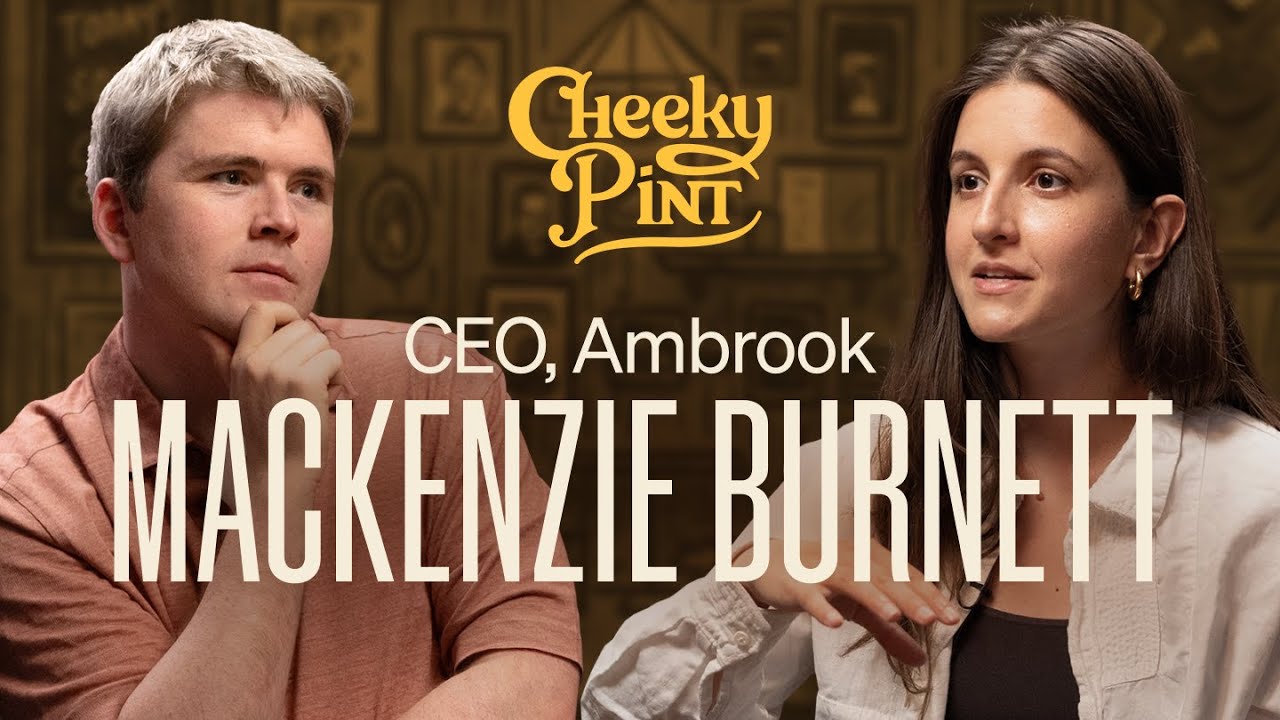
In a candid conversation, Ambrook CEO Mackenzie Burnett peeled back the layers of American agriculture, revealing a sector grappling with immense financial complexity, labor challenges, and a quiet drive for environmental stewardship. Her company, Ambrook, is not just building software; it's fostering economic and environmental resilience for family farms and other industrial mom-and-pop shops.
Burnett highlighted that 90% of US farm payments still rely on paper checks, not due to a lack of technological adoption, but because digital payment solutions are often prohibitively expensive for producers. This, coupled with the multi-entity, diversified nature of modern farms – often managing everything from cattle to trucking – creates a bookkeeping nightmare that generic accounting software simply cannot handle. Lenders, she noted, frequently resort to driving to farms and sitting at kitchen tables to manually compile balance sheets for loan applicants.
Ambrook addresses this critical need by offering financial management software that bridges the gap between basic tools like QuickBooks and complex enterprise resource planning (ERP) systems such as NetSuite. Designed for the business owner rather than the financial professional, Ambrook's platform offers a cleaner interface, multi-dimensional tagging for granular transaction analysis, and AI-powered mobile receipt management. These features enable farmers to perform vital analyses, such as calculating 'cost per acre,' which is crucial for expansion decisions. Remarkably, a third of Ambrook's customers manage all their complex accounting exclusively on mobile devices, underscoring the platform's accessibility for those spending more time in the field than in an office.
Looking ahead, Burnett outlined Ambrook's "post-distribution" vision: an ecosystem where transactions are instant, free, and context-rich, designed to keep capital circulating within local communities. A core tenet of Ambrook's strategy has been a deliberate avoidance of "free money" – below-market loans or subsidized payments – a controversial stance in startup circles. Burnett emphasized building a high-NPS software that users genuinely value, ensuring product-market fit is driven by utility, not incentives. This foundation, she believes, provides greater optionality to leverage fintech services responsibly in the future, fostering rural resilience and enabling multi-generational business succession.
Beyond software, Burnett touched on broader industry challenges and opportunities. She advocated for policy changes like open banking mandates to simplify data access for farmers and a streamlined approach to USDA programs. Discussing climate, she noted that while farmers may not use the "climate" label, many are actively engaged in practices beneficial for the environment, driven by a pragmatic environmentalism that demands a clear economic return. Ultimately, Burnett's mission with Ambrook extends to making the American dream of entrepreneurship and wealth-building broadly accessible, moving beyond the venture capital-backed tech paradigm to empower diverse small businesses across the nation.
“I just I want more people to believe in the American dream. My grandfather believed in it when he he immigrated from India to the US.”
- Mackenzie Burnett, CEO and co-founder of Ambrook