
- CMS manages over $1.7 trillion in health spending annually, serving 160 million Americans.
- AI-driven strategies are projected to save billions by preventing fraud and streamlining operations.
- A unified digital provider directory aims to eliminate errors and improve patient care.
- Workforce upskilling and cloud migration are foundational to CMS's AI-native transformation.
The Centers for Medicare & Medicaid Services (CMS) is embarking on an ambitious journey to become an AI-native organization by 2026. This transformation is not merely about adopting new technologies but fundamentally reshaping how government delivers value, enhances patient care, and safeguards taxpayer dollars against pervasive fraud.
The scale of CMS's operations is staggering, overseeing $1.7 trillion in health spending and serving over 160 million Americans annually. This immense responsibility comes with significant challenges, including billions of weekly cyberattacks and the constant threat of healthcare fraud. The speaker vividly illustrated this with a scenario of a rural clinic doctor relying on an outdated, fraudulent provider directory, leading to delayed care and wasted resources. The contrast with an AI-powered digital directory, offering instant, verified, and secure information, highlights the profound impact of this modernization effort.
CMS's 2026 strategy is anchored in an AI-native operating model, focusing on nine key priorities. Among these, embedding AI for fraud prevention and modernizing claims processing stand out. AI-driven anomaly detection, data matching algorithms, and automated triage are being deployed to flag suspicious activities and prevent improper payments, a strategy that has already recouped $106 million in improper payments in partnership with the VA. For claims processing, AI will enable smart routing, predictive analytics to catch errors before payments, and chatbots to free staff for more critical mission work.
Underpinning these initiatives is a robust investment in infrastructure and workforce development. CMS is migrating off legacy mainframes to resilient, scalable multi-cloud platforms and building enterprise shared services to reduce duplication and accelerate delivery. Crucially, the agency is heavily investing in upskilling its 5,000-strong workforce in AI engineering, cyber defense, cloud security, and data science. This commitment to human capital ensures that the teams can design, manage, and sustain the advanced platforms being implemented, recognizing that people, not just technology, drive government transformation.
Data interoperability is deemed a healthcare necessity, not a luxury. The creation of a unified national provider directory, validated in real-time by AI, will eliminate errors, reduce fraudulent billing, and improve patient experience by ensuring care is never delayed due to inaccurate data. The tangible results are already evident: 83% of the CMS workforce uses AI daily, saving an average of six hours per person per week, and significant fraud savings are being redirected back into patient care. This comprehensive, AI-driven approach promises a future of faster, safer, and smarter healthcare for all Americans.
“Every fraudulent dollar stopped becomes a dollar invested in care and trust earned in our citizens.”
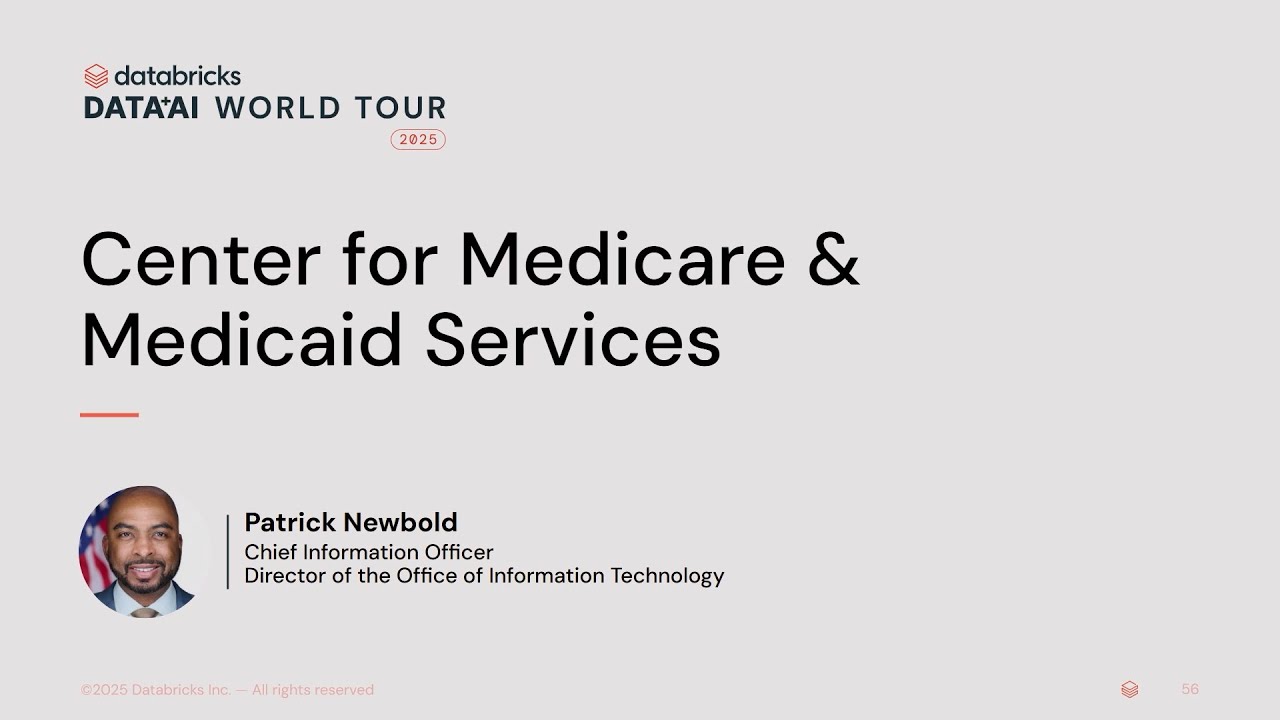
- Patrick Newbold, Chief Information Officer for the Centers for Medicare & Medicaid Services (CMS) and Director of the Office of Information Technology