
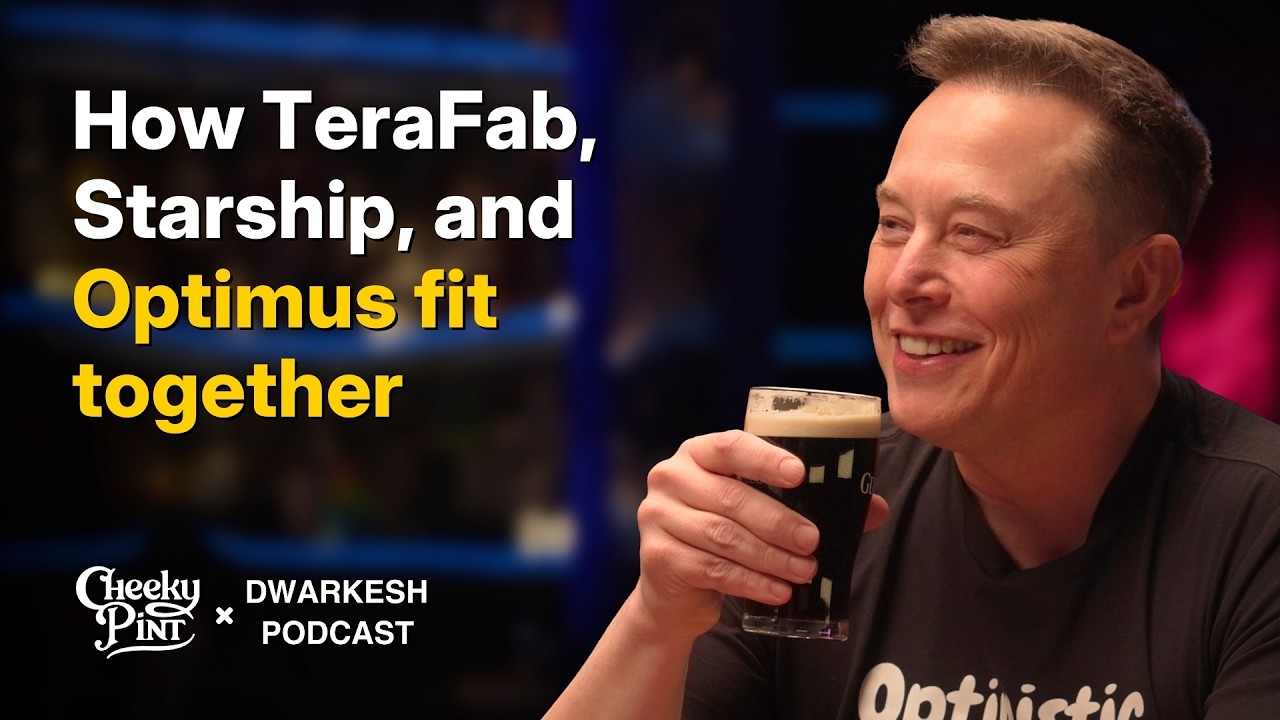
- Space will be the cheapest place for AI compute within 36 months.
- Earth faces an imminent power crisis, limiting AI chip deployment.
- Optimus robots are key to solving manufacturing and labor shortages.
In a wide-ranging discussion, Elon Musk laid out a visionary and stark assessment of artificial intelligence's future, predicting that space will become the most economically viable location for AI compute within three years due to insurmountable power and regulatory challenges on Earth.
Musk highlighted the critical bottleneck of electricity generation, noting that while chip output grows exponentially, global electrical output remains largely flat outside of China. He argued that the sheer scale of power required for advanced AI clusters, far exceeding current national consumption, makes terrestrial expansion unsustainable. "People are going to hit the wall big time on power generation. They already are," Musk stated, projecting that by the end of this year, chip production will outpace the ability to turn them on for large clusters.
His solution? Space-based solar power. Musk explained that solar panels in space are five times more effective than on the ground, requiring no batteries, and avoiding the complexities of land permits and regulatory hurdles. He boldly predicted that SpaceX will launch more AI into space annually than the cumulative total on Earth within five years, potentially reaching hundreds of gigawatts per year. This ambitious plan necessitates a massive increase in Starship launches, aiming for rates comparable to commercial airlines, and a new generation of chip manufacturing facilities—terafabs—capable of producing millions of wafers monthly, including logic and memory.
The conversation also delved into the transformative potential of Optimus humanoid robots, which Musk dubbed the "infinite money glitch" due to their recursive manufacturing capabilities. These robots, equipped with advanced AI and custom-designed hardware, are envisioned to tackle labor-intensive tasks, particularly in manufacturing and refining, addressing critical shortages and boosting industrial capacity. Musk emphasized that America cannot win the future on human labor alone, given population disparities and work ethic differences with countries like China, making robotics a crucial frontier for national competitiveness.
Beyond the technical challenges, Musk addressed the philosophical implications of advanced AI, stressing the importance of aligning AI with values that promote curiosity, truth-seeking, and the propagation of human consciousness. He warned against politically correct AI, drawing parallels to the dangers of programmed deception seen in '2001: A Space Odyssey.' Ultimately, he believes that a future where AI and robotics solve humanity's grand challenges, including national debt and resource limitations, hinges on a maniacal sense of urgency and a willingness to confront and overcome limiting factors.
“It will be by far the cheapest place to put AI will be space in 36 months or less, maybe 30 months.”
- Dwarkesh Patel, Podcast Host