
- Pioneering medical logistics in Africa, Zipline achieved a 51% reduction in maternal mortality.
- The company is now rapidly expanding in the US with silent, precise home delivery via its new Platform 2.
- CEO Keller R. Cliffton advocates for performance-based aviation regulation to accelerate innovation.
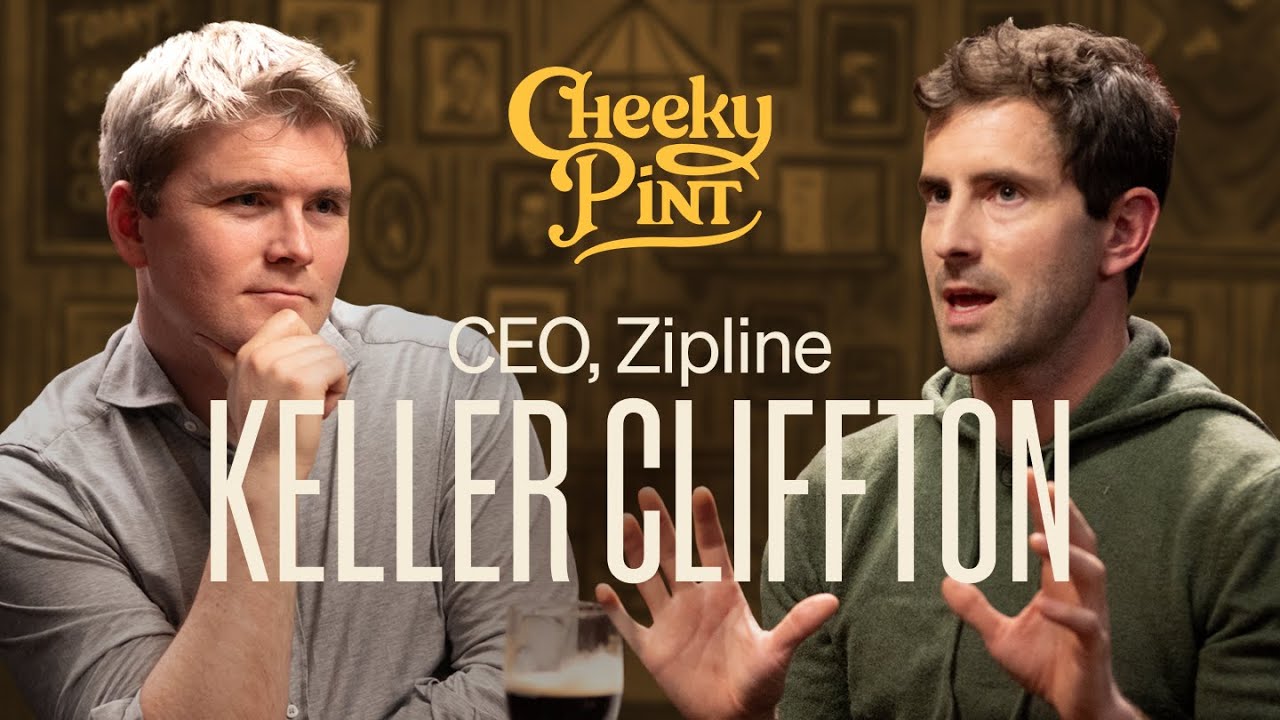
Keller R. Cliffton, CEO of Zipline, reveals the arduous journey of building the world's largest autonomous delivery system, emphasizing that true innovation lies in solving real-world problems, not just creating flashy tech.
Zipline's origin story began with a seemingly "stupid idea" in 2013: building an automated logistics system for Earth. Cliffton recounted the initial struggles to secure funding and the skepticism faced when proposing drone delivery in Rwanda. A pivotal moment came from Rwanda's Minister of Health, who, faced with complex proposals, simply stated, "shut up, just do blood." This focus proved transformative, leading to a system that, after a challenging first year, scaled from serving one hospital to 5,000 health facilities across Africa. Studies later confirmed Zipline's profound impact, including a 51% reduction in maternal mortality and a 70% decrease in vaccine waste, all while operating on a country-led and country-funded model, saving millions for national healthcare systems. Cliffton shared a striking anecdote of discovering a vast field of expired, aid-funded medicine in a country facing severe shortages, highlighting the dire inefficiency Zipline was built to overcome.
Now, Zipline is rapidly expanding its footprint in the United States, transitioning from its fixed-wing, parachute-drop Platform 1 to the new Platform 2. This vertical takeoff and landing (VTOL) system is designed for silent, precise home deliveries in suburban environments, partnering with giants like Walmart and Chipotle. Cliffton emphasizes that customers ultimately desire "teleportation" – instant, reliable delivery – rather than drones themselves. The company's exponential growth in Dallas, with services scaling 25-30% week-over-week, even without marketing, underscores the demand for this new level of convenience, exemplified by a 78-year-old grandmother who has ordered 340 times in a year.
A significant hurdle for innovation, Cliffton argues, lies in outdated regulatory frameworks. He criticizes the FAA's prescriptive approach to aviation certification, contrasting the DC3's rapid development in two years with the Boeing 787's decades-long, multi-billion-dollar journey. Zipline advocates for a shift to performance-based regulation, where the FAA sets statistical safety levels, allowing companies to innovate and self-certify, thereby accelerating the deployment of advanced technologies. This approach, he believes, is crucial for the US to regain its leadership in aviation and other hard tech sectors, preventing the stagnation seen in areas like nuclear power plant construction.
Zipline's commitment to American dynamism is evident in its vertically integrated manufacturing facility in South San Francisco, capable of producing 50,000 aircraft annually. Cliffton highlights the importance of co-locating engineering and manufacturing to enable rapid iteration, a lesson learned from countless practical challenges, such as moving GPS units from the flight computer to the battery to halve acquisition time. His advice for hard tech founders is clear: design something incredibly simple, get it into the real world quickly, and learn by doing. This pragmatic, mission-driven approach, rather than relying solely on smart teams or abundant funding, has been Zipline's key to transforming logistics globally.
“prototypes are easy production is hard”
- Keller Cliffton, Co-founder and CEO of Zipline