
- Google developed an internal 'ChatGPT' (Lambda) but prioritized safety over early public release.
- The future of Google Search will evolve into an 'agent manager' completing complex tasks.
- Memory, not just compute, is identified as a critical bottleneck for scaling AI infrastructure.
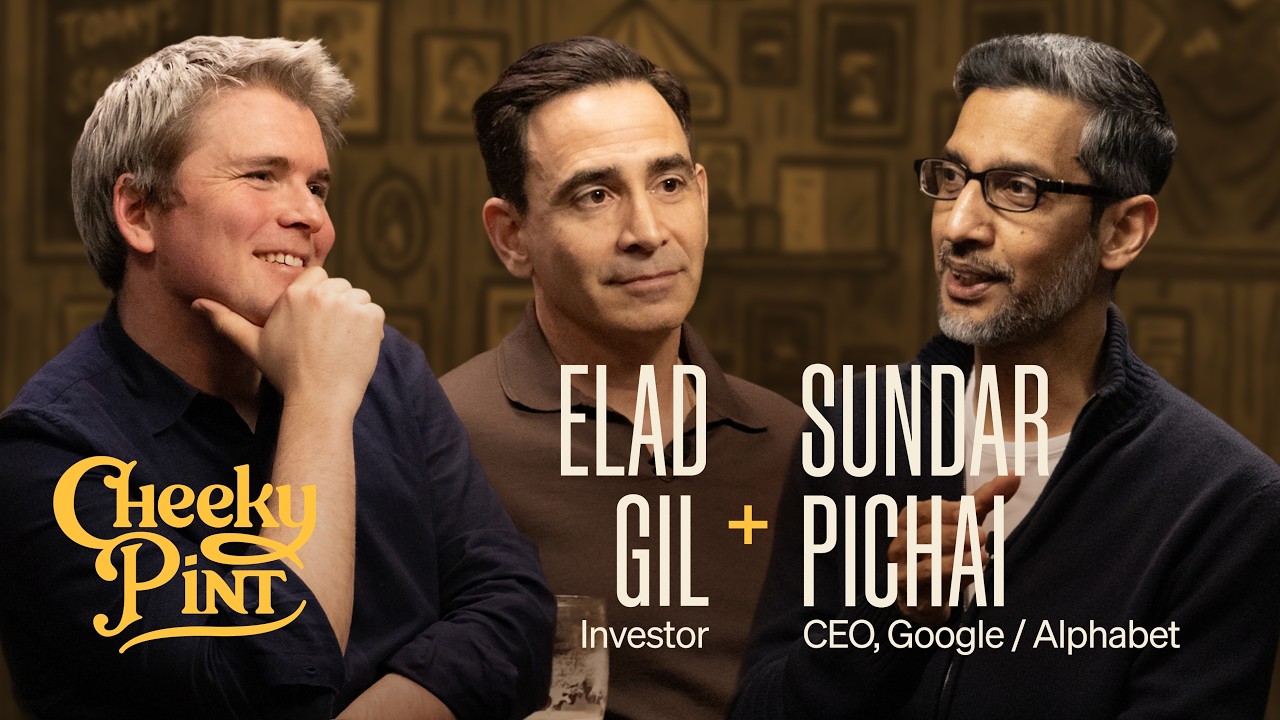
Google CEO Sundar Pichai offers a candid look into the company's deep-rooted AI journey, addressing past 'missed opportunities' and outlining an ambitious vision for the future, emphasizing speed, safety, and a non-zero-sum approach to the AI revolution.
In a revealing discussion, Sundar Pichai, CEO of Google and Alphabet, shed light on Google's extensive history and future trajectory in artificial intelligence. Pichai addressed the popular narrative surrounding the Transformer architecture, clarifying that while Google invented it, its immediate application was to dramatically improve core products like Search through models like Bert and MUM, leading to significant quality leaps. He also disclosed that Google had an internal conversational AI, Lambda, which predated public large language models, but was held back due to internal safety concerns and a higher bar for product quality.
Pichai highlighted Google's enduring commitment to speed as a core product differentiator, extending this philosophy to its AI services like Gemini, which leverages custom-built TPUs for rapid inference. Looking ahead, he envisions a radical transformation of Search, evolving from a simple query box into an 'agent manager' capable of handling multi-threaded, long-running tasks and proactively completing user objectives. This shift aligns with his broader view of AI as an expansionary force, creating immense value across industries rather than a zero-sum competition.
The conversation also delved into the practical challenges of scaling AI. Pichai identified memory as a primary bottleneck, alongside wafer capacity, power, and regulatory hurdles for data center construction. Despite these constraints, he expressed confidence in AI's capacity to drive substantial economic growth and foster innovation through efficiency gains. He also touched upon Google's 'moonshot' projects, including early-stage concepts for data centers in space, quantum computing, and advanced robotics, underscoring the company's long-term bets on foundational technologies. Pichai concluded by emphasizing the ongoing internal transformation at Google, with AI agents increasingly integrated into workflows, signaling a profound shift in how the company operates and innovates.
“I think what a lot of people underestimate in these moments is it feels so far from a zero sum game to me.”
- Sundar Pichai, CEO of Google and Alphabet