Slash Your AWS Costs by 50% & Unleash Agentic AI!
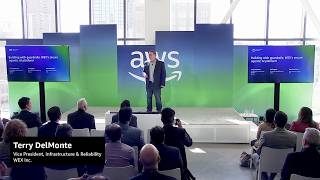
In an era where financial services grapple with complex, multi-cloud infrastructures, Transamerica is setting a new benchmark for efficiency and innovation. A recent presentation at AWS FSI NYC 2026 unveiled their strategic approach to optimizing grid computing and unleashing the power of agentic AI, demonstrating that the elusive trifecta of cost, speed, and quality is not only attainable but essential for future success.
“Build it into your AI not as a product feature, but as a mandate. It thinks and it self-checks and it self-diagnoses and self-corrects.”
Traditional wisdom says you can't have cost, speed, and quality. This session proves it wrong, revealing how Transamerica achieved all three. Discover how to optimize complex infrastructure and leverage agentic AI for unprecedented efficiency.
Very nice. Okay. So, first, thank you everybody for actually being here, and uh, you're going to have a lot of uh, good takeaways that you can implement in all of your organizations. Um, so, first, I'll actually start with, you know, like Transamerica, we are financial services company. Um, we do like uh, life uh, annuities, retirement, financial instruments, and your long-term care, etc. So, I and I'm personally responsible for uh, actuarial um, technology portfolio, and also finances artificial intelligence portfolio. So, and today, I want you to kind of like leave with a lot of important takeaways that you can actually implement and learn from our organization. So, this not just going to be all PowerPoints. So, there's going to be a lot of good takeaways that you can actually take and implement in all your organizations. So, um, first, basically,
you know, like looking at the agenda, the the first one, you know, like even though it basically says that we're transforming actuarial modeling and whatnot, which is essentially what we did, but the way I want you to think about is any of your complex infrastructure that you have in your AWS environment. Many of the financial services firms, you have very complicated infrastructure. You got a lot of computes, you got a lot of data stores, you got a lot of different data ecosystems, you got middleware, you got all of the different things that actually talks to each other from an uh, from a portfolio standpoint. So, you got you all the financial institutions have a lot of complicated systems. So, think complex systems and how effectively you can optimize them. We'll talk through that. And then, two, you know, like while we're looking at all these different complicated systems, uh, you know, like not in the in today's world, how do you actually build standard patterns that you can actually mass apply across all your portfolio. Is basically something we we think of like use cases, use cases, use cases, use cases, but like think of mass and repeat, okay? So, we're going to talk through some really cool things that we have done in terms of patterns that you can take and mass apply and then get like 100x, 1000x efficiency on what you're doing in your daily lives. So, with that said, let's actually go into the first, you know, like your complex um uh data infrastructure. You know, like any of you coming from like standard financial services, it's a very standard world the way it looks like. You have your corporate data centers, you got your cloud environments, you got AWS, you got GCPs, you got Azure, you got everything in between in terms of your data ecosystem and compute, right? So, it's got a lot of complexity built in, you know, like and any type of big applications that you see has, you know, like good amount of complexities, legacy things that you have built, tech debt, you name it. So, we all start our journey with a very complex infrastructure, very regulatory environment, everything that you have to actually prove out to audit, compliance, risk, and all the other people. So, that's the environment that we actually come from, right? So, then you want to take a very uh complex environment that you basically have and kind of like take it to a very optimal state in a very compressed time frame, right? So, that is really what is in front of us. You can, you know, like gone are the days where basically you say like, "Oh, yeah, this is a pretty complex infrastructure." And in in fact, some of the computer infrastructure that we have, you know, like in our world is basically tens of thousands of core node capacity in terms of compute. So, like we're talking like massive scale infrastructure, right? Because, you know, like when you do all the number crunching, people who know, uh you know, like the actuarial we do all the predictions projections you know like what is going to happen 100 years from now how many people are going to claim you know like your insurance and whatnot right so there's a lot of complicated questions that you want to answer that requires very detailed compute and you're actually trying to drive intelligence out of it gone are the days you want to actually do this in a 12 months gone are the days you want to do it in 6 months gone are the days you want to actually do it in a quarter we want to do it days you know like really that is the kind of scale that we're actually trying to drive towards so to do that you know like what you really
need you know like a so your traditional wisdom would basically tell you you can only go after what two of these three things cost quality and performance if you try to go towards two of them you try to move away from the third one so that's what you're actually your traditional wisdom will tell you so your traditional wisdom will basically tell you don't go after all three because it's not possible I'm here to tell you going after all three is actually possible and I'm going to show you how right so the first one that I want you
to kind of like focus on is cost okay so anytime you look at any of your infrastructure that you actually have the first thing that you want to actually take a look at is is your infrastructure optimal for what you're actually running as a workload what do I mean by that right so you have infrastructures that are that are you know like is it memory optimized infrastructure is it actually compute optimized infrastructure are you using the right chipset for the right purposes right so most of the times we don't even spend more than couple of minutes even thinking about is my bottom line infrastructure that I'm hosting all of my big complicated applications on, is it even running on the right chipset? For example. So, when we took a look at all these massive complex application that we had, what we quickly realized is just by swapping out couple of chipset, we and basically, you know, like putting them all together in what we kind of call a low latency, you know, like a backbone, kind of like co-locating all the infrastructure nice and bundled together brings your cost optimization through the roof. And in fact, when we did all the exercise that we actually did, we reduced the total infrastructure cost in half. Let that sink in for all of you, okay? Not by 5%, not by 10%, exactly slashing your complete infrastructure budget by 50%. That should That should sink in for all of you. It You know, like when you're looking at you're doing multi-million dollars in spend in terms of base infrastructure, right? And then if you do certain very small, simple changes, I'm going to call it low-hanging fruits, and in fact, all of you going out of this basically should look at your base infrastructure, what you have, and what type of chipset are you guys actually running on, and just moving your infrastructure away from, you know, like there are like lot of different choices in the marketplace for AWS, for example. The one that we settled on after we did all these different types of testings and whatnot for the workload we were running, we basically settled on AMD infrastructure, which was basically a 64-bit based infrastructure. And most of the times we just assume all the softwares and whatnot we currently run as applications are 64-bit optimized infrastructure, even though we have lived in the 64-bit world for a very, very long time. You would basically see that not all softwares are fully precisely optimized for 64-bit computing. So, and then basically putting that, you know, like so that basically slashes your cost basis significantly. So, just by putting in 64-bit AMD infrastructure, putting them all together, putting it in a low latency backbone, brought not only our cost significantly lower, it basically improved our overall compute efficiency by unimaginable amount of percent. And all of our network error rates that we were actually having, you know, like in terms of large-scale computes, kind of like significantly dropped. In fact, the network error rates were close to zero. So, from an overall percentage, you have actually improved your compute cost, you have actually increased your speed. And then once you put everything together, our complete back-end data collection processes speed kind of like went through the roof because they're actually on a low latency backbone. So, we don't stop to actually think about, you know, like some of these small, minor changes that you can actually make and make a significant difference to your bottom line. So, then we basically said, "Okay, we did all this. Great. It's all looking good. Now, we need not only good cost, good speed, we need good quality and good resiliency." So, to do this, you know, like your
standard AWS patterns will tell you, "Okay, yeah, you do multi-AZ infrastructure, you do her multi-environment infrastructure. Life is actually amazing." Actually, you would find out when you go in reality, it is not actually as amazing as you would think. Because once you actually go towards a multi-AZ infrastructure, multi-region infrastructure, None of our application portfolios currently can handle a multi-AZ workload and multi-A regional workload seamlessly. So, you take away, you know, like one of the things is that this is a newer service in AWS, you know, like it's called a fault injection service. And for the people who are actually familiar, you know, like this concept originated out of you know, like Netflix is one of the open source project you guys you guys can go look it up. It's called Chaos Monkey. It's got a funny name to it. But really it is introducing chaos resiliency to your application in production runtime. Right? So, we all talk about disaster recovery. We talk about the business continuity, you know, like what if this happens, you know, like magically will start working there and whatnot. But most of the times when you find what you would actually find is when you really put that to work in production, you go plug your RDS instance's power cord. You basically go wipe out an availability zone. You go wipe out a region. You would find that your application will most of the times you'd find there are a lot of gaps that you need to address. So, this fault injection service that you see is an absolutely amazing tool to basically see what your fault resiliency look like for your applications in real time. So, what you would actually do is once you implement this, we implemented a lot of different combinations of resiliency testing with our infrastructure. So, what what we did is we wiped out a complete availability zone. We complete we wiped out, you know, like in our cases we had like a lot of computer environments where you talk about grid computing, you will know like you have like a master orchestrator that is managing all the show. You got a lot of compute nodes that is doing the work and whatnot. But, you can imagine the same thing for any of your complex applications. You got your application, you got your middleware, you got your back end, you got all the things in between, and you basically go wipe out your API portfolio. Look what your application looks like in real time. So, go shut down, you know, like a services. You got ECS clusters, you got Kubernetes, you got, you know, like EC2 machines, you got whatnot. Just try to go reboot the machine and see what happens, right? So, this service is a excellent way to basically look at how do you build baseline resilience, baseline BCP, business continuity protocols, your disaster recovery protocols, where your complete availability zone gets wiped out, what your application would look like. So, this will really give you a real world test. And then the best way to actually run this is in production. So, if your application infrastructure is absolutely resilient enough, basically pulling power cord on any different service should be a non-event for your application. And very seldom that's the case. So, basically this will give you a good confidence that you're actually doing the right thing. Right? So, put put your thing into the fault injection and actually test it out for all different scenarios it supports. Tons of scenarios than more you can actually imagine. It's got, you know, like max out my disk, max out my CPU, max out my network disruption and whatnot. And then you can see how your actually application performs. So, it's a great way to do that. So, while we were doing all this, we wanted to build Okay, so we have complex infrastructure, things that we are managing. And then can we actually build some patterns in terms of AI that can actually act as foundation for anything and everything that we're actually doing. So, when we started to actually go in that particular journey, we invented some you know, like created some patterns that we were able to rinse and repeat not only for the use case that you're seeing over here where we let it kind of like help us with testing and other things over here, but we also kind of like expanded it to other portfolios that we will actually talk about shortly. And then there's some patterns that we developed and I'll give you some real-world use cases where we have applied that particular pattern and how the results actually look like so you can all think through what the pattern of the AI actually look like. So, going into unleashing, you know, like your agentic AI innovation. So, these patterns I'm going to show you and I'm going to show you some examples of where we implemented these patterns and I'm also going to kind of like provoke your creative minds on what all the different other things that you can do with these patterns. So, this should actually fascinate all of us, you know, like and I'm hope hopefully I'm hoping this will actually drive some creative brains and innovation for you on how you can actually apply this to your organization in real time. So,
So, we basically built two base foundations, okay? So, the first one, you know, like it's a multi-model AI foundation. What do I mean by multi-model? You know, like I know we've gone through a whole bunch of you know, like and everybody uses a text-based model, you know, like I I start to type something and I'm getting some information back from AI sort of like your Q&A feature. A lot of people have done like image generations and you have thrown in some image into AI and like, "Hey, what is it doing?" Image inference. Yeah, great. So, but what we've have done is most of our content that we are consuming is not only image-based content, not only text-based content, but we do consume a lot of documentations, we consume a lot of videos, and we'll talk through some interesting things. Even this meeting right here actually is being recorded as a video, but we very seldom rarely go watch any videos that gets actually recorded because it is very time-consuming for you to actually go consume a video recording. So, but but all these intelligence that we are collecting in a video and a multimedia format goes into a beautiful S3 drive somewhere, and it actually sits forever, but that intelligence is not open-sourced. So, our goal was to basically ensure that the multimedia data that we actually have has open-source productivity. Basically means that intelligence goes into a central location, become commonly freely accessible for every single person in your enterprise, and then this AI acts as your human intelligence narrator. Okay? So, we'll actually go into a bit more detail on where we actually implemented such use cases and what it actually look like. So, then looking at our agentic AI foundations. So, even though in the multimodal AI, there is a little bit of an agentic thing kind of like built in there, I'm going to talk about agentic AI more from the perspective of you have a lot of things in your organization that is rinse and repeatable. You know, like, "Hey, I I get this particular Excel file from over here, and then, you know, like, there is a whole bunch of people who's actually doing data entries, and I'm actually going through uh you know, like, I got a lot of data, and then there is data analyst who's actually sitting in there uh trying to produce my reports, and then there are people who are trying to compare my previous quarterly report to my this quarterly report. What is the difference is look like? And then you're like, "Explain me the differences." Okay, your mortality rate actually went up by 10%. Explain why. And then they're like, "Okay, let me go put in an analyst." 3 days later or a couple of weeks later, they come up with answer and a beautiful report, and then you go like, "That doesn't actually look quite right. And why here?" This is not actually a real-time interaction. So, here the thought process from an agentic AI perspective is basically anytime you have you need data intelligence, anytime you have rinse and repeat type of processes within your organization, I want you to think through you need to have an agent that handles it for you, right? So, the agentic AI foundation is specifically geared for actually doing that. So, now let me actually walk you through, you know, like one of our you know, like So, we've built these patterns, and I'm going to share one of the several patterns where we have actually used the multimodal AI. Right? So, any organization, not really
financial services. Here, SOP actually stands for standard operating procedures. So, we we got we we started with the journey where the business team basically came to us and said like, "Hey, we got, you know, like documentation that has been written about processes by people 20 years ago, 10 years ago. They all follow like different formats, different look and feel. Everything actually looks different. Any times we go try to read it, it basically takes us a lot of time to actually consume this information." So, then you would you would basically be thinking, "Okay, let's just throw AI on top of it and magically kind of like get it all working because now all the data intelligence is actually within AI." So, the the challenge that you would actually run into AI works better when you have consistency and you also have clean data. So, how do you actually get consistency and clean data? So, basically we put AI, the multi-model AI specifically to task here to basically say like, "Okay, you got 2,000 different documentation, 2,000 different formats written by whole bunch of other people, and then all your terminologies in the past in terms of your semantics all changed. The thing that was written 10 years ago, what it was called, it is not the same thing that it's called today. Uh Q, anybody? You know, yeah. So, we go through a lot of semantic changes over time and it does not stay consistent. So, the documentation that you wrote 20 years ago is not semantically consistent with today's documentation. So, the idea is that you take that and ingest it into the AI. The first step we did is basically, "Oh AI, take this all these 2,000 different documentations that you got, and then I want you to produce one single unified semantic model that this can actually be part of." So, the AI goes through all that and actually develops what we called internally the golden template. So, it basically gives you that, "Okay, I want you to write your document specification in this particular format." And then they're like, "Okay, great. Now, okay, now go to task and do it." So, we basically said like, "Take all the documentations, rewrite it in golden format which the AI created itself." So, then it was able to actually produce all the documentations in the same standardized format. So, this saved us like a ton of process cleanliness, you know, like and anybody who basically are looking at the documentation for any process regardless, "Oh, you want people's contact? Go to section three." Because it's always in section three because we have actually made it pretty standard. So, now this becomes a foundation for uh AI for any of the deep research or you know like any of your standard knowledge articles type of AI portfolio that you want to have on top. It becomes super duper easy. And now we wanted to kind of like level up because remember we talked about videos. So most of our content that are actually being generated in today's world, you know like let's say for example somebody's doing a knowledge transfer. In our world, you know like there is a new intern who's coming in and then there is a mentor or you one of your senior people are trying to actually mentor what their you know like job looks like. You know they do all the training, they do this you know like Teams meeting recording, you know like our Zoom recording, whatever you want to call it. You create all these beautiful nice videos and then they go into the stash. You know like and then that particular documentation that was created as a knowledge recording goes lost in space. So now what we did basically is with a multimodal AI it can consume that direct video recording. It's got like voice variations, analytics, semantics, sentiment, you know like your screen sharing, all the different things that you're actually doing a show and tell of is all beautifully baked into that beautiful MP4 video recording that you have and you have a transcription to go along with it, you know like what was said when it was said etc. So now it does it put pulls all this beautifully and puts it into your knowledge article data store. And now it is actually open source accessible for anybody in your enterprise and then they go like hey, what about this particular process and procedure that got knowledge transferred five years ago? Boom, you have it. And then do you have consistency? Do you have you know like queryability and etc. It's pretty easily doable. So it's a it's a it's a it's a amazing tool to think about. So, all of your knowledge is basically in one place and it is able to consume all the different formats and you're able to have consistent access to that particular knowledge that you have actually created. So, now let's actually switch to rinse and repeat type of tasks.
So, and obviously, you know, like in the efficiencies, you know, like we saw a huge efficiency compared to if we're trying to actually do this manually. Right? So, let's actually go into you know, like one of the challenges that we were having in terms of rinse and repeat tasks. Right? So, we were actually as a huge organization, we were moving from, you know, like all of our mainframe systems and beautiful things that we had accumulated from like centuries ago. We were kind of like trying to transition to like Oracle ERP Fusion platform. Right? And then now, okay, so you got all these beautiful modern platforms that you basically have and then you got people who have worked on it for hundreds of years. It's not going to be like, "Okay, let's actually switch to this modern platform and everything is great and good to go." right? So, you need actually something in the middle that can talk the things that people have been talking for the past 100 years. And then the people that need to talk a newer language that they're not used to yet, right? In the you know, like in this case a COA actually stands for chart of accounts, right? So, our people can basically say like, "Oh, yeah, 9999 is actually a suspense account, you know, like 1 or 2 3 4 is basically your debit and credit accounts payable to third party, whatever." So, they have done this for 100 years, so they know things by heart. And how do you actually go from the things that they just know by heart, they're so good at to something brand new you actually introduced and you're asking them to learn on the fly, so you're going to have a longer transition time. So, we said like, "What is the best way to bridge the gap between your legacy world and a modern world? Put the agentic AI in the middle that has access to both your legacy intelligence and your modern intelligence at the same time." So, what we basically did is in terms of the data accessibility, we provided access to the AI on both the old world and then the new world, so it understand the semantic graph of the old world, it understands the semantic graph of the new world, and anytime people ask questions about the old world and new world or new world to the old world, it can do all the translation by being the magic in the middle. So, not only we basically said like, "Okay, now you can actually translate back and forth between your different worlds." We also said, "Do the processes that were already pre-existing, right? So, there are processes that were already in place." So, we basically take the data and things that people were using in the past in terms of like data templates and whatnot that they're actually used to do. In this case, basically you know like your journal entries are just an example, if you will. We basically said like, "Okay, yeah, you just throw in the journal entries that you used to do before, and then the system automatically fully translate that into the Oracle ERP Fusion APIs that can actually be called, and then it puts it in a format that the newer system can consume, and then they can validate, "Yep, everything looks good." And then you push it onto the system by click of a button. So, it it basically makes, you know, like a efficiency of going back and forth between multiple different worlds very, very seamless. So, your AI is an extraordinary solution to actually be in the middle. We basically give built sort of like a lot of different tools that we attach to the AI like a semantic understanding, your NLQ, you know, like natural language to query and then you know, like and the most important thing that you want to provide AI is
ability to recover from failure. Okay, so that's the most underestimated part. So everybody is like, oh yeah, let's basically put here in my data layer, here's my beautiful AI on top. Let's go, right? But one thing is very important to remember when you are actually anything anytime you sort of like what we saw on your resiliency, right? Like so you're building a system, you want to make sure that it is resilient. Similarly, you're building an AI system, you want your AI system to be recoverable from its own problems. Okay? So then we did something even more modern with this particular solution where we not only gave it all these beautiful abilities, we let AI test itself. Am I doing the right thing? Am I producing the correct answers? You know, like a lot of people here talk about like hallucinations, you know, like it is producing incorrect answers or whatnot. But it is actually too late when you're talking about actually hallucinations post-production. So what the when you need to think about a hallucination and AI is doing all the right things is pre-implementation. pre-implementation. Build it into your AI not as a product feature, but as a mandate. It thinks and it self-checks and it self-diagnoses and self-corrects. So all of those capabilities are built into your AI platform. So um So um and with that cuz I said, you know, like it it it drastically improves your time efficiency. It gives you consistency because all your data layers and semantics is actually understood by all of it. And you can basically take this and say like, "Oh yeah, here's all the process." And you basically rinse and repeat the process from here. Right? So, it gives you a lot of tangible things. So, in summary, go get ambitious.
Look for cost, speed, and quality. Yes, you can actually achieve all three. Right? It's not a either or. Most of the times we actually think it's actually a either or. It is never either or. You can actually get all three. So, to get all three on your infrastructure side, look at look at very closely look at your chipset. Right? Even though we have used AMD 64, it worked great in terms of cost cost efficiency and whatnot. And your is your application infrastructure very capable to be optimized to your underlying hardware? The answer is most of the time you have a lot of opportunity to improve. Put it on a low latency backbone so that everything is co-located nice and well near each other even if it is in a multi-AZ ecosystems. Each of these ecosystem self-exist on both sides. Um and then making sure that you have fault injection, disaster recovery, and BCP continuity everything is built into your application. And also when you're thinking about unleashing your agentic AI at scale, think pattern. You take a pattern, you rinse and repeat. It can actually consume videos, documents, images, text. It can consume anything. So, all you're basically changing is what do you want the AI to do? That is your only thing that is actually changing between your use cases. So, once your AI is able to consume all the all the different formats and patterns, and the only thing that changes between your use cases is basically what we call two things actually change between your use cases. One is what you want the AI to do, and the other one is not to be underestimated, the human intelligence that needs to come in as a metadata injection in the middle. Um, and with that said, that concludes my presentation. Thank you all, and like you can go for questions.
Top Moments
AI's self-healing power!
Chaos in production!
Bridge the data gap!
50% cost reduction!
Videos lost in space?
Never lose knowledge!
All three are possible!
Up Next