- Infrastructure costs slashed by 50% through targeted chipset optimization.
- Achieving simultaneous gains in cost, speed, and quality, defying traditional tech wisdom.
- Leveraging AWS Fault Injection Service to build robust, production-ready resiliency.
- Developing multi-modal and agentic AI foundations for unprecedented operational efficiency.
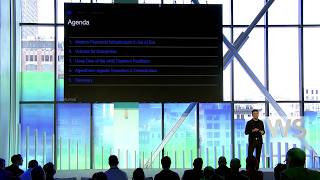
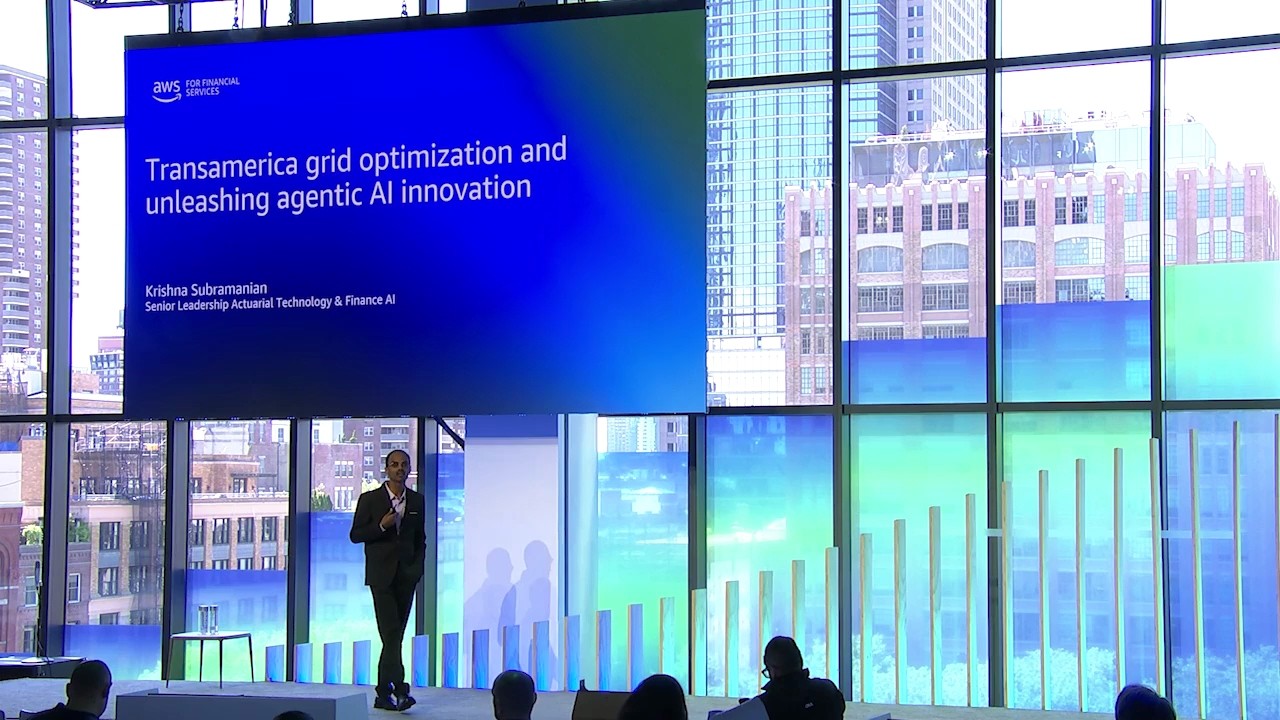
In an era where financial services grapple with complex, multi-cloud infrastructures, Transamerica is setting a new benchmark for efficiency and innovation. A recent presentation at AWS FSI NYC 2026 unveiled their strategic approach to optimizing grid computing and unleashing the power of agentic AI, demonstrating that the elusive trifecta of cost, speed, and quality is not only attainable but essential for future success.
Transamerica's journey began with a critical examination of its extensive AWS environment, characterized by vast computes, diverse data stores, and intricate middleware. The speaker highlighted that many financial institutions navigate similarly complicated landscapes, often burdened by legacy systems and technical debt. The core challenge was transforming this complex environment into an optimal state within a compressed timeframe, a goal traditionally deemed impossible when aiming for high quality and low cost simultaneously.
The breakthrough came from a meticulous focus on infrastructure optimization, particularly the underlying chipsets. By migrating to a 64-bit AMD infrastructure and co-locating components within a low-latency backbone, Transamerica achieved a staggering 50% reduction in total infrastructure costs. This seemingly 'low-hanging fruit' not only halved expenses but also dramatically improved compute efficiency and reduced network error rates to near zero. This success story underscores the importance of scrutinizing foundational hardware choices and architectural patterns.
Beyond cost, Transamerica prioritized resilience and quality. Recognizing the limitations of standard multi-AZ and multi-region setups, they adopted AWS's Fault Injection Service (FIS), inspired by Netflix's Chaos Monkey. This service allows for deliberate introduction of chaos into production environments—simulating availability zone failures, rebooting machines, or maxing out CPU/disk—to rigorously test application resilience in real-time. This proactive approach ensures that business continuity and disaster recovery protocols are not just theoretical but proven effective under stress.
Finally, the presentation delved into Transamerica's innovative work with agentic AI, built on two core foundations: multi-modal AI and agentic AI. The multi-modal AI consumes diverse data formats, including text, images, documents, and crucially, video. By transforming unstructured video content (like meeting recordings and knowledge transfers) into accessible, open-source intelligence, Transamerica is unlocking vast amounts of previously dormant knowledge. The agentic AI, on the other hand, excels at rinse-and-repeat tasks and acts as a semantic bridge, translating between legacy systems (e.g., mainframes) and modern platforms (like Oracle ERP Fusion), thereby streamlining complex transitions and fostering real-time data intelligence. A critical mandate for this AI is self-correction, enabling it to self-check, self-diagnose, and self-correct, preventing hallucinations pre-implementation.
“Build it into your AI not as a product feature, but as a mandate. It thinks and it self-checks and it self-diagnoses and self-corrects.”