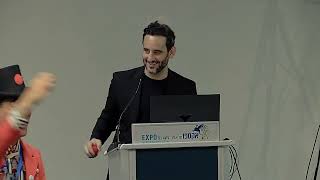
AI & Your Mind: Can Tech Truly Heal Trauma, or Is It a Trap?
As technology rapidly reshapes every sector, its impact on mental health and trauma healing presents a complex paradox. While digital tools promise unprecedented global access and personalized care, they also introduce new challenges, from data privacy to the very nature of human connection in therapy.
“I'm not afraid of artificial intelligence. I'm afraid of natural stupidity.”
- Esther Howard
The mental health crisis is accelerating, and technology offers unprecedented solutions. But can AI genuinely heal trauma, or does it create new problems? This panel explores the critical balance between innovation and human connection in the future of mental health care.
Okay, we'll get started. Welcome everyone.
everyone. It's good to see everyone came to hear
about technology and mental health. Um,
we're going to just start with a couple uh with a few short introductions just
so you know uh the perspective of of
each person on the on the panel. Uh my
name is Esther Howard and uh my
background is actually in oncology research and uh population health and uh
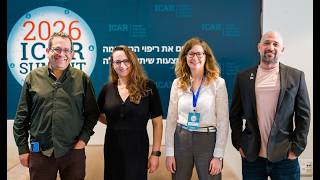
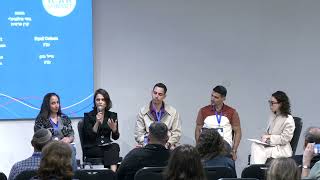
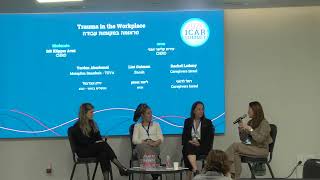
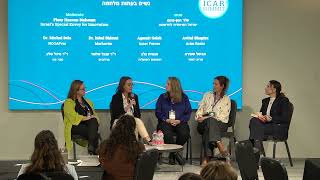
now I am completely dedicated to research in mental health to um find what works and what doesn't work in different populations of people around the world and um near >> Hi my name is Nanowski Dagan I'm 44 I live in Jerusalem I work for the Israel National Digital Agency I'm responsible responsible for innovation, data and AI and I uh 10 years ago arrived to the ministry of health. I was the digital leader of the ministry of health and afterwards I led a program called uh digital health as a growth engine. So this is where I started uh um moving around mental health digital mental health as well and I'm also responsible for the information and knowledge center of the INDA. Hi everyone, my name is Isizhar Lawer and I'm the director of innovation at Lummit Health Services. I came from a technical technological background. I was a CTO of Lomit for about 10 years and in charge of the digital services, the data channels and such. So it's going to be interesting. >> Thank you. Hey, I'm Adif. I'm a clinical psychologist, a trauma expert, and entrepreneur. I'm also the founder of uh the rising circle. It's a nonprofit that focused on that is AI supported creating clinical uh trauma- based programs. Uh in the past year, we've been working with uh reserveist families uh doing a community uh program uh involving technology. And I'm very excited to be here. Hi everyone, good afternoon. My name is Aal Gura. I'm a tech entrepreneur and a venture investor for the last uh 24 years. I've built six companies and invested in over 35 companies. Um most recently in the digital health space. So we were one of the first companies uh 13 years ago to integrate health IT and AI solutions in large scales. And uh most recently in in the mental health space I got involved in a project that uh I co-ounded called healing October 7 when the war started which is a group therapy that include uh MDMA. So we will hear more about it later. >> Great. So technology is the focus of today, but really the focus is technology as a tool to help us solve the mental health crisis and trauma in the world. Technology has given us the unprecedented ability to scale mental health support globally. Ironically, technology has also caused a lot of new problems and we're solving using technology to solve those same problems. thinking about social media, the way that we're bombarded with bad news, and it's not necessarily more bad news uh in the world. It's just we're getting it all in inundated. Sometimes there's more bad news in the world, too. There are a lot of heated opinions when it comes to technology and uh especially in mental health. Um because my background is in health care. I see the difference between general health care and technology and mental health and technology. And I think it becomes a lot more fragmented and and controversial when we're talking about mental health. So with that those heated opinions, it it makes us need to stop and pause and align with each other so that we can move forward because technology is moving so fast right now. Uh we can either sit back and let it go and destroy us or we can align and figure out how to how to move forward together. But we can't ignore the issues and the risks and the problems that it does bring. Um and at the same time we can look at where the opportunities lie. So today's conversation is going to examine the friction and explore what responsible acceleration can look like if we work together. And we're going to do this a little bit unstructured because it's good to have a little bit of friction and discussion and disagreement. Um that's a healthy thing so that we can all move forward together. Um if we have time, we'll take some some questions from the audience, but this will mostly be a dialogue from the from the four experts here. Um so the first thing that we're going to start with is to talk about barriers and adoption. And the first question is what are the main barriers and challenges to adopting new technologies in trauma healing? Um and so um maybe we'll start with you. >> Yeah. And uh and then we'll move over to high and and then then the government can step in at the end. >> We have so many barriers. >> Yeah, you have like a five hours. No, I'm kidding. Um yeah I think uh you know I've been here for the past uh two days and I've heard a lot of you know about the mathematical gap that we have between clinicians and people who needs help and I think we all agreed here that we uh can't hire uh through this problem we have to build together through this problem and in my perspective there are uh two main things that I will mention of course there are more but um in terms of the administrative burden on clinicians I I think uh um technology serves as more of a burden right now u and not an integrated into the system for clinicians and um instead of um digitizing paper I think we can use AI to actually at the top of the funnel screen better uh to the massive amount of people that needs help um and also give insights to clinician that can support and u magnify their treatment. A second thing I want to say um that I think serves as a barrier here is um the hierarchy of suffering. So we have a lot of people in Israel that uh are suffering and they think they're not worthy of clinical care because they're not uh suffering enough or they're not presenting clinical symptoms enough. Uh I see it when we work with reserveist wives. They're saying why would I get the treatment? um my friend her husband uh was killed in the war or any something more severe happened I'm not worthy of care but they actually are so the nonclinical population is uh the majority of people and if we're not going to reach them they're going to be a situation where people are under stress exhibiting symptoms that are not clinical but not getting um the care they need which um kind of infuel the intergenerational trauma that we are very familiar with from the Holocaust and I think technology can be a very low barrier here and uh kind of support this whether it's like a psychoeducational self-help um intervention that can actually reach those population and the silent suffering population uh that could help if we use technology right >> hope it wasn't too long >> um I would like to deal with the perspective of a health organization Um since October 7th we saw tens of solution uh I believe something about 50 or 60 solutions and many of them are are pretty unique and intelligent but in the end of the day there are too many silos. It's like a micro solution or many solutions. As an health organization, we cannot integrate to 12 tools per year. Okay? It's it's it's hard to say, but normal health organization can integrate to one or two tools per year per sector. Okay? So, what I really want to see is some kind of consolidation. So, we can uh integrate to one tool and get basically a set of tools. Okay? not one tool something that help us to communicate with the patient something that help us do this kind of techniques and the other for another technique I don't have to to uh do a separate integrations and agreements and everything has its own UI and UIX and we expect the physician to to know them all or or the patient knows them all. It's it's too much. It's overwhelming. Um the the second thing that I I would like to uh to address is that most of the solution we saw are additive to today's treatment. Okay, they are not studying by their own. They're not really replacing a treatment. So it does help but it not fully moving moving us forward. So it it is helping but we have a lack here in a solution that actually can replace totally replace a regular treatment or diagnostic and so I'll I'll try to touch base on few different angles. So on the there is the cultural angle. Um um mental health is still something that is culturally hard to to deal with in Israel in in our macho society. We we there is even a debate nowadays how the prime minister would like to title what happened in October 7 or not. It's like it's a dilemma like we need to wait for someone to title it for us. Uh so there is the cultural thing and in in addition to that and there is the the amount um so imagine if someone will come to the CTO's of uh the HMOs in Israel and tell them there are now half a million more people with diabetes or half a half a million more people suddenly with cardiac events this year. um as a nation and as HMOs uh it's something that wasn't dealt with before a sudden rise in amount of a specific uh thing to cure. So this is like on the cultural and amount side on the on the entrepreneurial side and on the venture side there are few layers to discuss that can be considered as barriers. So there is the the the data issues. So uh when we started uh when we started uh 13 years ago uh to produce algorithms to diagnose uh medical imaging scans uh the state of Israel already had 20 years of digital data. So it it took us two years to anonymize it and take it out to uh an envir environment when we can research it and there's a lot of dealing with the HMOs and a lot of challenges on on those sides but but still there were there were 20 years of uh structured data. Um so this is why Israel leaped forward in in those spaces. In mental health it's it's still uh in in in its infancy. uh not all all places have the data and not in all places it's structured and there is also the layer of uh venture creation and entrepreneurship. So if if an entrepreneurs come to their investors and tell them I got diagnosed with let's say breast cancer and I recovered and now I built a new tool to deal with breast cancer and and to better escort the the process for other ladies. um she might get the funding if an entrepreneur come to their investors and tell them I'm in I'm in deep depression and I need your money to uh to build something for depress depressed people and there is still this cultural thing. So also on the funding side there are issues and also investors always like to see other cases of success. Not not all investors really want to take risk and invest in new bold things. They usually take uh comps and other examples of other thing that work. This is why in Israel it's easier for investor to invest in cyber. And 13 years ago it was very hard for them to find examples of good digital health companies. And same thing now with mental health. It it seems like an acute thing to deal with. But investors always like to see how their money will create returns to their investors and currently in mental health we don't have enough of those examples. So all of those are compounded to many barriers. >> The money is always a barrier um and it comes from every angle. All right. Government. So from my own perspective um I moved to work for the government 10 years ago and it's quite frustrating in the sense that when I was in the public in the private sector I felt like I'm in a car with a lot of drivers and everyone is pushing the gas and there is one that is pushing the brake and in the public sector it's the opposite in the many times you feel that there are 10 different officers in different offices that have only a break button and you're the only one that's trying to push the gas. So we have tons of barriers but we have one above them all that is also an opportunity. Most of the barriers you already mentioned there is a data barrier. Uh the data is scattered. It's very hard to collect it. It's very hard to fuse it. Um there is a lot of issue with privacy on mental health. It's considered even more private than the regular health data. Uh there are issues with uh information security and cyber security. There are issu interorganizational issues. There are ego issues. But all these issues tend to disappear when there is a real crisis. For example, in the COVID at the beginning of COVID 19, boom, all these barriers disappeared. And I think that if people will understand that mental health is the new COVID, that this is the new epidemic, that this is something that is both urgent and acute, then these barriers will be uh uh withdrawn and we will be able to progress as we did in other issues. >> Before you give away your mic, um just a follow-up question to that because last night you and I had a conversation about population health data. Um so sort of shifting from the barriers into the opportunities from your perspective are you seeing that we have enough population health data to be able to justify that gas pedal being helping being able to move things forward. >> So first of all I think that the point that Aal mentioned is not a cultural point it's a value point. Okay. when people are saying I am a victim of a massacre and the government says no no no there was no massacre so this is a very bad beginning point for recovery this is a bad beginning point for healing okay uh the government is part of the creation of this trauma the people that have been traumatized feel that they were abandoned by the government so we need to be humiliated we need to arrive to them with humility and say we let you down now. Give us the opportunity to help you recover. And I think that this is a point of values and not a point of culture. After afterwards, we have tons of health data that examines uh in the information and knowledge center. How deep is the effect of October 7th on the entire population on the public mental health of Israelis? Some of this data is taken from cellular diagnostics and some of it is taken from questionnaires. And even if we we follow the uh how many how many hours people sleep, how much physical activity they do, we see that there are physical elements of the trauma still in millions of Israelis. So the data is already there. It is a matter of priorities. It is a matter of management. And if the country will understand how deep is the crisis and how big is the opportunity for recovery then it will be much easier to implement uh AI and technology. I I want if I may to to object to the issue that about the data in Israel regarding mental health. Um the reform in mental health was in 2015 July 2015. Uh so I believe we have pretty much data already in the HMO in the kot. Um I invite everyone to to to contact us if you need this data is accessible for research not how it was 10 years ago. Um so I believe we have this platform. Okay. We can do a work on this data and and it's totally accessible. Why don't you go ahead and keep the mic then and um help us shift into the next question which we've already started. So what technologies genuinely move the field forward and where are you still skeptical? um start to say before that they want to see more systems that can do diagnosis or treatment by themselves and I'm quoting from the the FD FDA digital advisory committee on November last November okay they're saying although the agency had authorized over 1,200 AI enabled medical devices none of those devices have been authorized for mental health uses and they mean diagnostic or treatment And this is very sad. Okay, I I I don't know exactly what we can do uh on the regulation side or other sides. It's not an Israel problem, but we have to figure out how we can h we can change it because it's it really affects the the ability of us to to make big change in the way that we treat uh people. Um and it's it's connected also to the fact that most of the systems that we have around diagnostics are decision support system not autonomous decision making systems. Again and again getting back to it the man is still in the loop. So the physician the doctor the psychotherapist again is must be in in in the loop. And this way we cannot really scale as we should. >> Go ahead Adi. >> Um so there are I think there's a bunch of opportunities and like you said there regulation privacy barriers. I can talk about what we did for the nonprofit um which is the top of the funnel uh uh smart triage system that actually it's it's a it's not just like looking at the symptoms. It's it's uh it has the ability to uh uh um look at common mental health, severe mental health and identifying risk and it also has the ability to uh identify uh specific community needs which is also extremely important in order to tailor uh the treatment and to build uh specific interventions. Uh so it's a smart system uh has some AI components in it. Um and we worked with the reservist um uh families um and we actually identified specific needs that they have and also identified families that are at risk. So what I say when I uh talk about specific needs uh I'm talking about parental needs uh relationship needs that they are experiencing in their families and it helped us build specific protocols to tailor to each family and customize the treatment. We also used uh u and I think that is very important. We didn't measure it only at baseline. We also continue to measure it to see if our intervention actually works. If we did like workshops or group therapy for those type of populations we measured it every few weeks to see if uh um specific symptoms have improved and if the needs of the community uh has changed. for example um um the soldier is in a you know deployed in the army or coming back the the needs are different at this time. So we really uh stayed close to the needs and adapted protocol accordingly and of course everything is evidence-based also the measures that we used or validated uh internationally. Uh and I think this is a great opportunity um to help clinician and support clinician customized care in that way. Um another opportunity is I think supporting clinician in terms of uh supervision right there is AI that can support clinicians with you know it's something that we're looking at uh that can support clinician um in in customizing treatment plan and in research it exists today and I think this will be a very good supportive for clinician to make them uh better and more trained in certain protocols any trauma-informed cure. >> Um I would like to take a step back from the current use of technology or or AI in our mind like we envision those uh very sophisticated newish things uh that uh AI geeks are developing in the garage. But uh technology as a whole is any type of process that can actually perform uh the the the needed result. Um so in in our uh nonprofit initiative when we when we saw that the Mafat the Alona was supposed to be in the panel but when we saw that Mafat the CTO of the defense arm are doing a RFP for technology solutions uh to treat post trauma. Um we we submitted our solution which is uh psychotherapy that is combined with psychedelics just because there were peer peer-reviewed uh published articles and clinical trials that show that uh you can really uh achieve great results with those type of processes. It doesn't need to be with AI. So uh in those uh phase three clinical trials it shown that uh around 70% of the people no longer adhere to the CAPS test of uh who who has PTSD just after 15 weeks of treatments that combine uh psychotherapy and MDMA. So we thought okay this is a great technology now how how do we scale it? So we did a back of the envelope calculation. it was very easy and we saw that there are not enough therapists uh in the whole world in order to treat a nation that uh got into this type of trauma together. Um so we built a protocol of a group therapy. Again it's not a science fiction but we build this protocol of group therapy. We were we consulted with many people around the world that are doing it in groups for decades and uh and now this protocol got the approval of the health ministry in Israel and we started those clinical trials. So and Mafat got convinced that this is a a healing technology not only to deal with the symptoms of post trauma that are immense and uh like lack of sleep and reduction of productivity and tons of other symptoms but actual healing. And so we still need to prove it in this clinical trial but uh I'm just saying that technology doesn't need to include the AI and we had companies like uh Monday that volunteered to build for us the the process management system. So uh the summoning of the seven and eight people to come to the group together uh the performance of the group the reports the dashboards but again it's not science fiction it's not AI but uh we hope that those things will help to move this thing forward. I don't know if I'm the only one in the room that um thought about this when you were saying uh technology is not only AI, but I don't know if you that you know the real where the kids like do really cool things and then they say technologia and it's perfect because they they're they're commenting on um the fascination of technology and it's got nothing to do with AI or anything even electronical or like digital. It's just something a gadget that has moved with with technology. So, you made me think of that. Um, it's really important to remember that AI isn't doesn't equal >> it's not the only technology. We're talking about process and science and and moving moving things forward so that we can we can make human lives better. Um, anything else to add? I would love to um before we move into AI because we're going to it's kind of the elephant in the room and and it's a really important topic but uh any other uh types of examples that any of you want to share where you're seeing really good wins with using technology to move mental health forward. >> Um maybe I'll speak about uh two opportunities. The first one is uh fighting bureaucracy. Most of us when we think about mental health digital solutions we tend to run into the clinical outcomes because we are clinical people and in fact we found out that when a person needs the services of Israel's mental health system it al he also gets a new job to be the clerk of the bureaucracy because mental health is scattered between social security and HMO and and sometimes it is the municipality sometimes is the ministry of health sometime is the social worker and the ministry of welfare. There are tons of bureaucratic procedures that can be omitted and we use uh technology not only AI but also other types of technology in order to build a unified uh case management and a unified customer journey. uh we we try to make it more of an ask once in the sense that the data will be transferred automatically between authorities and I think that there is a lot of progress to be made even if we don't touch the clinical procedure itself and the second opportunity is to make a public health um um situational awareness. We we now have public health data that is running in the system and it is near real time and it enables us to assess the mental health of the population near real time and to understand how different occasions and events affect this uh health. And I think that this is very important because usually it takes us as a as the government a few years to understand what's working and what's not. And when we have this real-time data we we can make much wiser decisions. Ju just to add on that how simple things can can be in terms of the bureaucracy. Uh I'll just give an example of a portfolio company called empathy. It's headed by my young and talented much more talented brother Ron and they they are dealing with a specific type of trauma which is a loss of uh someone you love in a family and um they calculated that just the bureaucracy and the energy invested by the family when someone dies is accounted to several uh working days in the US. So now employ large employers and uh life insurance companies are actually buying this app for their insuries in order to save them the time to disconnect from all the services and the app also includes like virtual support by nurses and other things that are helpful for the family but just the bureaucracy part where you disconnect from uh maintenance services like the banks and Netflix and all those subscriptions only this can take several working days in the US and so this is just a tiny example how this can provide a relief to a family. >> I would also like to add about u a project that we we've been working now more than a year and a half. It's about a digital triage and I mean a real digital triage that anyone can do whenever he likes. Um so in the development process we are hitting a lot of uh problems from you know people are very worried. Okay it's like mental health is dangerous than anything else. Um I'm I'm talking about the clinical staff. They're worried about what if someone will hurt himself. Um so it's obviously we we can all understand what are the the worries. uh but I do think we're about to to figure it out and to to to be up and running with the system and I believe it's not only that every uh patient can get a triage that will tell him what is next step to do where he need to go and point it exactly to where to where he can schedule this appointment or or find this therapist but I think it also can standardize all the the triage that we have in the in the organization because it will all come to one place in a structured data we can analyze it and and work um better I hope >> I want to add on that that in terms of smart triage and uh digital triage uh to add uh the risk protocols they will be very clear to clinician and to psychiatrist or you know it's um you can do there there are tests that can test the level of risk and how it can be uh automatically shift to the right people. So I think that risk protocols are extremely important. >> I totally agree and I want to ask you because you mentioned it before because in our digital triage we're working with validated questionnaires. >> They are they're awful, right? >> Depends. There are ways by the way we work with Columbia University that is actually shortening those. Uh >> okay so you talked about smart smart reage. >> Yes. So can you elaborate in one? >> Yes. So it's uh we work with u professor Milton. I have to say his name because he's amazing. Uh he also worked with a lot of uh cle and lumit. Uh he uh managed to shorten the common mental health substance use and risk assessment questionnaires to three to 10 questions which is you know we're talking about 60 questions versus three to 10 questions. And the system asks it in a way that is smart, right? If you answer no and no to this question, it wouldn't ask you other questions. Um, and we have a very strict risk protocols that if someone answers even in the passive suicide questions, yes, then it shoots an immediate alert to a psychiatrist and to the clinical staff to catch that uh and to see the level of clinical risk that they are at and they should be assessed by a psychiatrist. So I think those uh it's you know those stuff needs to be in place and it's also uh plus giving insight to clinician afterwards and it also helps with clinician burdens because that's the scariest things that clinicians had. So if they have a questionnaire that is you know there are questions for suicide ideiation um it's it's also calming for the clinician they can do their work more safely and not be stressed about this issue uh in my eyes but yeah so >> so just to add on to that um and sticking right now with the theme of opportunities and then we're going to shift again um but diagnostics is what you're talking about when you say questionnaires and then pretty much every other uh healthcare related ated field that I can think of. Um the diagnostics are very objective and clear and uh in mental health in psychology their questionnaires that were developed very differently than what I'm used to in my background in oncology. Um so do you see an opportunity with uh technology and the objectivity and the framework that we can build that is more precise because of technology shifting away from or maybe incorporating technology on top of the questionnaires in some way. >> Uh I think it's a good question. Anyone wants to start? I'm like taking this like I'm I'm at a rock show. Um I think um I think there's a lot of opportunities to automize it and I think we can uh it can be the first line and I think that can take us to you know the human aspect if needed right so it can be flagged if needed a human attention or something like that but I think that should be the top of the funnel we have a massive amount of people it can screen it can help the step model stepped care model it can you know uh tell you the people that are really need that empathy one-on-one now or they can be in you know sent to a first line of treatment which is psychoeducational, self-help all that or they need help now. So I think that is extremely important that's why I'm very happy to hear that uh you're working on a smart that can actually you know get people where they need and when they need it. uh I think that that's the key here and that's how we can do so you know uh technology as an infrastructure for all that >> and and again it might sounds obvious but for example in your background as an oncologist and in in many other forms of healthcare uh the intake is based on uh some some form of physical examination or uh hospitalization. So sometimes you needed to do a scan or ultrasound and take blood, measure something and and the the advantage in in mental health that many of those things can be done just by talking and uh and uh interviewing and surveying and it doesn't need to be like a boring questionnaire. It can be in conversation but nowadays conversation can al also be done with a technology. Um so a lot of scale can be done by that. So >> yeah, you can uh now there's technology where it looks into your eyes and looks at the levels of trauma or your body language and the technology can read your movement and your voice and um I find it incredibly exciting and fascinating. Anything else to add before we shift again? Uh I just want to add to what you just said that if you want to to take except for the conversation uh some kind of measurements. So I believe it can be additive to the conversation. It can can work as a standalone and it also is as a practical problem how you you grab this data because you need just is a smartwatch or you need something more advanced. So it's complicated when you come to to actually implement it. >> Yeah, it's definitely complicated right now. I agree that it's additive. Maybe in the future it could be replacement. We'll see. So speaking about the future, so as diagnostics become more objective and systems more autonomous, we inevitably reach a threshold question. So, as we've mentioned in other areas of medicine, greater precision improves outcomes, but trauma healing is deeply relational, complex, and personal. And there's a lot to yet to still be discovered. So, let's talk about AI, which is really the elephant in the room as we've tried to evade for the last few minutes here. Is it possible that AI could become more diagnostically accurate than the current standard diagnostics? And could it augment or dot dot dot could it possibly replace therapy? So, is that a future we should be building toward or guarding against? Who would like to start? >> I will start. >> All right. It's all yours. >> Um, of course, um, we're all worried. We we read some researches about the the the downside about uh wrong advices that people got from Chadipities or other tools. Um but nobody talks about who got help from Chajipities. Okay, nobody counted. And I just uh uh saw a a a JAMA article which is dealing with the US about the use of generative AI of mental health advice in the US and it said that 18% of the adentance with depressive episodes um there are 18% of adults with um with depressive episodes only 40% of them got some kind of treatment. Okay. So what what about the rest? And the second thing is there is a guy his name is Nolan Bushnell. He was in inventor of the Atari game. Okay. Back in the last 70s. And he has said he say is saying I'm not afraid of artificial intelligence. I'm afraid of natural stupidity. And I believe that I'm afraid from of the mix. Okay? because you really know how to need to know how to deal with these kind of tools. Um and in the same article um from the states 92% of people aged 18 to 21 said that it was somewhat to very helpful for them and they're talking about regular CH GPT and by the way uh when you go to this age group it's 42% that was very helpful if you go to younger uh audience it's it's splitting But um the obvious thing is that we cannot ignore it. Okay, it is already happening. We need to know and to see how we can make it more u risk-free. Okay, something that you can trust. Um >> I want to add to that and uh say if you can't beat them, join them. And I uh see it and I I I totally agree with what you just said. I see it. I'm also a a teen psychologist in the US. Uh and I understand that a lot of generation Z especially are using uh chajupi as a pocket therapist. So they see me once a week but they go to uh chajipi every day. Uh it's uh again if you can't beat them join them. We can't ignore it. uh we can as a clinician mitigate uh challenges that it can create and I have examples first of all my clients are sending me their chip prompts they think I can read it during the week and it can be it can be very worrying so I agree with you the chachup especially for nonclinical population can be very helpful or for relationship advice like my son is like what can I do with my girlfriend I'm like okay okay go to chachi I'm I'm a real psychologist um I'm kidding but Um the problem is that for clinical population and for people who with severe mental illness if I'm talking about bipolar it can actually do damage um because it tells you what you want to hear right so the next response is what you want to hear and if you are a little manic it can actually magnify your manic episode and it happened to me with uh one client that u it just really induced a manic episode. So I think as clinician we have the duty to work with it. I sometimes feel like I'm a co-therapist with chachi piti to be very mindful of it because it's going to come to us in massive massive uh challenges but again it can also do good and I think if you ask me what's the vision we will mitigate the damages and we'll tell clients what's important what's not important they will send us the prompts and we will be therapists by sorting what's I'm kidding I hope not but we can't ignore it it's an it's it's it's coming at us it's the new generation they're using it every day. So we have to kind of join it and see how we are mitigating and working with it to create a safe digital environment in terms of that. >> So so typically the the blind spot in those discussions are the assumption that uh the clinicians are better. uh so the the clinicians will never cause a manic person to become more manic or the clinicians will never have ethical problems or so this is usually the blind spot and I I spent five out of the 11 years of this health tech company that I told you about five years I just spent on stages in radiology conferences to convince doctors and specifically radiologists and oncologist that AI will not replace them otherwise they will not even consider working with us they were just reading all those articles that AI is going to replace them. Fast forward 14 years now um 90% of the radiologists all over the world are already using AI tools as a decision support tools. Millions and millions of patients are benefiting from this. No radiologist was replaced by AI. Um and there is still a huge shortage worldwide in any medical professions. um in mental health it's even more severe. So um so it's it's nowhere near uh um and then in addition to that we saw that every tool we developed back then we had to we had to submit to the FDA and when we submitted it we we already knew that it's more much more accurate than the doctor in this specific thing but it still took 180 days for the have they to get back to us and approve this tool for fractures and for stroke. stroke and brain bleed and breast cancer and eventually we had 10 FDA approvals um and two CPT codes but it's it took so much time and uh when you see how the FDA deals with each one of those uh identification you see that they put a lot of rigor and effort to see that it's safe so it's not uh enough to say that it's more accurate than the doctor you need to show that it was trained on um on what's called qualified data sets that are and there is the separation to the validation set and to the training set and you need to have enough uh resources and enough uh sources of uh samples. So if you in mental health it's not it can't be just one healthcare system or one technology. So it need to be a diverse data set and there are so many things you need to prove and doctors don't need to prove it like you can you can uh graduate from one one university you can see 100 cases during your training and then you can run on a night you can manage a night shift in a hospital or a clinic and you deal with case number 101. You don't need to prove anything. You don't need to prove you're not tired. You don't need to prove any bias. Um so uh there is there is a lot of promise in uh in technology and specifically in AI and just because uh it will be regulated in a good way. On the other hand, we we saw in the last year crazy cases where irresponsible acts like Alon Musk telling everyone can now upload their scans to Grock to and you s you saw husbands uploading their wives mamograms and I I tell them there is a a brain tumor in the mamogram and people still start to react to that. So as you mentioned earlier there is no the natural stupidity is uh still there. >> I like to tell uh people on that same talk topic. So I I live in Phoenix, Arizona and we have a huge fleet of unmanned uh taxis like you can you just take a car that don't nobody is it's autonomous driving everywhere. >> The whole the whole city is full of them. Um, actually I had an Israeli delegation of companies there last May and every single one of them took took those taxis all the time. And uh and it's funny because in the news for the first for the first year when when they came out the the news was always covered with all of the issues that that these vehicles would have. But side by side to that was covered and the the news was covering all the accidents that humans caused. And uh so now it's like really quiet. the those vehicles are just fine because they're way more reliable than the human drivers. So completely different than than this but but the same concept to consider not to ignore the risks but to consider the fact um and and my brother too he's a he works for Loheed Martin and he does uh works for the government and does all the um engineering for all the autonomous uh on you know the drones and the vehicles that they use in in um he's in defense and uh and he said the same thing like that you can't you can't look for perfection. You have to look for what's better to keep moving forward. Um, so it gets me >> a little bit better than >> needs to be better than human, but we also can't ignore the the problems that are being, you know, caused as a result. What else? Go ahead, Near. >> So, I I think that the last example that is now running in the states is the the butt of uh real food. I didn't I don't know if you started chatting with him but if you ask him where do you need to eat bananas from he thinks that it's better to eat bananas reversed. I don't know why he says that but it is a formal bot of the US government operated by Grock. So I think that reliable and and responsible AI is is not a a small issue. It is a an issue that we will face. The first comment that I want to make is that AI is already affecting the the mental health of billions of people. And we we always think about how therapists use AI, but most of the AI is not used by therapists. There are giant campaigns in social media in in some networks. Most of the people that we talk with and we argue with are AI bots. And these bots affect our mental health. We see it in political campaigns. We see it in fake news in in in some medias you have more than 90% of fake video and it is deep fake. So I think that the first my first prediction it's it's a personal prediction is that AI will definitely increase the the demand for mental health. Now um we predicted earlier that there are some things that therapists can do and AI cannot do. For example, empathy. But now we have more and more AI tools that are better than uh their parallel physicians not only in clinical outcomes but also in empathy. Okay. People give them higher empathy grades than they give physicians. And when you ask this person, why did you give the robot a 100% empathy? It's a robot. Well, I know that she's a robot and I know that she's faking empathy, but she's faking empathy much better than my physician. >> She gets it. >> Yeah, she's reliable. So, I think my my personal belief, I'm not representing anyone, but my my personal belief is that there is something very special in the human spirit and that this is something that is irreplaceable. And it is not because we have legs and hands. It is because of our mind. But I need I need to be much more hesitative when I'm saying oh this specific task AI would never be able to do that because we said it on many many tasks that AI is very good performing at right now. >> Any other comments before we go to our last question? last question? >> Okay. >> Okay. All right. So, let's think about um moving forward. We want to think about what we do need to change and how we want to move forward. So, the final question is if we want to responsibly accelerate trauma healing technology over the next 5 years, what are one or two things that you think we need to change as soon as possible? Do you want to start Near? >> Okay, I'll start. I think that the first thing that we need is a change of priorities. That this is not a matter of technology. I think that if we will understand that this epidemic is strong and that if we will not defeat it, it will defeat us, then the rest will be just details. I think that we need to invest more budgets in the mental health system in Israel. I need to I think that we need to allocate more of the AI national program that we have to mental health AI solutions and I think that we need to work very very closely and in this in this sense I think that I is doing a wonderful job and the fact that there is someone that is integrating all these great people that are dealing with mental health into one place is extremely important. I think that if we will ask the patients themselves and if we will ask the clinicians and if we will leverage technology then the sky is the limit. Um I believe that they want to see to find a solution for how do we regulate AI solutions in healthcare and to be clear I'm not saying the regulator is bad. I believe there is a real problem re real challenge here how you can regulate AI solutions specifically generative AI solutions it's a huge challenge um but I think we we must find a way to uh to solve it because this is basically the the key um for for for major change uh in mental health and and other area um as well. So I really think this is something that is but this is like a scientific or technological issue. How can you validate things like that? Um I can tell you I saw a a robot that you it's a bot but you need to wear um Apple's Apple's um VR solutions. Okay. It is called SA and I I I took a a therapy the demo of course. It was amazing. It was definitely amazing. So we must find a way how to effectively and risk-free uh find a way to to regulate it. >> I think that's a really good point. I think uh I think if we want to get to a clear step model uh we need to understand where people are at. So to diagnose the where people are at and give them in the low to moderate risk certain treatment that are more virtual and self-help uh rather than one-on-one clinician which will be saved for the more uh severe um um population will be a very important step. uh we have to protect our clinicians as much as much as possible so they can reach the people that need it the most. We have to train clinicians in a more effective way. Uh which I think technology can be extremely extremely helpful. Uh clinician needs help. Um they need to be trained in trauma models. They need to be trained in the latest uh protocols. I do think AI and technology can be really helpful and support supportive in that. they also need community and peer uh support uh whether it's virtual or technological or anything that can help that. So I think uh doing that is also very important coming from my clinician side >> a noncl clinician perspective is that uh I I can I can imagine how in the future we'll have automated triage and now the II will help us to will help us to uh better identify things and and enable the clinician to do their work better. I do think that from my perspective that there is a whole slew of processes that is not taken care of and even not discussed with is which is the the integration process. So after after someone is getting treated um by one of the healing models um much of the much of what I see that works is that there is a follow-up and an ongoing follow-up of how this patient can uh integrate the insights um into their day-to-day life and not go back to the trauma story of being a victim or um nothing is working for me and so forth. Um so those type of uh I would call it uh better stories maintenance and uh follow-ups I think are much needed. The AI can help with that as well. And again uh we mentioned before our uh government's fake attempt to call this akuma or to say it's not tear but uh there there is a better way to do profound integration and help people to to go to post trauma growth for example and not just by changing the name of what's happened. I want to add to that that I also think like uh predictive prevention model is something that can really be helpful like knowing who are the people that will have those uh fallouts or kind of creating prevention models uh and knowing uh which population is at risk I think uh is possible and very needed. >> Any other final? Okay. Well, I think Near, you hit it the nail on the head with your comment that AI cannot replace the human spirit. And there's one thing for me personally that I believe that AI won't ever replace. And that's the energy between us all. As we sit here in closeness to each other, there's energy that that is not really able to be measured, but we can all feel it and we know we have it. And it enhances our connection with each other. It heals us. And we don't even have to talk for it to happen. We don't have to interact even. We just have to be near each other. So that gives me hope that that humans cannot be replaced. We can't have AI replace each other for each other. And um and I think too um as we move forward, we need to of course we need to think about all of the opportunities and not forget what they are and not look at just the risks or else we we can't progress. The opportunity here is too big. Um and I love that we were able to talk about diagnostics and how we can use data more efficiently and workflows and triage and be able to to to move forward responsibly. We do need the regulators to get on board. I I meet with the FDA almost every month and and uh they are they're they're getting there and we're we're all getting there together. The desire is is for sure there. So just in final closing, I think what we'll do is no no questions but certainly available to talk anyone who wants to come up and talk to us between the the sessions. Um just a couple things to think about. Um we're not just building tools. We're shaping the future architecture of trauma healing. Technology will continue to scale. That's inevitable. And the real question is whether we will scale with wisdom, rigor, responsibility alongside it. And most importantly, not replace each other and maximize the love and the energy that we can all build together while we're building technology to improve the future.
Top Moments
Energy that AI can't replicate.
Patients rate AI higher!
No AI for mental health yet?
Urgent crisis, urgent tech!
Bots are shaping our minds.
Why people don't seek help.
Saving families from paperwork.
Up Next