AI Agents: The Trillion-Dollar Opportunity You're Missing!
The landscape of digital commerce is on the cusp of a profound transformation, driven by the emergence of AI agents. Coinbase, in a strategic partnership with AWS, is pioneering the infrastructure to facilitate this shift, enabling autonomous commerce through stablecoins and the open-source X402 protocol.
“The future of commerce isn't just digital, it's autonomous. There are now millions of agents in the world that are on the internet and they're about to come online as the next set of customers.”
- Brian Foster, Co-head of Infrastructure Business
Discover how Coinbase and AWS are revolutionizing digital payments for AI agents. Learn about the X402 protocol, enterprise-grade wallets, and the future of autonomous commerce. This partnership is setting the stage for the next wave of internet transactions.
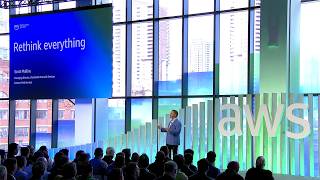
Hey everyone. Uh it's great to be here. My name is Brian Foster from Coinbase. I co-head uh the infrastructure business alongside my partner Eric who leads engineering and Alec who couldn't be here today. Uh you're going to hear from Eric in just a minute, but I wanted to start by setting the stage and talking a little bit about our new and exciting partnership with AWS. Um so off the bat, I want to just say thank you to the AWS team. We've been amazing partners to us over many, many years. Um Coinbase has scaled over the last decade from a small startup to a large um crypto-native financial institution, and we couldn't have built our marketplaces, our stablecoin business, um and all of the bleeding-edge work we're doing now without uh the help from the AWS team. So, uh thank you all sincerely. Um I'm going to just provide a little bit of context about how we got to the moment that we're in today and really
thinking about AI agents as a new client archetype that we need to be prepared to service with modern uh digital tools. Okay. So, many of you know Coinbase as a place where people go to maybe trade crypto, use and hold stablecoins. Um the
infrastructure business where Eric and I spend all of our time is really the complement to that world. And we like to humbly think of ourselves as in a way like the AWS for for crypto, right? We say that aspirationally. It AWS is a little bit bigger than we are, but we spend all of our time with financial institutions, payment services providers, fintechs, brokerages, helping them to imagine and build new, great products for their clients that take advantage of crypto. In the last In the last year or so, there's been a huge shift in
our focus that really maps to the demand we're seeing from our clients. Um and the theme that I'm talking about here is stablecoin enabled payments. Okay, so the clients we work with have really identified stablecoins as a new and exciting payment rail to globalize their businesses, enable faster settlement, and acquire new types of clients. And this has been a consistent theme we're hearing from the financial institutions, the PSPs, the money movers, technology companies, and large enterprises. As we've been on that journey working with these clients, we've we've actually recognized that there is a new type of client archetype altogether we have to account for that has a little bit different needs than the humans we've worked with in the past. And those are of course AI agents. AI agents. We think that stablecoins are
tailor-made for agentic use cases. Sub-second and sub-cent transactions work perfectly in a world where machine-to-machine payments need to happen efficiently and programmatically. So, we think we're built for this moment right now and we're super excited to work with AWS in this partnership to service AI agents with stablecoins in the agentic product toolkit that we've built here.
So, that's the theme. I'm going to talk quickly about the building blocks that actually go into the product that we've partnered with AWS on to hold out to developers using the AWS Bedrock portal. So, in our agentic bundle as we like to say, there's a few core LEGO bricks, so to speak, that make up the product and actually allow AI agents to transact.
The first component is actually an open-source protocol that Eric created from within Coinbase, but then we kind of gifted to the world, right? In the spirit of the early days of the internet and these open-source standards that that built the internet like HTML and POP and IMAP and HTTP. And recently we've actually moved the governance of that um that new protocol to the Linux Foundation, which we're we're super excited about. So, the really the base layer of this genetic bundle is the protocol itself, which is an open web standard that lets agents and apps pay websites per request using stablecoins. We need a couple other tools, not just that open-source standard, to really make this work well.
And the next one is core to our DNA at Coinbase, which is about holding, securing, and programming digital assets and stablecoins. And that is, of course, wallets. So, this is the next key piece in the bundle that developers will now have accessibly right in that AWS Bedrock portal. Finally, we have the X12 Facilitator, which is another product infrastructure LEGO brick that Coinbase has developed. And this is a capability that verifies each X12 payment, handles the KYC, AML, and compliance requirements between the payments' counterparties, and gives you that off-the-shelf so that it's enterprise-ready on day one. So, these are the main pieces that come together, and in just a minute, Eric's going to walk through an actual transaction to kind of bring this to life.
I'm going to speak briefly on really our focus on the enterprise. Everything we do in crypto and all of the discussions we've had with our clients over the years have been this really in sort of invigorating journey where we're asking enterprises to come along with us at the bleeding edge of something that's often new and unfamiliar to them. And although many of our enterprise partners and clients are often excited about this, they always have um similar questions around compliance, regulatory oversight, and suitability and scalability for the enterprise. And so, we've really gone to great lengths as we've built our genetic bundle to make it enterprise-ready from day one. And a couple of the things we've really focused on from a product perspective to make that that that mission work of being enterprise ready are number one great programmability and spend controls so that you can tailor the rules and boundaries of what your AI agents can do to map to your organizations needs and requirements. Guardrails, spending limits, flexible programmability to keep the agent in bounds. We don't want it going off the guardrails. We want it doing exactly what you need it to do within your rules, no more and no less. The second, of course, is as I mentioned before with the facilitator is native compliance and auditability. And Coinbase has a long history here of really being at the frontier of compliant work with digital assets. And we've thought about our agentic payments work in in the exact same way. So from day one, we have to have OFAC and KYT know know your transaction on-chain checks, geo controls, and full transaction logs out of the box for audit purposes so that enterprises feel confident that they're operating compliantly and within their risk parameters.
Okay, I'm going to just recap for everybody what the actual substance of the partnership is here that we've developed with AWS and we're so excited about before I hand it off to Eric. So, number one, we've partnered with the AWS Bedrock Agent Core team to embed our wallets and the X402 and facilitator capabilities directly into that developer environment so that agents from the start can be ready to transact in an AI world using stablecoins. The second thing we've done is really work with with AWS to bring them in from a governance perspective to this open-source X402 oversight committee, which we've now rolled under Linux. And we're thrilled to partner with AWS and a body of other leading firms to help steer this X402 protocol in the same way that many other great internet protocols have been steered over the years. We're deep believers in open standards. Um crypto really was born this way, right? It's blockchains are public open source protocols. And we believe at Coinbase in taking advantage of open source and open standards. Um we think that is the right way to do things in the most scalable way to earn uh developer trust over the long term. So, we're thrilled to be working with AWS from a governance perspective as well, not just on the product side uh with AWS and the Bedrock integration. I'm going to take a pause here and invite Eric on stage. Please welcome Eric Reppel, the creator of X402, who's going to walk us through a transaction. >> [applause] >> Thanks, Brian. As you can tell, Brian and I deeply coordinated our wardrobes and in order to represent the business engineering dynamic. Um So, let's talk about X402 and I'll run
you through a transaction as Brian said and uh really deep dive how the standard works and why some of the design decisions were made and why we think it's perfect for businesses who want to adopt stablecoin payments, but aren't are just dipping their toes into blockchain and the the unique powers blockchain enables and uh want some of that help want some help doing that and how Coinbase can help. Um and so, for those of you that By show of hands in this room, who's familiar with stablecoins? Okay, good. The word is reaching. And maybe to level set, stablecoins are uh dollar-denominated tokens on blockchains. They're one-to-one pegged by reserve to some major currency. And uh they you basically get the understandability and legibility of a dollar with the advantages of the technology behind blockchain. And so, that means sub-cent instant settlement uh and the ability to transmit globally 24/7 without really any constraints and full programmability. And so, T + 2 really turns into pre-T + 200 milliseconds. Um And that that makes them really suitable for agents, especially for kind of pay-per-use and smaller transactions that agents really really like. And so, this is how an X402 transaction typically works. So, X402 is named after the HTTP status code 402. 402 is uh is the status code, which means payment required. My party trick is I have the entirety of the 1997 draft for HTTP 1.1 uh for the 402 status code memorized. It is 402 payment required, reserved for future use. They They knew that they would want to put payments on the internet. They didn't know how back in the '80s and back in the '90s. And now with blockchains, we're really enabled to make payments a core part of the internet because they move at the speed of the internet. Because blockchains settle so quickly, they're an ideal payment rail for agents and for internet-native transactions. And so, I don't know if this is one of these that does a laser. Don't think so. Uh but you as a as a client, you can be an agent, you can be a browser, you make a request to a server like you normally would. The server responds to saying, "Hey, 402 status code. Here's a response body that's standardized. I You need to pay me in order to access this content or access this API or, you know, complete this checkout." That response body includes all the details that an agent needs to know in order to perform a payment. The agent can then select the payment method that they want. X402 enables you to express multiple payment methods, so you can use USDC on base, you can use USDT on Solana, you can use any any token, any chain, any method. In the future, we plan on supporting fiat cards as well. Um but consumers ultimately ultimately choose how payment is performed. The analogy I make a lot of times is it's it's kind of the little placard that restaurants have at the front at the at the um what do you call it? The host hostess stand. Which says we accept Visa, MasterCard, Amex. Same thing just for how your website wants to be paid. Ultimately, consumer choice dictates the competition for how payments get made. And so, based on that, the agent or the client performs the actions required to assemble the payment token. The payment token is then sent in a subsequent request to the API or to the website, where the server can then verify that the that the token payment token is valid, and then do whatever work that needs to be done to provide the goods and services, and then settle the payment instantly. And so, this facilitator step, if you're interacting with a blockchain, is actually optional. You don't need to depend on a facilitator to use X402. If you have the capability of interacting with blockchains directly, if you're comfortable managing hot wallets, if you're comfortable optimizing gas, you can do every part of what the facilitator does yourself. It's just interacting with blockchains at scale gets a little bit gnarly, and you know, Coinbase is here to help if you want to leverage our I think coming up on 15 years of experience interacting with blockchains. Our facilitator also provides inline KYT and OFAC sanction screening, and provides you auditability and logging, as Brian mentioned, which we think really lowers the barrier to entry and makes accepting stablecoins less of an unknown where you're going to be in compliance and we help you on that journey in accepting stable coins by doing kind of the the obligations that you have as someone accepting stable coins for you. Uh and then the facilitator performs those checks up in step nine and then submits the transaction on chain and then you get flow back the agent. The agent is now paid for you and received back what it has asked for. And so that's a little abstract. That's a little high level. Let's let's make it a little bit more concrete. Uh let's talk about how we worked with the Amazon Bedrock Agent Core team to get this into production and we'll run you through a demo. So
what we fun what Agent Core really does so well is allows you to build, connect, and optimize agents at scale. And so you get the scale and developer experience that AWS provides. Uh Uh but now your agents can also transact. They can perform payments via X 402 by leveraging Coinbase's wallets, facilitator, and USDC stack. And so there are plenty of things that you can discover and pay for. There's over 10,000 different X 402 enabled services that your agents can now go and pay for on a pay-per-use basis. Um X 402 and Agent Core works with any framework, any model and thus payments need to follow the same flexibility. You need to be able to pay for any service. And so one way to think about it is instead of going and spinning up 15 API keys for your agent, give your agent one wallet through Bedrock Agent Core and Coinbase and now they can pay for over 6,000 services. And so it's instead of having to integrate each service one at a time, integrate once and use anywhere. And so this demo, which might be a little bit small, but we'll we'll make do. Uh What you can do is configure a payment manager in the AWS console in the agent core console. Help. Okay, they're telling me to stall. So, I'm going to make a >> I need to. >> Oh, okay. Okay. It's playing. It's just very still. Okay. So, what you can do is if you look at far too small text button says create payment manager. And what you'll be prompted to do is You sure it's playing? There we go. Okay. What you'll be prompted to do is configure a policy for your agent and connect a wallet via CDP that gives your agent the ability to transact in stable coins. And from there you can ask your agent to perform a task. And so maybe hopefully we can get it to loop. What you can do is if you is you can ask your agent to perform a task. The agent can now spend uh using crypto native rails in X402 for the in order to do research for you. And so, the example we have is an agent researching uh uh to inform you on a stock purchasing decision. So, I think we're gone. But what the what the agent will do is it'll you it'll you the in this demo is you ask it to research the Amazon stock. It says, "Okay, great. I'm I'm to go I know things in my context window, but I'm going to go and pay for external analysis that help me provide you better, more research, more thorough opinion on what's going on. And the agent performs a successful transaction, and then it tries to perform a subsequent transaction that violates the terms of the payment manager, and you'll see the little red check the red red X preventing payment. And so those guardrails are really built into agent core to make it so your agent can safely spend money within the policies that you've defined. And so there we see the first successful transaction, and then we get a second successful transaction, and then we'll see the transaction get rejected uh because it's out of limit. And so by the way, that little processing and then the green check, that is money moving in real time to the provider. And that is a both the request and the settlement of funds instantaneously. That's really the power that stablecoin enables and why it's so good for agents. And so now we see the output, and uh it's collected a ton of data and provided analysis for me that is more informed than what it would be able to do without being able to pay small amounts of money for additional context. And this is so important because as if you're an analyst and you're publishing research, you want your analysis to be used by agents. You want humans to hear hear your analysis, but you also want your your agents to be able to use your analysis to inform their humans. But how are you going to get paid? How are you going to make money? Right? Agents aren't going to view the your ads. Agents aren't may not even be high enough intent to convert to a subscription, and so you can try try to like prompt them to get their human to subscribe for them, or you can just charge the agent two or three dollars to access your content. This actually turns into a net new way of monetizing that complements the existing financial infrastructure that the internet is built out. So, for humans, you see ads and you subscribe. For agents, you pay for what you actually need. And you end up with a much healthier ecosystem where agents aren't adversarial. They're actually your next customer. All right. Then we saw the reject at the end. I flipped over. I'm not going to try to go back into the video, but so in summarize, and I think we'll have
a good time for Q&A. The future of commerce isn't just digital, it's autonomous. There are now millions of agents in the world that are on the internet and they're about to come online as the next set of customers. And I suspect that the number of agents that get added to the world is going to dramatically outpace the number of humans that get added to the world. You can see this as the fastest growing cohort of customers that will ever come online. And so, you want your business to be able to meet those agents where they are and meet that demand that they're going to have to use your goods and services. And we think X402 as an open standard can do what HTTP and HTML did for the web in creating an open neutral standard that is uncontroversial. Only the sickos think about it. Normal people don't think about HTTP, HTML, only the hardcores do. do. We think X402 can be the same and provide the neutral infrastructure that everyone can build on in order to convert this wager this wave of agentic energy into real value both for businesses and making agents better. And so, start building today. Experiment and deploy digital infrastructure on AWS using AWS Bedrock Agent Core and CDP's wallet infrastructure and facilitator. Micro payments are a one-step to broader commerce flows. And so, And so, we think that we think that micro payments are differentiated and have a clear clear market demand. We've seen 150 million transactions on X402 in the last 6 months. Uh but eventually we'll see e-commerce, content, and more types of uh more types of transactions that we see on the internet now moving into these agentic native flows. And so, you can configure your wallets, you can set up policies, you can let your agent transact, and the developer experience stays consistent and becomes a stable place to build upon. So, join the Coinbase ecosystem, start building on X402. We have a marketplace that we call the X402 Bazaar, which gives you access to uh thousands of services that are X402 enabled that your agents can start paying for today. You can check out agentic.market to see kind of a nice graph and overview of the ecosystem. It's a very cool site. And then we're super super excited to work with AWS and the other members of the X402 Foundation to advance the standard to be open neutral infrastructure uh for the next generation of the web. So, thank you.
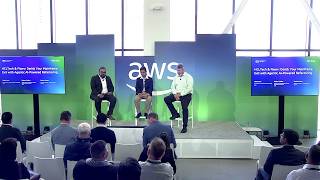
>> We have uh 7 minutes left, and so I'm going to pull Brian back up. If anyone has any questions, we're happy to take them. >> How do you monetize micro payments? >> How do we monetize micro payments or how do you monetize micro payments? >> How do you monetize? >> How does Coinbase monetize? Yeah, so we've we charge a flat fixed rate 10th of a cent per transaction on uh transactions that go through our facilitator. We can do that because the blockchains are incredibly efficient, and so a 10th of a cent is basically a margin spread on the underlying cost. Tends to be about uh 30% cheaper than that on the true gas costs. And then but what we're truly looking to do right now is just enhance and grow this emerging economy, right? Where we think that right now it growing this ecosystem is and making sure that this ecosystem is open and neutral and anyone can participate without gatekeepers is kind of the key thing to line on right now. Doing that, Doing that, nail it. >> Shin. So, the USDC is your thing, right? >> Can I have you take that one? Question was >> Okay. >> Okay. >> is USDC our thing? >> Yeah. >> So, the sender and the receiver has to be on your platform. platform. >> Okay. It's a great question. So, let me quickly demystify the relationship between Coinbase and USDC and generally stablecoins. Stablecoins are a critical currency in this digital AI native world as Eric said eloquently earlier. Coinbase is not an issuer of stablecoins. We partner with issuers, right? Like Circle. Circle is a creator of USDC. Um but we're really a platform. And so, our goal is to help with distribution to advance stablecoin payments, which we think is a super exciting, better, faster, cheaper global method to pay. Um so, we have an involvement in USDC as a partner to the issuer, um but it's not a requirement that you use USDC. And across our business, we try to support uh a wide range of stablecoins in response to our clients' needs. >> Yeah. And then X402 is both uh stablecoin and blockchain agnostic. And so, you know, we love base. We love our partners at Circle and USDC, but you can use Solana, you can use USDT, you can use any chain and any token. We have even seen uh a starting to see the meaningful demand in non-US denominated stablecoins. And so, we've seen activity in Euro C, which is the largest Euro backed stable coin, and XSGD, which is Singaporean dollar backed stable coin. >> And for avoidance of doubt, we do think this gigantic payments trend could be a huge driver of growth for stable coins, right? And we think that's exciting. >> Thank you. Great presentation. I'd like to know um to know um what is your time of settlement, more or less? Just maybe a test to build your cryptocurrencies. This what we wanted to do fast, but how fast can you settle? >> So, on It depends on the blockchain. As we said, XPRT is blockchain agnostic, and so on base we typically see settlement times of to process a block of about 300 milliseconds with finalization of just over a second. Uh and so we see a key 99 of total time to settle payment through our facilitator of about 1.3 seconds. >> Well, so you said it was it right? Because you need to go through blocks before you sign those up in the security and you know, biggest issues you get all those best of so many blocks. Sorry, I'm done here. >> Yeah, yeah. >> Yeah, yeah. Your question was uh is that right? >> [laughter] >> Do you don't you need to have a certain number of con firm confirmations of a block? And yes, and so blocks block processing time on uh on a blockchain like base is fixed at 2 seconds. Uh but base is kind of unique as a blockchain in that it has something called flash blocks, which are basically cryptographically assured uh transactions that will make it into the upcoming block. And so we do allow customers to opt into a higher uh lower payment times. And if it's a large dollar transaction, like if you're moving a million dollars, you probably want to do that. But with the flash blocks, you get a cryptographic guarantee that your transaction is going to be included in the coming block. And so if you come in at you know, time zero since the last block, you can be included in basically a bundle of transactions that are already pre-confirmed into the next block. And so is is blockchains I think blockchains I think to level set have gotten a couple orders of magnitude faster in recent years. And so Ethereum transactions these days are fixed at 12 seconds. Bitcoin blocks are still roughly at 10 minutes. Um but blockchains like Solana and Base and uh many others have been really pushing the boundaries of what's possible and now can offer sub-second guarantees of inclusion and have finalization of, you know, single-digit seconds. >> We're We're really taking you like 10 layers down into the most technically interesting muck. But from a client perspective, inclusive of agents, the point is it should just be fast and magical and you shouldn't have to think about it. So I hope that's obvious to everyone in this room as much as we love geeking out about what's 10 layers down. >> Well, there's a reason I don't wear a suit. >> [laughter] >> [laughter] >> Yeah, real quick, uh
uh putting this into kind of operation, right? There is chargebacks that are not you know, blockchain, but there's chargebacks, there's reversals, there's refunds, all the rest of that stuff. Totally asynchronous. You guys no part to play in that. How do you explain that to sort of the business side of the of the of the house? >> Yeah, so this is actually one of the properties that I think makes stablecoins a really compelling rail for agents. And that stablecoins don't support chargebacks, but they support refunds. And so and that's actually that actually is a feature in the case of agents where you don't have to be concerned that an agent is going to spend money with you and then immediately file a chargeback if it ran out of funds to go do something else. I think all of us can easily imagine an agent having like $20 and then spending $19 and realizing it doesn't have enough funds and then filing a chargeback so that it can complete its next task. And that's not even malicious. It's just, you know, these agents are optimized to really try to solve tasks and uh uh in any way possible and it's kind of a logical thing to do. And so stablecoins give you a guarantee that the transactions are reversible, the agent doesn't have a mechanism to charge you back. But if there the agent's human comes to you and says, "Hey, you didn't deliver the good or service that you promised me." You can give you can give them a refund. And so this is actually the mental model is much more of a cash-like business where if someone walks into your store, buys a cup of coffee, pays cash, and you know, walks back out and and says like, "Actually, this coffee is terrible." or, "You know, I ordered a medium, you gave me a small." You can give them a refund of the cash that they handed you. And so over time, as we as we said, we suspect that we'll see more transactions that look like traditional e-commerce like flight booking and hotels and you'll need to start adding things like chargebacks, but right now that's actually been a really compelling reason why stablecoins are suited to task. And so fundamentally commerce started as, "I have shiny rock, you have chickens and cow. I will give you shiny rock for chickens and cow." I There's no chargebacks in that. You just got to go and say, "Hey, I'd like my shiny rock back." Um it's easier to build up complexity than it is to start with all the complexity and pair it down. So, that was kind of the philosophy with X402 is start at the minimum viable technology needed to make these happen at scale and for real, and let's work with our wonderful partners to figure out which complexity is core and really required in the stage of AI rather than uh things that we've kind of invented. >> Great. I see that we're at time. I want to say thanks for all the great questions. It's great speaking to many of you. Um please get in touch. We're excited to build, um and thank you again to AWS for hosting today. >> Thank you. Yeah.
Top Moments
Fastest growing customers
Integrate once, pay anywhere
Compliance for AI payments
Money moves instantly
Future of commerce?
Agent-friendly payments
HTTP 402 unlocked
Up Next