לפרוץ את חומת החוסן: עתיד ריפוי הטראומה נחשף
פסגת בריאות הנפש וריפוי הטראומה שהתקיימה לאחרונה ננעלה בקריאה עוצמתית לפעולה, תוך הדגשת הצורך בגישות חדשניות, מחקר שיתופי והבנה מעמיקה של אתגרים ספציפיים לקהילה. הדוברים הדגישו שינוי בפרספקטיבה מחוסן גרידא ל'גמישות' בהתמודדות עם טראומה, לצד דיונים קריטיים על מימון, סטיגמה ואוכלוסיות מודרות שירות.
“"כל חיי הייתי כמו סלע, כמו אבן... וברגע שאתה מגיע ומבין שאין לך שליטה אפסית... הבנתי שאני צריך להפוך למים."”
גלו את התובנות פורצות הדרך מפסגה שהוקדשה לבריאות הנפש. מושב הנעילה מסכם דיונים קריטיים בנושאי ריפוי טראומה, כוחה של הקהילה ואסטרטגיות חדשניות לבניית חברה עמידה יותר, תוך התמודדות עם אתגרים החל ממשברים לאומיים ועד רווחת בני נוער.
All right, we're gonna close. Does this work? Yeah, you guys can hear me. Okay. And once again, whoever is in this room is uh the most courageous uh of the day. And you could see how numbers go down throughout the day. So, good for you and good for us. Thank you for being with us. Um, as always, I'd like to take a trip
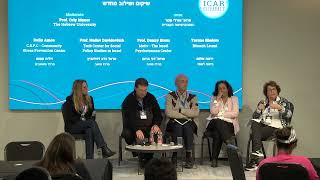
through the day that we spent together. So, this morning, um, we actually started talking about the future of trauma healing with four experts from around the world. Gabrielle is still with us and um, and spoke about what can we learn. Oh, J is also with us. There you go. So, a few people. What can we learn from other countries, from the US, from Rwanda who just went through, you know, as you guys know, is recovering from genocide and um and even though we're all, you know, different, we could still learn from one another. And I love the idea of reclaiming the word resilience. That's exactly how I feel. I don't like adding more words because it just creates confusion. So, I'm with it.
I did want to share a story because Thomas spoke about maybe replacing the world resilience with fluidity. And I wanted to tell you that I heard uh Stefan Tuvanov, the uh hostage that came home. And when people asked him, "What did you have to learn when you were in the Chevy?" He said, "All my life I was like a rock, like a stone. Like I was was running like and and crushing everything on my way. I could do whatever I wanted. I knew that if I wanted something, I would go and do it. And he says, "And as soon as you arrive and you understand you have zero control. You have zero control. You have to beg to go to the bathroom. You have to beg to eat. You have zero control." Said, "I realized I need to become water." And he came up with that analogy on his own, right? He said, "I have to become water because I have to take things as they come, just fit in." And um and that's how I decided to survive. And I thought it was, you know, such a beautiful thing that he he shared.
Then we heard uh from the tribe of Nova who told us about the Talik Shikum and especially the role of the community. Um I was extremely you know surprised by the number that they mentioned around the 40 different communities that are getting together right. So it's 40 sub communities of uh parents that are um you know mourning someone they lost or parents of survivors that are discussing you know how their kids are getting better or you know other groups and there are 40 different you know affinity groups if you want to call them that are uh working on this.
Then we spoke about building Israel's national research agenda which I know uh created a lot of discussions afterwards. Um there's always this discussion around you know should you collaborate on research but then you risk you know infecting one another with your ideas or should you not collaborate because it's then you or should you not should you collaborate is it good or bad like is are you going to infect everybody with your ideas and then there'll be less ideas right or do you share the data and do better together And you know, you guys know I believe in collaboration. Um, but so maybe I'm biased, but when I look at what we've done really well, you know, where we've done best in terms of innovation in the last 20, 30 years, you know, I also
think about cancer where we had the same issue where money was so um fragmented, you know, labs were getting, you know, one million here, one million here, one million here and nobody ended up coming up with anything. And then they decided to um you know bring the money in the same research institute and that's when a lot of things were discovered and same with HIV we had reached a plateau and then four pharma companies decided to do a JV put all of their data together it was called viv and then we had more drugs and you know and now you know HIV is also a good example in my mind for something that I don't think the stigma
is completely gone. I think if you tell someone someone has AIDS, they're still going to think who did he sleep with? You know, does any know better? But awareness is so high and there are good solutions. So awareness is a little bit compensating for what stigma still exists. And I think that if in if in mental health we get there, I don't know if we'll be completely without stigma, but I think if awareness gets so high that everybody in Israel knows what number to call and where to go, then it might compensate for the stigma. Um and then we had a two sessions, one on
uh innovation and then the impact showcase. Um so on innovation um I went around but I was mostly in the piece of coorbidities where we spoke a lot about what is happening besides for PTSD. Everybody's talking about PTSD but we know that there are other things happening like addiction like eating disorders that are not getting as much attention but are really um you know consequences of the trauma and we can't ignore it. Um, I heard great things about tech and AI and nature. I don't know if anyone wants to share what they took away from it. Um, and then the on the last one we had the impact showcase where uh you got to learn about great partnerships and again the goal was really to hear about those partnerships, celebrate them and then get ideas about what partnerships could do and how we can create more. And so we want to end um, you know, first by hearing from you
guys. if you have anything you want to share after those two days. Um things that you know stayed with you. Um things that surprised you but you know not only in the negative side right there are some things we heard that was disturbing but what are the good things the cool things that you heard in the impact showcase that are really going to stay with you in the positive side and then I do want to um reward one of the impact showcase presenters in each room. So any questions or comments from the room? >> Giving impression. Correct. >> Giving my impressions. >> So >> what stayed with you from? >> I was expecting to meet but many conference you meet with people and it's very superficial and everybody comes they speak to you. You speak with them, they are not listening to what you say. They want to tell them what they want to say. I have found here a different ambiance. I think here people we were learning from one each other. I have learned a lot today. So I think some people have learned a little bit about what I do. But the networking more than even the conference the networking was phenomenal. I was telling a friend if 10% of the contact I had is is get realized or follow up that's already a dream. So I want to thank you because it's not just the organization but it's a quality it's a it's a special place and I think we can feel the vibe and we can feel the energy of the people who all want to help and I want to thank you for that. >> I'd like to uh give my answer in the context of the the past two IAR summits.
Um I remember last year coming to the event and thinking being really impressed by the energy and and the values that were established at the event. And I wasn't sure what to expect this time around, but I found similar energy, but it was much more channeled into into focus and action in a way that was really inspiring. That's that's my main takeaway. >> First, I'd like to um convey my appreciation on this conference. I as an entrepreneur I go to many meetups many entrepreneurs for networking networking networking this is one of the best and it's because it's organized and the quality of the people I want to raise something about
raise something about what was spoken several times in the meetings here is funding and the lack of funding for innovation, for programs and I as as a startup I get um funding from the Israeli Innovation Authority and they surprisingly are not connected to the government. They are they are an authority by itself. So they have their one and a half million shekels a year. uh that stays uh that stays and they uh after October 7 they it was um added another 400 million shekels a year because they believed that to to go out of this two years of of crisis is innovation and new companies. the same thing thing for mental health. I think that there there's money out there but there are not specific programs out there. So if talking to the government, Israel Innovation Authority, uh Mis Kalcala and others for specifically for mental health, there's one small program and that's it. mean exchanging perspectives. That's and Dutch. I just want to I think echo what I said this morning and beyond the conference I think you've created something much bigger than that. Um, I think you've created a community. You know, you have mapped what is going on in Israel. And I think what I saw when I came here over the last two days was exactly that was what we have here in Israel. And because we have this community, what you've really done is given us a place to see who is who, who is doing what. And my whole experience of the last two day has been incredible because people will offer to connect people. people will offer to help people will want to cross sort of collaborate um across different organizations whether it's government whether it's NOS's whether it's private whether it's research so I think you've created something much bigger here and it's been an absolute pleasure to be part of it so thank you so much >> all right thank you all I'm not going to answer one by one but we're we're taking notes of all uh all of your ideas and um maybe I'll I'll do I I will address
Yakia your question around what else what are we doing because I do think we we're not great at telling people what we're doing um yesterday we gave you a taste of what we've done but you know what's what's the plan uh forward so obviously we need to continue psycho education but way beyond you know TV and to me the TV was really a way to get out and make noise because this is something you know 42% of Israelis still watch TV for some reason. Um and so especially one minute before uh 6 and 1 minute before 8 um and so we said you know we need to go out there and do this but also it was so that we could recruit more collaboration we have you know it was really also strategically because we wanted more people to join the bandwagon. I would have loved to be able to do this at the same time as uh you know ads on the bus stops and add in the buses and all of that but it was just not possible to master everyone together and I think now with the first step that we've done with TV it's going to be easier to bring more people with us but you know TV campaigns on their own don't do much we need to now take those messages and get them down into the community through the schools through the mikcomi the municipalities through um all kind of programs. And so we need partners to do that. We're not on the we're not in the field. We need the people that are in the field to do that. Um the second thing we mentioned briefly
was uh the the soldiers work that we've done and and what came out of this is actually um an understanding that we have a lot of different pieces to that could create a continuum of care uh for reserveists, but they're not connected, right? It's again that bridge like there are a lot of pieces of the bridge and we need to find a way to connect them but that will take work on the side of change management convincing people to work with one another and that they're not giving up on what they're doing if they join a project like this. It's going to take funding. So we're discussing now with funders who wants to help build this and we are >> okay >> I was hijacked um and um and we're trying to you know build a technique write like a program to do this write a blueprint see what it could do etc and then you know build it with the partners um and we think like if you start with reserveists And then you talk about their family members because one cannot go without the other. Then you're actually piloting a continuum of care for civilians because at the end of the day their wives are civilians, right? Or their husbands. And so that's the that's one of the things we're doing. And we also heard a lot from the field that teenagers um are really really suffering. you know, COVID 19 straight into the war. Um, in the north, 30% of teenagers don't go to school anymore. Um and we heard a lot you know also I don't know who heard uh today and when Amir from Ruth was talking and I heard the same from Uriatskar at Ziv we see cases of teenagers that come to the ER or to you know clinic with such advanced states of eating disorders or after a suicide attempt when we didn't know they were at risk right it never happened before in Israel we were really good at ident identif ifying kids that were at risk. But right now, because the kids don't really go to school, the friends don't see them. The parents and the teachers have their own going on, right? So, the kids are really uh transparent. And um I love the quote from Winnieot where he says, you know, it's such it's such a a privilege to be hidden, but it's such a disaster not to be found, right? And I think the teenagers today, that's exactly what's what's happening. So we want to start the same process that we've done about reserveists on teenagers specifically. We know it's going to be even harder because education is a field that's been established for many years. There are a lot of players and you know and so we'll see how we do it but that's one of the pro the programs and um am I forgetting anything big? Those are >> Yeah, we just published a big paper on ArabIsraelis and where they are complete u deserts in the in the field. So it was actually a very deep research of actually looking on websites and trying to figure out who says they have a services available but then actually calling them and saying hey we have a patient here that needs some to see someone and so comparing the theory versus the practice and we have identity identified 71 71 71 uh 71 uh 71 municipalities or or areas with zero access take care. Um, and so now we're
starting another round table to work on specifically access to care for Arab Israelis and what needs to happen and and again like like you know with the reserveist they decided to work on the continum of care with the teenagers it might be something completely different and and with the Israeli it might be something completely different. We'll we'll figure it out as we go with the group because we use a process of really listening and analyzing and then you know aligning on a problem statement that we think we can go after. Yeah. And then you heard about the research uh program that we're trying to do. So we'll continue to work on that. I won't uh spend too much time on it. and the workforce capacity. We didn't speak more we spoke about it yesterday a little bit but we're trying to map um who is traumatraed actually in Israel uh because there is no one knows right I mean today was talking about we don't even know how many psychiatrists are specialized in children but you know we're spending so much money in training people in uh in trauma whether it's EMDR or PE or whatever but we actually don't know how many we have and how many we need and do we have too much EMDR and not NFP we don't we we're working a little bit blind. Um so we wanted to start somewhere on the workforce capacity issue. I tell you, I got the opposite feedback yesterday from someone that we were too negative. and not enough positive. So I don't know.
>> So now for the end of our uh impact showcase, I want to call on the people that um have gotten uh votes and appreciation from the team and from their moderators. So the first room was about digital infrastructure and system backbones. So we looked at different digital platforms and that were um set up um you know you could call them like back office sometimes right it's things that are helping to build uh the infrastructure either of municipalities uh the kibbutz movement was here um and uh I minder spoke to us about how they're working with the army and the presentation that got the most uh recognition was Bishenu and The second room was around new clinical and digital treatment models. So people were talking about partnerships that um allow us to discover new therapeutic tools or digital interventions like generate more evidence etc. And I'm trying to see if uh the winner is here. All right, let's see. I didn't see the winners are Alut and Relax elf. No, Ron is not here. Sophie, you'll take it for now. >> Okay, go for it. >> Here. Here. Hang. >> The third room um was about community and municipal capacity building. So really collaborations that help uh strengthen municipalities, frontline roles and community systems. And Dr. Asala halaj from University of Kyifa who's working with the municipality of fam. fam. Sorry, sorry. And next. Um and then for the last one it was about workforce peer models, experiential models. So how can we support how could you expand the mental health workforce to include more people and more um responses? And the winners are infa and war for soul. Are they here? Is Razi here? Shaoli man we should remove their >> they lost it. All right. Thank you. >> Huh? >> Huh? >> Apple. >> He's gonna He's gonna get it. He's gonna get it. get it. >> Israeli style. >> Israeli style. >> Israeli style. Exactly. All right. Well, my turn to say thank you to all of you because this would not be possible um without all of you here. So, we're very grateful for um your generosity in um how much you're giving us and and how much time you're dedicating to mental health and to well-being and the the whole uh spectrum. And I'm very humbled to be in this room because I think uh so many of you have life experience and expertise that you know we will never get close to but you're sharing it with us. So, thank you so much.
רגעים מובילים
מסלע למים
בני נוער נאבקים
איפה הכסף?
לגשר על פער הנגישות
המאבק השקט של הסטיגמה
מעבר לנטוורקינג שטחי
להתאחד או לקפוא על שמרינו?
הבא בתור