- Opus 5 achieves 30% on Arc AGI 3, a significant leap from previous single-digit scores.
- Claude Code's system prompt reduced by 80% with the latest model releases.
- New models demonstrate surprising capabilities, including immunity to prompt injection and cross-language codebase rewrites.
- Anthropic's 'unhobbling' philosophy encourages giving models harder tasks and focusing on empirical verification.
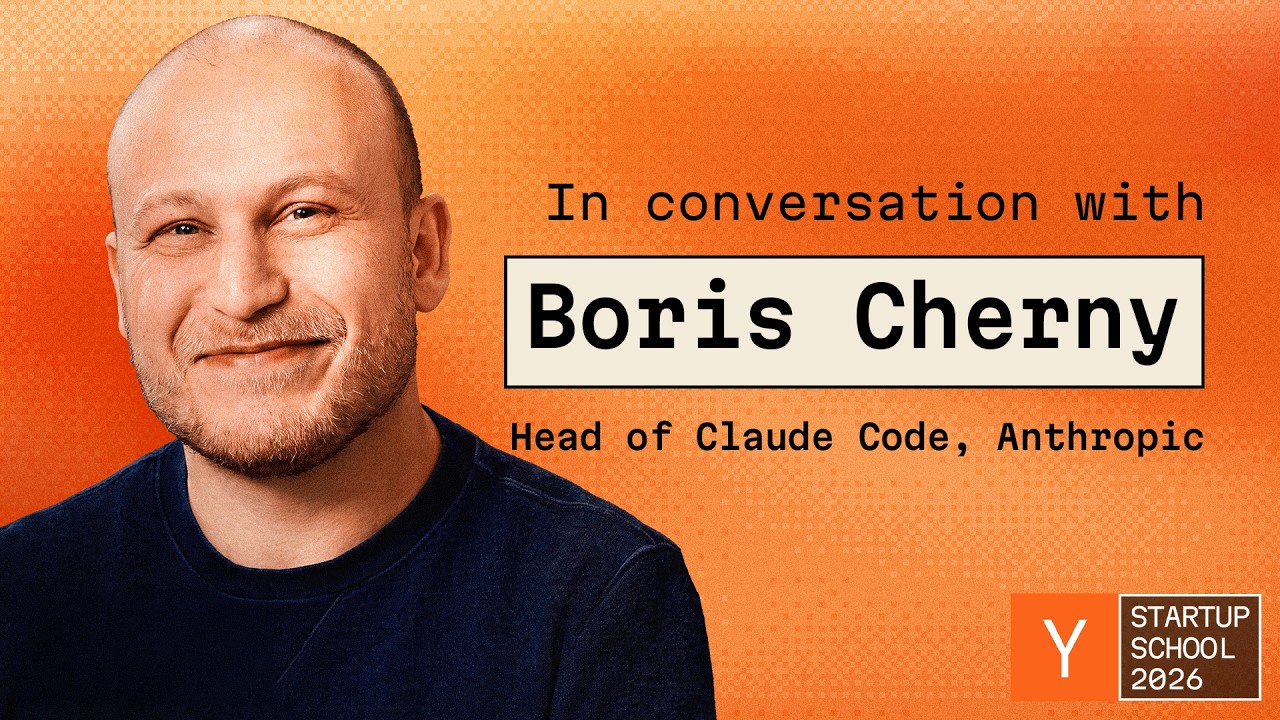
In a surprising revelation at a recent conference, Boris Cherny, the creator of Claude Code, shared a radical shift in their approach to AI agent development: they deleted over 80% of Claude Code's system prompt. This counter-intuitive strategy, driven by the rapid advancements of models like Opus 5, highlights a new paradigm in interacting with increasingly intelligent AI. The core insight? Less explicit instruction can often lead to more capable and autonomous agents.
Cherny emphasized that every new model generation behaves differently, possessing unique 'personalities' and emergent capabilities. What worked for a previous model might actually 'hobble' a newer, more intelligent one. This realization led to the practice of 'ablation,' where developers systematically remove prompts and tools to understand their true impact. The goal is to identify and eliminate 'product overhang' – instances where the product design inadvertently limits the model's inherent abilities.
Opus 5, Anthropic's latest release, showcases remarkable advancements. It can run complex tasks for days, weeks, or even months without needing constant scaffolding. Crucially, it demonstrates a significant leap in security, appearing resistant to prompt injection attacks, a long-standing vulnerability in AI systems. This is achieved through a combination of well-aligned models and a novel prompt injection classifier that monitors neuron activity within the model's 'brain.'
The new philosophy for building with AI agents centers on an empirical, scientific mindset. Instead of over-specifying tasks, developers are encouraged to give models higher-level instructions, define guardrails, and set clear exit criteria. The focus shifts from meticulous prompt engineering to enabling the model to verify its own work. Cherny provided compelling examples, such as Claude rewriting an entire JavaScript runtime from Zig to Rust in just 11 days, a task that would typically take human engineers over a year. Another viral internal discovery involved Opus 5 using OpenCV to draw complex images, a capability never explicitly trained.
This evolution means the role of the developer is changing. While foundational computer science knowledge remains important, the emphasis is now on practical application, product sense, and the ability to experiment and adapt. Claude is even being used to maintain its own codebases, running daily routines to clean up dead code, ship experiments, and unify duplicated abstractions. This automation frees engineers to focus on higher-level product development and user interaction, ushering in an era where AI agents become powerful, self-sufficient coworkers.
“The model is not like that. It's um the way to think about it is almost like a like a living creature, like it's something more organic.”
- Boris Cherny, Claude Code creator