- NVIDIA's founding technology was 'absolutely wrong'.
- A $5 million act of trust saved the company from collapse.
- AI is creating more jobs than it automates away.
- Systems thinking is the most crucial skill for the future.
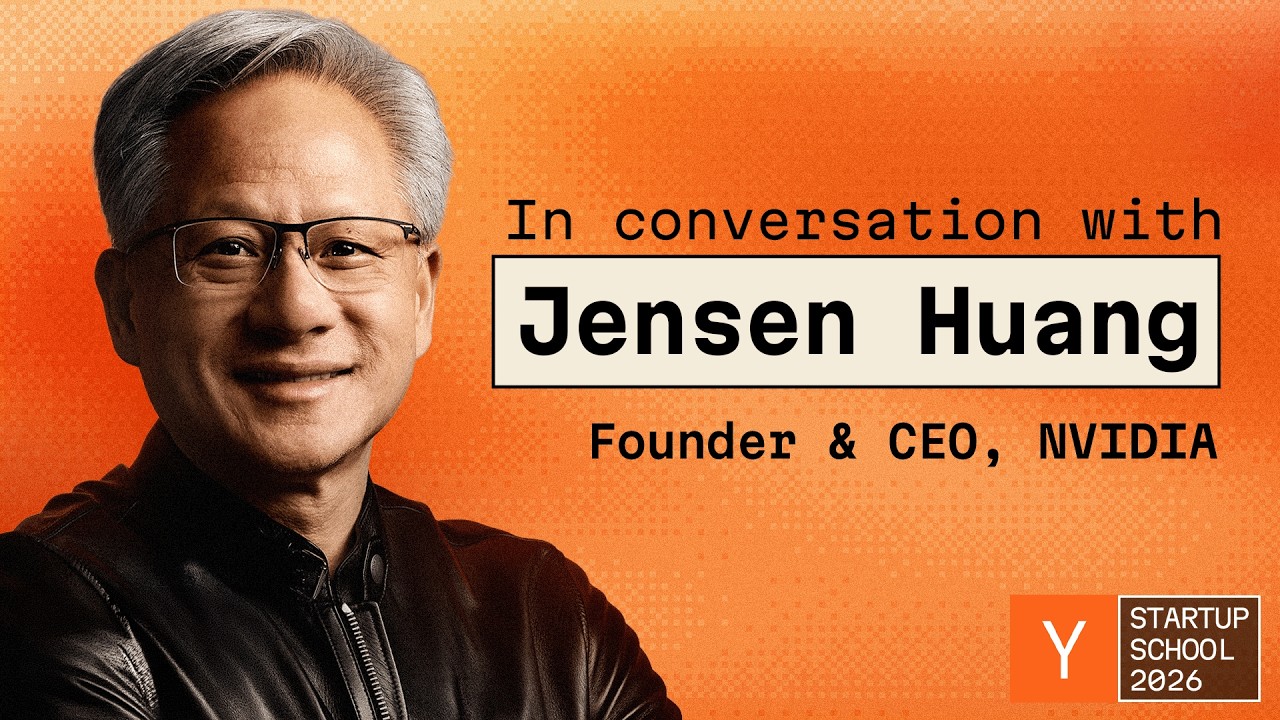
Jensen Huang, the visionary CEO of NVIDIA, offers a rare glimpse into the company's tumultuous beginnings, revealing how a fundamental misstep in technology choice nearly ended their journey before it began. His candid reflections provide invaluable lessons on adaptability, the power of a unique perspective, and the relentless pursuit of innovation that transformed NVIDIA into a trillion-dollar AI giant.
NVIDIA's origin story is far from the typical tale of immediate success. Huang openly admits that the core technology chosen at the company's inception in 1993, aimed at reinventing 3D graphics, was "absolutely wrong." Facing 35-40 competitors and a flawed algorithm, NVIDIA was on the brink of collapse. Instead of giving up, Huang and his team confronted this harsh reality, literally buying textbooks to learn the correct approach to computer graphics. This early, humbling experience instilled a deep-seated philosophy: technology changes constantly, but the ability to confront reality and learn is paramount.
This adaptive mindset proved crucial for NVIDIA's pivot from graphics to accelerated computing. Huang emphasizes that the company's enduring vision was always about augmenting CPUs with accelerators to solve problems too difficult for general-purpose computers. This lens allowed them to see the profound implications of deep learning, like AlexNet, not just as a specific algorithm but as a "universal function approximator." This insight, realized 15 years ago, led NVIDIA to reinvent the entire computing stack, from processors to applications, positioning them at the forefront of the AI revolution.
Huang's leadership style is characterized by deep technical curiosity and a commitment to empowering his team. He dives into the "weeds" of technology, understanding first principles to navigate rapid change, likening it to a surfer reading waves. This approach fosters an organization that embraces continuous learning and adaptation. Contrary to popular fears, Huang asserts that AI is a job creator, not a destroyer. By automating tasks, AI frees up human potential, leading to increased productivity and growth across industries, from software engineering to radiology and legal services.
The future, according to Huang, is in "physical AI" and agentic systems. He believes the "ChatGPT moment" for robotics occurred a couple of years ago, driven by generative AI's ability to simulate and articulate physical motions. NVIDIA's work in self-driving cars, agriculture, and warehouse automation represents a burgeoning multi-billion-dollar physical AI business. Huang champions open source as essential for this growth, enabling widespread innovation. His ultimate advice for young entrepreneurs: embrace learning as your "single greatest superpower," approach challenges with a "how hard can it be?" attitude, and cultivate the resilience to overcome daily obstacles. "You don't have to overcome life in one day. You just have to overcome that morning."
“The big lesson is that for me is technology is changing all the time, and so long as you're able to confront the reality, so long as you are able to learn, the technology itself actually doesn't matter.”
- Jensen Huang, Founder and CEO of Nvidia