- Microsoft unveils a comprehensive AI stack spanning edge to cloud.
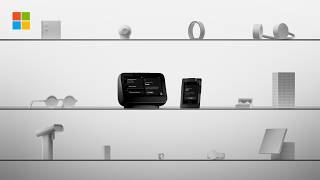
- New Surface RTX DevBox and Project Solara introduce agent-first hardware.
- Microsoft IQ and Agent 365 provide unified context and governance for AI.
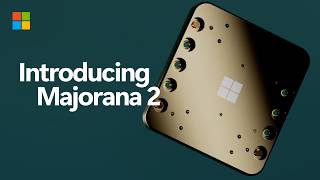
- Seven new MAI models and Majorana 2 quantum computing mark significant breakthroughs.
Microsoft Build 2026 opened with a compelling vision for the future of artificial intelligence, emphasizing a 'frontier intelligence ecosystem' where developers are empowered to build unprecedented value. The keynote highlighted a holistic approach, integrating AI capabilities across hardware, cloud infrastructure, developer tools, and a new generation of agentic systems. This strategy aims to make AI ubiquitous, unmetered, and ultimately, a force for 'humanist superintelligence' by placing human and organizational needs first.
The core of Microsoft's strategy revolves around a deeply integrated AI stack. This begins at the edge with Windows, where local AI processing is being significantly enhanced. New Windows ML and AI capabilities, alongside powerful hardware from NVIDIA, Intel, and Qualcomm, enable agentic applications to run without constant cloud dependency. The introduction of the Surface RTX DevBox, a 'dream machine' with 1 Petaflop of AI compute and 128GB of unified memory, underscores Microsoft's commitment to equipping developers with top-tier local AI power.
Moving to the cloud, Azure is being transformed into an AI super-factory, optimized for 'tokens per dollar per watt.' Innovations like the Fairwater data center design, Grace Blackwell and Vera Rubin GPUs, and the new Cobalt 00 VMs are tailored for AI training, inference, and agent runtimes. This infrastructure is not just about raw power; it's also designed with sustainability in mind, featuring zero-water consumption cooling systems. Project Solara further extends this vision by introducing new agent-first devices, reimagining form factors like stationary desk companions and wearable badges, all designed to bring AI closer to where and when it's needed, across diverse industries from healthcare to retail.
Microsoft is also unifying enterprise intelligence through 'Microsoft IQ,' a layer that brings together models, context, and tools. This includes Web IQ for fresh, high-quality web data, Fabric IQ for operational data, and Work IQ for organizational knowledge, ensuring agents are grounded in relevant, real-time information. The new GitHub Copilot app and Rayfin SDK simplify agent development, offering a powerful, sandboxed environment for building and deploying agentic systems. Furthermore, Agent 365 provides the critical governance, security, and compliance needed to manage agents at scale, with tools like MXC (Microsoft Execution Containers) and MDASH (Multimodel Agentic Security System) defending against AI-driven attacks.
Finally, Microsoft unveiled a family of seven new MAI models across image, voice, transcription, and coding, built for efficiency and practical real-world application. These models, combined with 'Frontier Tuning' and Reinforcement Learning Environments (RLEs), enable organizations like Mayo Clinic and Land O'Lakes to build custom, continuously improving agents that compound their unique knowledge and advantage. Beyond immediate applications, Microsoft Discovery and the advancements in Majorana 2 quantum computing signal a long-term commitment to accelerating scientific breakthroughs and tackling humanity's most pressing challenges, all while ensuring technology empowers, rather than diminishes, human agency.
“The PC evolved from being an incredible tool to now being a tool that is used autonomously by an AI assistant. My PC became an assistant.”
- Satya Nadella, Microsoft CEO