- AI models now operate at junior engineer proficiency.
- Specialized inference hardware is crucial for low-latency AI.
- Data movement costs 1000x more energy than computation.
- Startups should target problems where general AI models fail 99% of the time.
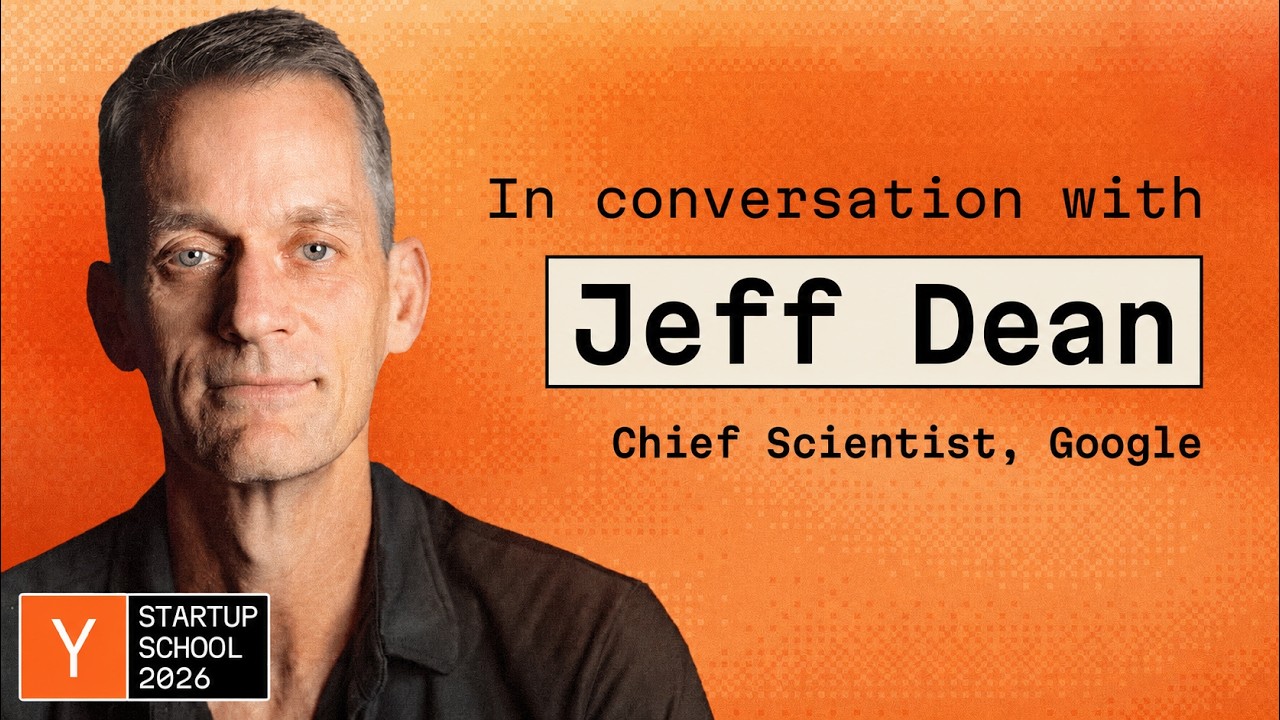
In a captivating session, Google's AI luminary Jeff Dean offered a profound look into the current state and future trajectory of artificial intelligence. From bold predictions about AI's evolving capabilities to the foundational hardware shifts driving innovation, Dean provided invaluable insights for engineers and aspiring founders alike. He emphasized the critical role of 'napkin math' in identifying bottlenecks and the strategic importance of 'taste' in problem selection.
Dean began by reflecting on his past prediction that AI would reach the level of a junior engineer by 2025. Acknowledging the rapid advancements, he confirmed that agent-based AI systems are indeed becoming highly capable in coding tasks, often exceeding initial expectations. Looking ahead to 2027, Dean foresees significant automation in ML systems themselves, where AI will autonomously run experiments, decompose problems, and iteratively improve its own capabilities through automated experimentation loops.
The conversation then shifted to the foundational hardware that underpins AI. Recalling the genesis of Google's Tensor Processing Unit (TPU), Dean shared how a simple 'napkin math' calculation in 2013 revealed that the burgeoning demand for speech recognition would necessitate doubling Google's server fleet. This led to the development of TPUs, specialized chips dramatically more energy-efficient and lower-latency for machine learning inference. This historical context served as a springboard for Dean's next major insight: the current 'fits-in-memory' moment for AI is the urgent need for high-performance, low-energy inference hardware. He highlighted that data movement costs a staggering 1000 times more energy than computation, a critical bottleneck that shapes how AI algorithms are designed and deployed.
For aspiring founders, Dean introduced the '1% rule': seek out problem domains where current general-purpose AI models succeed only 0% or 1% of the time. These niche areas, often involving proprietary data or highly specialized tasks (like protein folding, as seen with AlphaFold), represent significant opportunities where a small, passionate team can build highly accurate and impactful solutions. He also stressed the growing importance of 'context engineering' – teaching models to use tools, retrieve relevant information, and orchestrate complex multi-agent systems. The ability to write crisp, detailed specifications for these agents will become a paramount skill, as it enables them to tackle multi-week, complex tasks effectively.
Finally, Dean encouraged a mindset of constant questioning and learning. He shared the anecdote of the distillation paper, initially rejected but now a widely adopted technique for creating smaller, efficient models from larger ones, proving that persistence and conviction in one's ideas are crucial. He urged the audience to identify problems they are passionate about, work with people they enjoy, and continuously expand their 'tool belt' of skills. The ultimate goal, he concluded, is to leverage AI to accelerate scientific discovery and engineering, tackling grand challenges like developing data-efficient learning systems, fostering better global discourse, and making a positive, tangible impact on the world.
“Look for something where the model succeeds 0% or 1% of the time, not 20%.”
- Jeff Dean, Chief Scientist at Google