AI's Hidden Costs: Why 60% of Projects Fail to Scale!
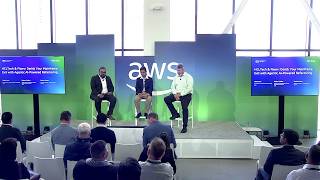
The financial services industry is grappling with a significant challenge: translating promising AI pilots into scalable, production-ready solutions. Despite widespread experimentation, many organizations struggle to move beyond initial proofs-of-concept. This panel discussion at AWS FSI NYC 2026, featuring experts from TCS, Anthropic, and CardWorks, shed light on the core impediments and offered actionable strategies for successful AI adoption and transformation.
“If you want to shift the value equation from productivity and efficiency to really create a business value, you have to look at business transformation.”
Uncover the real challenges holding back AI adoption in financial services. Learn how leading firms are moving beyond pilots to achieve massive business transformation, from optimizing data foundations to reimagining entire value chains with autonomous agents.
Thank you all for being here. Hope you'll find this to be an interesting and enlightening session. Just for fun we thought we'll swap the seats around to confuse you but we decided that to read the watch of mental effort. So glad to be here. Wanted to introduce my co-panelist here Mitesh Shah who's chief data officer of for card works. He's been with HSBC for a number of years and American Express and large firms like that. We're also delighted to have Morgan Riky from Anthropic. He is part of the FSI team at Anthropic working on applied AI. And Kavita leads AI transformation for us in financial services at TCS. Thank you all for being here today and thanks to all of you for making the time to be here with us. Um Um We'll kick it off for Kavita with you.
And this is a big question in the minds of a lot of our clients. Uh We've been doing lots and lots of pilots for the last 3 years almost, right? And uh hardly any hardly any big examples or several we have find not that many examples of engagements going live in production at scale. Right? So there must be a lot of impediments to this and we talk about in TCS Martec's law. Technology moves rapidly and exponentially, right? And the organizations move at a very different pace. So technology is like this, organizations adapt to it like this. So wanted to welcome Kavita to share her thoughts in terms of what she's seen in terms of why there is this gap between POC and production. >> Yeah, okay. Thank you Rajesh and love the energy at these AWS events and great to be part of this panel. So we'll start with uh what we are seeing and in line with what's the keynote talked about. There is definitely a a rise in the way AI is being adopted in the enterprises. It's as Rajesh said, not as fast as we expect, but definitely seeing a rise in the adoption. And if you look at the McKinsey report of 2025, it says that 88% of the organizations have at least implemented AI in one of their lines of business. But just to give you a perspective of what that really means, if you look at the kind of use cases that have gone into production, they've been typically NLM workflows which have got which are localized to a particular process or don't have too much of integration requirements, more customer-facing use cases. And if you look at those pattern of use cases, the challenges have not been as much. It's been easy to scale into production and we've seen our clients we worked with our clients to move that into production in in 3 to 4 months. So that has been the case for those types of use cases. But what we're seeing now is enterprises shifting or pivoting into use cases that we call AI systems. And when I say AI systems, they talk they're about different agents working together in a coordinated fashion making decisions performing actions. And the needs of these kind of AI use cases is very different. They have very complex integration requirements. They need specialized data and and the readiness of enterprises to handle these use cases is not there, you know, as yet. And the path to production is very very complex. So I'll just let you talk through some of the challenges we are seeing as enterprises get ready to adopt such
use cases. The first is looking at it from an integration perspective. There have been cases and when we and the that we have delivered, what we found is that to build an AI solution, it just took 40% of the effort. The 60% of the project effort has gone into integration. And there have been cases where we actually got it done a very good pilot, but the business case to perform that integration and implement didn't stack up and we had to drop projects. So, integration is the number one complexity that you need to look at as you look to scale these use cases. The second is the data. So, a POC environment where you work with curated data, you don't really see the complexity of production data there. And that's when when you really move into production, that's when you have to deal with it. And what we find is that a lot of the enterprises don't have that AI-ready data and don't have a capability to manage that data life cycle. And you'll hear a little bit about it today, but that's the number two item. The third is how do you bring the team together? In every AI project, what's looked at is, you know, can I put the AI resources to solve the problem? But many of the AI initiatives are not just localized to doing AI. It's about bringing a cross-functional team, which means SMEs from your platforms, you need business experts who can re-architect the workflows. So, a cross-functional team is number three on priority. And number four would be looking at how do you manage the whole AI governance? Uh in terms of your model risk management, your model life cycle, where are the controls to be placed? And what we see is that if you look at putting controls within the use case, you'll kind of be duplicating the effort. So, taking a platformizing all your control, taking creating a centralized AI control plane, that should be one of the one of the priorities. And last but not least, I'd like to call out being ready from your organization perspective in the sense that getting your business users on board because many of these use cases are going to touch them directly and getting them on board on day one makes a huge difference. So, these are some of the practical challenges we have faced as we as we have taken our customers through this process of moving towards more AI system based and that's what I wanted to share. >> Thanks, Kavita.
>> Thanks, Kavita. Um moving on to Morgan. Anthropic is uh is doing a lot of work in this space and you had your FC event yesterday. Uh in Morgan, there is we always know that there are tons of use cases that large organizations have, hundreds in some cases. Right? But rather than it being just a small pilot after a pilot, how should leaders go about transformation rather than get stuck in a pilot? How do you start and how do you move fast? >> For sure. And like Kavita hit on a lot of the complexities and points around like putting this into production and doing it at scale for complex things. What I talk to executives about and like my mental model when I talk to them is like number one, have a single threaded leader who owns AI and then have sub single threaded leaders who own use cases and business units. What that does is they're responsible for reporting back up how it's going, what are the blockers, what are the value that you're seeing. And what we've seen is when you do it by group or people, things tend to slow down. By giving a single threaded leader at the highest level that owns it and then people that roll down and then report back up on specific use cases, how it's going, the value, we see a lot more ownership and a lot more movement on moving to production. The second thing is is as we start talking about this, I'll even talk to the like the sub unit business leaders and they're like, "Morgan, my like business team wants to do 20 cases, like use cases. How do I decide which one to do?" What I usually recommend and I tell customers to do is spend an hour, 2 hours, create a chart of complexity and business impact. Start with complexity low, high business impact, start to get wins, start to drive value, report that up back to the business, everyone gets excited about it, and then you build the framework for going into the more complex things where your engineers are more prepared, they know about the rough corners and edges, and they're starting to figure out how this can scale. So, that's number two. Where I've seen where you go with the most complex, interesting, looks great to the business, you can spend 9 months getting frustrated, you're getting blocked by security and compliance cuz you're trying to connect to all these different places, and you're trying to figure out a new technology while you're trying to build a solution that looks pretty. So, keep it simple at the start, and build those calluses and skills with your team, and then go more complex and keep driving business value, which gives momentum. And the last piece, which I think is critical, is having security and compliance as a partner throughout the process. I promise you, if you're just building and then notifying them, they'll find something that they don't like. If you're architecting with them as a partner, you're going to be a lot more proflit like efficient, and then you're going to move a lot faster. So, like, trying to transform, trying to prioritize use cases, trying to go fast as possible in FSI is hard. That is the mental model I'm telling executives to start getting value as soon as you can within kind of your controls and your boundaries of your business. >> Thanks. Thanks, Morgan, for that. And moving on to you, Mitish. How about
as chief data officer, how are you accelerating intelligent, which is essentially the outcome, in your organization? >> Yep, sure. >> Yep, sure. So, CardWorks is So, CardWorks is a brief introduction about CardWorks, and I'll I'll speak about it so because I'll I'll link it to a real-life use case which can which will I think so you'll some of your folks will relate to. So we are a credit card company with a bank. Uh and we are in the subprime business. We usually sort of folks with below 700 credit score. So So we need a lot of data for analytics role risk analysis and marketing analytics. So one aspect which we have is there's too much data and how do we accelerate the intelligence to the business folks to make the right decisions. So So again, the banks have always used model building machine learning was already part of it. But when you look at the analysis which we sort of drove is it took approximately 25 or 30% time for the modelers to collate the data from multiple sources. So this is something which we just went live about 2 weeks back uh taking our macroeconomic data and our internal data uh together which helps to accelerate model building activities. So the use case which we started building off was what is the impact of oil prices to delinquency rates? So simple example, it used to take about a week for a modelers to build those criterias out there. So what we did again, we are a Snowflake customer and AWS customer. So we subscribe to the macroeconomic data which is huge which is available but in a very cute well curated manner. And and then of course we have our internal data. So what we build is agents to So there was a main agent which was natural language processing to get to sort of evaluate the data. And then there are sub agents because think about the macroeconomic data is huge. It's like goes back from 1970s to uh to to the state. And the data is annual, daily, quarterly. So, the data set is pretty big. So, think about the question you are asking. Give me the impact of Medic Bank portfolio, which is our card work sort of brand. Give me the impact of Medic Bank portfolio with the card uh to the price increases of oil and how it impacts delinquency rate. So, you can write that natural language process and we have sub agents. Uh one is uh going to the energy sector um agent, one is the financial sector agent, and then the other one is a Medic Bank agent. So, three agents working together and within 5 minutes you get the results. And the results were pretty phenomenal and like and we use Claude, which is Anthropic on the back end uh to collect that information. So, within 5 minutes without collating the data assets, within 5 minutes the the SQL runs and we got the answer. Yes, there is an impact of oil prices to delinquency rate, but it's a lie it lags by 3 months. That's what the answer was and usually it would take us a week. In 5 minutes it was done. So, agent building was done before. But the output now is set up and and that's the power of how we are using business intelligence to accelerate the decision-making within the business. >> Thanks, Mitish. Um I guess all of us are big users of AI. I use it in many ways. In fact, I've automated my entire expenses process. I'm based out London, but when I go back I am stuck with some 50 receipts which I need to process and do. And we don't have systems like Concur in our office the company. So, what I've done is automated the whole process of getting this dump all the receipts in one folder. Um it gets uh and uh I use Cloud Kwork here, produces a nice spreadsheet, and packages all the receipts together, and then I send it out to my assistant who uploads into our system, right? So, what used to take a couple of hours at least is now a matter of minutes. So, it's uh working for us as consumers in real life extremely well. So, question to Morgan is, while as
consumers we all benefit and enjoy and enjoy from the benefits of AI, what is Anthropic doing to help enterprises adopt AI and scale it, which is seems to be a much more complex problem? >> Yes, and I think like Mitesh's story is exactly what's happening in the ecosystem overall. It's like before it was like Q&A, summary, like you're just chatting with this system. Now it's actually doing jobs for you, and like all day long I'm just queuing up work on things that need to be done. So, what does that look like? You're starting to see the other ecosystem pieces mature, the SDKs, the agents, the MC keys, and other types of pieces that you're putting together with the hyperscalers, also with the service integrators like TCS, to actually automate things like presentation decks, um um company analysis, doing and training models and retraining models in champion challenger way, where you're just saying, "Hey, this is what I want to do. You know how I do it." Queuing it, queuing your other work, and then it's going off and automating a lot of your day. So, the things that we're doing and what others are doing in the ecosystem is starting to build the building blocks around the models. The model is the brain, but there's other orchestration tools. There's obviously the data with the MCP and the and the context that you need to do it. Um and then putting that all together, which is why we're seeing things like multi-agents automate work that used to take days, now do a few hours, because it can be well defined and the models can reason through it. The other part that we're doing is leaning on our partners like the hyperscalers like AWS which we're at the event today, but also leaning on like our service integrators for those complex workflows. They want to scale our customers teams like TCS and I think you guys actually have a good story that I think you want to share. >> Yeah, sure. I mean what what we've done
is with our mature clients, we moved away from point use cases to reimagining entire value chains. So, to give you an example with one of the largest banks, we are working on reimagining their entire customer onboarding process. And they're using AI not to reduce costs here, but there is a huge number of dropouts when you try to onboard a commercial banking customer. There are people getting frustrated and they drop out. So, if the bank wants to hold on to as many clients as they can, they need to reimagine the whole process with AI. So, that is what we are doing. We're building with 20 plus autonomous agents which will make this process seamless end to end. And also the way we are looking at it is rather than get 10, 15, 20, 30% productivity by tweaking what exists as a process, we are looking at reimagining this as a almost a humanless process which is completely autonomous. And then we are looking at where should the humans intervene. Right? So, we are flipping it from a 20 to 30% gain to 70 to 80% gain just by this mindset mindset shift. So, that's something that I would encourage your firms to also look at in terms of how do you look at the opportunity and maximize the gains you get from that. Uh moving back to Mitesh uh
Kavita also mentioned that a strong data foundation is essential for AI to maximize its potential for your enterprises. So, what are you doing Mitesh as a CDO? >> Yeah, I completely agree with Kavita what she stated. It's a challenge and opportunity data foundation, right? So, I'm pretty sure you all guys are in the field and understand the challenges of data. But the complexities of data sort of are different in each organization, right? So, we are a 35-year-old organization. A lot of legacy tool stack. So, we have SAS, which many of you guys would know about it. It's like in financial institutions, we have it. So, we are trying to sort of get away from that environment, how it produces data, and all the legacy processes built around it. So, we are in the process of working with TCS to evaluate uh and doing a POC as to how can we use generative AI to take the SAS code and convert it into um uh SQL, Python, open-source language code, which helps to migrate to AWS Snowflake. So, that is one way which we are trying to look at legacy systems and processes to drive transition so that it integrates as the other aspect which Kavita was talking about is the integration because SAS the on-prem SAS doesn't integrate well with the generative AI tool. So, that is the other aspect of integration and modernization which we are driving. And the other aspect which is uh I I think so we'll go about natural language processing. And if you want to implement business intelligence solutions as an example, one is the quality of the data, and the other aspect is how do you build better met- metadata for all of the uh elements which you're going to use for generative AI capabilities because the models are not going to recognize like if you put in taking the delinquency example, I think so the modelers couple of years back put in DQ 30, uh the model might not recognize till you train it that DQ means delinquency 30 days, right? So, we've done uh we are leveraging sort of third-party tools to sort of enhance that metadata. And the example which I shared earlier about getting the data from the macroeconomic data from the subscribers. If you see the are models how they had built the metadata. They had a table set up for metadata. So when you sort of run these GenAI or cloud models on this, it's very easy to for it to recognize and give you the right answers and avoid hallucinations or giving you wrong answers as an example. So we are leveraging some of the generative AI capabilities to really improve the metadata I think. So that is one aspect which we've learned the hard way that if you don't have really good metadata with really good examples and not only the definition the the example which I said delinquency plus 30 days, but be as English-like as to what does delinquency plus 30 days means to a business user. So think about when you're querying the database or writing a natural language processing question. The business users can ask like anything, but make sure that it gets the right metadata information as you're building the model. So I think so that is the aspect of data foundation which is super critical which is gets lost in with the fancy LLMs model and this is tedious work. So not a fun fun work, but that's what I would say. >> Thanks Mitesh. So going back to Kavita,
you know you how should enterprises maximize the value they can derive from AI? We've seen a lot of people experimenting patchy results mixed results. What should what's your guidance to enterprises in maximizing AI value? >> Yeah. I think the the primary goal should be to look at business transformation versus looking at how I can embed AI into the process. While it's been it's much easier to do that, it's a low-hanging fruit and everybody feels that's the good way it's a good way to start. I would definitely agree. But, uh you know, if you want to shift the value equation from productivity and efficiency to really create a business value, uh you have to look at business transformation. And when you look at business transformation, some of the examples where we have, uh you know, started the journey with some of our clients, the example that Rajesh mentioned, business banking, uh used to take uh 5 to 10 days to process a new request, dropouts coming in, can we bring it down to less than a day. And And that's important for banks to do it because of all the competition coming in from the fintechs. So, it it's really the need of the hour. The second example is the whole credit memo generation in the process of commercial lendings. 1 to 4 weeks could can be reduced 40 to 60% of the time, you know, from the early pilots that we have done. The whole document processing, which is now uh part of every banking and financial service process, that's getting transformed to an agentic document processing solution. Claims processing. So, there are so many examples that where we are seeing this whole um shift happening to these kind of uh use cases. And while we do this, it's very important that uh what we have observed that we don't start with uh looking at the as-is process and then looking at where AI can come in, but taking more of a right to left approach rather than a left to right. What What do I mean by that? Looking at what is the value want to deliver from this process and then reimagining this. And the second is looking at it with an AI first approach. Going back to the first principles of what that process means and how can AI do it differently. And applying those techniques are the only way that you will look at uh coming out of it coming out of with a with a newer uh transformed process. Otherwise, we end up going back to your as-is and trying to fix the problems. And uh just wanted to add to that that that is one way we have to do, but then this is not it's not sufficient to do just the re-architecting of the process. Building that foundation to have to scale AI is also very important. And many times we see that sometimes organizations take a centralized approach, and that's really slows them down. There are many organizations we've worked with that started with a central team, but now they're slowly shifting to a federated model where the business units have a control on what those use cases are, how they build it, and the central central management and control is what has we are seeing is really working. And the third important thing is modernization of your data and your systems so that you can scale AI. And uh Oh, if we have time, we've been as TCS helping customers through this journey. The approach we take is we start off with something called a discover and where we discovery and visioning where we actually take some time to identify the high impact use cases. And then take go through a process called a rapid build where we translate that idea into a defined outcome. And finally look at scaling with with the whole platform and integration space. So, this has worked well as we have picked up certain use cases that I spoke of and uh I think the I think this is a really exciting time Rajesh to say that, you know, pivoting towards these use cases and bringing more value to the enterprise. >> Okay. Question for Anthropic here.
Thanks, Kavita. A handful of organizations have been very successful with AI adoption. They're running agents, multiple agents across multiple business lines. What are they doing differently? And what can audience here learn from those frontier firms or >> Yeah, absolutely. There's a common thread within FSI customers of the ones that are honestly like excelling within this gen AI era, and that was a top-down executive mandate that this much staff and this many people are going to be using it on a day-to-day basis. And that was early on before it was as mature as it is now and the ecosystem is as mature as it is now, but they learned the edges, they learned about the tools, there is a learning curve to it, and as we made progress, they got creative around things that they can do, and they're now automating a lot of that and queuing a lot of their work, giving it off to Claude, and then they're getting and just working on the highest business value things. So, executive level definitely helps and you'll see that the firms within that, like even just a for the leaders in the room, mandating your team, motivating your team, encouraging them to get used to it, are usually the ones that are the farthest ahead, and then all the other teams are like, "Why is this team so great? Can they present to us? How'd you learn this? How'd you do it?" But it's a simple thing down from the top to just get the people that are nervous, they don't feel confident confident about it, they don't know how to do it, that you're telling them to spend time on it, they get creative, then they're like, "Oh, my my teammate also does this task and it can be automated? I share it with them, now they love me." And you can continually scale that good work across the firm. The second one is is they go into each use case with, "Hey, this is the actual benchmark that would be positive and productive for us to accept this. Instead of being 100% accurate, all or nothing, they're like, "Oh, if this automates 80% of it, we'll augment the work for this user or for this team, and that's great, and that gives them more time back in the day to do more business impacting things." So, it's like, you can you need to go 10 miles, you can drive a car nine and walk the last or walk, I'd rather drive the car, take the augmentation, and be able to do more things that impact the business. So, there's an aspect of that as well. >> Right. And Kavita, uh how do
organizations balance autonomy, giving autonomy to agents versus retaining control? >> Yeah, I think um it it's a very very relevant question. Um you know, if I if uh if you if I if you look at it, the uh if you look at where AI has matured from the last year to this year. And if you look at if you use white coding, you'll see that the code generated by AI is now so much better than it was uh you know, last year. And you begin to trust the code, and you don't need to spend as much time reviewing. That doesn't mean you can just uh go without reviewing. You still need to review. But, what I wanted to bring out is the fact that you start building trust. And that the similar principle works when we build these agent AI systems in enterprises of all sort. Look at how we can build trust. And the approach that we are taking is we're taking a a graduated autonomy approach, which means that you start off with uh human oversight completely controlling the process. But, as and you control you continuously monitor the agents, and based on the performance, you can look at slowly bringing more autonomy in. And um and and and building all those controls in place so that you can monitor those agents, uh that's going to be really important. And then uh ensuring the agents are in fenced with the right guardrails, the policy, the constitution, all of them are are so much important as we look at moving towards these autonomous systems. So, I think having a centralized control plane that manages this will be very foundation, and taking a graduated approach starting with uh steps which are repetitive, and then uh looking at a an escalation mechanism when when the agent encounters or you know, comes up goes against a threshold which is a pattern that it has not observed before, looking at an escalation mechanism. All these are some of the best practices we have started putting in as we build these agentic solutions. >> Thanks, Kavita. And just to wrap up, one actionable recommendation for enterprises here. enterprises here. >> Ritesh, start off with me.
>> I I think so we talked about a couple of them, but I'll I'll just say integration, data, and data, and and the most important aspect is legacy integration, right? I think so that's those are the two advices I would three advices I would give. >> All right. >> Mine is put the business tools in your users' hands. They're going to be the greatest feedback loop on what's working, and come up with the best use cases that are going to be the highest impact for your business. So, give them a level of autonomy. Maybe you don't have an exact use case yet, and I promise you the coolest things that you'll do, the best things that you do will come from someone that's uh creative, and comes up with something that impacts the whole business. >> Yeah, I I probably say that we see AI help us do it do our processes faster, cheaper, better, but I think the potential lies in AI in helping us to create something new. So, I think I wish for all of us in all of us, you know, as technologists and leaders would be to see how we can use AI to create something new in our enterprise and make an impact. >> That's great. Thank you, Ritesh, Morgan, and Kavita for joining us for this session. I hope the audience found it helpful and useful. We're going to be around, so if you want to catch us at the expo, feel free to come and talk to us. Thank you very much. >> Thank you. >> [applause]
Top Moments
Accelerate Decision-Making
Start Simple, Build Momentum
Humanless Process, Maximize Gains
Top-Down AI Adoption
Own AI, Drive Value
Modernize Data, Boost AI
Integration, Data, Governance
Up Next