AI Just Cut Product Launch Time from Months to DAYS! Here's How.
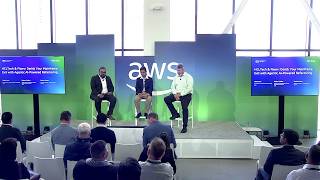
The insurance industry is on the cusp of a profound transformation, driven by the rapid advancements in Artificial Intelligence. A recent panel at AWS FSI NYC 2026, featuring leaders from Deloitte, Baldwin Group, Ameriprise Financial, and Hudson Insurance, shed light on how AI is not just an efficiency tool but a strategic imperative, fundamentally altering operations for brokers and underwriters.
“AI is something that has to be business-led. Business needs to be engaged right from the get-go. And we are providing the We are We We have now become an enablement organization.”
- Satish Marimuthu, Leader, Insurance AI and Data Practice at Deloitte
Discover how AI is rapidly transforming the insurance industry, accelerating product launches, and enhancing broker-underwriter collaboration. Learn from top executives on balancing innovation with risk and driving successful AI adoption.
Uh thanks a lot everyone for joining this session. Uh today we are going to have a great panel discussion with our esteemed speakers on rethinking insurance with AI built for brokers and underwriters. We'll start with a quick intro. I'll start with mine. Satish Marimuthu, I'm going to moderate the panel today. And I've been leading financial services and insurance for about 24 years now. And I I work for Deloitte and sit in our insurance AI and data practice. Been lived through the several evolution of AI, analytics, and data. I'm really excited to host our panel members and ask some great questions. With that, I will turn it over to Sandeep. >> Thank you. Thank you for inviting me, Satish. Pleasure to be here. I'm Sandeep Bajaj. Currently, I'm the Chief Technology Officer for the Retail Division at Baldwin Group, which is one of the top 12 insurance brokerage. Um but my whole career has been in insurance. So, 30 years experience in the insurance domain. I've been work I work for Zurich Reinsurance, uh Everest for 15 years, work for a startup in sports insurance, and navigated the entire value chain from insurance, reinsurance, third-party capital, MGA, and now brokerage. So, been an amazing journey. Uh and also in terms of technology, I played multiple roles as a CIO, CTO, data analytics, and so I really enjoyed my my career and more specifically into insurance. Very few people would say that, but I'm really happy to be in the insurance domain. >> Nermin? >> Yes, thank you. Hello, everyone. Uh my name is Nermin Hussein. I'm representing today Ameriprise Financial, particularly RiverSource, uh that with that focuses more on the life and insurance annuity products. I've been in the data world for over a decade at this point. Um you know, started my journey with data governance and that has evolved through the data program, data management, focusing more on the building, really breaking the silos on fragmented systems, and really bringing a data foundation to life practical adoption. Uh really excited to be here and a bit overwhelmed with the crowd and of course uh my friends and peers sitting here. So, really looking forward to the conversation today. >> We'll make it easy. >> Well, there we go. >> Um Eric. >> Hello, everyone. My name is Eric Parks. I'm currently the chief information officer for Hudson Insurance. Before that, I was managing director at Accenture, spent a little time at Deloitte as well, and then I started my career on the carrier side uh with an insurance company called West Bend Mutual. Um similar to you, I have a lot of experience going end to end with delivering large-scale systems, Guidewire, Duck Creek, a lot [snorts] of data and analytics journey, merger and acquisition, always been tied to property and casualty insurance throughout the value chain, right? So, looking forward to uh to being here and answering some great questions. >> Nice. Uh a lot of experience on the stage and three great uh panel members here joining with me. Um Sandeep, I'll start with you. Uh
when you look at the insurance industry for the next 3 years, uh how do you see the market changing? What are the patterns and trends that you are uh seeing in your role uh as you see more and more AI coming into the front and center of the game? >> Uh I mean it's going to be an amazing 3 years. I think uh I've been told multiple times that being in the technology is the best time to be in. Uh it creates a lot of challenges also because you are constantly under the pressure of kind of trying to implement and roll out AI and be thoughtful and sensible about it. So, we'll talk about responsible AI as well. But, to answer your question, um we are uh um specific to on the brokerage side, on the distribution, we are looking at it more from a which is a most valued commodity or um a resource in the organization, and that always comes back to the advisors and the client executives, because they are the ones that becomes the glue between the insureds and the carriers, between capacity needs versus the risk appetite. And we are seeing some massive opportunities over there. Uh I always feel wherever there's a cross-section between human judgment and data, and providing prediction and insights around risk and how do you manage that risk, that cross-section is where I feel AI can make a huge difference and make a big impact. And that's what we are focusing on is finding all aspects within the organization where uh a human judgment is very critical and important, supplemented by our ability to have access to a humongous amount of data. And what AI has done with all the models that we are seeing has made it very simple and easy for these key resources, whether it's an writer on the on the insurance uh carrier side, or in our case, advisors or client executives, is how can we get access to them a completely rich information using AI models, and simplify the job, so that they can focus more of their time and energy in dealing with the client, in dealing with the client um the carrier partners, and providing better, greater insights using the information that is not readily available. And that's why we are seeing a dramatic impact and improvement in our in our areas. One example I'll give you is very recently one of our uh divisions, um a product that would normally take and we all can relate to that, that normally rolling out a new product in in insurance or in MGA takes like 3 to 5 months or 3 sometimes 6 months to roll out a new product. Using AI, we were able to roll it out in 3 days. I mean, that was the impact of what we could see, but that requires a reimagining on how we think about workflows and how how think about how work gets done. And those are some real examples which uh our CEO just mentioned about it in our links call a couple of days back. >> Awesome. I mean, reimagine has become the most trending word, I think. With that, I mean,
great that Sandeep shared about the forward-looking view. In the last 12 months, what have you seen in your role in terms of how you are adopting to AI, and what types of results are you seeing? >> Yeah, I mean, I would start with really saying, don't we all have the fear of missing out, FOMO, right? So, really it's kind of taking a step back. Financial services is relationships, right? So, it's built on relationship with our advisors, client, and our company. So, as we kind of look back and really also forward-looking at the same time, in the past 12 months, I mean, our AI journey started really over a decade ago. So, at Ameriprise, we focused on advice insights, which has, you know, served up the insights for advisors, focus on clients at the same time. But, now is the time, more urgent time for us to adopt more being more responsible towards it, but at the same time, our focus is really towards the growth and the productivity for our advisors, so they can be more productive with our clients at the same time. Yes, our clients love AI-generated, you know, advice, but the human factor where it goes with is the empathy, the sound judgment, that is very important, right? And that only our advisors can bring in. So, past 12 months have been really kind of the journey of looking into what are the tools at our fingertips, but really also focusing on what is the primary need at this point. Human in the loop, AI readiness, having the sound data foundation, that has become more urgent and urgent. AI announcements are in news, they are peer pressure in the market and the industry where we are headed, but then we have to go back to our core, which is a relationship, and that's where we are doubling down across an enterprise on an enterprise level. Instead of doing efforts in silos, really kind of bringing them all together and being strategic towards what are the right priorities that we can implement across the board and really double down on the efforts as well. >> Nice. Nice. >> Nice. Nice. Eric,
Eric, I want to hear more from you in terms of In Specialty, particularly, how are you balancing speed and innovation while also not making the trade-offs on anything related to risk that that AI presents, right? >> Yeah, absolutely. I mean, ultimately, middle market access commercial insurance is what our company focuses on. So, ultimately, it's a a lot of speed to market and AI is helping us do that, right? But, it's all about getting the business to be aligned in my company, MVP. Win fast, lose fast, right? So, we have a lot of things that we're doing in a month or two with brokers, with agents, with wholesalers, to get us speed and find out if we win or fail because getting for speed to market and getting before the other big carriers is is critical to us, right? And I find that when you have MVP, you get the business aligned with that, the compliance comes easy cuz you're just bite-size chunks, right? It's iterative, right? Um the other piece though is helpful is right on non-admitted paper, right? For for rates and forms, like we do a lot of non-admitted business. Obviously, when you're on the admitted side, you're you got to work with legal and compliance right off the bat, and they, you know, they have to get a fact for you going to get to the states to get going, but ultimately, it's win fast, lose fast, have a defined outcome, and really MVP that you can scale for the future if it is successful. >> Awesome. Yeah, I'm I can I can relate to some of my own experience serving specialty lines where there are tremendous opportunity for AI, but yeah, you got to balance the the risk aspect of it. Sandeep, I'll probably shift to you
in terms of modernization and how is Baldwin approaching this as you introduce more and more AI and what are some key areas where you're making specific bids? >> Uh, I mean we're making bids all over to be honest, but we are doing it in a very responsible manner and how we go about it. Especially when it comes to modernization, right? I mean the way you look at it is like from an AI is like you have to go across the entire value chain. It's you have to talk about data, you talk about architecture, you talk about workflows, you talk about talent and human. All of these things come together and you have to really be thinking that through on modernization. Every aspect of this needs to be addressed and touched upon in parallel. The area where we are really starting off is like really challenging our workflows, our existing workflows and saying how can we reimagine those workflows? I already gave an example of that because implementing AI, which is the mistake that I think quite a few of us made in the prior when RPA, robotic process automation came up as so we started implementing RPA for existing processes or workflows, right? We did not use and think how can we reimagine these processes which have been there for the past few decades and how can that be challenged or reimagined and as I earlier said so we are looking at workflows to start off with and from the workflows we're actually trying to glean through what are the friction points that exist within the organization where there's a cross-section of human judgment required with need for more data. So we start prioritizing based on that and that's what we do really looking at. Data is the obvious one, but data takes a long time for you to really navigate and get get together. The other thing which we are really looking at is from an architectural perspective because over the next 3 years it's going to be a very volatile space. Companies that are existing now may not exist anymore in the near future. So one of the things we're looking is trying to stay away from point solutions and stay more close to the hyper scalers and make make it make make an architecture that's more plug and play, it's more relevant right now than anything else and how we can shift and move across the board. And specific to the business perspective, as I said earlier, our focus is where do we have the biggest impact and the biggest impact is with the knowledge workers. Like that's where we feel like that's going to really move the needle and shift the needle. So, we are hyper focused on opportunities across the whole organization where there's a cross-section of human judgment that is required along with data and processes. And those are the things that we really prioritizing and moving through the value chain. >> Nermin, anything you want to add?
>> I I would love to add actually as I'm listening Sandeep to you as well. It's just kind of taking me back to the comment you made about data, right? Data takes time to come together. And based on what we have been doing and what the challenges that we have in front of us, those have been the primary focus for us, which is again the data, bringing it into a foundation that can be used and leveraged not by humans, by AI as well. But then also a semantic layer that really helps us make it easy for consumption and speak plain English, right? So, uh really the focus is at this point. There are four different areas just like you Sandeep, but the primary focus is the building the data foundation and the architecture at the same time. You have great data, which is your bottom line, right? And then in the middle you have this foundation, and then on top of it you have your consumers. So, who are you building for? It's critical that we are build we build this together at the same time so we can actually validate the data foundation we are building, the architecture we are laying down, and at the same time how we are actually consuming that information. But another key aspect of that is not only for AI for uh analytics purposes. We also aim to utilize our foundation for operational business excellence as well. So, how do we become more efficient as it becomes more data-driven organization? Plug and play the agentic AIs to workflows as well, but having the human supervision at the same time. These are all the core aspects with many different challenging areas that we are trying to solve for. >> Yeah, I I think what got my attention are two things. One, obviously, making the data AI-ready. Right, that's something a lot of people talk about, wanted to, and I'm I'm so glad that American Fidelity is already on a journey on that. >> You know, Satish, I I would add that AI readiness, it's it has to be translated, right? >> Yep. >> Yep. >> Right? So, it's a buzzword these days, AI-ready data. But, what does it actually mean? >> Mhm. >> Mhm. >> Everyone translates that based on the complexity you have in your own fragmented systems, and that's where it's important to have the strategic view, which, of course, with your team that we are partnering to build a data foundation together, has been valuable for us to really bringing that industry experience, but then also bringing our challenges forward to really articulate the need for AI readiness and what it will mean customizable for us, rather than the generic template. >> Yep. And I'll come back to the adoption, and I want to hear from each one of you. Before that, Eric, I'm curious to know what solutions are are you working on, right, that you see is going to drive value. Can you share a little bit about that? >> Yeah, and specifically, you know, middle
markets we're going through insurers, agencies, brokers, wholesalers, right? Like, ultimately, we're trying to make our solutions stickier with them. That's what we always say, stickier. And what does that mean, right? For our top wholesalers, we want to do APIs that had gives real-time data, right? >> With the data that >> Operational, yeah. >> Operate operational, right? So, that's one of the things that that will definitely do, right? >> Absolutely. >> The you know, the smaller ones, we'll just maybe do some low low-volume, so maybe we'll do some manual processes, but make it sound good, right? The other piece is real-time data, like drag and drop, specifically with with actual actuarial raters, right? So, that we can our actuaries can talk to our MGAs or our, you know, our administrators that are selling our business. So, we're trying to define the risk, make the risk appetite for them. Hey, this is good. And one other thing, third one is kind of we find universes, right? So, we say these are the target markets you want to go at MGA or administrator. And we help them basically create a funnel, right? And say this is good. This is going to be very good for you, very good for us. So, we're we're we're going above and beyond to try to make really good MGAs, wholesalers, agencies, all of these used interchangeably, right? Very, very good sticky, right? And and good to do business with. So, those are the things and it's done through APIs, it's done through data, right? Uh specifically. >> Yeah. >> Nice. >> Nice. Um let's touch up on the adoption. And
Sandeep, we'll start with you. Uh lessons from the field, what are you learning from your end users, consumers as you roll out these solutions or as you have these conversations? >> So, again, as I said earlier, we have all been experimenting with different point solutions over the years. Lessons learned and but one key thing is if AI is not embedded within your actual business workflow and it is an option that somebody can opt in and opt out, you have a problem, right? And we are really monitoring adoption rate because like it's not easy and many times we roll out a solution and it's good, it looks it does the job, but who's responsible for holding uh uh the accountability for the adoption. So, one of the things which we are now implementing is like getting the business heads. There's a partnership between technology and business where you work on a solution together, you look at the problem statement together, but once the solution it gets delivered to understand the scale and the maturity of that and monitoring that is a very key aspect of it. So, that's couple of the lessons learned where we told things out. Looks good, but then the adoption gradually fades out. Like, how do you drive that? And more recently, one of the things I've made a statement as and as technologists we need to be thinking more bigger and broadly is we now become the center for enablement for the organization. We cannot no longer have the privilege of controlling everything. So, I say like we have 5,000 colleagues in the organization. I call them 5,000 AI developers because everybody has access to some AI component. We just a couple of days back announced an enterprise license with Anthropic. And we intend to roll out Anthropic across the entire enterprise to really enable and empower our colleagues and power users. But, the thing remains this is we need to provide them training, governance, support, understanding what the best practices are. And then that's one of the things that we're realizing that we cannot just let them go. We need to provide them that support and and the care that's really needed. That's step one. And then on top of that is like learning from the lessons that this is like both the top-down and the bottom-up approach. Like, bottom-up is like data, workflows, it's going to be a bottom-up kind of approach. But, the top-down is how do we start getting the organization excited and really look for opportunities of defining the various big use cases that is really going to move the needle for our clients in the client experience. And we start prioritizing that. >> And I would actually add I heard AI in workflows, right? >> Yeah. >> Yeah. >> I think the precursor to that is right
you don't want to automate a bad process, right? So, what we're doing is have a BPO team actually going through each division underwriting unit trying to get pro we're actually doing old school business process optimization to get ready for AI to automate that process, right? So, our CEO is is embedded that culture to make let's make this process really good. Let's get all the fat out of it there. Then let's go AI. And then two things, AI will be adopted better by the business and we're going to get a better ROI. So, I just want to like everyone talks about AI, but I think there's a huge process thing and and the data, right? The pre getting the Everyone has these large scale star schema Ralph Kimball, you know, databases for the last 20 years, but getting it ready for AI and putting all this other data market data into that warehouse to get it going with a better business process. >> One other thing I wanted to add, sorry is like as you were talking about that is one of the other things which we really being hyper focused on is what we call as the killer architecture that you roll certain things out and they stay there in the field and nobody just dies a natural death. We are just cleaning it up right now. We are really really hyper focused on and then the whole AI life cycle management is one important aspect of it which is the governance piece of it which is very extremely critical as we try out because there's going to be things which may not work out or there might be things like today's I think cloud is kind of everybody talks about it. We need to be agnostic about these AI tools and one of
the things that I'm telling the business is focus on the outcomes. Don't get married to the tool or the product, right? Because that's going to constantly keep changing. I want us to start having a conversation more on the outcomes that you're trying to strive for. How we deliver and how we execute upon that is going to evolve and change over the next few years. >> Yeah. >> Uh Nermin, anything you want to add from your perspective? >> I I would love to, yeah. So, for RiverSource particularly, right? Being in the insurance and annuities business, uh I work very closely with our business partners. So, my team is considered business. However, I consider myself kind of more of a bridge between business and technology, right? Uh being in the position of dealing with the data in and out, making the decisions based on what is the right tool set with our tech partners to be able to enable the access to the data, but all that comes to the bottom line of if I can't drive adoption, then I can't really maximize the benefits this data foundation serves. So, what we have done in in our RiverSource organization is partner with all different areas of organization that consume our data. Now, all of them have unique um you know, requirements. But the key thing is everyone uses data and previously we are all used to using data from whichever pathway we can get our hands on, right? That is the major problem that we need to solve for and then help them understand what's good for them, what's in it for our business to come to one place and adopt what we are building and actually adopt towards the future. Get rid of the manual processes, the workflows sitting on access database, SQL Server databases and whatnot, which again exposes the great risk of having the data duplication, inconsistent metrics across the board. But at the same time, those business end users, they're not all at the same rate of readiness to be able to utilize the data and the tools that we are serving up. So, how do we make it easy? So, one of the key initiatives that we are focused on is a agentic AI tool that we are very excited to launch by end of this year, um which essentially builds it's built on top of our consumption layer and really be able to speak the plain simple English prompts to get the data on our hands, but at the same time with the guardrails. And And I am as much as So, I started my journey with data governance, so I'm kind of more of a police in the middle that you get to have data or not get to have data for what purposes. So, that does makes me really nervous. So, the way we are trying to address that change challenge is working closely with our business partners and tech partners to what should be the guardrails, what are the right use cases that can be those are scalable, but at the same time can we build some templates? Can we contain that knowledge base? So, how do we kind of think for the future, but then who are the right personas who get to actually validate, has the skill set to validate the outputs before we actually use it for any business operation purposes. >> Awesome. >> Awesome. Um I think we have a few more minutes. Let me start with um um something that I'm personally interested in at all. I hope the group will also get benefited. Come Monday morning,
Come Monday morning, uh is there one advice that you want to give to the group that they can make this bring to life and make it more real and practical? What would that be? >> Can I give two? >> Yeah, sure. >> Um >> Um I would say one of the things that we are falling through is um progress over process. It's very important. It's going to be incremental. Many times we get locked in into process. Not to say that process is not important, but you need to put constant emphasis are we making progress within the organization. And second piece is AI cannot be technology-led. Though it's technology is a driver, it needs to be business-led. Uh you need to engage the business. You need to partner with the business. It needs to be driven by the business. It needs to be owned by the business. That's when there's success within the organization. If it is just an AI technology tool, there is a challenge over there. And I think that's one of the areas where we really lucky about the adoption within the uh Baldwin Group. >> Yes. Rick. >> Yes. Rick. >> MVP. Win fast, lose fast, right? So, get an outcome ASAP. With an MVP, you can scale, right? Um the other piece then is yeah, that it's all about the business. I my I tell the business, I want to free you up. I want to free your mind and your clutter so you could focus on visionary strategic things in how we deliver products to market. That's what I see AI doing for our business. >> Naomi. >> Can I go two as well then? Well, first one very important. Both of my peers, whatever they said, please listen to them. >> [laughter] >> [laughter] >> The the The one that comes to my mind right away is really I'll quote my leader, Jaypore. Um he always tells me, "Don't let the details come in the way of the big story." >> Yep. >> So, focus on the big story. What is the big story that you are chasing after? The details will come along. >> That's nice. Yeah, I think I mean, I can't agree more to all the things that you said. Out of my own experience and what I hear from other clients, I mean, definitely look at this from the the business angle, the value aspect of it, and the adoption. That should always be part of how you go about this. And and I liked how each and of you tied this back to what does this mean for our core business processes and workflows, and work through that so that you don't have to justify the value for the investments you're asking, right? >> for itself. >> Yeah, it speaks for itself. Um I'm going to open it up to the group. Any questions from the team out here? Please. >> Hi, uh hi. Yeah, hi. I'm Venkat. So, general
question, basically anyone can actually answer. So, one is like, how do you manage the friction between the, you know, the dev teams and the business? So, a lot of times, usually what happens is like, you come with a pretty [clears throat] fantastic product, you know, that uh pretty much got you can you can talk about everything like skills, plugins, MG B servers, you know, all combined into one. You pretty much have everything. Again, you take it to business, you know, their line of thinking will be slightly different. So, like, how do you manage the friction? So, that is one question. The number two is the cost.
So, earlier, [clears throat] only training used to be costlier. >> Yeah. >> But we don't do training, so we did fine. But inference was very low earlier. But now, if you see the cost of inference has gone up pretty much by 10 to 20 30 times in the last 1 2 years. And it's going to further rise. There's no doubt about it. So, how do you manage the cost of inference? I like I mean, I Do Do you have any strategy in terms of like having your own a few GPUs, uh you know, and use an open source model uh completely end-to-end within your office or so, so that you don't you actually don't have to go to, uh you know, and uh I mean, reduce your cost, basically. That's it. Thank you. >> I can take the first one, the friction one. CEO alignment is the quick answer, right? If you get CEO aligned with the business, they can follow and this is an emotional people aspect, right? It is it's business adoption, right? And luckily at my company, I've had CEOs gets the business aligned and we're all singing the same tune, right? But if you don't have that, then it's all about influence and how you can get people within the business organization, maybe not on the the business team you're dealing with, but maybe another person they respect in the business unit that you're not dealing with. To me, it's it's a people problem. It's part of our jobs, we're psychologists, right? Like, you know, trying to get people adopt it, right? Like a lot of it is, even within your team. So, if you can get that CEO alignment, that's that's the easiest way. Otherwise, you got to play psychologist and and people, you got to find people that influence others to stop that friction, right? Even if you have a good solution, could be the best solution in the world, but if the business thinks it's bad, it's perception is reality, right? >> May May I add to that? I think the answer is in your question because when you said when I take it to the business, that's where the problem is, right? So, you cannot You cannot take a solution to the business. You need to have the business be along with you in looking at the solution together, right? That's where the problem usually happens, right? Which means that the business is not there along with you right from the get-go. And as I said earlier, AI is something that has to be business-led. Business needs to be engaged right from the get-go. And we are providing the We are We We have now become an enablement organization. We are not the center of excellence. We no longer are the place where things would always need to get done. Our job is to really partner and understand that that's become very important. >> All enhancements do start with the business problem. We all recognize that, right? So, you're not going to build something that is not solving for something, but at the same time, business often times may not realize that they actually have a problem that they need to solve and I think that's where some of the challenges may come forward as well where you have a great solution and you are trying to really motivate business that you need to solve for it but at the same time give the benefits I would say but the friction part you have to well first be empathetic on both sides play a neutral role I would say but then I would totally agree that really focus on what business problems and you know we are solving and if they are aligned then things become find a champion find a friend in business who can speak for you >> yep mhm >> yep mhm >> you need the allyship >> yes you need the allyship >> uh Sandeep anything on the cost angle >> I did not understand the question completely so >> we use the models basically developed by Anthropic and other companies so like we don't have to worry about the training cost because they're already paying for it so but we use it basically for inference you know you you give a query and gets an answer like you get a token you know it costs us so the cost has actually increased like almost like 10 20 30 40 times in the last 2 years at least from what I know >> so I understand the question now so I'll answer it I'm not in the business of creating an LLM model right I would not even venture to do that in my view we we should be consumers of that and trying to venture to do it on your own because I think the I agree with you the cost is going to go up but that's where your agility and your plug and play architecture comes into play but today >> one is switching from one model to the other because if like today in in the case of Anthropic it was Sonnet and now it's Opus and now they have Mitosis another model that has come up these models are getting more and more complex but at the same time the previous models are getting cheaper but can still do the the so finding the right match for the use case to the model is the is the way to navigate the cost issue rather than trying to build your own model or your GPU >> right >> thank you >> thank you >> I can take one more question. >> Yeah, too. Yeah, thanks for that. Eric, this probably is going to be with you because I work with a lot of insurers and just last week I was in a discussion with another CIO. Now, you are a specialty carrier, right? Essentially, a lot of discussion here is around scaling up, right? But essentially from a specialty standpoint, it's all about precision and control, right? It's it's never going to be huge volumes, etc., right? In your mind, how are you actually navigating that? Because you I love the fact that you talk about the MVP because that's the way to go, you know, get let people taste the Let them have Let them have the proof of the pudding, right? So, there are two parts to it. One, I was curious about your inputs around how do you manage precision control over scaling? That's one. And even a small change for an underwriter, for example, right? That you bring in is going to have a profound impact in the ways of working that these guys been having, right? So, it comes back to the change management question that you were earlier asking, right? You talked about the emotional equation and stuff like that, right? So, curious about how are you actually managing that in your in your environment? >> Yeah, the the scale The scaling piece is lucky for me because we are high premium, low volume. So, we could scale pretty much anything that we create, right? Because we are a very, you know, right in that at 50 million in the tower, right? Like and up. So, that's the to us that's that's no problem. Luckily, I also have a really good enterprise architect that could take anything an MVP. He's one of the most brilliant people I've met I've met on some great ones and he can scale he can scale it out. So, I'm very lucky to have >> What's his name? >> Yeah, exactly. And I'm Yeah, [laughter] John Doe, right? But so that that in AI is you could scale. So, you know, so we're good there. But the the adoption piece, yeah, it's it is about getting that business and I you know, I come from a consultant background. If I didn't have a good relationship with the CIO, I use my I use, you know, strategy He had a good, right? Like I use that same kind of consultant mindset to have relationships, to get adoption, to people that have influence, right? Um and luckily, the business is so our business is so like I want it, I want it. They're like Pavlov's dog when they hear AI, right? So, ultimately, I don't have too much problem with the I actually have the problem where they want to go too grand, right? >> Over adoption. >> Over adoption, yeah. So, it's good it's a good problem to have, but yeah, the I I use again, it's the emotional aspect uh this person has 20-year relationship with them. I'm only 19, 20 months in, right, in my role. Let's use Let's use your relationship. >> Bring your allies, right? >> So, um and we can talk about it later, but that's kind of my I that's the emotional person aspect for it for to me as business adoption. The out would be because you're always going to have an outcome, you're always going to have a business case, you're always going to have ROI. It's always going to be good for the business if you so we have really smart business people, but it's it's about the the emotional aspect getting it through. >> Nice. I think there was one question, and we can wrap it up with that.
>> Hello, Inji Khaya with IDC. This is a question about talent. question about talent. There's a severe shortage of talent. This comes up as a priority problem for a lot of insurers. You alluded to offering them some tools, but then this runs into the change management issue, which takes a while. Takes a long while. That's part one, and part two is do you really believe that once they have the tools that everybody will be thinking visionary thoughts, or will they be redundant? >> I'll start. So, my data management team is fairly small, at the same time fairly new as well. So, I started this journey by myself 6 years ago. I've started building my team for the last 2 years only, and at the same time handling the multi-million dollar projects with a small team of seven people. So, the reason why I choose to stay small is for the very same problem is the talent. At the same time, building on the talent that is actually correlated to the initiatives that we are focusing on. Right? I can't over hire or under hire at the same time. But my my vision is is the business at the same time, right? So, I'm bringing in the people who are actually utilizing the data, who know what the real problems are and they have the vision that there's something out there that I need to solve for and I'm investing in those business resources, be in my team or not, but actually upskilling them with the knowledge, with the trends, with the tool set and really making the good investments. Not thinking about they're part of my team or tech team or the business. We work as data team all together. That's one angle. Um to your other point, are you going to find people who will be visionary or will stick with what you actually feed in front of them, right? Uh you I think I believe you need both of them. So, you need people who can actually continue to maintain and drive what you have implemented, but you also need that shark tank that actually will go and chase the new and shiny ideas out there and you need those and and I believe I used to be one of those. Now, I'm finding balance between the both. But you have to trust them. You have to let them go. You have to go let them chase that shiny thing and then actually adopt their ideas based on what makes sense for the business, for the company at the same time. >> Yeah, I mean, I see it as AI right now is a force multiplier to make one smart engineer worth five or six, right? Same with the business, right? And that's where we Well, I said earlier, we want to unclutter the brain of the business. Same with my IT staff, right? So, that be because then we could allow the ones that are visionary to be visionary. Then you could allow the ones that are doing the day-to-day tasks, also automate those in a less strategic or visionary perspective. >> And you don't want everybody to be a visionary. You'll run into chaos. >> Then you have other problem to solve for. >> [laughter] >> [laughter] >> Which ideas to pick? >> Nothing will get out. Yeah, okay. I think we have we have extended the time quite a bit. I would like to thank the audience and the panel panelists here for the extended time and for sharing their wealth of experience here where we are this critical moment. Thanks a lot, Sandeep, Eric, and Armin. And thanks a lot, team. >> Thank you. >> Thank you.
Top Moments
Everyone's an AI developer!
Don't automate bad processes!
Unbelievable speed!
It's a people problem!
AI + Human Touch
Speed to market!
Data for everything!
Up Next