מעבר לחוסן: שפה חדשה לריפוי טראומה קולקטיבית
בעוד העולם מתמודד עם טראומות קולקטיביות ובין-דוריות הולכות וגוברות, התכנס פאנל של מומחים בינלאומיים ומקומיים כדי לאתגר את החוכמה המקובלת, וקרא להערכה מחודשת של השפה והמסגרות המשמשות לריפוי טראומה.
“לא משנה כמה קשה העולם דוחף נגדי, בתוכי יש משהו חזק יותר, משהו טוב יותר שדוחף בחזרה.”
האם המונח 'חוסן' מאבד ממשמעותו בעולם של טראומה מורכבת? פאנל מומחים בינלאומי זה מאתגר גישות מסורתיות, ודוגל בשפה חדשה, התערבויות מערכתיות וריפוי המונע על ידי הקהילה. גלו כיצד לעבור מתגובת משבר לאסטרטגיות פרואקטיביות ומשולבות לבריאות נפשית.
Hello. Thanks to everybody who's back. Thank for everybody who's here for the first day. And because not everyone was here yesterday, um I will start with a recap of uh what we've done yesterday. So you know where you come in. Um
so yesterday I um I want to share that we started with uh MK Yon Levy who um came on stage and very courageously spoke about his own anxiety. um and how he got into the field of mental health which made a big difference for the rest of the day because um it was a very courageous thing to do all the way at the beginning especially for an MK and that really set the tone uh for the day. After a few
opening remarks um and um a presentation of um the goals of Ikar, we had a paddle on the state of trauma healing in Israel which was uh quite uh intense which was nice. Um and um we heard a lot about education and children and the need to think about this generation that has gone through corona and now you know is going through the war and they're really you know the soldiers of tomorrow. Um then we moved into thinking about the
future. What could what does the strategy look like? And even though Israelis thrive on crisis and emergency response, I hate to break it to you, but emergency response is not a strategy. So, we spoke about the fact that now might be the time to design um something for the future and we had a great bunch of speakers to start to talk about what we can do to accelerate healing. And I was glad to hear a lot of people talk about the fact that we need to work together. In the afternoon we had um two kind of
panels. One the first one was about the tipuli the continuum of care. So people had to choose between four sessions. One on psycho education primary prevention. One was how do you create a um trauma-informed society? Um and then we spoke about rehabilitation and we also had a session on diversity and inclusion. Um and what came out of this
uh session is a lot about you know the whole family. The fact that um it's not only about one person when there is a traumatic event it influences um every need everyone. There was also a lot of talk about the need for easier access to care right now when you have too many choices. It's hard and um you know the women from the forum Nikim spoke about that that you know they would love all the women would love to know where am I supposed to go where who do I ask if I need help. Um we had a little bit more optimism than
last year I feel. So maybe today we'll continue on that note. Um a few people including it Sadian who spoke about his own experience reminded us that from crisis we can all grow and that there is you know something hidden in here. Even if we can't see it right now because it's early and we're all still processing there is um growth that could come from it. Um we spoke about AI and digital with a little bit of a discussion on whether it's a good thing or a bad thing. People are ready or not ready. Um and um I think to me the conclusion is anyways it's coming. So we even if we're not ready we better get ready. Um and we know that teenagers are already using AI and replacing us. So um we need to know what they're um they want to use. Um, yeah, we spoke about the fact that one in four people are actually caregivers.
I don't know if you realized, um, I didn't realize that it was so many, but one in four people in the workplace are caring for someone else. And, uh, most of them, 60% of them do not say that on the workplace. They're worried people will look at them in the hallway with more pity in their eyes or they're worried they won't get a promotion because no one, you know, will trust them. Um and in the diversity session we spoke a lot about the power of community and
the fact that uh strong community is really an anchor for everyone and you know it can serve as a prevention almost for other issues. So a lot of things um came out uh in the evening we had experiential sessions that people could join one uh on the science of hope. Thank you uh Ben and Vakon for this session. We had one on writing as a tool for healing and one about the Jewish project from Anu Museum. We just got a taste and they were excellent. So if any of you um want to bring this to your organizations, let us know and we'll be happy to share one thing that we also did. So yesterday the one of the first
thing that AEL presented was a baseline. Where are we? Let's align on where we are before we talk about what could be, what should be. You know, there's easy to have a lot of opinions, especially when we don't have data. And so, we shared a few numbers, but before we did that in the morning, we actually interviewed people as they were coming in and asked them some of these questions. How many therapists do you think, how many psychiatrists do you think there are for children? So, we wanted to show you that video and Nell will um then, you know, >> dancers. Yeah, exactly. >> All right, >> let's save it.
Wow. 50,000.
making more room for more therapists to join the table and making more room for breakthrough treatments that are not being as easily regulated as they could be and spread out in a much faster way. to bring people who want to make Alan come to Israel. I specifically work for an organization that specializes in OIM. There are very highly trained therapists who are eager to come and help and they want to come here and the hurdles have to be removed and make it easier for them to come and help right away. helping these people, mapping out the ecosystem, seeing what's actually going on. Foreign speech. Foreign speech. Foreign speech. I think if I look around this room and seeing all the people that are willing to help and ready to help, I think there's a lot of solutions. There's a lot of different people here who need a lot of different help and there's a lot of people here who are willing to help. So connecting the people who need it with the people who are giving it, the sooner we do that, the better >> because we have a future and we're headed towards somewhere. Yeah. If we don't stay positive, we can't build that future.
today. So today we move to innovation and the future of healing. Um so in the morning we'll have a session in English um that uh will bring experts uh global experts to share with us what they've seen in other areas. We know that it's u you know very hard to imagine that anyone has been through what we've been through and every situation is different but there are things that we can learn even as Israelis. And then we'll speak we'll hear uh from
the tribe of Nova um and hear where they are right now. Uh because I think a lot of us you know know what happened to them but not all of us know where they are um right now and how they're doing. And at the end of the morning uh we'll have a discussion around uh research and what is the research that Israel could be doing should be doing um and how you know do we create that agenda for what research to do again. So it doesn't it's not up to luck but actually up to something we could think about uh proactively. And
this afternoon we have um another uh four um sessions on innovative ways to think about trauma. One will be about
nature-based therapies. So for all of you that are curious about this, you could go to that session. One is going to be on technology and AI. This one's going to be in English. Uh one is going to be on pharmacological innovation. So you'll talk about MDMA, SGB, psyocin, ketamine, etc. And one is going to be about all the behavioral as behavioral health aspect of trauma, right? So how it moves to physical health also addiction, eating disorders, um suicide um and so this is going to be another really interesting session. After that we have a very exciting um new um
initiative that will bring together on stage collaborations. Um, we wanted to hear from everyone in the in the room, but we wanted to celebrate the people that are actually creating collaborations that make possible something that would not have been possible without the collaboration. So, we'll have four rooms that you can choose from. It's going to be really hard, but you have to choose um between, you know, solutions that are more about treatment, solutions that are more about community and municipalities. Um so look at your agendas and go uh to these sessions and there'll be a link as well so you can send um feedback to all the presenters and we can celebrate them and also inspire the next generation of collaborations. So thank you have a great day. Hello. We'll start in English now. Um, I'm actually uh moderating the
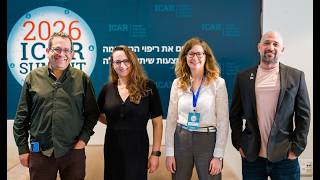
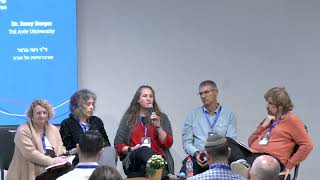
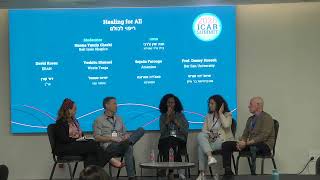
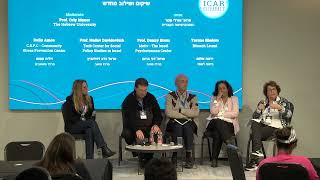
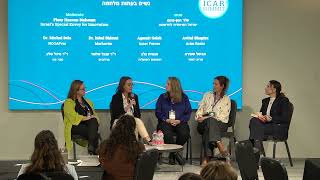
panel. So, I think you can all come up and I'll slowly ease us into our our morning >> anywhere that looks comfortable. >> That's what we are. So, welcome everyone. Um, I'll I'll say a few words just to give you an overview. We have one short hour with an amazing panel where each question we ask could easily be a conference on its own. Um, so with that in mind, we're going to keep it as structured as possible. Um, I'm going to in a minute read to you a text that I sent the panel just last week to kind of think about to um absorb and think about a response. Uh, and then I'll introduce them gradually with some targeted questions based on their own expertise and wisdom. Um, uh, a few ground rules to start with. Um we what we asked of the panelists is to um as much as possible bring theory to action. As Gila just mentioned, today is thinking towards the future. Um and unfortunately we won't have time for questions because we have a lot to say and we really want to hear them. But I'm volunteering them to be around throughout the day over coffee, over lunch if you'd like to follow up and ask them more questions. Um, okay. So, this most distinguished panel brings together international and local expertise on collective trauma training uh and healing. We're here to examine how different contexts shape policy and practice and what Israel can learn from such global experiences. Our speakers offer perspectives that move in both directions. international ideas applied locally and local experiences shared globally. They represent a vast interconnected world where words and perspectives travel quickly. In that sense, what we'll be doing is in this next hour is an active translation not only between languages but between contexts, interpretations and ways of understanding trauma. But as we know, meanings do not always travel intact across cultures. Sometimes the old meaning is lost in translation. Most times new meanings are formed. And if we're lucky, the understanding falls somewhere in between. So, with that in mind, I'm going to read to you the introduction I sent our panelists right before the weekend for them to digest and think about how they would like to respond as a means of introducing themselves to us and to each other. Over time, the language we use to describe trauma has been shifting. We speak of moral injury, the wound of acting against one's moral code. But more recently, the field has moved towards ideas of identity injury, recognizing that trauma does not only hurt us. It can reshape who we understand ourselves to be. Similarly, resilience has become the dominant lens through which we interpret trauma recovery. Yet the word now stretches stretches across vastly different realities. From a child going back to school after a night of sirens to a society living through years of ongoing war. Yet used to describe so many things, the word resilience risks meaning less and perhaps may be evolving as has the term moral injury. The scholar George Banano, for example, an expert on resilience, suggests that the word flexibility may in fact be better, may better capture how people and communities today adapt when trauma is prolonged, collective, and woven into everyday life. So my question to each of you as I introduce you one by one is if resilience may have reached a point of semantic exhaustion, what new language do we need now? what concepts, frameworks, or even new words might better capture what societies actually do or should do in the wake of multi-layered, multigenerational, and collective trauma. Okay. Is this is this on too? This is Yes. Okay. So, I'm now going to introduce our panelists one by one. And after each introducing each of you, we'll ask you to take three to five minutes, that's the challenge to answer the question you've been absorbing over the weekend. Beyond the word resilience, what new words or framework can we use today? We'll start with Debra Abraham. Dr. Dr. Abraham Gerard Meyer. Dr. Meyer is the founder and president of the Mental Wellness Society, international chair of the Resilience and Well-being Foundation, and the director of Reswell VUKA PTSD, an international collaborative on societal PTSD. He is a psychologist, researcher, and educator specializing in trauma resilience and community mental health. His work focuses on evidence-based interventions for individuals and populations affected by mass trauma, integrating clinical practice with training and program development for professionals in public systems. Now we turn to you for your reply. Beyond the word resilience, what new words or frameworks can we use today? >> I think you had a question for me. No, you had a question for me. This was a question. >> Okay. I'm speaking about George Bono. >> Yes. >> Okay. >> Okay. So, thank you very much. Number one, I'm
very pleased, very, very, very honored to be with you. And I need to say I'm more than pleased to see that there is an organization doing the work you do because without you inviting me, I will not be able to speak and they will not be able to hear me. So, thank you for making a shidor. That's practical. That's practical. Uh, speaking about George Bono, I think we need to put things in perspective. You You will tell me when to stop. >> I will. I have. >> I I I go on you to stop me. >> That's my >> uh Bono >> uh Bono Bonano wrote what make him famous more than 20 years ago. Many things happened since 20 years ago. So that was before COVID, that was before Facebook, that was before Tik Tok. Uh which are useful but they are element integrated element of the society but they are also stressful element in the society. So we
need to reactualize a little bit. As much as I love technology innovation on the present time and even the future time, I think we need to look in the past. And in the past, we have an extraordinary example. Uh we have been helping psychologist in Ukraine uh not to suffer about a vicarious trauma. And I was very surprised because they were I was saying have you read the book of Victor Frankle? And they all said you know when there is a alert we take that book with us in the shelter. So that's very interesting because we are talking about people and we are talking about somebody who many years ago created something. What was that thing? That thing was in fact his book is a man in search of meaning. But that was not that. What he said was I
don't want to let the situation to define who I am. I am who am I. I am who I am and I am the person who wants to do things. He already knew there that he he started to create a new a new element of psychology. I think he was an example of resilience as we speak of resilience. So I think it's very important. Another element we change in this society is we all as researcher and validator are working with placebo effect. Even some people still question does placebo exist? Yeah, it exists between 20 and 30% of the case and thanks god many people get treated with that. But the problem in this society now is that we move from placebo to noibo. We don't believe we believe I see a lot of PTSD people saying when you have is it true that you keep PTSD for life. Well, uh, no, you people can have a
PTSD, people can have an ADHD, people can be on the spectrum and have a normal life if they looked at a normal life. And if they deal with people who are working as more not looking at the problem but looking at the solution and that's a very important element because if we bring an old solution to a new problem how do you expect a good solution and the problem we have is really new. So we'll speak about that in the second part. >> But I think it's very important to see that we speak about George Bonano Bonano on the memory. Speaking about the memory
of well when start our memory it's not a question of conscious subconscious. It's not that our memory start as a mamalon in the old brain and we have reaction which are ingrained in our DNA. We see today that that memory fl up on October 7 because many of us are descendant of what we call oloc survival. It's in the DNA. So there is a memory in the DNA. There is that that's in the old brain. the mamalian brain, flight, flight, freeze, the reaction we
have in front of danger. But that reaction does not involve the the thinking, the cortex. It involve definitely uh the reptilian brain and what we don't control which is a parasympathetic system. So how do we bridge the two? Another memory is in our body. When we have a trauma, the body remember everything and it's in the body. That's why some people are talking about picotherapy, pico summatic primary therapy. They are all good. Acupuncture is very good. There is very good acupuncture. There is very bad acupuncture. There is very good psychology. There is not so good psychologies. Uh what is a
measuring stick? Measuring stick is the duration of the treatment. And the duration of the treatment is if the psychologist, the practitioner, the teacher, whoever it is does not have an idea where it takes that person, there will be a problem because if you don't know where you go, you will never get there. So it start by the destination. What is your destination? That was Frankle. His destination was to survive and to become somebody. How many seconds done? >> Three. >> We'll >> We'll have a lot more >> to be continued. >> I'm going to take that back. >> The challenge begins. Timekeeping. Um, we'll go we'll go down the the row. Uh,
next is Dr. Thomas Hubel. Dr. Hubel is an international teacher, facilitator, and author working at the intersection of trauma healing, collective resilience, and contemplative practice. He is known for integrating psychological insight, somatic awareness, and spiritual traditions to address individual and transgenerational trauma, including the long-term impacts of historical violence. Dr. Dr. Huba leads global training programs, largecale group processes and dialogues focused on collective healing and social transformation and advises organizations on traumainformed leadership and cultural repair. Uh so the question now to you beyond the word resilience what new words or frameworks can we use today? one two. Yeah. So, good morning. Um and uh yeah, thank you first of all thank you for the invitation to and um thank you for uh your time. I would say I like very much the word fluidity. That's why we call our method IA
fluidity in individual ancestral and collective liqueification. And I will explain why. Because for me um in the last 20 years when we were working mainly on looking at um how collective trauma and I want to define collective trauma because sometimes collective trauma is being defined as a like a historical layer of impact on a society and I I would very much resonate with the memory of the DNA that um collective trauma is actually a much bigger system that is not defined by a certain layer in time but is actually like a very long
systemic process that is ingrained in the way we experience our life. Our reality has different memory levels from DNA to body to a psychological individual experience and I think that there is a sometimes an overemphasis on the subjective experience which the subjective experience is very important but for me looking at working with very large groups so we work with very large groups that's why I think also the treatment model for collective trauma impact are actually healing collectives. That's why I liked when EAR came into life um that the EAR collective is is a a collective because collectives are very impactful and if we combine individual treatments with highly trained professionals and collective competence building. So the trauma treatment is actually a systemic interdependent
process and not a separate individual process. And so in my in my writing I write a lot about this principle of like se individual separation versus individuation. And so that's why I think resilience is a combination of the individual capacity to stay related to one's agency, the individual capacity to stay related to the challenge and the inter subjective or interdependent capacity of a system to face the challenge together like to stay related to the collective challenge. And that obviously is impaired by uh what you beautifully said before is that the we are not October 7th is not the first trauma impact. So
when October 7th happened a lot of other processes happened that influence how we respond to October 7th and we saw it in the news on the news we saw it in society we we heard it all the time. So that's why I think resilience as a a fluidity, a maturation and as a systemic capacity to stay related to challenges is like a definition that I like very much and and the other part is that I think that treatment models need to include more collective power because I see in in our healing collectives that we work with around the world that These collective spaces together with individual high highly trained therapists have a lot of power and you can train individual competence building and collective competence building together. And I think in in times like now when we have such a mass need for treatment um the distribution of the right treatment to the right person when we have collectives that are more trained I think is much more efficient and much more timely. So I think that that's uh definitely one definition of
resilience for me. That's it. >> Um, next we have Dr. Gabrielle Salati. Uh, Dr. Salati is a professor of psychology at John J. College of Criminal Justice, part of the City University of New York system, an internationally recognized expert in
investigative Psychology, her research focuses on behavioral crime analysis, offender profiling, and the dynamics of violent crime. Dr. Safatia has collaborated extensively with law enforcement agencies worldwide developing empirically grounded methods to support criminal investigations, risk assessment and violence prevention. So we ask the same question to you. Beyond the word resilience, what new words or frameworks can we use today? >> Um thank you. They're working okay. So I just want to start as well by just thanking the card team for inviting me here. Um, this is a really exciting time. I met the team close to two years ago when they were first starting in New York and I remember having a conversation at the time about the vision that they had and to be here two years later both in terms of what's happening in Israel and what's happening with ECAR is an absolute honor because I really think that we are at a crucial time now where we can move into action and it's so it's been wonderful to just be here and just meeting so many people
and so I want to take that that from that perspective of where we are today and and speak about resilience from there. So I've been I've been going around Israel a lot and in other places and I've been working on so I I've come from a background of law enforcement but I've been working with first responders for a very long time and um in from the angle of protecting the first responders who are doing some of the most high stress jobs that they're out there and I think Israelis understand that of more than most places and when I'm speaking to people about resilience it's become very clear that it's become a buzzword you know and we're lumping it together now with trauma and whenever we speak about trauma we speak about resilience but I think it's important so I don't want to change the word resilience I love the word resilience I love what resilience does I want to reclaim it and
I want for us to just maybe think about the many things that it means and I know we have a lot of different people in the audience and I sort of want to reach out to different people and say different things about how we might want to think about resilience um resilience is not the same thing as uh trauma. It's not treatment. Resilience is not meant to treat trauma. What resilience is hopefully able to do is actually um mitigate the impact of trauma because it's a coping skill. And because it's a coping skill, it is something that everybody can learn. And it's something that everybody can learn literally in minutes. It's not something complex. You don't have to be in psychotherapy or in treatment for months and and years. So that's the first thing I want to say is that it is in the grasp of people to have it. And I think that's really really important. Um resilience is prevention. resilience is prevention. It's about what skills we can give people to have to make them stronger so
that when they are in a difficult situation, anything from daily life to extreme trauma, how can they use those skills to mitigate the impact of that trauma? And so I think it's important to look at it more as a prevention strategy rather than as a treatment strategy. And then thinking about where we go from there and how we then give people these skills. And I think now we're at that time I think on day two when we're looking at how do we actually go forward and try to reach people and give them these skills just like ECAR started now with the psycho education program. How can we take it one step further from there? And there's a lot of different things that um we can do. But the other thing I also wanted to mention that I think is really important is um we've talked a lot about how do we reach people? Um how do we um see who has the biggest need? We talked a lot about that yesterday. And so I think we need to think about resilience in the context a
little bit like you know this is when I'm coming from my my military and policing background but you know when you go to a battlefield and you you look at who is who is injured um and you do triage just like you do triage in a hospital and I think you need to do the same thing with psychology. You approach people and you do a psychological triage of who actually is in that moment of extreme trauma and they need that psychologist. From what I've heard, and I think these numbers are coming from ECAR, you have about thousand psychologists here in Israel. 400 of them are about to retire very soon. We have a number of psychologists, but they're not necessarily trained in um they're not trauma-informed, all of them. So, I think it's important that the people that you do have get the people who need them the most to those who can actually provide the treatment. And then you had and I think the numbers were yesterday I can't remember if it's 85 or 95 of people have things that have experienced but then there's no one there. How do we get them and they don't need necessarily to go into treatment. They need skills. They need to be able
to cope. And we can do that in many different ways. And so when we come back to the definition of resilience really it's about what can we give those people and how can we give those skills to people so that they can actually have and this is what you were talking about in terms of self- agency. give them the power back to be able to deal. There's nothing people love more and that heals more than people being able that to think that they have they have the belief in themselves and they have the skills to actually get over something. And so I think that we need to think about resilience as a triage thing um from treatment all the way to what can people actually have in their hand. So, so in a way I'm reclaiming the word resilience and um but just thinking about instead of the word it's what do we do with it? What does it actually mean? Um how am I doing on time? >> Few seconds left. >> Few seconds. Okay, I'll keep the rest for the second question. Thank you so much. >> Thank you.
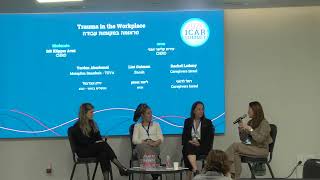
Miss Talia Lebanon is the CEO of the Israel Trauma Coalition where she leads national and international efforts to strengthen trauma preparedness, emergency response, and community resilience. With decades of experience in crisis management and public sector coordination, she has overseen largecale psych psychosocial interventions following wars, terrorism, and disasters and has advised governments and NOS's worldwide on building sustainable traumainformed systems. Under her leadership, the coalition has trained thousands of professionals and volunteers in resilience and emergency mental health care. So what new words, if any, might we use for resilience? >> The problem with being last is having heard all these wise people speak before
me. I also want to begin by thanking Gila and Dika. I think it's an amazing uh place to be in. Um I spoke to you yesterday about reality and words creating a reality and the words in our work has changed so much over the years. Uh I began a uh I think I when we began our work we spoke of crisis. Nobody spoke of trauma as an entity that covers all our daily lives. Um, and because of that, I think I would not change the word resilience either because if it creates reality, this is the reality you want to be in. But I believe and and I'm not the only one that resilience means not only being strong, but it means holding your vulnerability and the understanding that you will be able to cope together. And in one of the discussions you asked, I think whether it uh what happened to me defines us. I think it does. But also
what defines us is how we moved forward because resilience is not about bouncing back. We will never be the people we were uh ever. We can bounce forward with the experience and also with the experience of what it is that we did and what my family did for me and what my community did for me and am I part of a bigger uh thing in life and how it can help me move forward but also how I can help others move forward. And so the word doesn't I don't think we should uh invest a lot of finding a new word for resilience although it's very tempting I think we should invest a lot in creating a framework within which we all work with learning from each other and implementing uh our our work. I do want to say for one second something about words and that is the since the 7th of October especially the the mix between uh mental health and trauma care which I find also that needs to be discussed not at the moment but it needs to be discussed because I we believe that trauma care is not the whole same arena as mental health and it has different approaches sometimes different people and of course sometimes different clients but when we speak of frame frameworks uh we've developed and I'm saying we because it's not you know everybody in their own way but we are also part of a bigger thing we developed a lot of frameworks to work and I think the one of the best frameworks uh is the work that is being done a comprehensive framework that includes not only uh teaching and learning but also training teams training organizations and providing a lot of community work to create community resilience but a lot of clinical uh care by pro by trained professionals in trauma and this if you we created together with the government the idea of the resilience centers in Israel we have currently five resilient centers in Ukraine with the same model we created the resilience center in Paris with the same model and I think that the of course I'm not I'm biased but I think that the resilience center holding under one roof the understanding of training the local organization uh very attuned to the local culture and to the local uh scenarios uh training teams, training the community, working with the community and being able to provide direct care creates uh a system of care that uh holds the community before, during and after emergencies. Thank you, Talia. Okay, I'm now going to ask each of you to elaborate further through your um specific lens and expertise before we open the discussion for cross communication and inspiration. Uh so I'll turn back to you Dr. Meyer. What are some key mistakes or blind spots Israel should avoid based on your international experience with mass trauma? What approaches may have initially seemed promising but have now proved to be counterproductive? >> Five minutes. >> Five minutes. >> Five minutes. >> Five minutes. >> Just fine. >> Just fine. I think I will come back to resilience for one second and I I like and I believe with a group of people working on resilience at University of Tel Aviv. We are now 80 scientists in 22 countries uh and resilience. So there is two two approach. One approach is we had a a conference and we tried to define resilience and after two days of conference we could not come up with a common denomination for a common explanation for resilience. Let it be like that everybody will be happy. That's not my attitude. And I am the second group who said no because word are important. Actually word can heal and word can kill. So it's very very important to have a word because the word can define my thinking and my action. So I like the definition of the ability to adapt successfully in the face of stress and adversity. It was created in 2013 by Dr. Wu in South Korea. they have to deal quite a lot with their neighbors of North Korea on on resilience in the psychological resilience is not limited by bouncing back like many people think and that's what we were talking before. It's not to make you back to what you were because what you were were already deficient because you were made in a way where you were susceptible to other trauma. So we need to rebuild you better than before and in fact we need to be more a functional psychologist a functional person to make you function despite your precedencings which could be the spectrum which could be anything which are very big aggravating factor in PTSD. Many people don't pay attention that the aggravated PTSD is mostly due to people who have ADHD or on the spectrum particular in specially. So here we don't look at the coorbidity. We don't look at the um at the situation before. We need to look at the person during his whole life and we need to understand and again there is one way to think to be problem oriented. We'll solve the problem of the problem we have today. We'll solve it. This is not good. We need to be solution oriented. We need to look forward because problem oriented is to drive your life looking in the back mirror. And it's what all the patient have. They don't see how they can do better. They see the problem they had. And that problem gives them an anxiety in the future. They are not in the present. They are not looking at the future. So some consider I am one of them that resilience is an active exercise of agency. After four year of research, we try to look at what brings better resilience. How do we repair people? And from all the possibility, we have found that agency, the sense of agency was the key to the whole problem, the key to the safe. Because when you rebuild agency, you rebuild or you develop in prevention the internal locus of control. And when you have internal locus of control, you are less susceptible to have a problem. But >> one more minute for this and then we'll come around. >> But we live in a time of vaua. Vaua for some of you will explain more during the break is vulka is volatility, uncertainty. What is concerning? What is concerning? I'm sorry. I'm sorry. >> Complexity. >> Complexity. >> Complexity. Thank you. Complexity uh which is also ambiguous and repair connectivity and that is something which came from COVID since everybody during COVID have been on the computer since that we see and when we make an fMRI of the brain of somebody we see that when you spend too much time on the screen part of the brain become null. What part of the brain? Part of the brain of social interaction. And when you have a trauma, what do you need to recover? Social interaction. So the mistake people do is to look at the sickness and not to realize that the system is sick. The society is sick. The system it's not a systemic approach. It's not a sustainable approach. We try to catch up with the problem. So we need to bring technology. Today we can measure the brain and we are saying with a group of friends that we advocate brain map brain mapping the same way that mamography became for cancer detection and technology is not necessarily big we have your little ring we know 14 parameters particularly for you you are concerned with HRV or this bracelet Dr. Wak is showing me his bracelet too. We have the possibility now to use more technology and I have seen in the past two years an element will cost $40,000. Now it's $1,500. Now it's $1,500. We have seen that a lot of technologies coming. In one year there will be maybe 100 of those. In two years there will be thousand, three years 10,000. Then I'm sorry. Do you want me to repeat? >> We'll come back. >> Okay. So, what we need is not to make the mistake to continue to try to catch up on patchup, but we advocate for helping Israel to become first in technology innovation for mental health. And we be we believe that that we have all the resource, all the intelligence to do it. If we look at the destination, no mental sickness, not to cope but to prevent. >> Thank you. I'm going to take this one. >> Thank you. >> Thank you. I I just want to check timewise. We started I think at 10 after. So, right, we have until 10 after. Yes. Okay. Just checking that as timekeeper. Okay. Back to uh Dr. Hoo. um addressing intergenerational and collective traumas both event specific specific as well as the systems we are born into. What lessons have you drawn from your global work that is most relevant to our Israel today? Yeah, maybe I will speak I keep it short time wise. Um that uh for example like one practical example we have been working for a few years on with a colleague that is the external legal advisor to the government in Rwanda. So she she wrote the justice reform for the Randon government that is trauma informed and for the once like just a short introduction into Ronda like 94 as you know there was this genocide and within 3 months uh around a million people perished. And so we are now looking at there was the truth and reconciliation process in Rwanda and we are now looking how to implement like a collective trauma framework for the kind of deeper healing of what truth and reconciliation couldn't do. And um and so the Rwanda government uh incorporated now a trauma-informed ADR, alternative dispute resolution process to transition again the justice system from kind of an authority forced based like European model to back to a community-based justice model and through the Kajacha courts like the justice after the general genocide because there were so many offenders so you couldn't deal with them in the regular way. So there there was a a very strong process that is very much rooted in the Rwanda culture in community- based approaches. And so now with the implementation we are now training around 50 people from various ministries in the in the government in Rwanda from mainly from the justice ministry but also from the ministry for women and youth because the next generation is showing more severe intergenerational trauma symptoms. So we are training now a co a key cohort that is then rolling out the whole process in the whole country and this is really promising and I think um thinking about this and I think that's why the work uh of is important and the trauma coalition they're coming together in collectives and beginning to implement like an architecture that has individual treatment capacity but also has the capacity to address the systemic aspect of trauma And that's often kind of I don't know weaker. And so I think if we combine these two and develop these architectures for various countries, we also working with um uh diplomats in uh we are training diplomats through one of our NOS's in that work in crisis areas also here in the region on on mediating conflict and in other areas in the world. So how to bring collective trauma understanding into diplomacy into conflict resolution and into governments around the world so that we can develop this healing architectures and combine individual and collective treatment. And I think the Randon U example is a like there is a lot to learn in in Rwanda that I think is is has similarities at least doesn't it's not equal to what happens in Israel but there's there are lessons learned that we can apply here. So just short >> thank you and as we can see each one of you could answer each of these questions. So again, when we finish this round, we're going to just open it up for you to uh talk with each other. Um, okay. Dr. Salati, what are some effective models for supporting frontline workers who are repeatedly exposed to horrific traumas to prevent burnout and long-term impairment? And what can we draw from these models that can be used to scale in aiding broader wounded communities? Okay. So, um, we've had several crises. So, I'm I'm I'm speaking So, I'm I'm speaking now coming from the US. Um, in terms of what we've seen there, but I think it applies here as well. We had a huge mental health crisis that came to a peak in 2019 where we had more first responders who took their own lives than were killed in duty at two or three times the level. And um we really found ourselves at a place when we had to find what can we do next after co we had another crisis that happened and it didn't replace the first crisis it just added it to it and that was the burnout crisis. And so a lot of people when they're talking about burnout, they think about it as stress or as um you know connected to trauma, but actually burnout is an organizational issue and it's the impact of people no longer feeling connected to the work that they do. They've lost hope. They're disconnected and so they leave. So then what you found was that people um were leaving their jobs in higher numbers than we have ever seen before in the first responder populations. And what happened was that those who were left had two or three times the workload and then had less resistance and then when you're getting the trauma. So you both have the operational or the job function and you have the organizational function. So it's now compounded and this actually we're seeing the numbers is international. We're seeing exactly the same numbers where about 60% of the workforce or more which is twice as much as before co um are now in burnout and leaving. So that's huge. So based on that um and I think this applies to here in Israel because all of these numbers are international. We're seeing the same thing. But based on that, I kind of want to piggyback on the um the image from yesterday that Gila had about the bridge building and the piece. For those of you who are here, she had pieces of the bridge on the photograph saying in order to get people who were drowning in the sea back to shore, we had to take these different pieces together and then provide the bridge. Um I'm a puzzle person. I like the process. I like to build um and frustrated artist. So I want to take that image and I don't know who we have in the audience but from my from my understanding we have a lot of different people. So based on the work that we've done, I just want to give some key things because again I know that I'm challenged on time but in terms of some of the takeaways. So from the perspective that we built based on first different first responder groups coming to us and saying we have a problem can you help us we um built resilience programs put them through large scale. So we put them out you know I evaluated some programs that took it out to about 35,000 people and I built programs that we delivered to 12,000 people several years running. So from large scale what did we learn what worked what did not work and so I wanted to sort of talk about the what who when what how um so that for those of you interested in different aspects so that can take some of those things uh away with you. So what we need the first thing that became very clear is that we need to instill programs and be very aware of the cultural context. So when we're talking about first responders, who are they? What do they need? What is the context that they work in? But the one thing that became very clear is we have no baselines. We don't know what the level of illness is, if you want to use that, in different populations. But there's something more that we don't know which is really crucial. We don't know what the levels of resilience are. we don't know what kind of resilient people have. We don't know what is missing. So we can't plug it in until we know that. So some of the work that we did was trying to find out um that. So I would say always at the start of any organization putting something in just survey them, see what's happening, what do they have. We have the we I'm happy to share that we have the the the surveys that you can send out, who needs it. Um it became very clear that people are going into first responder populations very often come from trauma because they want to help because they were helped or they they feel that helping is important. But when they come into the um the organizations they're taken on when they have a clean bill of health and what happens is that they get ill during the job. So there's something that happens during the job and what we found is that there are actually subopuls and profiles if that's sort of my profiling background. who are they and when can we catch them? Um and what we found is that everybody starts really well. So that's really when you need to train them because around the 5 to 10 year mark is when people start committing suicides. So that is our your risk group right there. Um what do they need? So we need to find out what it is that works. Just because we have resilience tools does not mean that that is what they need. We need to match it to the job context. Um how do they um how do we get it? And I think this is a really important one that has been completely ignored in the literature. How do we deliver for impact? It is not enough to just deliver training. We need to deliver training in a way that makes the ground underneath people's feet move. You know, it needs to be transformative. And we can learn a lot from the transformative sort of communities that deliver training. And so we need to train our trainers to deliver very differently. So that if they only have three hours, which is often what we're given by first responder groups, you have three hours to change their lives. That that's a tall order. So how do we do that? It is possible, but we need to think very carefully about how we do that. Um and then the other thing is obviously we need to deliver for scale. And that part of my question was well, how do you how do you take what you've learned from what you've done to then deliver it to larger populations? It can be done. We delivered training to 12,000 people in the space of a few months. But there's more than that. And this is the piece that is really missing, I find, and something that we really need to think about. And that's the implementation piece and reinte and integration. We go in and we train people for three hours and then we walk away. It's not enough. We need to follow them through for months afterwards and teach them how to integrate it into their lives. And we have tried a whole bunch of different things. Some which worked okay, others which worked much better. Um, and there's another piece to that is that we can train people on things, but if they don't use it, then it doesn't really matter. So, we need to find out what they actually like and what is actually useful and in what situations they use it. And then, um, because I do want us to keep us on time. Um, the last thing then, um, we then need to find out did it have an impact? And that is the piece when you're looking at the literatures, we did a lot of reviews. We s we looked at every single study that was ever written on resilience and the impact it's had on first responders. And the one thing that's missing is that people don't test to see whether there was any impact of that training. And so we really need to integrate that. So we need to do before and after. And it is not difficult to do. You've delivered the training, you test it before, you go in 3 months after, 6 months after, you test it again. It doesn't take a lot of effort. As long as you have the systems in place and all of these pieces are the pieces of that bridge. If we can connect them, we can get people to the shore. Um, and Talia, how you can answer this any way you'd like. I know there's so many angles to this. How can we balance collective and historical remembrances without being defined by trauma? Where do you see the role of narrative memory and public acknowledgement in our process of long-term healing? Um, wow. I began my work in 1973. I was a officer in the Israeli army and I was working with berved families. Um, and I am a great believer in the strength of the human spirit. It's been instilled in me and is still going with me. And so when we talk about the work that needs to be done with individuals and communities, there is this expression don't do for us without us >> uh that is not used enough and people come in to communities or to individuals and say we know what's good for you. I have this training that is amazing uh I know what happen I understand what you're feeling and so on. Uh and so I believe and I think we all said this that in our work we first of all need to understand where the person or the community is at what they went through and and trauma is very very individual even though it's collective it's very individual and you need to understand before you go in and so much needs to be done but first there is a learning process that needs to be done and near Oz is very different from Aza very different from Tel Aviv very different from the North you really need to put an effort. Uh having said that I will also say that we've worked for many years in learning and understanding trauma and the 7th of October is a different experience for all of us. We were all affected. We are all injured. We are all struggling. I think it's the first time that the personal and the professional have come so much together. It was very difficult to be only a professional or only uh uh um mother of soldiers and so on because for all of us we shared a reality that was very difficult and again when we are struggling with creating resilience for people who are affected. We need to understand this in order to move forward because it's a different people. It's a different country than it was before that. And uh when we look at our work as was said here before we need to look at I believe at a model that is a funnel model a model you begin by psycho education providing understanding to anybody a young child a mother an elderly an Arab orthodox Jew according to their understanding they all need to better understand what trauma looks like how it affects me as a mother how it affects me as a nurse how it whatever They when you provide psycho education to people they will deal better because they will understand what happens to them to their body to their role whatever their role is. The next phase is and is creating training as was said here to everybody. My mother used to say if it moves clean it if it stands no the other way around if it moves feed it. If it stands clean it. So we say if it moves train it. We need to train young children to be able to help their peers in the kindergarten to blow a candle if they are stressed and we need to train uh security officers and nurses in the hospitals and so on. Training makes people feel even they if they don't have a a professional role that they can cope and the next phase is having hotlines available accessible that are trained in trauma and can help people with first emotional aid. people will turn into the hotline and call and they will receive first emotional aid. They will be able to call better but of course if they can't they will be referred to places where they can receive help. And the last end of the of the fel >> speaking here >> is is uh the idea of having trained professional trained professionals that are trained in trauma. We have a challenge with children psychologists with children psychiatrist. We have a trauma with people uh who are able to help in clinics throughout the country. And of course, I will respond to what said before in the resilient center. The waiting line is not six months, it's not even a month. The resilient centers offer an accessible service that is specializing in trauma and also specializing in resilience. Holding these two together and helping people move forward. I see your stress, so I'm stopping. I'm >> see my stress. You're clearly traumatraed that you saw how traumatized I was when I looked at the clock and thought we had another 10 minutes. So clearly this conversation has just begun. Uh my favorite part of meeting this panel. We all just met this morning for the first time uh over coffee was the free flowing uh cross communication. So I'm just going to open it up now because each one of you could have answered each of these questions uh to have a chance if you'd like to um reflect on something you didn't have time to say. And uh yes, I'll be time keeper. We have two minutes. >> How many minutes? >> We just have a couple minutes left. Unfortunately, >> thank you. One element we did not spoke today which I think I think is very important for recovery and for what we try to achieve together. As professional we have rules of ethic and we observe the rule of ethic. But in the situation we have we need to move from ethic to something which is a little bit different which is integrity. And you can have a lot of ethic as a therapist or anyone and a low integrity. And integrity is to ask a question is what I am doing efficient is what I am doing a result because you can have a lot of ethic but if you don't bring show integrity to your client it's a second trauma because they feel betrayed and I think this is something a movement we started to work as a group intern in internationally to say we need to bring standard in the field of integrity because to hear that somebody's in therapy for 20 years is not there is something wrong that it takes uh 20 session of EMDR no there is gradation maybe we need to organize EMDR at a certain time another modality another time another modality so we need to follow up people and for that we need technology to be able to collect data and be able to follow those things. >> Thank you. Any last words? Language translations flow. flow. >> I have much to say but I will end with a quote if it's okay with you. >> Wonderful. No matter how hard the world pushes against me, within me there is something stronger, something better pushing right back. Albert Camu, I thank you. >> That's a beautiful place to end. Thank you all so much. It was such a pleasure to work with you, meet you, and I hope we continue the conversation throughout the day. >> And thank you so much to our wonderful moderator who did such a good job keeping us in line and on time. >> All right. my
רגעים מובילים
מערכת צדק מבוססת טראומה ברואנדה.
לבנות מחדש יכולת פעולה, לבנות מחדש שליטה.
מטפלים במקום העבודה.
ממוקד פתרונות מול ממוקד בעיות.
משבר אינו אסטרטגיה.
אתיקה מול יושרה בטיפול.
שחיקה סמנטית של חוסן.
הבא בתור