- OpenAI aims to acquire 'all of the compute' to meet insatiable demand for intelligence.
- AI models are demonstrating capabilities once thought impossible, from self-optimizing code to solving complex physics problems.
- The shift to agentic AI requires new organizational structures and a focus on human oversight and ethical governance.
- OpenAI is making 'painful decisions' to maintain a singular focus on building trustworthy AGI.
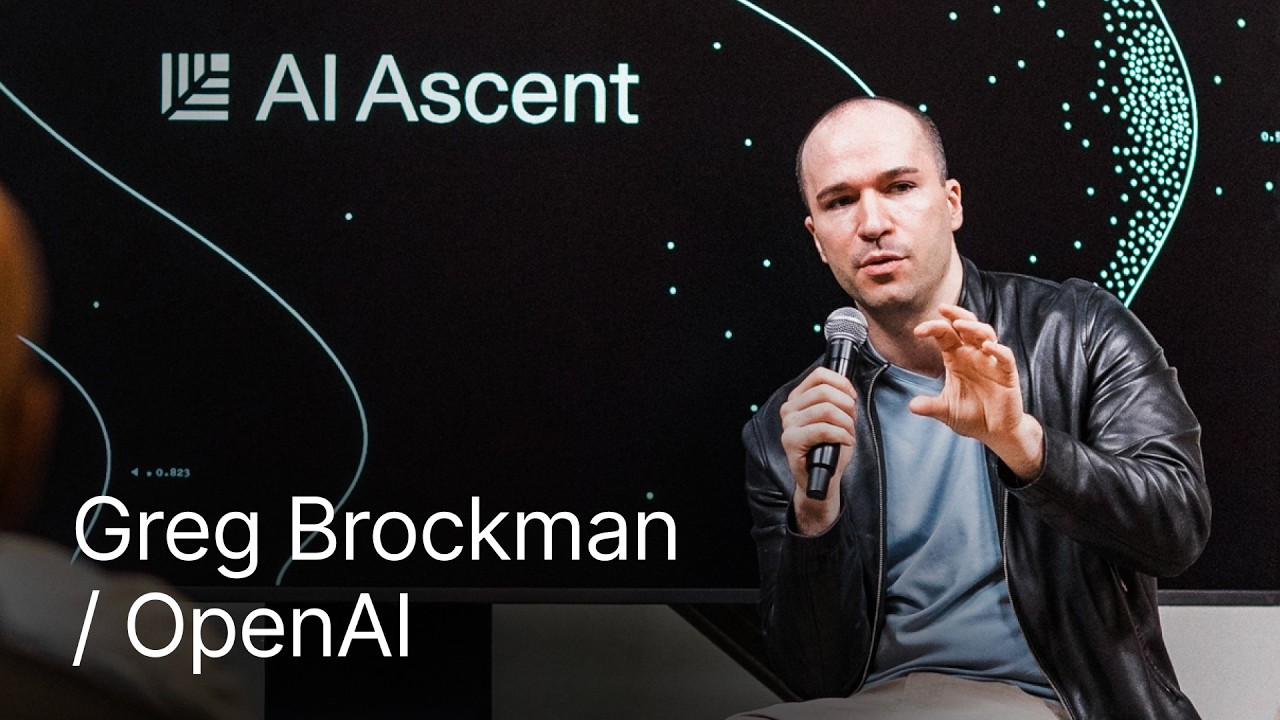
In a candid discussion, OpenAI President Greg Brockman offered a rare glimpse into the company's ambitious journey, revealing the foundational role of compute, the surprising evolution of AI models, and the profound implications for businesses and society. From the relentless race for computational power to the ethical considerations of building advanced AI, Brockman painted a picture of a future shaped by increasingly capable and autonomous systems.
Brockman emphasized that OpenAI's core business is deceptively simple: acquiring and reselling compute at a margin. This strategy is driven by an 'unlimited' demand for intelligence, with current AI models demonstrating an ability to tackle virtually any problem. Despite aggressive compute acquisition, Brockman admitted, "We're constantly out there hunting for more." He recounted an internal directive to buy "all of it" when ChatGPT launched, highlighting the perpetual struggle to keep pace with demand.
The conversation delved into the 'deep and beautiful mystery' of AI scaling laws, which continue to show that pouring more compute into models yields greater capabilities. While the fundamental ideas of neural networks date back to the 1940s, Brockman stressed that continuous innovation in architectures and algorithms, like the shift to transformers, is crucial. He shared a compelling anecdote where an OpenAI systems engineer tasked a model with a complex optimization, only to wake up and find the task completed, including initial implementation, performance profiling, and iterative optimization.
For startups, Brockman advised leaning into these powerful tools, noting that agentic coding tools have rapidly progressed from writing 20% to 80% of code. This shift makes prototyping incredibly cheap, moving the bottleneck from creation to sharing and governance. He introduced 'Chronicle,' a new internal tool that allows AI to form memories of user activity, eliminating the need for users to explain context. This highlights a broader trend: humans will spend less time 'explaining to your computer what's going on' and more time on high-level direction and value alignment.
Addressing concerns about AI's impact on organizations, Brockman suggested a future of flatter, smaller teams capable of 'incredible things,' citing individuals using advanced GPT models to solve unsolved math problems. He also touched on the critical human factor of security, advocating for models to scan codebases and participate in red-teaming efforts. OpenAI is committed to a 'thoughtful way' of deploying AI, balancing rapid innovation with robust mitigations and trusted access programs, particularly in sensitive areas like cybersecurity and biosecurity. The ultimate goal remains a trustworthy AGI that can assist in personal and professional life, offering advice on everything from career choices to health information.
“No matter how fast we try to ramp compute I guarantee we're not going to be able to keep up with demand. And that has been true ever since.”
- Greg Brockman, co-founder and president of OpenAI