
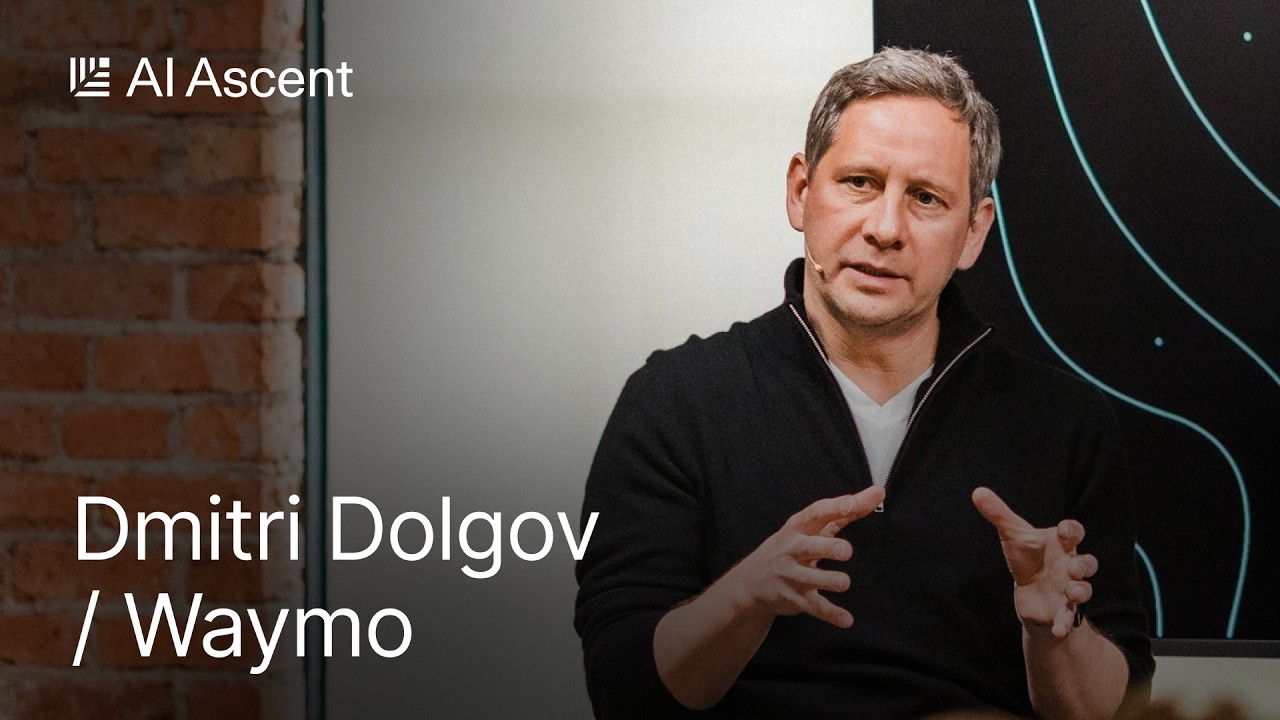
Waymo's Secret to 20 Million Rides & Superhuman Autonomy REVEALED!
Waymo's Dmitri Dolgov shares the untold story behind 20 million autonomous rides. Discover the core AI innovations, the relentless persistence through industry slumps, and the groundbreaking safety measures making Waymo 13x safer than human drivers.
Key Moments
Robotics in our lifetime?
AI wrote code overnight
Hassabis's AGI prediction
Easy to start, hard to finish
AI's bizarre logic
Browse by Topic
Explore all sessions, quotes, and moments organized by theme.
AI Sessions (4)

“Our generation was born too late to explore the earth and too early to explore the stars. But we are born just in time to solve robotics.”
Agi Sessions (3)
NVIDIA's Jim Fan: The Robotics Endgame is Closer Than You Think
Robotics in our lifetime?
Believe in deep learning?
Zero robot data?
Physics from pixels?
24-hour robot curse broken!
Is it real or neural?
Wrong focus for robots?
Deep Learning Sessions (2)
“No matter how fast we try to ramp compute I guarantee we're not going to be able to keep up with demand. And that has been true ever since.”
Robotics Sessions (2)
OpenAI's President Reveals AI's Wildest Capabilities!
AI wrote code overnight
AI escalated to manager
No wall, just keeps going
Constant powering innovation
Buy, rent, build compute
Deep and beautiful mystery
World Models Sessions (2)
Stories from the stage
Andrej Karpathy: The AI Revolution is Making Programmers 'Feel Behind' – And That's a Good Thing
Andrej Karpathy, a seminal figure in modern AI, recently shared a startling admission: he's never felt more behind as a programmer. This sentiment, he explains, isn't a sign of personal failing but rather a profound indicator of the rapid, fundamental shift AI is bringing to the world of software development.
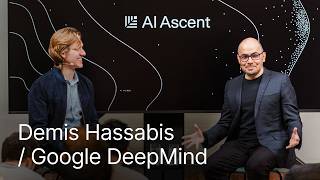
Demis Hassabis: AGI is Within Reach, Poised to Unlock New Eras of Scientific Discovery
Demis Hassabis, CEO of DeepMind, offered a compelling glimpse into the future of Artificial General Intelligence (AGI), asserting that the field is 'three quarters of the way' to achieving this monumental goal. His journey, marked by early success in gaming and a deep dive into neuroscience, laid the groundwork for a vision that many once dismissed as 'sci-fi.'
Greg Brockman on OpenAI's Relentless Pursuit of AGI and the AI Revolution
In a candid discussion, OpenAI President Greg Brockman offered a rare glimpse into the company's ambitious journey, revealing the foundational role of compute, the surprising evolution of AI models, and the profound implications for businesses and society. From the relentless race for computational power to the ethical considerations of building advanced AI, Brockman painted a picture of a future shaped by increasingly capable and autonomous systems.
Waymo's Dmitri Dolgov on 20 Million Rides, Superhuman Safety, and the Road to Global Autonomy
Dmitri Dolgov, a pioneer in autonomous vehicle technology for over two decades, shared Waymo's journey from its ambitious beginnings to its current exponential growth, emphasizing the critical role of persistence, a unique AI architecture, and an unwavering commitment to safety.
NVIDIA's Jim Fan Unveils the 'Endgame' for Robotics: A Parallel Path to AGI
NVIDIA's Jim Fan, a leading voice in embodied AI, laid out a compelling vision for the future of robotics, drawing a 'Great Parallel' to the rapid advancements seen in large language models (LLMs). His presentation, 'Robotics' End Game,' detailed a strategic shift in model architecture, data acquisition, and simulation, predicting a future where robots achieve unprecedented levels of dexterity and autonomy.