- Traditional 'resilience' concept faces 'semantic exhaustion' amid complex, multi-generational traumas.
- Experts call for a shift from emergency response to proactive, data-driven, and culturally attuned healing architectures.
- Emphasis on 'agency' and 'fluidity' in recovery, integrating individual and collective interventions.
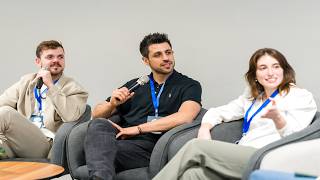
As the world grapples with escalating collective and intergenerational traumas, a panel of international and local experts convened to challenge conventional wisdom, urging a re-evaluation of the language and frameworks used in trauma healing.
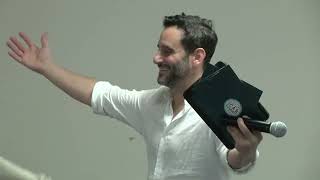
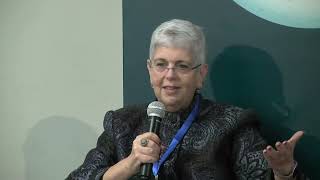
The discussion, moderated by Dr. Alexander Kleiner, highlighted a critical need to move beyond the often-overused term 'resilience' and embrace more dynamic, actionable concepts. Dr. Debra Abraham Gerard Meyer, founder of the Mental Wellness Society, suggested 'fluidity' as a more apt descriptor, emphasizing the individual, ancestral, and collective maturation required to navigate prolonged trauma. She advocated for systemic, interdependent processes that combine individual treatments with collective competence building, drawing parallels to Victor Frankl's search for meaning in the face of extreme adversity.
Dr. Gabrielle Salati, a professor of psychology specializing in investigative psychology, echoed the sentiment, asserting that 'resilience' should be reclaimed as a prevention strategy rather than a treatment. She stressed the importance of equipping individuals with coping skills early on, viewing it as a psychological triage. Salati also highlighted the alarming rise in burnout among first responders globally, noting that this is often an organizational issue stemming from disconnection and a loss of hope, rather than just individual stress. She underscored the need for data-driven approaches, including baselines and impact assessments, to ensure interventions are effective and culturally appropriate.
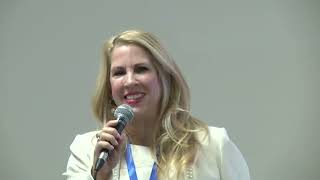
Talia Lebanon, CEO of the Israel Trauma Coalition, reinforced the idea of a 'funnel model' for healing, starting with psycho-education tailored to diverse communities (children, elderly, various cultural groups) to foster a foundational understanding of trauma. This is followed by widespread training, accessible hotlines for immediate emotional aid, and specialized clinical care. Drawing on her extensive experience, including work in post-genocide Rwanda, Lebanon emphasized the necessity of culturally attuned, community-based approaches to justice and healing. She stressed that trauma care is distinct from general mental health, requiring specialized training and a comprehensive framework that addresses both individual and systemic needs.
The panel collectively urged a shift from a problem-oriented mindset to a solution-oriented one, emphasizing the importance of looking forward and rebuilding individuals and societies to be stronger than before. They called for greater investment in technology for mental health innovation, including brain mapping for early detection and personalized care, and stressed the need for integrity in practice – ensuring that interventions are not only ethical but also demonstrably efficient and result-oriented.
“No matter how hard the world pushes against me, within me there is something stronger, something better pushing right back.”