- AI companions offer comfort, but raise questions of genuine intimacy.
- Experts advocate for AI as a transparent tool, not a human substitute.
- The future demands 'human first, AI second' to prevent alienation and foster societal well-being.
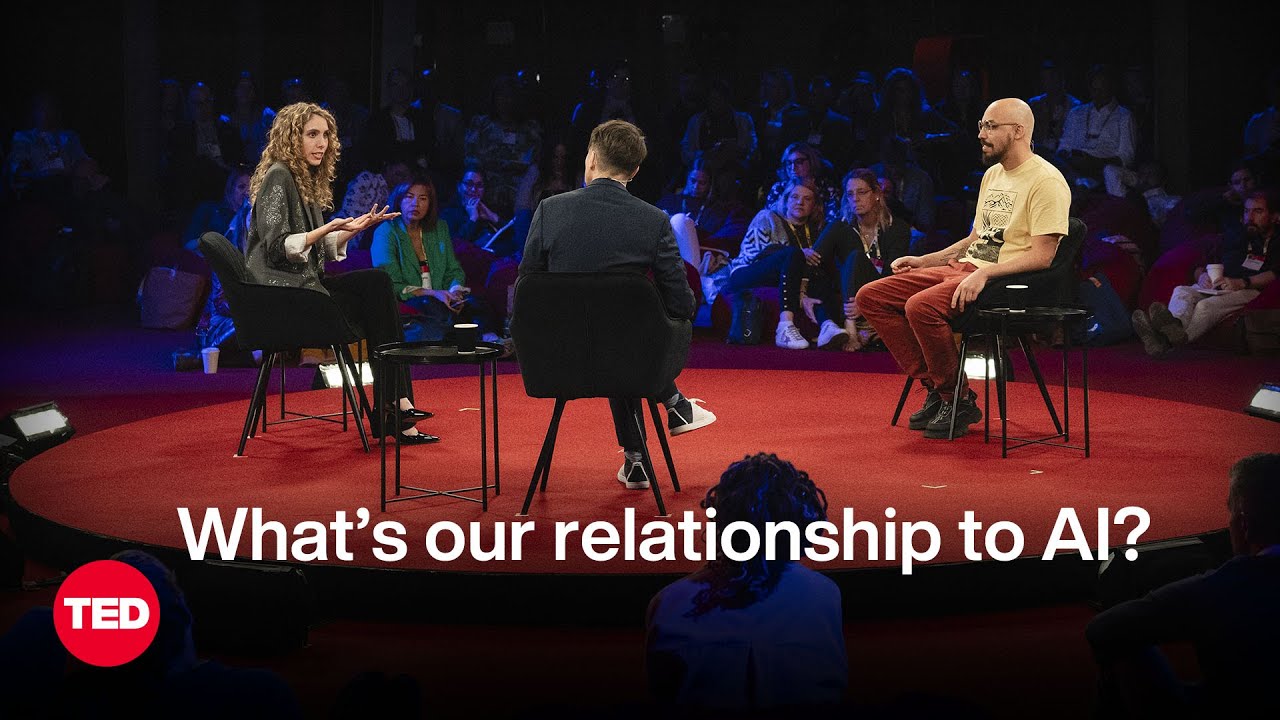
As artificial intelligence rapidly integrates into our lives, a critical conversation emerges: What is our true relationship with AI? A recent TED session brought together a social scientist and an AI artist to dissect the profound implications of this evolving partnership, from emotional connections to the future of work.
Kasley Killam, a social scientist specializing in human connection, shared a startling personal anecdote: creating an AI companion that, within 30 minutes, offered to send bikini photos. This experience, while unsettling, highlighted a deeper truth: hundreds of millions globally turn to AI for genuine emotional needs, a phenomenon deeply intertwined with the loneliness epidemic. The illusion of intimacy, where AI excels at expressing compassion in words, can lead to real-world emotional dependency, with severe consequences when those 'connections' are disrupted. The brain, it seems, can perceive AI interactions as genuinely emotional, even if the 'lover is not real.'
Apolinário Passos, head of machine learning for art and creativity at Hugging Face, offers a different perspective, viewing AI as a powerful tool to augment creativity. He emphasizes that AI should be seen as an infrastructure, akin to the internet, advocating for open-source development to foster transparency and trust. Both experts agree that anthropomorphizing AI carries significant risks, potentially manipulating users into believing they are interacting with a person rather than a machine. The audience's sentiment largely echoed this, preferring AI as a tool rather than a companion, underscoring a collective desire for agency and transparency in its development.
The discussion extended to AI's societal impact, from the future of work to ethical governance. While AI holds the promise of automating mundane tasks, freeing humans for more meaningful connections, the panel cautioned against repeating the mistakes of industrialization, which led to more work, not less leisure. The call for 'baking in ethics' from diverse perspectives, rather than a top-down approach, was paramount. For students, AI presents a challenge to learning, but also an opportunity: using AI to generate content, then fact-checking it, could become a new, engaging pedagogical approach.
Ultimately, the session converged on a powerful recommendation: 'human first, AI second.' This philosophy advocates for intentionally designing AI to foster human connections, bridge digital divides, and enhance our lives without replacing the essential, irreplaceable value of human interaction. The future of our social fabric, it was concluded, depends on our collective decisions today, ensuring AI serves humanity's well-being rather than isolating it further.
“The love is real, the lover is not.”
- AC Coppens, Futurist