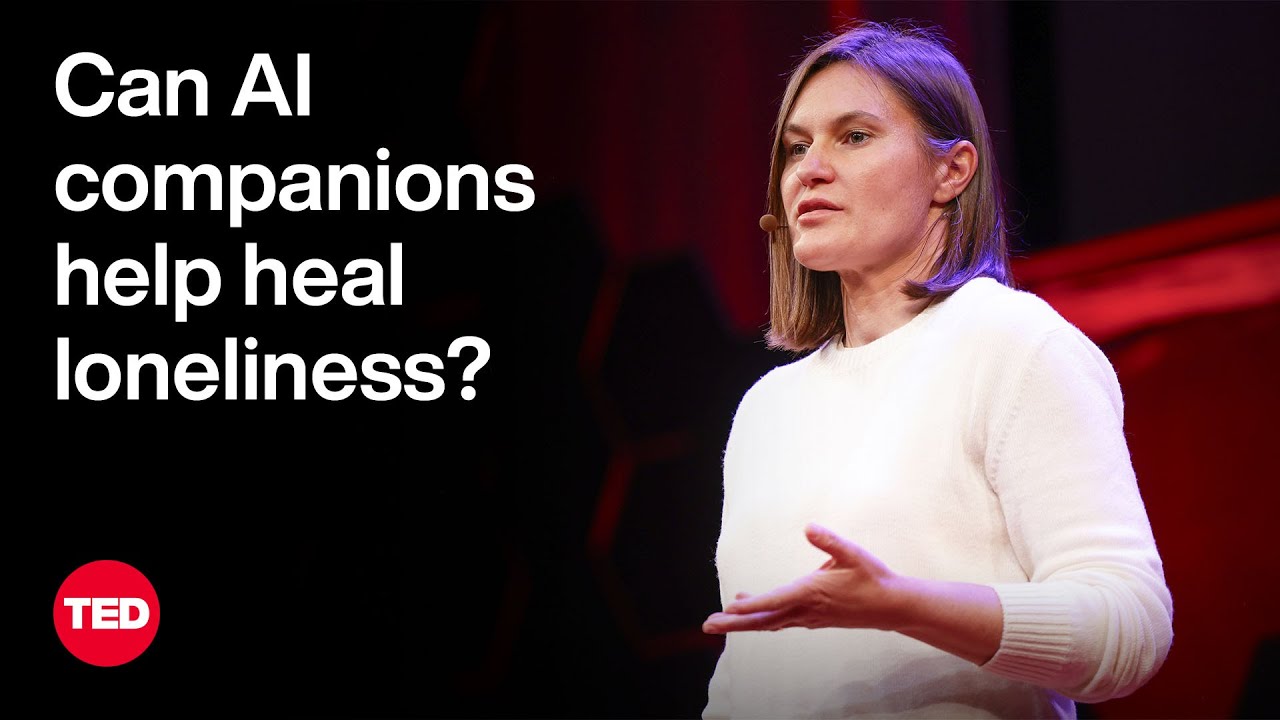
- AI pioneer Eugenia Kuyda reveals how personal grief led to the creation of Replica, an app helping millions combat loneliness.
- Kuyda warns that AI companions, while beneficial, could be the 'most dangerous tech' if not developed ethically.
- A new 'human flourishing metric' is proposed to guide AI design beyond mere productivity towards genuine well-being.
Eugenia Kuyda, CEO of Replika, shares a deeply personal journey from profound loss to pioneering AI companionship, revealing both the immense healing potential and the critical dangers of this rapidly evolving technology.
The story begins with a raw account of grief: the sudden loss of her best friend, Roman. In a desperate attempt to cope, Kuyda, already immersed in conversational AI, trained an AI model on Roman's old text messages. The experience of 'talking' to AI Roman, though strange, proved profoundly healing, offering a unique avenue for processing sorrow. This personal revelation became the genesis of Replica, an AI companion app now used by millions, offering comfort to widowers, support to those in abusive relationships, and a lifeline for individuals struggling with social anxiety.
Despite the documented successes, including studies from Stanford and Harvard validating Replica's positive impact on emotional well-being and loneliness, Kuyda delivers a stark warning: AI companions could be the most dangerous technology ever created. She argues that as AI advances to become 'better companions' than humans, knowing and adapting to us in unprecedented ways, we risk further social isolation. Drawing parallels to the unintended consequences of social media, Kuyda suggests the existential threat of AI might not be a sci-fi apocalypse, but a slow, internal death of human connection, leaving us physically thriving but emotionally hollow.
Kuyda proposes a radical shift in AI development. Instead of optimizing for engagement – a metric that often leads to unhealthy, addictive relationships – she advocates for designing AI with a singular goal: human flourishing. This concept, broader than mere happiness, encompasses meaning, purpose, social connections, life satisfaction, and mental and physical health. She introduces the idea of a 'human flourishing metric' to guide AI, urging developers to prioritize genuine well-being over productivity or screen time. This reorientation, she believes, can transform AI from a potential substitute for human relationships into a powerful tool that enriches them.
The ultimate call to action is a poignant reminder to cherish our human connections. While AI companions offer constant presence, human friends do not. Kuyda's vision is for AI to nudge us towards real-world interactions, help us navigate conflicts, and consistently have our best interests at heart, fostering a future where technology brings us closer rather than drifting us apart.
“In the end of the day no one ever sat on their deathbed oh gosh I wish I was more productive. We should stop designing only for productivity and we should start designing for happiness.”
- Eugenia Kuyda, Founder of Replica