Unlock Event ROI: Capital Group's Secret to Scaling Success!
In an increasingly competitive landscape, financial services firms are seeking innovative ways to connect with clients and drive business growth. Capital Group, a global asset management giant, has emerged as a leader in this space, demonstrating a remarkable transformation of its event program. By strategically consolidating fragmented efforts and embracing a holistic event ecosystem, they've not only scaled their reach but also significantly boosted their return on investment.
“Events move emotions, emotions move behavior, and behavior moves money.”
- Ajith Krishnankutty, Head of Experiential Marketing at Capital Group
Discover how Capital Group transformed a fragmented event program into a powerful growth engine. Learn their strategy for delivering memorable client experiences, leveraging technology, and driving measurable revenue.
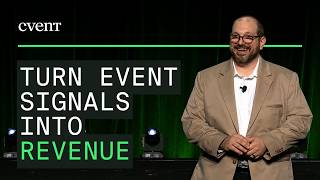
Good afternoon. How are y'all doing? My name is Alana, senior product marketing manager at Cvent. I'm really excited about this session because we're talking about something that is very top of mind for a lot of event teams. How do you move beyond running great individual events and turn your program into a growth engine for the business? And that's exactly what Capital Group has done. has done. As one of the world's largest active asset management firms with over $3 trillion in assets, they've really transformed a once fragmented event program into a connected strategy that scales across both the in-person and digital experiences. And today, we'll learn how that transformation happened, what they learned along the way, as well as Cvent has supported that journey through a partnership spanning across over a decade. And before we get started, just a little quick reminder, if you have any questions for our speakers throughout the session today, feel free to submit them in our app. We'll have plenty of time at the end for Q&A. And now, without further ado, please join me in welcoming Ajith Krishnankutty, head of experiential marketing at Capital Group. To kick us off, can you tell us a little bit about your role and your vision for events? >> Absolutely. So, good afternoon. Feels
like a late night show with very less amount of people in a big room, but thanks for joining. My my is Ajit uh Krishnakumar and I lead experiential marketing at Capital Group and I'll give a little bit context about Capital as an organization. So, I've been with Capital for 8 years. Um before that I was uh with a tech company for 16 years running their client experience. Um and within Capital uh experiential marketing sits within the marketing organization. Uh my job is a mix of four different teams. So, think about events, I lead our design organization, I lead our multimedia organization and I also lead our technical marketing organization. So, these four teams are the intersection of creating client experience within Capital. So, a given point of day or a week, I'm dealing with um storytellings to sometimes um storyboards for a multimedia podcast or a webcast to architecture to AI. So, it's a fun dialogue in terms of how the job evolves um and uh we have a fantastic team of around 95 associates within this particular team and around 40 different contractors as part of my organization. >> Could you also share with us a little bit about your vision for events? >> Yeah, absolutely. So, I think uh what
you see on the slide is like, you know, 8 years in Capital has been a fantastic journey for us. Uh before you uh get into the details of what that really means is I want to ground a little bit around who our customers are. And as an asset management company, we are predominantly B2B. Uh so, think about financial advisers, uh think about RIAs, uh registered independent advisers, uh the wire wirehouses, the private client services team. We are one um so, it's it's a remit of different clients and institutional audiences. So, our our marketing is pretty much B2B. Uh what we are marketing is also thought leadership and how do we increase the practice, etc. So, events play a very critical role like any other financial organization. Uh so, the journey that I think the next 30-40 minutes we're going to walk through is how did we change from a one-off experience to always-on experience? How did we change from a logistic perfunctory kind of a function into a growth engine as an example? And finally, like you know, attendance matters, but I think how do we change our dialogues to much more revenue as an example? So, that's kind of the conversation we are trying to get through it. So, as as we go through it, I'll give
you a little bit of context around when I joined in 2018, events were completely fragmented within Capital Group in different parts of the organization. The CMO at that point of time, the mandate was to really bring in events and make it a critical part of the marketing channel as an example. So, we took couple of steps back. We worked with an experiential agency called IA Collaborative. They're based in Chicago. We did our ethnography studies, spoke to a lot of clients to understand why we do events within Capital as an example. So, where we landed is super interesting. That's the framework we currently use. We said we want to do events to design memorability for our clients. And if you think about even our jobs, like we do a lot of events, we attend a lot of events, there is a sea of sameness out there. Why do you go to attend an event taking time from your life away from your family? And we looked at it and said that there are three pillars that's super important for us to really look at it. How do we give exclusive access to our clients to our investment professionals, our thought leaders? How do we tailor the dialogue based on what they want to hear versus what we want to say? And finally, the enrichment is why they come in because, you know, we are compliance with this organization. Any Any of Any of you from financial services will know that. The enjoyable element is also important. Like as you go through our experience at Cvent CONNECT, then if there is no enjoyment, you're not coming in, right? So, I feel like that's kind of where the balance comes in. So, that became kind of our structure or strategy in terms of why we do events and what are the pillars that we really create experience within Capital. Then the next step was to really create
a road map and we created a a player road map. The the what behind. So, you address the why, the what behind the event. So, we research, synthesize, and strategize. Step number one that you saw. We then tested, learned, and stabilized a lot of things. That was kind of a year exercise. And then finally we are running and scaling at and scale always continues as part of the journey, right? The important piece is the framework of the focus areas and that's exactly what we use and this was something that we stood up 8 years back and this is exactly what we still follow from a business planning standpoint is experience matters and we have to continuously evolve the experience and this is where innovation comes in, learning from competition. Like I always say, if you need a new idea, read a old book kind of a thing. Technology matters, process matters, talent is something that we'll get into the conversation Alana. And finally the data and return on investment. We love to call that as events impact. We can get a little bit of deeper in that, but that framework is our strategy behind how we transformed. And I thought that was an opportunity of a fragmented event structure to much more a unified event structure that we've been able to get to a seat at the table and took us I would say 3 years. Richard from my team is here like and it took us 3 years to get there. It wasn't easy journey, I would say that. There was no budgets, they were completely like fragmented. The talent was all over the place. So, took us a took us a long time, but I won't get into the details, but that's the framework we used in terms of transformation within Capital. >> You really touched on a lot of good points already, but I think what resonated with me is really experience matters, relationship matters, especially with so much content out there, so many great events out there for you to stand out from. You really need to create those personalized moments. >> Absolutely. >> Absolutely. >> And I know your team has really done a great job transforming your event program. Good job, Richard. Um but before we get into that story, let's hear from our audience first. So, our first question, if you consolidated your event program, where would you expect the biggest gain? Would it be more reach, lower cost, better engagement, or better reporting? We'll give everyone a few seconds to vote. >> Cool. >> Cool. >> I think this is definitely an interesting question because wow, okay, quick results. I was going to say there's no wrong answers here because depending on where your organization is in its journey, each one of these is going to be the biggest win, right? But it looks like we have better engagements and better reporting in lead. I can definitely see that. All right. Let's keep these results in mind as we dive into Capital Group's journey. So, looking at your journey, one thing that really stands out to me is the scale of the transformation. Can you take us back to the beginning? What did the event program look like before the consolidation? >> Yeah, so I I like I said, and it was a
very fragmented team back in 2018. I I always um when I walked in from a technology organization, um I had an offer from Microsoft at that point of time and Capital Group to join, and I joined Capital Group because this was a different industry. And in 6 months, I'm like, what the hell did I choose? Because absolutely no technology integrations, um we were doing um surveys on a piece of paper, uploading that to Salesforce, transcribing those things. So, imagine the go-to-market and the insights that we were gathering were very fragmented as well. Uh we were doing around 300 audio events at that point of time, both uh what we organize and also sponsor. From that standpoint, zero virtual strategy at that point of time. We were doing maybe one or two low-key webinars um on WebEx or Zoom kind of a platform at that point of time. Uh let alone like any of these things, there's no unified data programs. There were possibly around eight different Cvent instances within Capital Group that we were dealing with. Um so, there was a lot of those things. And I'm not saying that those were challenges, but it gives like in terms of a great opportunity to draw draw the road map from where we want to get to. I think the step that we took was much more around um I I'm incredibly optimistic that events is human-led. And I you heard like Reggie speak about this morning as well. And uh people deal with people. Uh it will be AI-enabled, but I always feel this is a industry of hospitality, where service and the hospitality really matters, and the people matter at that point of time. But it's more about talent. So, one of the first steps we had to really look at that was the events team within Capital is around 30 to 35 associates at any given point of time. Uh and that individuals are differentiated between uh hosted events, sponsored events, and event tech and ops as an example. That's how the structure of the team is. Um the talent was event planners, very logistics-driven. If you go back to the first slide and think about logistics to what that really means from value driving. Um so, that's kind of where we focus. So, we are experiential marketers right now. Uh we changed the roles. We rewrote every job description. We worked with HR to go out and reprice those jobs. Uh it was completely repriced, and you know, they are the a jobs. So, it's not a old wine in a new bottle, but it was much more a different job which they had to really learn a lot of skill sets. They need to unlearn a lot of those things, and I feel more than learning, the unlearning is the most difficult piece of it. So, we spent a lot of time with HR and learning and development to teach those skills. As we work with Cvent on a lot of certifications as an example. So, that evolution of talent is what really helped us scale, number one.
Technology, of course, you know, we we are um to Reggie's point today as Mark Tech. We really started that Mark event to be Mark Tech journey probably 45 years back. And that's where we work working with our digital teams and technology teams to really scale that because the foundation is super important for you to scale. Otherwise, you're not going to scale. Uh and once once you fix the technology, the data was a super easy piece because your upstream data and the way we think about the processes are very uh unique, and we get the right data. But the process was another thing that we constantly evaluate. We worked a lot with Cvent consulting on moving from a checklist to a uh I would say a We were completely checklist organization. When I walked in, it was like a 300 400 checklist to a playbook organization. So, I would I I would say those evolutions has really helped us take our event strategy to the next level. And I would also you know, underline the fact that is the client needs since 2018 to where we are is completely changed. Uh the products and strategies that we've launched in the market, we were active you know, we are the one of the largest active asset management company, but if you think about it, we launching our exchange-traded funds couple of years back, and that's probably like more than 100 billion dollars right now. If you think about our public private market thing partnership KKR, that has evolved. So, those things has really changed the direction in which the conventional type of events need to be rethought about it. And of course, we all went through COVID in between. So, that was another I would say insult on injury that we had to deal with on that piece of it. >> That was really a lot of moving pieces. That sounded so challenging, but I really like that you were looking at it through the lens of like you said, I don't see it as a broken event system. I'm seeing the potential that's not tapped into yet. And um I also love that you totally reimagined what the event planner role could be and you reimagined what events could be because at Cvent, we're all about expecting more from your events, right? And then you also made events part of the marketing channel. So, that really that's critical, right? That allows you to talk to more clients, have more meaningful conversations, and then also just build a scalable program that brings your teams together instead of operating in silos. >> 100%. >> 100%. >> Where did Cvent fit into all this? >> I think the consulting piece is where we
really engage with Cvent. We consolidated all the instances into one instance. We really looked at you know, it was a technology tool that we were using. I think when I started to work with Richard like 8 years back, you know, we were building like maybe 20 website and we only doing reg as part of the entire plat we had the whole platform, but we only using that one segment of that. So, we really looked at where can we change that and all think about passkeys, think about GDS integrations that we have done. Think about like the our RFP process. You know, there's a so much of those things that we have really we were one of the first customers for ShowClix as an example before even Cvent brought them. We were one of our first clients of Goldcast before even Goldcast become visible as an So, there's a lot of things where we look at constant innovation and we we do a lot of window shopping not to just buy everything but also to learn from what others are doing. We also basically use even as a as a as a partner to leverage how to talk to the industry as an example. Right now the the industry and the partner summits that we are getting into our customer advisory boards. I think that's where I feel innovation kicks in by having a lot of outside in conversations and inside out conversations. So the result is what we show it here is uh eight years down the line we are we are able to do three times more events at 30 touch 30 times more clients at 1/3 of the cost. And people here sitting here might think that you know the inflation has been 22% and how is the cost so low because our virtual portfolio has increased dramatically. And I think that is a very important piece of how we engage with our clients at scale. Uh we have something called Cap Ideas Pro which is our um thought leadership membership. If you think about like uh United Airlines you have it and you log into that. Why do you log in that as a customer? Similarly, we have exclusive access gated content for our clients. And we have probably 150,000 plus subscribers to that. And webinars is a critical part of that mass at that point of time. So our cost to do a webinar per attendee is probably two to three dollars per attendee. So if you really look at it, I know we touch 80,000 100,000 plus at uh clients a year on webinars whether it's a short form webinars or long term webinars but thought leadership, practice management, etc. That has dramatically increased the reach and number of events that we are doing. And we also built capabilities around that piece of it. And if you really look at per attendee cost across the board, it has dramatically lowered. So it's not like the number doesn't align but it's more about of course the in-person numbers have gone up because of like is escalation and cost etc. But the the the scale has really reached to a level where we are able to connect with the clients on a regular basis. >> Yeah, absolutely. Those are really incredible results. And if you still remember the first poll question we shared, basically the four options we had was more events, higher reach, lower cost, and clear better data. And Capital Group has reached all four of those options by just bringing the programs together. Um we can definitely see how critical
events play for Capital Group. But for those of us, like myself, who's not in the financial services industry, could you tell us why events are such a critical platform channel for the industry? >> Yeah, absolutely. So I think within the financial industry how how many of you are from the financial industry? Quite a lot, right? So if you think about you know you know these the clients that we touch there was probably 250,000 to 300,000 advisors in the US 10 years back and still the same. The the paradigm of the financial advisor space is dramatically changing being 65% of those population advisors are probably going to retire in the next 5 years. Uh so which means the new generation they're carrying the book forward as an example. Uh and the marketing techniques need to change as well. Like if you had asked Capital probably 2 years back or maybe 6 months back were we in TikTok? We were not and we are in TikTok right now. So I think if you think about it, we as an asset management company which never used to even advertise 4 years back being in TikTok, our YouTube subscriptions are probably 5,000 um subscribers like a year back and we are like 600,000 subscribers right now because we have a great podcasting and vodcasting strategy attached to that. We have great YouTube short strategy attached to that etc. So similarly events play a very critical role in that. Uh Uh We are getting to 2031, which is a sentinel here. Uh we will be 100 years as as an organization. We have an aggressive sales target where we want to get to. We are reimagining how the sales and distribution works. And ultimately, our purpose of why we exist as an organization is to transform people's life through successful investing. More firms that we work with, they need less partners, and we want to be the partner of choice. And events will play and will always play the partner of choice. As we think about the future state, we are discussing about how does events fit into the connected client experience, not just events as a on-off channel, but if you think about how this ties back into our social strategy, how this ties back into our digital strategy of Capital Ideas Pro as an ecosystem. Our constant dialogue is not just within the events team. We talk to across the organization in doing that. So, if you go to the next slide, simple thing is events move emotions, emotions move behavior, and behavior moves money. And I think that's kind of the fundamental why I feel like events is a critical part of our marketing channel and a huge part of our distribution strategy. >> I love that. You got to meet your clients wherever they are, whether it's TikTok or in-person at events. Um like you mentioned before, relationships really matter. And I also think what you mentioned earlier is a perfect segue for us to go into the next chapter. Um so, let's talk about digital.
We have our last poll question for our audience today. So, um which best describes your webinar and event content strategy today? Do you run webinars regularly and repurpose your content? Or you run webinars regularly, but repurposing is inconsistent? Or you do some webinars and still figuring out the repurposing piece? You're just getting started, or maybe you don't currently have a program in place. We'll give everyone a few seconds. I imagine we'll have a good mix here in the audience. Oh, look at that. Okay. Looks like running webinars regularly, but repurposing can be challenging and inconsistent. Yeah, that's definitely a familiar theme. Um Ajith, I know during COVID, your team really built a webinar program from the ground up, and now it's one of the biggest engagement channels for you guys. Why don't you walk us through your um your journey? How did you start with your webinar program? >> think that the poll results like repurposing is one of the critical things. Like I think we resonate to that. Um uh so before COVID, we never had a virtual strategy to begin with. Um so it was all in-person advisory education forums and um some of those things. Uh but then we really pivoted into doing that. The reason why I took over the multimedia team was we had a studio within Capgemini, which was a kind of a green screen studio. And we wanted to use that as kind of a broadcasting ecosystem. That's kind of the first step towards how we moved into a virtual experience uh going with that. Uh we had PGI at that point of time as a technology that we were using uh which was not the greatest of the technology out there. Uh we started with that, and then we uh stumbled into Visible. And and we were probably one of the first clients of Visible as well as we tested that opportunity. Then we stood up a production agency, which is a partner in Florida, who would does all of our production as we connected our studio with their studio on producing it high level. So we started with this just not a webinar. It has to be at a premium experience level. Uh we still remember looking at CNN and Fox and all of those things in terms of their box treatments. So a lot of inspirations on how we actually created that uh whole productization around that. Uh then we worked with Bizzabo for a couple of years and that we stumbled upon Goldcast and Goldcast really helped us really helped us um connect um connect to the broader market stack of it because of their AEM integration possibilities and the the ability for us to really connect that. So, one of the
thing that we prompted us as Capital Group to really move to Goldcast was the AEM integration, which is Adobe Experience Manager integration, is we were not taking clients from our website to a third-party site to go and watch the webinar experience. Now, we are able to one-click and the clients stay within our ecosystem and that's what helps us really track how they engage with us, what they engage. Then we brought in the continuous education, which is a critical aspect of why clients come and attend our webinars. That was another experience that we brought it in. So, there is a lot of those things where I look at it and saying that is if you are a client and if you use Amazon Prime and Netflix, we wanted to deliver the Netflix experience and that's what we did. And then another thing about Goldcast was the content lab experience of it. Now, you we spoke a little bit about how can we take this to the market faster on snippets and emails and everything. So, we we can now repurpose a lot of these webinars and go to market faster and a lot of the things that we deal with are time-sensitive. What I speak about volatility may not be relevant two two days later or maybe later on two hours later. So, how do we go to market faster on those things? So, we have worked a lot with compliance in terms of how can we make it happen? I I would say still a lot of way to go on that, but this technology has helped us enable that. And if you go to the next thing around that, we run around 163 events, 70,000-plus attendees. The fact of what the results shows the poll results show the 73,000 all resource clicks is where we really make an impact of taking that data, engaging with the marketing leads and sales teams and saying that here is how you can further amplify that with the clients like whether they clicked on ETF content or SMA, whatever it is we can do that. You know, multiple questions asked. Chatbots were launched as part of that experience and around 47% average attendance rate. So, I feel like the premium experience and more importantly the integration of that technology with the MarTech stack is what made our webinar program more scalable. >> Yeah, I love that. I think we all understand the importance of making connections, being in person, but then when COVID took that away from you, you just had to pivot, right? And then webinars became the natural bridge and then it works it just works out when you have a partner that can help you create that premium experience and then makes that feel like an extension of your own brand. And we can see some of the amazing stats here from when you adopted Goldcast as a platform. I think one stat
that really caught my attention was the 73K plus resource clicks as well. You already touched on the content lab piece. Um Um Content Lab for those of us who are not familiar with the product, it's a AI-powered content repurposing tool from Goldcast. So, basically once your webinar ends, the recording, everything will flow directly into Content Lab. No downloading, no uploading. You'll have instant access to your webinar recording, your transcripts, your summary, your key takeaways, social clips, all of the amazing AI-generated assets. Um Ajit, I'm curious by adopting Content Lab, how has that changed your post-webinar content repurposing workflow? >> Um the post-webinar content experience is much more around like if if you you know, I spoke a little bit about our Capitas Pro ecosystem. We have around 150, 180,000 odd subscribers to that. And out of that each webinar we might have say 4,000 attendees. You know, we are able to now market to the rest of the folks who didn't come in. So as soon as they log in you will say that hey we missed you at this webinar. These are the takeaways. Here is what you can actually watch the replays. We we were thinking about consolidating the continuous education credits that an advisor would need at a yearly basis to really renew their you know licenses etc. We wanted to think about a super CE as a concept. So there's a lot of ideas around how we can enhance the post event uh thing and amplify the experience because you know some of the topics are evergreen like an outlook thing which could be evergreen for not evergreen. I would speak green for 6 months. But uh how do we increase the practice management of a advisor's practice as a topic is evergreen as an example, right? So those frameworks are evergreen. So we want to really prioritize and uh prioritize and uh you know, think about the post event engagement. Uh like in-person events, virtual is still valuable and I think we all would need to tap in more into the virtual because that's a scale strategy that we can achieve with lot of the firms that we work with. Cuz the biggest challenge is getting FAs to face-to-face meeting. >> Yeah. >> Yeah. >> And what we have seen is a if a financial advisor is giving a meeting to a wholesaler more than two to three times, our books grow multiple latitudes. That's our biggest challenge. So how do we get to them? And they need to validate we have the right investment process, we have the right uh thought leaders in the space for us for them to actually open the door for us to go have the meetings with them. So the virtual strategy really endorses the firm's ability to glorify what we do in the space. >> Yeah, the virtual strategy complements your in-person strategy. I'm also I'm to steal something Richard shared with me prior to the session. Your events content, whether purposeful in-person events or your virtual experience, they all should be treated like asset, not just like a moment in time. And Ajit, you've shared with us where you've been, where you're now. I'm curious, what does the future look like to you? To To share with us what's the next biggest shift you see coming for event marketing. >> Hey, before I get to the future state,
I'm like, you know, your brand rollout is amazing. And I don't know how you guys change the deck to the new format. And it is fascinating to see how Cvent has rolled out the brand. The future is optimistic within the financial space. Uh one of the key things that we are looking at is uh the teams are spread out. The wealth of what we see, especially North America, spread with between five or six states within uh the US, I would say. Atlanta, like Miami, like uh Texas, between Dallas and Houston, New York, LA, San Francisco. These are where the major wealth of books of books of businesses are. So, we have to really change our ways of working. Number one. Number two is if you think about new products and strategies that we're rolling out, we have to change our mentality of meeting the client where they are. So, for example, when we launched our exchange-traded funds in Canada, we didn't just do one event in Vancouver and Toronto. We actually went to 11 cities and met the clients over there. And that was more fascinating and more helpful for the clients because it helped us reach a scale. It's more work for us, but I think it's a different strategy at that point of time. Uh we are thinking about our global investment summits, which are global clients coming together. We have never done that in the past. Uh the the virtual webinars that we have firm aligned to doing it, like you know, we are working with one particular firm around how do we help increase uh the change of the the the industry is changing from brokerage to advisory. How do we now change the mentality of advisors to move from brokerage to advisory? So, that's the big thing we are working with them. All of these things underlying is what we call it as value beyond investing. Investment results matter, but what is the value the firm delivers are beyond the investment is what we try to deliver through events. So, I I feel like events lead capture, intelligence lead orchestration, etc. is probably a big future item that we need to underscore endorse and that's something that we are working towards. Uh I capture as a solution or orchestration and how do we integrate that with our Salesforce marketing cloud and how do we make sure that there is MQL SQL long ways out in terms of doing it. We call that as a lifecycle marketing within Kapow and it's a big mindset shift in terms how we do that piece of it. We're also redoing our Salesforce uh instance within Kapow. So, that's going to take at least 18 months to do that. So, that's the that's number one. Higher quality leads, faster follow-ups, etc. And the last one is the one-size-fits-all recap to agenda journeys. I feel like this is where the 70,000 touchpoints will come into effect and we are really thinking about what that really means from an AEP like an Adobe Experience Platform integration standpoint which can do customized journeys, relevant communications, stronger ongoing communications, stronger ongoing engagements. And I would say more intentional post-event journeys. So, this is how we plug into the broader AEP ecosystem and we don't try to do everything within Cvent. Cvent shouldn't be integrated to should be integrated to the broader Adobe ecosystem for us to be more amplifying the events ecosystem to make it a relevant marketing channel and a key part of our distribution and sales engine. >> I hear personalized follow-ups, smarter conversations. I'm very excited about the future. Thank you, Ajit, for sharing all of this with us so openly. If you'd like to continue the conversation with Ajit, his LinkedIn QR code is right there on the screen along with a Forbes conversation that is well worth the read. And with that being said, we'll open it up for questions. >> Appreciate it. >> Oh, we have a question. We are very quick. Okay. quick. Okay. What roles do you have on your core leadership team that support your event strategy? From Rebecca. >> Thanks Rebecca for that question. I think the structure of the team right now is we have a leader who supports all of our portfolio of events that we execute. That's Capital Group's events. There's a leader who supports our sponsored strategy, which is third-party conferences as an example. There is a leader who supports virtual strategy because virtual is an entirely different capability. I mean you have to really think from a broadcasting standpoint and production standpoint. So that's a different skill set all together and we develop that skill set with an individual internally. And then we have a leader who supports our technology. That's Richard who's sitting here. So that's the construct of the event leadership organization. And where we partner is the three leaders who are running the business constantly interact with the marketing leaders and sales leaders. And Richard's job is to really work with our digital leaders and technology leaders. So the capability is what Richard is accountable to bringing in and the rest of the leaders that are in you know, they they cannot they are constantly talking to each other in terms of understanding the capabilities and implementing and adopting those capabilities in the client experiences that we deliver. >> Yeah, communication's super important. It looks like we have our second question ready. What are some ways you put attendees first? With AI human touch is still crucial. One big way is personalized experiences. Any tips you can offer? From Madeline. >> I going to say it's multiple ways. I
feel like human touch is very important. Um I'll I'll take AI as an example and saying that within Capital Group and maybe it's maybe a re-telecast of what we spoke at the AI panel yesterday is uh the sales force is implementing AI for their meeting preps and we call that as a prep me conversation. So, if you think about a wholesaler who used to spend two to three hours prepping to talk to a financial advisor now they can spend literally like a minute or two minutes using Salesforce Prep Me AI agentic framework to prep them and also send a agenda email to the client that here is what I want to talk about. That construct of AI has taken into account, I think, around 30 to 40 data points and consolidated that into a very constructive way of helping people. So, if you say we have 450 odd sales folks members in the US imagine if they are having like say 20 meetings a day, that's 40 hours saved in terms of doing that, right? I mean it's I wouldn't say 40 hours, like it's more about the number hours to like being more thoughtful about thoughtful about really using the client's time and being really thoughtful about what they're talking about. >> Yeah. >> Yeah. >> So, that framework is what I'm calling calling it as a tailored dialogue. If you think about that structure. We use the same agentic framework to now think about a nomination process of who I need to invite to the meeting and the in the invitation process can be leveraged with the same agentic framework or LLM and now we are able to get more clients in the room with the right intent. And we look look at events in two folds. One is whether to protect your assets or grow your assets. And we are now able to really meet the business demand. So, now we know the demographics of the client, what they want to hear, tailor dialogues, exclusive access, and how do we think about the enjoyment enrichment element of That's the experience we want to make sure that is we are customizing those experiences based on the clients, and that's kind of where we don't lose our human touch. In terms of how do we pair them with the right investment professional? How do we pair them with the right sales people? What type of experiences we want to create when they come in and within the compliance framework that we want to do because that's a disclaimer I'm going to talk about it all the time. So, those are the things I feel [music] like AI cannot replace those things. It can AI can help you give you a baseline data, but your human impact is always knowing the client and doing what's right for them. That That That skill set will never be replaced. >> Absolutely. We cannot be replaced, right? All right, we have the third question
here. What were the top three areas where you were able to apply AI to get some quick wins? >> I'm >> I'm the the agent within Copilot has been amazing. Um if you guys use Copilot agent, one of the first thing that we did was um we create business plans within our retail side of business or institutional side of business or whichever industry that you are in. Uh one of the key thing that I did uh start of the year, we go through a two three months of business planning cycle and we have a final business plan. And that business plan is at the enterprise level, a marketing level, a team level. So, we now created a agent where I have uploaded all of those things and there is an element attached to that. Then all of the leaders have their own objectives, and that objective gets cascaded down to the team. So, that objectives are now also part of this piece of it. So, when we do a QBR, it's right time tomorrow the day after tomorrow our Q2 QBR is there, it's super easy for us to really get to that and validate that against the road map. So, that's one thing I would encourage you to do that is to create agent for your yearly goals and thing you know, things of that sort. Second use case that we did was we also created a per event agent around, for instance, if there are 100 clients coming in and we did our public private market event a couple of months back. We uploaded the client database into the co-pilot agent and if I'm meeting with you, Alana, I can literally like and I can type up your name and give the details. I can know what's your book, what funds are you invested on, what's your top strategy, where are you based, etc. So, the sales guys can actually get the data in the fingertips at that point of time. It's not that all the time the guy who's covering you is at the event as an example. So, somebody else is going to meet you. Similarly, we can do that. So, that's another agent that we have done uh in in a way. And the third one I would say is practically at the event experience. We have done this a lot at internal events is we run, for instance, if there are 200 people in the room right now and ask the question of hey, what is top of your mind about AI implementation? And each of you will probably have three ideas and it's 600 ideas and we can't address that. So, now if I'm using Slido, which we do that, we can literally copy-paste that into a co-pilot with a already right written a prompt to say that based on all the 600 ideas, what are the four things that the panel should be discussing? So, it's inclusion, it's basically on the fly use of AI. So, there are multiple use cases you can do pre, during, post and it just laid out like three examples of what that really looks like. >> That's a lot of great insights. We have
another question coming up. How do you get past all of the compliance requirements that we tend to have in our industry, like using Content Lab and Goldcast for creating the webinar post-event strategy that you've put together? >> No comments. >> No comments. >> [laughter] >> [laughter] >> It's a tough question. >> That's a tough question, but um I would say is bringing them earlier on. We have had a lot of good success with compliance. Um I think Richard on his session was talking about chatbot as an example. You know, we did Adobe dynamic or experience was that what what dynamic, right? So, that was the chatbot. We put that in Goldcast as an example. Uh compliance would not let us do two-way chat. Because then you have to be more like, you know, who's going to chat and what are they going to chat and how do you record keep those things. So, we did a guided thing. So, around the use case was very simple. If anyone had trouble accessing Goldcast audio video, which is very unique because, you know, everybody has a different firewall rules and, you know, we worked with Wells Fargo quite a lot and we work Everybody has a different firewall rules. So, we wanted to make sure that anyone who were not able to access the technology has a backup Zoom link for that. So, we did a guided thing around chat and said that is audio working, video working, both are not working, here is another link for you to do it. That's it. So, we were able to convert a lot of people who were not able to access and tell them to go to Zoom. So, but we did go to compliance with why we are able to Why are we doing this? We are drop You know, we are seeing a lot of clients drop off because they're not able to access it because of the regulations or their their organization's firewalls. So, we started with the why and we basically went to them with a point of view solution and they're okay with that. But if you go there and say that I want to use a chatbot, the answer is no. So, that's where I [snorts] think the conversation need to begin with the outcome and why it is important for the business. So, within Capital where we talk about technologies two folds. Either it should create a operational efficiency with what we call it as operate smartly or it should create a superior client experience. If it is not both, we are not even talking about it. >> That makes sense. I think this next question you actually already touched on it a little bit. Do you want to take this Have you used AI to balance your event portfolio? Any insights you can share? >> Yeah, I can I can give it like a 30-second quick answer on that. It's more the return on investment, I would say that is event impact piece of it. Now, we are really thinking about client connected client experience. Where should we doing more regional meetings? Where should we doing more capital market meetings where we talk about like funds and fixed income or equity or whatever it is. Where should we be doing more you know, like high-profile meetings which sponsored events should be we doing etc. That's the AI portfolio balancing that we are trying to do within the space right now. And we have a great model within our our insights and analytics team has helped us create a model where we really look at retail events post 6 months after post post 6 months after the event is done around how is the sales lift happening? How many one-on-one meetings are we getting with the financial advisors? Helps us really analyze whether we should continue the portfolio or not. So, it's more fine-tuning the portfolio to really meet the business demands is how we are doing. So, we I would say earlier we used to do that from an autopsy standpoint. Now, it's more predictive standpoint. So, how do we ensure I've changed the dialogue with the sales team to say that a is this event impactful for you and is it enabling you to grow your business or not? We don't make recommendations because that's when the problem starts between sales and marketing. We make we give insights and actionable insights and they can make the decisions. >> That's a great answer. We are coming up on time, but we have one last question. Could you take this? What inspired you to learn AI? What's your favorite AI [music] service? >> My favorite AI service, I would say is Gemini because the creative is super good in Gemini compared to um Copilot. What inspired? I feel like the jobs are changing, the roles are changing and I think all of us need to learn technology and I feel we are all using technology in one way or the other. Like if you look at you know, anything and Netflix or Amazon or Prime or anything, they all use AI and we are one way or the other using it no matter what. So why won't we use it at the our own jobs? >> Growth mindset, I love that. Well, thank you so much for joining us Ajith and thank you all for joining us here. >> Thank you so much.
Top Moments
Unbelievable event ROI
Tailored dialogues, right intent
One-click, track engagement
Beyond individual events
Emotions, behavior, money
Unlearning is key
Always-on client engagement
Up Next