Unlock Your Event's Future: AI Digital Doppelgangers Revealed!
In an increasingly digital world, the value of live events is paradoxically soaring. As AI-generated content floods our feeds, creating a "white water" of averageness, brands are turning to authentic, in-person experiences to forge genuine connections. But how do you ensure these significant investments hit their mark? Enter digital doppelgangers – AI-powered replicas of your target audience that allow you to test-drive your entire event before a single dollar is spent.
“The digital doppelgangers we are going to talk to about today are basically a carbon copy of your audience... they react like real people.”
- Colja Dams, Co-CEO at VOK DAMS Worldwide
Imagine test-driving your entire event before spending a single dollar. Digital doppelgangers, AI-generated copies of your audience, simulate behavior to predict success and reveal blind spots. Discover how this pre-data wave is revolutionizing live event planning.
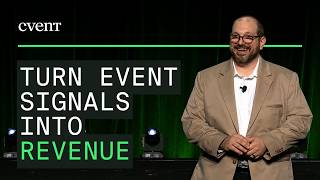
Today we're here to talk about digital doppelganger. So now digital doppelganger, what are digital doppelgangers? And most important maybe to explain it's to show what digital doppelgangers are not. Digital doppelgangers are not your player character in an 80s computer game. They're also not the digital doppelganger like the AI avatar you have up on stage and you can do like a cool moderation with. And also the digital doppelgangers we are going to talk about today are not the digital doppelgangers you can create of yourself and have them sit in two boring Zoom or Teams calls and just do like thumbs up once in a while while you do other fun stuff. Usually people come after the presentation and ask me for this specific tool to use. The digital doppelgangers we are going
to talk to about today are basically a carbon copy of your audience. So they are an AI-generated copy of your audience that simulates, that replicates the behavior of your target group. And the enormous advantage over traditional personas is while personas describe people, digital doppelganger real act like real people. So they react like real people in though it's like an AI built um system, they're based on psychological data, behavioral patterns, contextual data, and event information. And with this data we train the digital doppelgangers to think, to decide, and to act like your target group. And the best thing is, you can talk to them. So, you can talk to these digital doppelgangers and basically test drive your entire event. You can ask them what you're planning and ask them how would they react to it. How would they act in the audience to certain content, to a group flow, or um other stuff. So, you can ask them what would motivate them and what makes the event a success for
you. Or you can ask them what is still missing. And instead of relying on assumptions, as we have been in the old days, so now we work with the clear simulated behavior base that really tells us what is working and what's not working. And the amazing thing about digital doppelgangers is you can talk to them before the event. So, before you are spending any dollar on your event, you can talk to your digital doppelgangers and test drive your entire event. And yes, it's all about data. It's all
about data and it didn't used to be all about data. When I came into this industry quite some time ago, in the first wave of events, we call it the no data wave because this first wave of events, no one cared about data. Data plea- played like a zero role in events. Um everything was about to make sure to get on national television, to get front page news. We did amazing projects, but data did not play a key role. Then, after the first wave, the second event wave came about 10-15 years ago. And the second event wave, you may remember all of you, has been all about data. So, this was the post-data wave because all the data we generated has been only available to us mainly after the event. So, we generated data in millions. We generated data in terabytes and terabytes that by the end of the day no one cared about after the event. So, we generated This was one of my favorite ones. Together, we created a system that had like cameras to the audience and was measuring all the emotions of the audience. And this was amazing, and I remember showing off this test driving the system and showing this to a head of events who after the keynote of the CEO, and I was told, "This is amazing, Collier. Only I will never ever show this to my CEO when people fell asleep during his presentation." So, the data after the event, no one really cared about. Also, the data we had like heat map cameras, but the system of a heat map camera is kind of stupid because if people clock at a certain area, that may be because you have on your exhibition booth something super exciting happening there, or you may have something on the group floor where people are just clocking up, and it has nothing to do with your content if people are sitting there. And usually, the data that was available after the event was of limited use because even if you do the same event again a year from now, our world is changing so super fast. The world is changing so super fast that even the key learnings from your event, if you redo the event a year later, are only of limited usage. And this is why after the post data wave, we are now entering event wave number three. Event wave number three, and this is what we call the pre-data wave. The pre-data wave and the digital doppelganger wave. So now the pre-data wave and digital doppelganger wave is super exciting because as of today event budgets rise. >> Exactly. So, we have, unlike popular
belief, we do have we are seeing that event budgets are rising. Even with overall marketing budgets, you know, shrinking and just become having more constraints, within those budgets market event budgets are increasing. And this is and the reason for this is pretty simple. It's we are constantly being bombarded with so much AI content across all platforms, whether that's LinkedIn, whether that's TikTok. It's there's it's almost like an AI content tsunami. There's so much noise being generated that it's difficult to stand out. Also, we have we run on autopilot. Uh just this morning trying to get to the convention, I'm standing at the stoplight and I'm doing what everybody else is doing, I'm looking at my phone. I'm consuming so much AI content or just general content that it gets to the point that I and everybody else is not noticing when the light actually turns on. Everybody's just waiting there. Uh but one of the big things that's uh changing extremely right now are big tech attention gatekeepers. Big tech companies like Google, Meta, Microsoft. Um they're gatekeeping their audiences. They're gatekeeping you from being able to reach your target group. And so we've entered an era that we call white water. It's an era of averageness. It's There's so much content that everything becomes average that it's difficult to notice things. Things are difficult to stand out. And this is why we have CMOs across all over the world saying that they're spending most of their marketing budgets on live events. The reason for this is because you control and ownership. You have brands own the audience and data. They own the relationships with the audience and not the big tech companies. We have uh authentic connections because uh live events just beat the algorithm and all of the AI-generated noise that comes with that. We have trust and impact because real experiences drive measurable loyalty uh and return on investments. And so there are two in real life options that come out of that. We have the first option that is you know, your social your local social clubs. Whether that's your local book club, whether that's your social running club. Any sort of local social gathering is an in real life event. So even there we're running into issues already though. With for example, my local running club was starting to have more and more brand activations and more and more sponsor activations that it's getting to the point where we have more sponsors and more brand activations than actual people trying to go for a run, actual runners. And so it's difficult to stand out there as well. So, the only other option for an in-real-life event is to own your own events, like C event connect here today is, that we have people that want to come together and to own your own event, which is why we're seeing so many people here, why this is so popular, because it creates a real impact. It ensures you're getting closer to your audience, and it ensures you're creating a real impact on your customers, on your audience, and with that, I'm going to we're going to get back to our idea of the digital doppelganger. >> Thank you, Corbin. Now, the digital doppelgangers help us
in the beginning of every event, because the beginning of every event has a clear call to action. So, every event should be starting with a clear goal. And interestingly, even though this is nothing new and nothing that has really to do with the digital with a doppelganger, we found out it helped us to really come back to the basics with um creating digital doppelgangers to really figure out what is the event call to action. So, now the event call to action is basically the answer to the question, what should the attendees do after the event? What should the attendees do after the event? And depending on your format, on your event, that may be um differ. For um a leadership meeting, it may be buying into a new strategy. For an influencer event, it may be creating buzz for a new product. For um for a sales conference, it may be choosing one product over the other. But, after having established what the event call to action is, the first question that we are asking ourselves then is
why don't they do this today? So, when I've established what is the question, what should they do after the event, what keeps them from doing it today? And this is the first potential for the digital doppelganger coming in because now you have a person, all right, AI generated, but a person to ask this question. And while you're at it, to figure out what's the obstacle, what keeps them from reaching their goals, you can also ask when do you feel engaged, what makes you switch off and ignore what's happening around there, and what will actually surprise you. And this is extremely powerful because by the end of the day digital doppelganger give us a 100% response rate. You all know the feeling sending out a poll, a questionnaire after the event, we're lucky to get like a two-digit response rate. Digital doppelgangers always answer. So, you have a 100% response rate. And you get balanced feedback. You all know the feeling from Google Maps where people, if they're um ticked off by a hotel or restaurant, they're 15 times more likely to put something in the keyboard that they hate their experience. This is negative bias. There are lots of other biases as well. Digital doppelganger, because purely AI generated, they don't have a negative bias. And they create real usable insights. Real usable insights before your event. So, this is one thing we're finding out right now that more and more heads of events are using it because we are all having one issue in our industry that everyone can do events. Especially a lot of times C-levels when they saw something exciting about the over the weekend, they call up the head of events and say, "We need this in our next event." And now we have a solution because we can now run it by the digital doppelgangers and figure out, does it really get us closer to our event call to action? And of course, it's a lot more resource friendly compared to doing classical market research. Of course, you could do classical market research and ask these questions as well, only that it's very time and cost consuming. So now, how are
the digital doppelgangers are being built? are being built? I'm going to run you through a quick blueprint. This is actually how we approached it starting 2 years ago, but we've been ever since we dropped it earlier this year, we've been contacted by very many startups around the world that are working on something similar. So I believe there will be several systems out there in no time. The unfortunate news is it's not just a chat GPT prompt. I mean, of course, you can ask chat whatever you like, but you get a mediocre average answer coming out of that that may or may not be useful. So now, we build it the digital doppelgangers up on scratch. We actually do start with an AI layer, which is a chat core engine, and because we are based out of Europe and do lots of business in the US, but also in Europe and Asia, and they tend to work with different AI models depending on where you are in the world. And a operation would be choosing a different model than a European or a Chinese operation. This is why we basically collected all the training data above this level, so we can adjust and adapt to our clients' favorite AI usage. So
then we added all the motivational um layers. So everything that motivates people in an event setting, may it be curiosity, safety, recognition, comfort, because people behave different. You behave different if you're sitting in a room um watching um a session than you are visiting the zoo with your friends or kids. So therefore, it's extremely important to look into the motivational drivers. Then we added the spy um all the psychological models, because you do need to have a certain trigger, a motivation, and an ability to act. And there are psychological models like the Fogg Behavior Model that we embedded in our system to really being able to predict this decision. Then we added all um event behavioral models that are out there. They're not that much as the motivational and psychological models, but there are quite a few that really help to understand how people react, how they prefer to maybe listen quietly, how do they explore new things in an event or trade show setting. Then we added a hidden dynamics layer. A hidden dynamics layer because by the end of the day, even if you're um if you're meaning well, there may be um hidden momentums that you are not looking into. There may be barriers Um for people. Are they feeling safe to get involved in something? So, this is an important layer. Then we added an adaptive training layer. Adaptive training layer where the system is renewing itself all the time. And the clever thing about it is we internally even call it we are basically learning how to breathe digital doppelgangers. And of course, we
added everything from event wave number two 600 plus event data we've collected, we uploaded into the system. So, this gets the base core model of the digital doppelganger, but this is a universal case model. What is now interesting that we need a client layer because no client is the same as others. We need to get all the information on the organization, the company that is the brand that is inviting for the event to be uploaded. And we do get information and sometimes even classical market research data that we are implementing into the system, but there's usually very much already out there in open fields of the internet that we can use up on. And the third the ninth latest layer is the context layer. Because then you need to build the context where every one of your attendees is in. Because if you are doing an event for sales people of the pharmaceutical industry, it's going to be different from car sales people, then it's going to be different for partners for large law firm. They're in a different context and you need to find out what this context is about. And we um created um I learned I'm not supposed to be saying this. We're not using scraping technology, but we're looking at what is happening in this industry and then um really uploading it to the system and getting a very clear model of this. By the end of the day, we created the
digital doppelganger with 39 different adjustable parameters. And the fun thing about it is we have um co-engineered it together with a university in Germany and we test drove the digital doppelgangers compared to classical um normal um um um market research. And the interesting momentum is we get the same results. So, the market research, reaching out to a fraction of the target group and asking them questions in in-depth interviews versus the digital doppelgangers are about 87% accurate. And the funny thing about it is we never know which of the data is the more accurate because asking people, you may have all the bias and all these issues in it. Versus there may be other situations from the AI data, but it's amazing that you all get this together. By the end of the day, the digital doppelganger lets you simulate the real behavior of an event before anyone ever enters the room, before you contracted your venue and everything in these parts, and you can make sure that it really helps to reach your target. And it lets you really forecast friction and flow. You see where is my guest flow smoothly running and where will I have to look into and may have some issues. And it will reveal the blind spots. The blind spots where you may have an issue that you have not thought about um before. And of course, it reduces risks. And as Corbin mentioned, event budgets rise event budgets rise while a lot of times, especially in um Europe and Asia, marketing budgets are under pressure. And while marketing budgets are under pressure, but the biggest share goes into in real life into events, heads of events do really have to make sure that they are reaching their targets with whatever they spend in their and their their return on investment is positive. And to reduce these risks, digital doppelgangers, we're just learning is um the biggest use case as a de-risking tool in event strategy and planning. Because by the end of the day, the digital doppelgangers help you to ensure the event call of action. And of course, it's all AI-based. But now, it's also funny that we're still talking about that there is AI-based into it. I do believe because when the internet came up, we were the agency that was so proud of um showing everyone we used internet in events. And now we're telling everyone we're using AI in planning events. I believe when we come back here a year from now, AI is going to be in everything. My watch, my glasses, and um it's not a big deal anymore. But as of now, it is a big deal because you can act to AI. We actually created for one client not just a chatting option, but we include the digital doppelganger in live calls. So you can have them in your Zoom and team call and just ask questions. We can co-create with the digital doppelgangers and by the end of the day it has zero bias. It has not only the negative bias, but also no hierarchical bias. It's really facts over politics. And it's always on. If you feel like at 4:00 in the morning or someone is pushing you to ask your audience a question, go right ahead. And of course, it's fast and safe, especially for European corporations, the GDPR compliance is very important. And if you compare it to classical market with research, it is more effective with less cost. And now coming to a close, I would like
to show you one more thing because one more thing after doing now the project number 18 for the 18th global player, we created digital doppelgangers that they are using in the events. Usually they start with a pilot event and then roll it out into the planning process. We actually asked our digital doppelgangers several questions, but there are five things coming up that tend to come up all the time and I'd love to share them with you. So let's go to the top five. The first one is start with a bang. People are deciding if the visit of an event, attending an event is for themselves profitable after the first couple sessions. So, therefore, it's important to start with a really great session that gets you in the mood for the rest of your conference. The next one is serendipity. We all learned that why do people attend events? Why is everyone here in the room today? Because you're here not only to um watching amazing stuff up on screen here, but you're here to um meet other people. And meeting other people, taking something beneficial out of this more random encounter with other people that has the highest value. Therefore, you do need serendipity, but you need to find as many opportunities, and I believe Steven is doing a great job doing this right now here where people can interact. A lot of times, our clients have so much content that they want like to be in the conference that there's hardly any serendipity time left over. But this is most important. The next one is digital natives love to go analog. Even digital natives love to go analog because they would like to have moments in their event where there are no digital devices involved and keeping their phones in the pocket. And this is more and more where sessions or interactions are being planned and appreciated where the smartphone plays a zero role. The next one is curation wins. No one likes to go through millions of sessions in 15 different tracks and has to hand-pull together the optional program for themselves in an app. They love to have the organizer curate the program together to really make it fit. The next one is the Eiffel Tower effect. If you are bringing a group to Paris, the first thing that comes to mind is to show them the Eiffel Tower. But then the lots of event creatives say, "Yeah, but that's lame. Everyone has seen the Eiffel Tower." No. We're finding out We're finding out it is extremely important, even if it's iconic and some kind of cliché, stick to it. Even though it's cliché, it may not be bad. If you're going to Paris and you're not showing the Eiffel Tower, everyone is missing something. And last but not least, Wednesday is the most favorite day for corporate events. Thank you so much. So now we are happy to take questions.
To use the digital doppelgangers, do you need to build additional time into your timeline or do you anticipate that it can help speed up your improve your planning timelines? Actually, this is interesting. We are down to a little more than a week to build the digital doppelgangers of a specific target group. After you've built them, they are there and can be used in these parts. And we do see that the power of the digital doppelgangers really it come from the momentum where you are at the event. So, even if you're getting shorter to the event and you have different options to choose from, it lets you actually cut the planning timeline because you don't need to look into so many options as you may have done in the beginning. So, we now see that digital doppelgangers let you cut the timeline for planning the event. Any recommendation on skilling up to be able to work and manage all of this data? It is actually extremely important that you It's all about data and it's all about collecting this specific data and our feeling is that um interestingly, what we found out that the data generated from the digital doppelgangers is extremely helpful. And we had some testing of clients where we did take questionnaire data from in-depth interviews of target group members into it. And this helps up to a certain level, but it doesn't get the data or the decisions by the digital doppelgangers any clearer. So, therefore, I do believe um to use clear market research data will help up to a certain level, but um you can create the digital doppelgangers just with pure data that you already have and you don't need that much data and the data that you can get as data intelligence out of the net. I'm interested in the negativity bias.
What practices do you put in place to include edge cases that lie outside the average attendee training data. It's also a very clever um question because the negative um bias, we really had to work on this because you may have noticed if you use large language models, they try to um concentrate on strange behavior. There was a study on picking out the perfect pricing for toothpaste. I'm not sure if you're familiar with the study which was done purely with AI and a handful of like 20 people were being asked. And there was one person um being asked on the street, what are you going to be able to pay or what are you willing to pay for toothpaste if it keeps your teeth um white, healthy, and you will not going to need to go to a dentist ever in your life. And this person said, I'm going to be willing to pay 10,000 US dollars for this toothpaste. And because it was one out of set of 25 people, um the AI with getting this data said, um there are people out there willing to pay 10,000 um US dollars for toothpaste. I doubt that there are people out there willing to pay 10,000 um US dollar for toothpaste. So therefore, it's extremely important first to keep the human in the loop. So in case there something comes out that is totally weird, that you don't take it for now everyone is expecting this, but to really make sure of these parts. But the negative bias, interestingly, comes from people focusing also in messages on these parts. What we are actually doing when in corporate events, we are gathering all their social media data of the um guest list of people and going through this thing then we anonymize it so we're not connecting it to the person but we're reading in all this data and this is working very very well and making sure that there is no negativity bias. Is that research data purely pulled out of Cvent reports or does it need to be massaged into your platforms? This is a good question. No, it's not all out of Cvent reports
but we do use Cvent all the data that is available out there but as I said we do use data that we are scraping out of the net even though I'm not supposed to be saying scraping so that is data intelligence but what we basically do is that when we have the attendees we look into where are they in the social web and what are they using for platforms and we take this data. We also have clients that provide us with their data from their internal Slack or Teams channels and we are also incorporating this data to really find out what are the topics that our people really interested in. No more questions so thank you very much. Thank you.
Top Moments
Authentic connections win
Simulate audience behavior
No more survey bias
Data before dollars
AI blueprint revealed
Unplug at events
Embrace the classics
Up Next