Unlock Your Creative Cash: PayPal & Canva's Monetization Secrets!
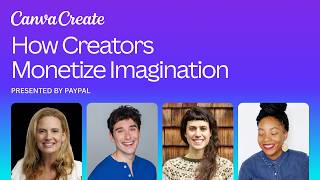
In an era where imagination is the new currency, creators are constantly seeking innovative ways to transform their artistic passions into sustainable businesses. A recent conference session, 'How Creators Monetize Imagination (Presented by PayPal),' brought together leading voices to discuss the evolving landscape of the creator economy, highlighting the critical role of seamless monetization tools and authentic brand building.
“Your work has value, monetary value, and that you should not be afraid to charge for your work.”
Discover how top creators turn passion into profit. Learn actionable strategies for monetizing your craft, building an authentic brand, and leveraging new platforms like PayPal's payment links in Canva.
Hi everyone. It's great to be with you today. today. Um so as we start, I just wanted to take a moment to tell you that I'm thrilled to be here and as I look across this audience, I actually don't think it's an audience, it's a group of creators, entrepreneurs, side hustlers, storytellers. And one of the most important things is how do you make money from your craft? So today as we embark upon this journey, I'm going to talk about the business component of what you do and how you bring to your customers that you activate with every single moment. Um how you reach them in the forums that you touch on a constant basis. And just a show of hands in the room, how many people here have struggled with how to turn their creation into a moment of sale and monetize their brand? Thank you. Great. So I believe that's fundamentally because of the fact that commerce and creation are disconnected.
Today when you create in apps and in surfaces like Canva, you're moving into a different surface, into a different forum altogether to get paid. And so that creates an extremely disjointed and fragmented experience for your customers. And today I'm here to share with you that PayPal in partnership with Canva is changing that and bringing commerce and creation together. So I'm thrilled to announce payment links within the Canva ecosystem. And what it fundamentally enables you to do is create, share, and get paid instantaneously. So let me show you how it works. Within the Canva ecosystem, if you log into the App Store and you type in payment links, you're instantaneously taken to the PayPal product, which if you sign in with your PayPal business account or create an account instantaneously, you're then able within the same creation framework that you use today to add all the information about your creation and your design and it automatically generates a QR code, a button, or a link for you to distribute to your customers within Canva. So you don't have to do any extra steps. There are no extra sort of fees associated with this. What it really does is it enables you then to meet your customers in the forums that you meet them today. You can email them, you can use social media, you can text them, all instantaneously. And from that link, they're able to you're able to get paid from PayPal, from Venmo, from credit cards, and be able to add buy now, pay later capabilities as well for customers that want to split payments over multiple periods of time. So that is what we are launching. We're thrilled to be part of this with Canva and this is what it looks like when creation and design really come together for customers in a very seamless way.
With that, what I wanted to do was introduce uh a wonderful group of panelists who are here with me today that are going to help us bring this to life and talk about how they brought monetization into creation seamlessly. So with that, I'd love to introduce Shay Anthony, Andrea Love, and Julian Shapiro Barnum to the stage. >> [applause] >> Hey guys. Hi. How's everybody doing? Hi. Thanks for coming to this this talk. >> [laughter] >> Um so I am going to have my panelists do a bit of their own introduction as we kind of go through this because I want you to hear about their journeys, what they've done in and around creation, but I'm also when they introduce themselves, also want them to add another question, which was what was the moment that most sort of sparked your creativity that led you to believe that you could create a business from what from what you've been doing. So Julian, I'm going to pass it over to you to start. >> Thank you. Hi everybody, I'm Julian Shapiro Barnum. Um I'm a comedian, writer, and interviewer. Um Um I have a couple of shows online. Uh the first one's called Recess Therapy. It's a show where I interview kids all around New York. I was going to say the world, but that's not true. Um Canada once. Canada once. Uh but I interview kids about like life's biggest questions. I have another show called Celebrity Substitute where I have celebrities go into public elementary schools around New York City like A$AP Rocky, Billie Eilish, and spend the day teaching. Um and then this I was going to say this summer, but like in 2 months I'm launching the internet's first late night show with YouTube. That's going to be cool. And I have a book coming out, so read that in August. >> [laughter] >> But uh when when did I when did I know I could make it into a business? Um I don't know, that's a hard question. I like, you know, I I went to theater school. I studied playwriting and acting and like there was never a world where it wasn't going to be, but I think, you know, I started Recess Therapy at the end of my senior year of college during during COVID and um I you know, within 6 months we're it's weird, it's only 5 years ago, but like we were one of the first like big interview on the street-y New York interview shows that now there's a bajillion of them, but like within 5 or 6 months of doing it, we um brands were reaching out and asking to work with us and um I think that was when I was like, oh, okay, okay, okay, I can stop doing freelance work and really devote everything to this. Does that answer the question? That is a perfect answer to the question. That's amazing. Andrea, I'm going to pass it over to you. >> Okay. Hi, my name is Andrea Love and I am a stop motion animator from Port Townsend, Washington. Um I have been at this for about 15 years now. I'm completely self-taught and all of my work is almost exclusively out of needle felted wool. Uh I do short films, music videos, uh social media content. I've done an online class and a couple years ago I started a game company called Woolly Games and we are making a felted stop motion game called Feltopia, which is all about felting. That's amazing. Oh, and so yeah, I mean, the origin story of what I do is uh you know, pretty much right out of college in 2011, I was teaching myself how to animate. I was just kind of doing it in my bedroom, in my closet, wherever I could figure out a um sort of how to set up a a stage. And I started working with local businesses. Um that was where I got uh my foot in the door. I just sort of was uh you know, you know, just take taking on these small jobs, learning on the job, and uh eventually started posting on social media and like Julian, it was sort of like when the brands started reaching out and that was sort of like the moment that it went from sort of a a passion career to an actual profitable business. profitable business. Shay, what about you? Hi, um my name is Shay Anthony. I'm from Atlanta, Georgia and I started She Is This in 2018, so it's been a while now. Um I wanted to celebrate women of color, women that look like me, brown, black, and I didn't see myself um represented when I would go into big box stores. Um at the time I was doing interior decorating. I remember walking into like a HomeGoods and again, 2018, and being surprised to finally see black and brown girls in the art. And at that moment I had already knew I had the business acumen. It was just finally now I had something that I knew I could put a passion behind. And I think the moment that I solidified it for me is when I started selling prints and I would have people DM me and say, you know, I bought a print, I put it in my daughter's room and she said, Mommy, that looks like me. And that was it. And from from that moment on I knew that was where my passion was and so I've just been doing that ever since. Love it. Okay, I'm going to come back to
Julian. So Julian, you've talked about stumbling upon something extraordinary in the work that you've done. How have you thought about building your brand and staying true to that brand on this journey? Fabulous question. Thank you so much. Um yeah. How how do I think about my brand? Um I think I don't think about it like a brand. I think that's kind of my how I've been thinking about it in in relation to this question. Like I think everything that I make uh and have made even before anybody else was watching it came from this like very real uh need to tell a story, ask a question. Um and I think people respond well to authenticity and genuine curiosity and artistic practice and I think in that I've been able to build my audience. I'll give an example. Like when I started Recess Therapy in college, I was um you know, it was coming out of the pandemic in 2021 and I was very unhappy and was doing online school and was pretty miserable. And the reason I and every week I would go out and like interview people about something different that I just was kind of curious about. Probably cuz I couldn't hang out with people and so I brought it to the world. And then like at the very end of my senior year I went to a playground and I asked all these kids about like how they found happiness during this hard time. And their answers were like mind-blowing and I was genuinely kind of taken aback by what they were saying. And I think in that moment I went, oh, okay, this is interesting. What if I made a list of everything that I was struggling with as a 21-year-old, all the things that I was like climate change, anger, are there aliens? Like all these big questions. And then, you know, big 21-year-old problems, are there aliens? And I went out and every single week without fail I would interview kids about it. And I think people started to relate to that and like wanted to know more about that and then there was a brand I guess and then >> [laughter] >> like with celebrity substitute it's the same thing. I was like what you know, the kids at that point a lot of celebrities were coming on the show and artists and stuff and um it was like what could these kids learn from the celebrities and then without said tonight I'll I'll be quick about it. I was like someone who grew up on late night. I love late night. Late night has exclusively been like a network show and the internet to me has become this exploded version of a late night show. Like you see all these shows that are a piece of what late night offered as a full package. May it be like a long form interview or like a repeatable game or like a musical segment um and I was like what if you brought that all back together and I'm hoping that the brand follows the curiosity and the passion um and I think when building a brand starting from a genuine curiosity and not just thinking about what might work, what might captivate attention. Like I never think about that first. I think about what do I need to do as an artist. >> I love that and I think one of the other
things that you've talked about is the show Bible or really the manifesto. So how do you think about the principles that really sit behind what you do and staying true to those in these various new mediums and formats that you're pursuing? Yeah, I mean I come from you know a screenwriting playwriting and a big element of that is like the show Bible. It's the like what do these characters believe in? Who are they? What boundaries do they not cross? Like what is their given imaginary circumstances and I think when I started recess therapy in college, I don't know I'd be doing it for five years. Um I'm still surprised I'm doing it now but um I before we started I went okay, I'm going to be working with kids and I need to take this very seriously. What are things that I will do? What are things that I won't do? Like what what is what are the boundaries of the show? And uh I found that list like maybe a year ago and I was pleasantly surprised to see that I have not compromised my values on the show um um which segues which it is sometimes hard to work with brands on recess therapy because it is very clear what it is. Like the the show is asking kids what they think about something. It is not showing kids something. It is not asking them to do something. It is getting their genuine ideas. When I start celebrity substitute and now what I'm starting outside tonight knowing that brands are a key component of this ecosystem of like how these shows work in building the show Bibles which I did again or manifestos sounds scarier um I was like okay, how can we make brands a part of the storytelling in a way that doesn't compromise the story. So with celebrity substitute we exclusively have worked with Amazon today and every episode we go into the school and a core part of it is what does this school need? They need a new library. When Malala came on we gave the school an entire new library through Amazon. How can we or you know, with ASAP Rocky we built a recording uh studio in the school in Harlem. Like we see how we can use the brand to elevate the story and unlock something that we couldn't do otherwise while also still telling the exact same story that we're going to tell anyway. With celebrity substitute I mean with outside tonight I'm referencing this but I don't know where it is up there. It's like remember on a zoom call when you're like and it's somebody else. Anyway, [laughter] um with outside tonight and if there's any cool brands in the audience hit me up, you know, we're working with a bunch of brands and they're built into like the interstitials and the games and the interviews. Um we're working with like Chase and all these cool spots. But anyway, yeah, you build it in and you make sure it works and doesn't sacrifice the story. I'll stop talking. >> I love it. I love it and I think that's
a good transition. So I'm going to jump around. Shay, I'm going to come to you. So Shay, you started She is this and you did it also by the way working another full-time gig at the same time um because you talked about how you didn't see yourself reflected in art. And I talked I started the session by kind of talking about money which I know is never super fun to talk about but how did you think about building a strong brand and this engaged community because what I've been so impressed by is your community has stayed with you and then how do you think about taking that community and starting to monetize it? Well, for me um y'all probably won't know this cuz I'm on a stage but I stage fright and nervousness and being in front of a camera is a really big thing for me. And so for the longest time when I started my like have my business I was always like I'll just be in the background. It's fine. I'll have a nice logo. I have a great product and then they won't nobody will care who's behind me. And so what I ended up having to do was really lean into the only issue with that was that I'm a terrible salesperson. So I can't sell you water if you are about to you know what I mean? So I said, you know what? I've got to get in front of the camera and so at that point I realized that people wanted genuine authenticity. If you are a small business a lot of times we don't want to be a small we want to seem like we're a huge corporation. We don't want to you know, I want to be really professional and that logo has to be tight and that business card has to be perfect. But really what helped for me was to come from behind the camera and then all of a sudden it was like oh this is the person that's making my product. Being a small business, you know, like I said it always sometimes comes off like a bad thing. Oh, I can't fulfill that order. They want 50,000 there's no way I'm too small. Oh, I you know, forgot that order and didn't mail it. Oh my goodness. I'm small. I'm a small business. But being small is great. You don't have to outsource any it's just you. You are the person behind the camera. You're the one that's doing everything. So that allows you to kind of give people a behind the scenes take. Um growing up I've always like I would watch a show and I love to see the bloopers. I want to see the behind the scenes and so for me I've noticed that my my tribe as my mom calls she said do the stuff and the tribe will come. They enjoy you know, seeing my dog or seeing my process, you know, I'm trying to shoot uh for Christmas I was trying to shoot a little uh coffee um cocoa bar thing and he jumped into the picture and so instead of you know, like editing you're like okay, move I'm going to redo it. He's in the picture. Here's the thief trying to get this the marshmallows and so that gains that engagement because that's relatable. That's funny. We all have pets. We all have you know, we don't live in these clean you know, um pristine uh situations. So like I said for me just really leaning into being small showing my that I am small that I am it's just me. You know, sometimes I'll get messages. Hey, you know, this is for the office of Shay or like the assistant. I'm like who are you? It's just it's just me. I'm yeah, you got me. You know, or like I'll get a DM and they'll be like thanks for answering. Yeah, like I oh yeah, it's true. You know, so they enjoy that. Like I said most people just assume it's some big corporation but I've been able to or you know, not my business but just businesses in general when you say you have a business they think it's so you know, structured or like a certain way and I'm like it's just a girl with a business. You know, you can reach out. So that's been how I've been able to connect with that community. I like I just I just show them who I am. I'm goofy silly. They see my mistakes. They see my progress. Um before they even see a product they'll see me designing you know, the work in progress. Some of the prints on the screen they see me start it you know, before I before it became a finished piece and then that just that builds that relationship like authenticity and connection. Well, and and to the point on authenticity then and not being a salesperson, how did you start to see the monetization? Like how did you start to have people pay increasingly and ask them Like I said you said the answer that I built that tribe that community. So now that's where I go. So a lot of times instead of having a business and you don't have any answers or you don't know what's going to sell. You're just guessing. I have
this whole group of people that I can ask now, right? So for instance sometimes I I crowdsource the information. So if I want to come up like I want to put a design on a shirt. I did this happen. I was going to do black and white graphics um couple years ago and I was so proud of those shirts. I love a good black shirt with white words on clearly. I was like yeah, that'll be perfect. I got to put those out there. Didn't sell not a one. I was so I was shocked. So then I said okay, what's going on? So I would notice that people would ask me they'd see a print very colorful and they'd say put that one on a shirt and then I learned from my tribe that oh they really don't like black and white shirts. They want you know, what they want something colorful on there. So that's how you're able you don't have to wonder. You don't have to guess. You've got these this group that's followed you. That's honest. They'll tell me if they don't like something. I'll ask them. You know, hey do y'all want this shirt in white or do you want it in orange? Whatever I want to know that's who I'm going to because those are the people that are going to buy it anyway. I love that. Um Andrea, it's probably a perfect segue over to you. So very different type of medium. Um you taught yourself how to turn wool into a medium and now with partnerships with Netflix and Coachella and I know we'll talk in a moment about Feltopia. Very exciting. Um how do you recognize when an unconventional idea actually has legs to it and it's worth pursuing? Yeah, so there are a lot of things that
come into my mind when I'm thinking about what I'm going to work on next and so I would start with like does it bring you joy? Do you actually enjoy the day-to-day of your idea and what what it really takes to to get the work done because um sometimes it'll be months. Sometimes it'll be years and so you know, you could like the idea of it but until you actually try it out and realize that it's something that really brings you joy um that's that's one really good sign. Um and then what is your metric of success? Is it all about making money? Um making a living and if so, you know, I think it's important to understand where the money comes from in your industry and just sort of come up with actionable goals to meet to meet. So but there are so many other great ways to to measure success whether it's the skills that you learn, the people that you meet, the connections that you make. So just you know, having a clear idea of what you're trying to get out of it. And then also you know, your tolerance for risk. How much risk are you willing to stomach and do you have a safety net? And so you know, if you're young you're right out of school and you have a lot of free time like that's a great time to to you know, shoot for the goal. But if you have like kids and you have to make a living and you you know your life is full. I think having that sort of side hustle with a day job is always a really good path to take. Um and then finally yet you have a hook. What's your unique offering that's going to grab people's attentions and you know in this day and age we have to have either that visual style or the the story that is going to draw people in. And so yeah if you have a hook, if you have passion for the idea, if you can absorb the risk uh yeah I think it's probably has some legs. >> It has some legs to it. And can you tell tell our audience too about Feltopia? How did you run that through the same framework? I assume it hit on all those points. >> Yeah well it became very clear very fast that this was going to be the biggest and riskiest project that I had ever taken on. And so there were many times along the journey where I really had to do some soul searching and figure out like is this something that I actually want to continue doing? Um and even like a year and a half into the project we completely scratched it all. We we tossed it all away and started over. And uh but that has allowed me to come back with a stronger angle and vision for what we want to create. And I think it's also a you know a lesson for me in that like you don't always get it on the first try. Sometimes there's a lot you know you can learn from these perceived moments of failure that can actually set you up for success in the long run. Well so I'm going to transition into
some speed round questions now and I'm going to mix that. Maybe Julian I'm going to start with you. Um as you look back what's the one thing you wish you had known when you were starting on this journey around creating a thriving business? Oh boy the one thing I wish I knew. Um >> [laughter] >> [laughter] >> um >> um I mean I'm just going to rattle some things off. One I've learned the the wrong way about this is maybe not an interesting thing to say. I'll say it. I like never stop. I'm like a little bit obsessive and like love what I do more than anything and I think you can't make your best work from like a depleted place and this is something that I wish I I'm telling myself to know today and always but like uh being able to not get yourself to a spot where you need to bounce back to get your spot where you were taking rests and coming at it from like a level and clear headed spot. I feel like my friends and I all just go so hard all the time and then like we're not making our best stuff. So I'm saying it and also to myself like I wish I knew how to like balance and find balance in the work. Cuz also there's so many beautiful things outside of your work. >> That is I'm really just talking to myself right now. >> I think you're talking to all of us. >> really really I was I was feeling what you were saying like with this late night thing like it's it's hard. It's hard to take a real big risk on something and I think um it's exciting but so scary sometimes. Really is. >> Andrew what would you what would you add to that? So what's the what do I wish I knew >> yeah we were starting out. Yeah. >> Well for me it is that your work has value monetary value and that you should not be afraid to charge for your work because I just I spent years at the beginning of my career undercharging and apologizing for it. And as soon as I was able to actually charge a livable wage and I feel like my clients also respected that as well. And yeah I just I spent way too many years uh not charging what I should have been charging. Very good one. Very good one. Shea over to you. Um I think my biggest one would be to make the make the stuff. I like I mentioned earlier I had all the logos. I had all the you know business cards. I can't tell you how many business cards I threw away or how many you know just that I never used and it was like the website was pristine but where's the product you know? And then on the other side of that I meet so many people that'll show me you know I've got I I know one guy he makes beard oil and he's got all these oils and I'm like well where where is he selling it at you know? So like but he's got the product. And like if you're trying to sell something you can't sell your logo. You can't sell your business card. You have to have the product. And so just going ahead and getting that to the forefront first and then working out the other parts. I think if I'd known that sooner I would have had a more um a stronger product base and wouldn't have spent so much time again trying to have great branding and no product. You know what I mean? Like I'm here now and that's fantastic but I I would have liked that earlier. >> [laughter]
>> [laughter] >> Shea I'm going to I'm going to go the other way. Where do you see yourself in five years? Oh you know what? I I I think the answer to that is supposed to be that I want my business to just be but like you mentioned I am full time and I actually do enjoy having a full time job and have a good business. And so I am perfectly fine if in five years my business is just where it is right now. And I know that's a crazy thing to say when everybody's thinking growth growth growth but I think it's very important that in if you have a business that you're supposed to enjoy it. It shouldn't be like a a thing that you're always shooting for like I got to got to get better got to get better. So right now I'm so fine. So if in five years I still have my small business and I work full time I am perfectly fine. I'm great with that. Yeah. I love it. Five years in five years I would love for Feltopia to be out in the world and a massive success. Uh maybe working on game two or perhaps a feature film or a TV series. Uh but I also just am enjoying building a team of people and sort of see my role evolving from just sort of like a single creator working in my basement to sort of you know a collaborative experience uh experience with more more people. So that's my hope. I love it. Okay Julian you want to finish up? I can't >> the king of late night. What are you going to Well I don't know. I can't think past August right now. That's my world goes until then but I don't know like I I hope I made one or two feature films. Like I hope I you know am I don't know. I I kind of I never I feel like I come up with stuff all the time and then I never know what I like I hope I'm doing something I love doing and like whatever new idea comes my way I hope I give it 110%. Um and I hope I got some good new recipes. I know how to make. >> [laughter] >> [laughter] >> I've been making the same three things for like >> Well if they work they work. I get it. I get it. You guys thank thank you all so much for being here and for joining us today and I hope um it inspired you but you also take advantage figure out how to plug into more of the Canva ecosystem and opportunities and we can't wait to see what you do next. So thank you all. >> Thank you. Thank you.
Top Moments
Relatability Builds Community
Authenticity Fuels Growth
Test Your Creative Vision
Crowdsource Your Next Hit
Seamless Payments, Instant Cash
Failure is a Relaunch
Unshakeable Creative Principles
Up Next