AI Purgatory: Are Australian Execs Missing the Boat?
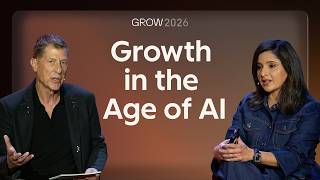
The rapid advancement of Artificial Intelligence presents both immense opportunities and significant challenges for Australian businesses. While many executives acknowledge AI's disruptive potential and are investing in pilot projects, a notable gap exists between initial adoption and truly transformative outcomes. A recent study revealed that three out of five Australian organizations use AI as an assistive tool, yet only one in five has seen it fundamentally change their operations. This panel discussion at GROW ANZ 2026 brought together leading executives to dissect this 'AI purgatory' and chart a course for genuine agentic shift.
“What we mustn't do is put our heads in the sand. Australia mustn't put its head in the sand in this very volatile, very fast-changing time. We need to lean in and see opportunity.”
- Megan Hughes, Managing Director & VP of Sales, Asia Pacific & Japan, HubSpot
Australia's top executives reveal the stark reality of AI adoption: many are stuck in 'pilot purgatory.' Discover how leading companies are moving beyond individual productivity gains to fundamentally transform their operations and unlock unprecedented growth with AI.
All right. Hello everybody. Thank you to my panelists for joining me. We're going to have a really interesting conversation today about AI. Um I think most of us in this room and through the conversations today have moved past should we adopt AI. And the question is uh how do you actually build an organization where AI is doing real work not just sitting in a pilot delivering individual productivity um or used in just one siloed use case. And that's what we're here to talk about today. And I'm thrilled to have with me three leaders who are at the forefront of this in their respective domains. And before we get into a candid conversation on what it takes, I'd love for you all to please introduce yourselves. Helen, can we start with you? Sure. The things I list uh that I do are um chairing a couple of scaleup companies and edtech, Education Perfect, and Higher Up. Uh but broadly what I do these days is um help people uh steer their companies through uh digital scaling having worked in Seek and Etsy and VTO and a number of other digital companies over the years done a few rodeos and help other people with theirs. >> Hi everyone, I'm good. I'm the managing director for Australia New Zealand at zero and also our global chief strategy officer. So the MD role is all things go to market for zero in this part of the region and obviously from the strategy lens thinking about how AI but everything else uh how do we make sure we serve our customers well. >> Hi everyone, my name is Will Snell. I'm based here in Sydney. I work for Open AI and I lead some of our strategic accounts. Uh these will be large enterprises. It could be government. Uh it could be non for profofit ways to uh actually use AI to drive impact. So, it's really rare to have three such different vantage points on stage at one time and between the three of you, I think we're going to have a really interesting conversation. Um, we're going to get into the AI landscape and some really actionable takeaways uh for the leaders in the room. What I'm hearing uh from a lot of the the organizations that I speak to is that the technology is moving incredibly fast and probably faster than most organizations ability to absorb it. Um Will, I'd like to start with you. Um you're across enterprise AI deployments across the region. Um what's your honest
view? Where are most A&Z organizations sitting right now with AI? >> Just zooming out quickly. I think globally we do hear a lot of large companies say that they've understood that AI is this really large of disruptive factor that they need to um they need to lean into. then nearly all of them have some investments in AI different projects. Uh but very few feel satisfied with the results. Um and so if you then look at Australia, we hear the same thing in boardrooms and with uh senior leaders here. Uh everyone has acknowledged that AI will change Australian businesses, Australian landscape uh pretty dramatically and they're all investing and they do feel a little bit like they're stuck in PC purgatory. And one of the things that we often do is work with large organizations on on how to get out of that PC purgatory and how to also measure the impact. Um and so I think Australia's doing you know relatively well in terms of acknowledging you know the changes that we see. Uh but there's still more which is a global trend. There's still still more work to be done uh with regards to the sort of capability overhang. What we talk a lot about at the company is if we were to stop all model development today, which won't happen, but if if the entire industry was to stop, there'd still be years and years and years of economic impact with the models capability. >> Yep. >> And so that's largely a deployment um and uh sort of like a an investment issue. And so we work with large companies on how to clear that. >> I love PO purgatory. That's really interesting. I think a lot of us can relate to that. Um Helen, you're sitting across multiple boards with very different companies. Does what Will is describing now make sense for you? Does it align with what you're hearing? Uh not my personal experience, but that is a slice of the market and they're all digital first companies that I work with. Um I would say that was where a a number were middle of last year. But since December the adoption, the disappearance of skeptics, the um excitement about the productivity gains and revenue opportunities has utterly transformed. I've never seen such a speed um of transformation of of ways of working attitudes >> very hard for people to keep up but um it it's a very different place now in the companies I work with but it is in a digital um a digital context who should be damn good at adopting new technologies. So so I think it's probably that slice of the market I would say. >> Yeah. And we like to think that tech companies are at the forefront of all these things that are happening. Lots of people from tech companies on this stage. Um Angard Zero sits at the center of millions of businesses across A&Z.
What's the gap that you see between what customers say they want from AI and what they're actually getting? >> Yeah, I think if you think about our key customer, mostly small medium businesses, the the thing that we know for them and Zero's been empowering for many years is they're time poor. the last thing you're trying to do is manage your back office. You want to go serve customers. You started a small business or a medium business to go, you know, achieve your dreams. And so I think the the thing that they're all looking for is time efficiency back. Give me insights. Give me the knowledge I need. And I think the thing that's stopping them the most frankly is up to us as industry leaders, which is how do you provide that in context of the work they're doing. if they have another tool they have to go off to the side. There's always going to be trail blazers to your point that will happily have 50 Chrome tabs or you know open to go do what they need to do. But I think really and the way we think about it at Zero is like what is the most important insight we can use through all the technology that actually helps a small business owner make a decision, change the way they serve their customer, but in context and and let them just do what they want to do dayto-day. Um so that I think is the biggest gap at the moment. If it's like a lot of context switching, there's a new tool every single day. >> Should I be trying this or trying that? And it creates uh in their world, not Purgatory, but analysis paralysis of, >> you know, and then it's, oh, it's just all too hard. Let me go back to doing how I used to do it cuz now I'm spending more time trying to learn the new tool versus just actually adopting it. >> Yeah, for sure. So, it's nailing that specific use case that's going to move the needle for you and deciding on that. Do you think >> and and I think as platform players like ourselves providing it so it feels natural >> like why do they have to go learn AI? How about they just get the insight they want and then they can keep executing. >> Thank you. We've heard a lot through today about the gap between AI output and outcomes and I think that part of the conversation is really crucial. We ran a piece of research recently with over a thousand Australian business leaders and a couple of numbers came out of it that really stuck with me. Three
in five organizations said AI is already being used as an assistive tool across their business, but only one in five said it's fundamentally changed how their teams actually operate. And I think that gap between we're using it and it's actually changed how we work is something that I'd love for us to dig into uh in the next piece of this conversation. All three of you have a really unique view on this. You're across you know large scale enterprises. you're a lot you're across you know a lot of smaller companies you're across boards um let's talk about why this gap still exists for so many organizations and then what are the leadership decisions and moves that you've seen actually close it so Angad I want to come back to you zero started integrating AI into the product really early um when it comes to your internal use case what are the biggest areas that you've seen driving AI uh adoption or outcomes >> I mean the way that we're thinking about
driving that change is both top down and bottom up. So one, we're trying to give as many of our teams the tools they do need >> less on the PC, but just go run hard. At the end of the day, many teams know their context and know their work better than we're going to know centrally or top down. Um, make it very easy to procure those tools, set the right parameters, and then let them loose to make sure they can get more efficient. I think then it's upon us as leaders to do the harder thing, which is how do you reimagine the way work needs to get done? cuz that often requires you to go across multiple functions that in a business requires you to rethink how those functions should even operate and I think it's unfair to ask your employees to go do that natively bottom up. I think that's our job as leaders to say how would we fundamentally change this and so for us I think we're seeing use cases across whether it's marketing customer support sales the best bang for buck is where those teams are actually changing multiple steps in the process and just running the process completely differently using AI tools versus trying to sprinkle a bit of I checked you know a model to try and see if I could do this a little bit better. It was how could we actually change the way they create all our marketing content digitally? Start with that problem statement first, give them the right tools, and then let them rework the workflow. >> Yeah, absolutely. This is where AI moves from being an individual tool where you're just speeding up an individual process that you're doing to an institutional tool where it's changing the way you you fundamentally work. Um, Helen, from where you sit, what leadership decisions have you seen that have moved the needles for some of the companies that you work with? I think
it's not a leadership decision. My personal view I think it's a practice and it's from board down to call center operator not down but you [laughter] the full spectrum of roles touching it playing with it seeing its power I think that is the point of of complete transformation of most people's thinking about it as a tool I think we are for me it I the closest thing and it's not it was not as rapid in its introduction is the arrival of the internet and we do not even know where this ends. >> Yeah. But the most important thing is to get on email and work out what it can do for you. And you know like the early days of the internet work out start playing with it because the the use cases are emerging every day in every department in the organizations I'm working with. Every single department it starts in engineering gets tested it gets measured. They start to get excited in recent months in particular. Um but it's spreading very very rapidly. Um and so I think if a leadership decision is involved, it's give people space to start using these technologies. Take the AI component of every software you use. Play with it yourself directly because because the power will be in the use cases you imagine. I I personally don't think it's a leadership decision. And I think it's a it's an individual keeping up to then collectively transform every organization. It's my personal pick. >> Yeah, that's really interesting. And you know, we talk internally about employees and their AI fluency and their ability to contribute to the organization using AI. And that's a really fundamental skill now that we hold really really valuable at HubSpot. Um, and we often talk about that when we're hiring or promoting. we talk about, you know, what have they done to lead with AI and where are they creating uh a difference that others maybe aren't? And that kind of aligns with what you're saying. Um Will, can you share your observations on what's working for the companies that you work with and where you're seeing an impact? [snorts] >> Sure. I think the companies that are
seeing the the biggest impact are the ones that are have a high level of conviction. They have board support and they have very bold leadership making um decisions about using the tool and engendering a culture of of fun of of testing of um of permission for people to use it. We do some pretty detailed surveys on deployments of AI with our biggest customers. Uh and the number one sort of differentiator from uh you know like a meaningful successful project to one that is sort of me off the charts is full leadership buyin. >> And so you know one example I think of a lot is CBA with Matt Common. You know he is an avid AI user. The culture at the at the entire bank is that everyone is is given access to to the tools. Um, and it's one I think what is different about this technology is that it's not like you set up a quarterly check-in, you say how you going with AI and you're done. It needs to permeate the way that these organizations work. So, I've come across many organizations where, you know, in some meetings they'll start with their use case, the personal use case of AI that week, which is a really kind of engaging way of people to share how they're using the tools. um a lot of celebrating of use cases uh that we work with in New Zealand and one of the procurement team members you made an incredible breakthrough in terms of the onboarding of of um of vendors using chat GBT >> and she was supported in front of the entire company by the CEO. So I think the more that the tool you people are using it like if you're if you don't think if you're a leader you don't think that people are using the tool you're probably mistaken and in fact you know I've been in so many rooms where leaders will say like oh I've heard about open claw and then their entire tech team be like yeah we're using it like I've got five open claws at home and do you know what I mean and so people are using it and so it's about bringing that excitement and the guardrails into an environment that people feel they have the permission to do it. Um and then um as was mentioned making sure that there's like a framework for what does everyone using the tool look like and then what are the priorities for the company so that how do you build towards your northstar as a company with AI. >> Yeah. Really nice. So interestingly Helen you talked about bottom up you and and Angad talked more about top down you know you talked about bottom up as well. It's a bit of a combination of the two. Um, and I think the other thing that's
really important, which you almost all mentioned, is um, the ability to measure outcomes. So, what are we hoping to achieve? What's the outcome we're looking for in 3 months, 6 months, 12 months? You know, how much will that change over the next couple of weeks, let alone months is something none of us know. Um, and measuring not just the AI strategy, but the business outcomes that are attached to it. Um, so I guess you know the question is how do you know that your approach is working and when you're unsure of what you're working towards and so how you know you know measuring that measuring that outcome making sure that you're really clear on what you're trying to achieve and that you're taking your teams along that journey is really important and I think that brings me to what I want to dig into next which is um getting your organization aligned around a slightly different challenge. So getting the outcome is one thing, but how do we get organizational alignment around this and how do we build the internal business case? So I'd like to go behind the scenes and ask each of you about the internal work, the selling that has to happen before the technology even gets involved. Um, and so maybe it's board signoff, maybe it's bringing a skeptical leadership team along, maybe it's getting people on the ground to actually use the technology and try new things and be creative. So Helen, you've
described yourself in a way that I adore, which is at a bit as a bit of a honeybee, cross-pollinating between different companies. Um, what's one thing that you keep seeing that is effective in shifting people that are skeptical about AI? Well, certainly um that's how it felt 6 months ago that um you know, I would speak a lot about the examples I've seen. So, you know, one of uh my native AI companies I work with, um the CEO, you know, 6 months ago for sure, maybe longer, cloned a or created a virtual CEO of himself, trained it, um and his team could ask it questions when he wasn't available. Um an example like that or the CTO I met who decided not to hire a team. It's a small company. Admittedly, it's not zero, [laughter] but um it's a small company. And his decision was I've got my eight agents. They're working really well. I'm going to see how I go without it. Um those examples were were sort of early 6 months ago where I I just talked everywhere. I think in the early days of a new technology, everyone's experimenting and it's it's the cross fertilization that's sharing. There's not there's not the Gartner report yet [snorts] on adoption. You guys have obviously done some research within your companies. Awesome. Please share it as much as you can because there's not enough. And I've found I'm sharing examples across the people I work with. Um but I have to say in more recent months that's less of an issue in a digital company because people are playing and the results are starting to be profound. So I do also just think you know these are top down things you can do. share examples, find benchmarks, look externally. It's an important time to look externally as a leader in an organization, but also get them using it because they're going to work it out pretty fast. I mean, we've got great data, be it 20%, 30% velocity improvements in engineering, you know, the data starts speaking for itself pretty quickly. Will, you've talked about dual strategy, top down uh strategic bets and bottom up access. What happens when those two things are not in sync inside an organization? >> I've seen a few different versions of it. >> Yeah, >> Yeah, >> I would say they don't have to be perfectly in sync. However, it's very difficult to pick these massive bets. If you think of just going top down, pick these massive bets as an organization and bring your organization along with you if they're not involved in it. And um you know some things you know you can reimagine you know customer service experience with AI but if you want to reimagine your company you need to bring your your team along. Um so I think some organizations especially digital natives are very good at planning um the use of the technology and the tool. Zero does a great job of it. So I think there are examples of that for sure. The challenge is is that it's moving so quickly and we all you know these organizations they need to bring their teams along with them that if you don't have a tool that people use we obviously you know talk quite fondly of chatbt um because it's the one it's the most popular one that people are using in their personal lives but if you don't give people an actual tool to use it's very difficult to work out also how you can um bring them along and what I would say is >> the technology is changing so quick that we actually had some companies that we did these very custom engagements with two years ago. We would never do that now. That would just be a function of chat GPT with an MCP server or you know I think about like you know the HubSpot connector that we have. There could have been a version of that a year or two ago that people would have hacked together and it could have worked but like now we don't need to do that anymore. It's a function of chat GBT. So, I think having a playground where you can have these powerful AI experiences that you don't need to custom build is really important because where you put your time and energy is really important, especially when you get those 20 30% gains in the engineering team. >> Yeah, absolutely. Um, and I'll share a little bit about what it looked like for us at HubSpot as well. So um about a
year ago, a year and a half ago, we gave uh a lot of our organization access to a bunch of different AI tools and we you know we encouraged AI fluency and we created tiger teams and we created some you know some experts in the field and we sent people off to build a lot of stuff and to be as creative as possible. Um we shared wins, we formed some habits and we thought about what are those use cases for us internally that are really going to be meaningful for us. And then this year we've shifted and we're focused now on outcomes more than efficiency. So rather than rewrite this email for me so it doesn't, you know, look snarky to my boss, you know, let's create a a use case that's really creating an outcome for us as an organization and really driving results. Um, and what we're finding is that once adoption's happened inside an organization, um, people don't ask necessarily, should I use AI? It's more how could this be done better with AI? How can AI form part of this workflow? Uh how can I automate part of this so I can go and focus on something that's more meaningful for me. Um and that's where it gets really exciting. But I don't think that happens without leadership modeling it first. Um and so when leadership does then you start building teams where humans and AI can really work together and complement the work that each other does and we can do the things that are innately human and important. Um all right let's talk a little bit very briefly about the human and AI agent teams. Um, we've talked a bit about building conviction and getting people to uh change how they work and to lean into a place where humans and AI, you know, specialize in what they do best. Um, and I want to stay on that human moment for a second and zoom in on it. Uh, because once AI is doing real work in your team, your job as a leader actually changes and you're not just managing people anymore. So, what does that actually look like, Angad? When AI is doing real work alongside your people as a genuine team member, how does your role as a leader change? >> Yeah, look, I mean, I think it's if we
even go back to your previous comment on how do you measure the return? Uh, you said an important thing Megan around just like measure the business outcome. >> So, I think it's very easy when there's a new tool or tech to say what's the latest leaderboard or scoreboard of some very finite metric. At the end of the day, what's your business goal that you're trying to solve doesn't change? And so, is it enabling you to get to that business goal faster, better, more effectively? And if it isn't, and I think that's the same when it comes to then how are using AI as a teammate to your point, if it's assisting you, if you're assuming that and as a good leader that you can outsource everything to that agent >> and you think you're going to get a great outcome, you're probably not, right? Just like we used to hire highly talented, skilled people that you trained, they would give you output. You would coach them, you would guide them. I I think it's no different. Uh context is critical in any AI environment. How much information can you give a team member to give you the best work? It's the same with AI tools. The most content you can give it context or problem, multiple conversations. And so I would encourage people that if you're trying to create this team of agents and humans, treat them like a team member. Obviously there's inherent differences. It is not just a human being. But but they need the same things. They need great context. They need to know what outcome you want. And they need to know how and when they what output you want delivered. If you give that clarity, it's going to work much better. >> Yeah. And they need access to all the information that you would provide to an onboarding team member. And you need to allow the time for that onboarding to take place because it's not a short process. Um we have a customer um can I build and Mark Deacon there speaks about um how his team of trained agents and that they on average spend about two weeks on boarding an agent and then have a robust feedback cycle of three to four weeks for each of those agents to sort of really manage them effectively. Um will is there anything that you want to add on on the idea of humans and AI working together? >> The thing is now is that we have so much AI generated content out there and systems and agents that what we do as people is really important because you know I can't write as good an email as Chatt. [laughter] Um so I think what happens is the companies that really also adopt AI really celebrate all the stuff that AI can't do. And so you know like um it's very easy now to send a report that summarizes everything in your slack like that's not difficult. So what becomes really important is working with the team getting that report refining it you know having influence in organization. And I think these things will never change. And I think what happens is that people just think that these tools will just like automate companies completely. And I think that some of the auto like that is probably where the future will go in some level. But then our ability as humans to drive change decision-m to work with the board you know it will this technology will permeate all parts of organizations and yet we're still going to be core to organizations. So I think we should lean into what we do best. >> Yeah. I like what you said there about what humans do with the out with the outcomes because it's the decisions that you make off the back of that report that chat GPD gives you that's more important than anything. >> Yeah. >> Yeah. >> Um okay let's talk about the data that's
the foundation for AI. Um not in a technical sense obviously but in a practical sense of like do you have the foundations in place that are actually going to make AI work? We ran a piece of research recently um with a thousand Australian business leaders and 44% said access to relevant business context and data was most important for AI agents to operate efficiently. And in my experience, this is where a lot of organizations can run into trouble. There's actually a distinction that's worth making here. Data is what happened. Eg a deal closed, a customer churned, a campaign ran. Uh context is what that data means. So why the deal closed, what made the customer leave, why your what your team learned along the way, and that's where the gap lives. Um, Angard Zero's whole AI thesis is built on being a trusted system of record. And you've talked publicly about the shift from system of record to system of action. Um, what has to be true inside an organization before that shift is possible? >> Yeah, I think you mentioned obviously data is a critical foundation. Uh but I think for any system to become the system of action uh you also have context of the workflow to your point. You know there's one thing to know what is in my bank statement. It's another thing to know how many times is that the same thing? >> How often does that need to then interact with different members of my team? What does my accountant and bookkeeper do with this information? Uh they have pattern recognition. And so you know the next thing you need to do on that data is trust. And to get trust we've talked about it just in that previous conversation. It's how do you have the right human in the loop at the right time? What level do you want to be automated and what level do you want to go in your workflow to a human to cross-check something to then trigger the next action? So we think it's critical to build that trust uh with the human in the loop and to do that I think you know we have we have the benefit but I think any company that's in this system of record space has this opportunity which is you have years and years of context of how that information is used how it gets manipulated how it gets used to make decisions to your point um and that's all the additional context you need to build on top of the raw data >> absolutely Helen can you share what the companies that you work with have had to manage uh in terms of data foundations and what advice you would have. Look, I think this is a journey that was already happening. Data um you know machine learning is 15 years old, data lakes and so on were already um incredibly important and the engineering of those to give access. Um I think uh the difference now is the autonomy of the agents working with that data that potentially is fully automated and no one is checking that it makes sense. Um I I think there's a lot of talk about the data being important, the context being important. I think on top of all that is is judgment which at the moment is more the human piece. I think it will become an autonomous piece as well and then we'll need to check the judgments >> and have checks and balances on those judgments. But at the moment it is um it is where most of most organizations are still keeping the human judgment over uh those those calls. Um I think that will change and I think that's where it gets very dangerous if you haven't got your data um engineering strong to the point of you know it's correct you know um the logic of of the entire organization uh and can leave things autonomously making the right judgments yeah it's much more critical now >> yeah I think so so the data in the context layer the human over the top making the judgment at the moment. at the moment. >> Yeah. At the moment. Exactly. Yeah. And and some of those judgments, right? It doesn't have to make all of the judgment calls, but it's a trust question like you said and you know where where we trust AI to go ahead and make the decision in maybe those non-critical use cases and then where we require a human in the in the cases where it's much more important. Well, and regulation is also not caught up at all. So at the moment there's a lot of regulated I mean accounting is regulated legal is regulated there's a huge number of industries where you you given the regulation need to ensure there's some human judgment applied >> um before final advice etc. So these things will change but for now yeah let's move to talk a little bit about governance. So data has two sides to it. There's the foundation question, which we just talked about, and then there's the trust question and how it's being used, who controls it, how it's protected. We're not going to touch on that right here. Um, Erica Fischer and Matt Fam from Mortgage Choice had a great conversation on exactly that here on this stage earlier today. We have recorded it for you if you missed it. Um, but for us here in this conversation, we're going to talk about uh getting the data foundations right as being one side of the equation. And then also um how do you build the guard rails that protect the organization without becoming the reason that you put the handbrake on and stop everything good moving forward with AI? So Helen,
there's a lot of board level conversation about AI um as a riskmanagement question and it's legitimate, but your view seems to be that boards are not asking all the questions that they should. Um what do you think they should be asking? Can you give me some more context to that conversation? Sure. Yeah. Look, I was I was I stay up with, you know, Institute of Directors or whatever um governance latest views and I literally haven't seen AI used once in the context of an opportunity. It's all about risk management um in all of their educational materials and and that is incredibly important. I mean certainly the companies I work with has scanned the t terms and conditions of every every um artificial intelligence supplier we have because we really want to understand in detail what data is being used and where and and protect our our our competitive modes. But um the it's a governance it's a broader governance issue I think in Australia that it's so overindexed on risk rather than growth and AI has enormous opportunity and growth as well. Um every company I work with is launching products leveraging some of these new technologies gaining new revenue because of some of these technologies. Absolutely. efficiency, potentially cost savings, absolutely, but also opportunity to serve your customers better to to you know the holy grail of marketing forever come from marketing um to personalize journeys um to the segment of one. Welcome to AI. you know, you have that that ability now in a marketing context, in every life cycle for every customer to personalize to one. Um, be careful when you do and how you do all of those usual judgment questions. Um, but I think opportunity it needs to be much more where boards are directing the questions. um once some risk guardrails of course are in place, but our teams aren't silly. We also need to encourage some risk appetite around new technology because you just don't know where it will end and you do not want to not be part of it. >> Yeah, absolutely. But I like what you said that the ultimate goal is growth. You know, everything else that we do is to get us to growth. [snorts] Um and so the governance while you need to be mindful we need to work out a way to to navigate I know you have a strong perspective here how should leaders be thinking about governance as an enabler rather than a constraint. >> Yeah I mean I would echo a lot of what Helen said that we're fortunate again probably because of the industry we're in. Our board is very much about what can we do with this? what are all the you know I think if you're in a uh engineering product technology company but frankly probably most companies you always have this um paradox of choice there's usually more you want to do than you can do today >> and so I think if we see AI or any technological change as freeing up capacity freeing up time allowing you to go after new opportunities that maybe were too cost prohibitive before too complicated whatever it might be then I think it changes the conversation completely Um and but but you know we are a large company and everyone has to make sure you are secure but we did a similar thing where we got a tiger team together legal risk small group uh you know internal IT your goal with our risk appetite being slightly higher is to say how do we help us move faster so you don't have to change every process you just get the right few people together they know their job is to make sure that the right safe AI tools can come into the business as quickly as possible with some cost guard rails but then unleash our team members to do as much experimentation and get the benefit of it. >> I like what you said about bringing that team together. Who did you have on that in that group? You said legal >> legal risk and IT. So you're getting everybody on board. You're making it their responsibility to drive that drive that innovation. >> Yeah. Rather than trying to be like well you know why are you it's just like the goal is keep us safe and secure. That is your job. Uh but here is the goal for the company. We need as many of these tools to be able to come in, get them in securely and help our employees get access so they can go after the next opportunity and then they feel empowered to go enable that for the company as opposed to being seen as the handbrake which I think is quite liberating for them. >> Yeah. So you put them in the driver's seat of making it happen and unleashing the the freedom to do what we need to do with AI. I think that's really powerful. We need to think about the way we apply AI in terms of it being institutional and not individual. And I talked a bit about this before when you do what Angad's just describing where you put it, you know, you talk about what's the outcome that we're trying to drive and then we put the team together that's not only going to help like release the governance that that's going to make that happen, but then you probably also got a technology team that's actually building what you need. Then we're creating something inside a business that is creating growth and that's really meaningful rather than making tools available and saying, you know, everybody have a go at creating some efficiency with AI. So, I think that's really meaningful. I want to ask you to share something with us that's going to allow us to close on something really concrete. Um, so I'm going to come to all of you. I'm going to start with you,
Will. Of everything that you've heard today, what is the one thing that leaders should consider doubling down on? What would your advice be for people in the room? >> Uh, I would say experimenting. Um, I I I said at the PC purgatory comment before, but it's still really important to make sure that there's broad adoption. And so I think making big bets is really important. So we don't want to go away from that. But there's still so many new technologies. There's new models. There's new frameworks. There's new agents. Like um it's not a technology where you can make a decision in January and come back and see the results in December. So I think having this sort of appetite for playing uh for understanding what's coming for making sure that you're always like having it in your hands. I think that would be the thing that all leaders should likely be doing at the moment. Um I do my personal life, but I think also it permeates the the work life as well. >> And can I come to you? >> Uh yeah, if I can cheat, I'll give you two. I think um [snorts] >> one I would say use it, but use it yourself as a leader. Like build build something, try it out. I think you cannot lead your teams or your organization through change if you truly don't understand how these tools work. it. Some things might fail, some things might surprise you, but I think you have to have a deep understanding of what is possible rather than just the hype reel of, you know, what can be in the media. And then secondly, I would say um and we'll touch on it earlier, be very clear about where you want human accountability. You will want it. It's critically important. >> And instead of just thinking about how we're going to redesign the process of where there are less humans, how are we going to redesign the process? Where do we want the humans? Where do we want the agents? And how can the agents accelerate what the humans are are already doing? >> Yeah. >> Yeah. >> Yeah. Awesome. Thank you, Helen. Totally agree. Um, but I think we're living in such volatile times just geopolitically alone. >> Yeah. Cringe ever every day. And, uh, AI and this transformational technology that is just moving at a pace I've never seen in a 30-year career in digital. Um, there is, I think, a bit of a temptation for people to put their head in the sand. You know, geopolitics at the moment. There's more people than ever not watching the news. I realize this sounds like a red hearing, but I think what we mustn't do is put our heads in the sand. Australia mustn't put its head in the sand in this very volatile, very fastchanging time. We need to lean in and see opportunity. So my my leaders opportunity. We've covered a lot today from why the gap between AI ambition and commercial reality still exists for so many organizations to what it actually takes to build uh internal conviction around AI. Get the data foundations right and then put governance in place that enables speed but doesn't kill it. Um, and I think what sits underneath it all is a simple truth that the organizations that are winning at the moment, they're not waiting for perfect conditions. They are they're making deliberate choices about outcomes, about access, and about where humans stay involved to your point. Um, and they've started to your point and the context underlying uh is what makes AI actually work. your customer data, your team's knowledge, your business history. Um, and that's not going to sort itself out. The organizations pulling ahead are the ones that are investing in that foundation now and then letting their teams and their agents do work together. So, I hope today's conversation gives you something concrete to take away. Please join me in thanking Will Angard and Helen [applause]
Top Moments
Lean into AI!
Bigger than the internet?
Risk vs. Opportunity
AI is moving FAST!
Full leadership buy-in
AI as a team member?
Stuck in AI limbo?
Up Next