We Used AI to Redesign Our Events: What We Learned
Cvent, a leader in event technology, embarked on an ambitious journey to integrate AI into its event programs. What began as an overwhelming flood of ideas quickly evolved into a strategic, disciplined approach, proving that true AI transformation requires a fundamental rethinking of existing workflows.
“The job was to find the work that hurt enough, repeated often enough, and mattered enough to deserve a full redesign.”
- Stephanie Sweetland, Senior Director of Marketing Systems
Drowning in AI ideas? Cvent shares their journey from an overwhelming flood of AI concepts to a disciplined, measurable framework for event transformation. Discover how they prioritized, built, and scaled AI solutions that deliver real business value.
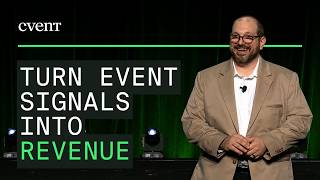
Hello everybody and welcome to our session, Cvent on Cvent, how our team used AI to rethink our events program. I'm Stephanie Sweetland, senior director of marketing systems at Cvent, and I'm joined by my colleague, Aiden Kanojia, manager of event technology. Today we want to share a field report on what it actually took to make AI work for our teams. For us, events became the proving ground. The opportunity was clear. What we needed was the infrastructure to scale it. So, we built an operating model to prioritize, govern, measure, and scale AI across our marketing organization. And by the end of the session, you will have a strong framework you can take back to your team and start using on Monday. But before we get into the how, let's start from the beginning.
Like every team in this room, we were told to go use AI. And for months we did. We had organizational and team trainings on how to use our AI tools. We used AI capabilities within our marketing tech stack. We launched some really big portfolio initiatives. And we sent a survey to our internal marketing team asking where they thought AI or automation could improve their work. And here's what we got back. 1,562 ideas. So, at first glance, that looks like momentum. And it did create energy and excitement. It inspired some experimentation, but what it really showed us was that we didn't have an idea problem. We had a prioritization problem. The job was not to pick the 50 most interesting ideas. The job was to find the work that hurt enough, repeated often enough, and mattered enough to deserve a full redesign. For months we had been asking how we could best fit AI into work that already existed. But AI doesn't automatically fix an inefficient or broken process. What unlocked progress was asking a
different question first. And that question was, if we were designing this work on purpose today, what would it look like? The step that most teams miss is the opportunity to completely rethink how they do things. As part of your AI strategy, you have the chance to review how your top workflows are mapped and design step-by-step how work should actually move through your team. Everything you're about to see came from asking that redesign question first. But before we go further, we would love to understand your audience more and where your team is in its AI journey. So, we're going to go ahead and run a poll. How often does your team use AI in a typical week? Okay, so we're seeing regular use in pockets is primarily one today. And second one is a few people are experimenting. All right, C is winning. Okay, so regular use in pockets, but not throughout. So, wherever your team is at in the adoption journey, the path to scaled AI is not a straight line. And for most teams, including ours, it looks more like this. First, you get excited. You get tools.
You provide access to them. You start using tokens. And then the work starts to spread faster than the structure around it. And eventually, the business asks the question it should. What value are we actually creating? That's the moment when a lot of teams swing hard in the other direction. More caution, more process, more gates. And honestly, we lived both sides of that pattern. What we learned is that the answer isn't ungoverned experimentation, and it isn't overcorrection either. The answer is discipline. An approach that's prioritized, governed, measurable, and built to scale. And that's the path we want to show you today. >> Events is one of the most AI-ready
disciplines in marketing. And the opportunity is visible in two directions. Team efficiency and attendee value. We're not only looking at where AI saves the team time, we're also asking where it adds value for our attendees. Smarter session recommendations, faster check-ins, better personalization. better personalization. Now, internal efficiency Now, internal efficiency and attendee experience aren't separate conversation. Now, hold on to that attendee angle, because we'll come back to it when we get to measurement. Now, that scope creates a prioritization challenge because not everything is equally ready, equally repeatable, or equally worth redesigning right now. So, the question becomes, where do we start? Now, we mapped our work instead of trying to automate everything at once. Now, as you can see, the opportunity wasn't uniform, and that was actually good news. Now, we estimate the average across event program for AI efficiency is somewhere around 40%, but averages can sometimes hide the shape. Now, in our instance, travel and housing tops the charts at 60% followed by event marketing, creative design, project management, and attendee support around 50%. Now, these are all highly repeatable, worth redesigning right now. At the other end, on-site event management sits near the bottom because there's more human judgment baked into that kind of work. So, the near-term ceiling is lower. Now, that's not necessarily failure. It's an honest read of where AI earns a role. Now, this is the prioritized layer in action. Where do you start and in what order? Because the point isn't to AI everything. It is to sequence your work based on where your work is predictable enough to redesign. Now, an honest note, these numbers will probably look conservative in 18 months. The teams that build their operating model now won't have to play catch-up later. So, remember, the smartest move is not to AI everything. It is to know where AI should earn a role. Now, let me show you what it looks like when you pick the right workflow and actually build it. Now, this is where we change the question. This was a shift for us. We stopped asking where AI could help,
and we started asking where the work repeated. And the rule is simple. If five or more people in a team of 20 are doing the same task every week, then you have a redesign candidate. Not just an automation opportunity, but a redesign candidate. And every redesign candidate has to clear the same three-part test. Is it painful? Is it painful? Is it repeatable? Is it measurable? Painful enough that people will actually adopt something better? Repeatable enough to map and redesign? And measurable enough to prove it actually worked? Now, remember these three words: painful, repeatable, measurable. You'll hear them a lot throughout this session. Now, remember the four jobs from the top of the session? This is the first one. Prioritize. Made practical. It gives you a consistent way to decide what to resource, what to build, and what success looks like once it's live. So, remember, repetition is your clue, and measurement is your proof. Now, that filter did two things for us. It narrowed the field, and it gave us a way to defend why some workflows moved first, and the others didn't. So, the flood you saw a few slides ago that Stephanie showed, 1,562 ideas, narrowed down to nine. Yes, that's nine workflows covering 52% of marketing team's pain. That's the short list we committed to. Not the most exciting ideas from the flood, but the ones where we could build, measure, and scale. So, few concrete examples here. Post-event recap decks, CID and UTM automation, product launch packs, data standardization rules. Now, these aren't necessarily glamorous. They're repeatable, they're painful, and measurable, which is exactly what our filter was designed to find. And by the way, this is still a build story, because we're not up here telling you that we're done. We're telling you we have a method, a short list, and a proof on the first few. The rest of the ideas are still in flight. Now, the breakthrough wasn't necessarily more ideas. It was a short list we could actually ship. The nine workflows that cleared the filter, we could not build them all at once. So, we ranked them by two things. Number
one, impact. How much change is if you get it right? And number two, effort. effort. How hard it is to pull off given our data and our systems. The ones that we built first were high impact and low effort. So, essentially, the filter told us what was worth doing and this told us what to do first. That's what turned a short list into a sequence. Let me show you where the events opportunity lives and then walk through a real example. Suppose event reporting for us rose to the top on both counts. It was high impact and relatively low effort because most of the data already existed for us. It also cleared every part of the filter. It hurt enough to matter. It repeated after every single event and it touched enough stakeholders that the inconsistency was impossible to ignore. So, it was painful. It was repeatable. It was measurable and the first thing we could actually prove. Now, as most of you would know, when an
event ends, the team is already heads down on the next one. So, the closeout loses and recaps tend to go out as emails, Slack messages, one-off decks, or sometimes not at all. Stakeholders see five formats with five different cuts of data. Nothing is reusable. Nothing is comparable. Nothing is comparable. And the story that the event told gets lost. Now, what made the fix scalable wasn't just AI drafting faster. It was building what we started calling a shared brain. One trusted context layer of event data, definitions, templates, and outputs so every recap starts from the same foundation. I'll come back to why that mattered so much. Now, the right side of the slide is what the good looks like. A defined cadence, consistent KPIs, ROI tracking built in from the start. Not as a reporting exercise, but as a proof of value for every event in the program. Now, let me show you how that actually runs. So, let's walk through the workflow. So, first we have the input.
This is where the event lead uploads what they already have. This is nothing new. They have all the data, registration, attendance, feedback, lead capture, budget actuals. Nothing new to create before they start. Then, we have the AI engine. Every input maps to that one shared data layer that I spoke about in the previous slide. And then each output format is drafted from the same template. One source of truth for the three deliverables that we require. And then, we have the outputs. Consistent across formats. The number in our flash recap always matches the exact summary every time. No reconciliation, no which version is right. And then finally, the impact. We get hours back for strategy. And stakeholders who can finally compare one event to the next. The event lead always stays in the loop. They review, add the story, and own the final product. AI handles the draft, but the humans still handle the meaning. And that's what makes the workflow faster without making it less trustworthy. Now, from the same shared foundation, we build three outputs for three different audiences based on our requirements. First, we have the flash recap. Something that we typically need 24 to 72 hours from when the event ends. It's one-pager for all tiers, all tiers of event, while the event is still fresh. Then, we have the post-con deck. This is something that we would need 30 plus days out from when the event ends. It's the full wrap-up for the core planning team with the depth that they need to make better decisions. And then finally, the exact summary. This is something that we would ideally need 30 to 60 days out from the event 10. Five slides with actual ROI, open questions, built for the leadership, only what they need to see. That one data layer point is what makes all three possible. Same source, same numbers every time. The flash recap and the exact summary should never disagree. Now, that's the workflow in motion. As you can see, the events lead has already uploaded all of the data, and this is what it produces swiftly. So, now let's talk about what it actually produces and how we measure whether it's working. So, this is how we prove the workflow is worth building and worth maintaining. Now, remember the three-part test? Painful, repeatable, measurable. This is the measurable part coming to you. So, it's painful enough to fix, repeatable enough to redesign, and now here's the evidence that it was measurable enough to defend. The KPIs are now consistent across every recap that we send. Attendance, show rate, CSAT, NPS, goal attainment by segment. That consistency is the whole point. For the first time, we can compare one event to the other and say something meaningful about the program. ROI tracking connects events to the business, pipeline, funnel, cost per lead, budget versus actual. Not because we have to, but because it's how events earn a seat at the table. And then there's a time story. Three to four hours saved per tier one show. That's not just efficiency. That's three to four hours an events lead can put towards better storytelling, better analysis, and and decisions, instead of just reformatting decks, now hold on to that 3 to 4 hours cuz when we get to the measurement framework, I'll show you exactly which lens it belongs in. But, as you can see, we have the same KPIs, every event. That's what makes any program comparable and defensible. >> So, Aidan just showed you one of our
most efficient new workflows. Now, I want to show you what holds it up because the workflow that works once is a demo, but a workflow that keeps working is a system. And that system builds in five layers: data, context, dedicated resources, a defined operating model, and measurement. Having these five layers covered will help you land your AI program. So, the first thing to help make your AI program stick is also the hardest, data. It's what makes any of this possible, but before you build anything, your data has to be ready, not perfect, but ready. So, for us, these five dimensions matter most. Our data needs to be complete, accurate, current, governed, and connected across systems. And beneath this, you need a foundation for your agents that makes this data usable with a strong taxonomy, documented flows, and agreed-upon security protocols. Okay, so now before you start panicking about the level of effort that's needed to bring your data up to speed and be AI ready, know this. The point is that not every workflow and every AI program needs all five data points at the same level. The point is that you need to know which dimensions matter the most for the workflow that you're trying to build because AI does not fix messy data. It amplifies it. And the quality of your data sets the ceiling for what any workflow can do. So, if data makes the work possible, context is what makes it reliable. Earlier, Aidan mentioned a shared
context layer, and this is why that mattered so much. AI cannot scale on prompts alone. It scales on context. This is foundational context like your brand voice, critical definitions, persona details, and regional nuances, things that ensure your AI program speak your company's language. And execution context ensures that your campaign operations can scale with information on campaign and asset types, your products, how your customers engage across the buying cycle, and what channels work best. These contextual layers all work together to help AI understand what makes your organization tick. The more clearly that knowledge is captured, the more consistently your workflows can perform with strong, consistent, ready-to-use outputs. So, with context, your advantage is not just the AI model, it's the organizational knowledge the model can reliably access. So, if data makes AI possible, and context makes it reliable, AI champions are what makes it sustainable.
We found success through launching a formalized marketing center of excellence with three levels of ownership. At the center is a core team focused on strategy, operations, enablement, and major portfolio work. And around that, supporting, we have role champions who own our AI playbooks and best practices for their own discipline and function, and team champions who help drive adoption and also surface new opportunities from inside the business. The most important part of this model is not just who's involved or what their role is, it's that we protect their time. So, you'll see our core team spends a significant portion of their roles just focused on AI. Role champions devote about 30% of their time, and team champions like Aiden about 20%. So, that matters because AI champions cannot run on volunteer energy. If AI is treated by your company like a side project, it stays a side project. And champions do more than encourage adoption, they help define the operating rules. They shape what AI can do independently, where human judgment needs to stay in the loop, and where AI should not be used at all. So, the bigger idea is this, the people closest to the work should help redesign the work. But that only happens when you make room for them to do it. Next, that brings us to the operating model itself.
Like most organizations, we experienced real top-down pressure to show results and quickly. This operating model is how we turned that pressure into structure that we could scale. One thing that we got really intentional about is that this model is tool agnostic. So, you'll see the standards, the intake, the roadmap, none of it is locked to a specific AI platform. And that was a deliberate choice because the AI landscape moves really fast and we didn't want our operating model to need rework every time a new AI capability dropped. So, our operating model has four parts: intake, one front door for new AI requests so that good ideas get prioritized and tested, roadmap, AI use cases categorized by potential impact, organizational readiness, effort, and cost, standards, these are our shared guardrails for quality, data use, security, tools, and tone, and impact, a formal way to measure adoption, efficiency, and business outcomes. This is where you compare the before and after state. >> And that brings us to the final layer,
measurement. And it's where most AI programs lose credibility, which is also where they can rebuild it. The mistake that we see everywhere is that we're always measuring activity. We're always looking at the number of prompts, the number of tokens consumed, the number of licenses activated, number of outputs. Now, remember that activity is not impact. To have a real AI story, you need three lenses. Number one, people. Look at the time savings. Time shifted from admin work to strategic work. Remember the three to four hours saved per team one event? That lives here. It's also one of the most personal lenses and often the most motivating one for teams as well. Number two is process. Consider cost savings, cycle time, error and rework rate, first pass approvals, steps removed, hand-offs removed. This is where you you prove that the workflow actually improved, not just sped up. And number three is experience, engagement, feedback, and pipeline impact. Attendees who rate the event higher, measured in CSAT and NPS. This is where the attendee angle from earlier comes back. Smarter recommendations, smoother Smarter recommendations, smoother check-ins, better event. check-ins, better event. It's where you connect AI to outcomes that the business already cares about. The question we ask before we build any workflow is simple. Which lens does this move, and by how much? If you can't answer that, your workflow isn't probably ready. Because if you can't measure the change in work, process, or experience, you don't have an AI story yet. So, let's run a quick poll on that note to see what the biggest challenge your team faces in AI. It's pretty even, too many ideas, not enough prioritization, messy or disconnected data. I think that's one of the biggest challenges that we faced as well. Not enough enough time capacity, and I think that's where the champion model comes in, where we democratize in a decentralized environment. >> And unclear ownership or governance. Looks like that one's in the lead right now. So, all of these are exactly why an AI program is harder than it looks. Using AI at scale isn't hard at the beginning. It gets harder after the first wins. That's when excitement starts moving faster than discipline. So, on the left side of the slide, you can see what that looked like for us. We started, of course, with no shortage of ideas. We had teams with different levels of readiness. We had people using AI in real ways, but not always through standards, uh, like shared workflows, knowledge bases. So, yes, we were doing a lot, but we weren't yet doing it in a way that would scale. So, what changed was our discipline. We have one last framework for you. Our discipline meant that we got deliberate about five areas that made the difference. First one, adoption enablement, because tools only matter if people can know to use them and use them well. The next one was demand prioritization so that we stay focused on the highest value use cases. Third, capacity because AI doesn't really progress if nobody has room to do it. Fourth, readiness supported by thoughtful enablement and a clear operating structure. And fifth, measurement because once you know what's working, you know what to scale. That last piece matters more than ever. Every AI story needs proof. So for us, that proof shows up in hard outcomes like revenue uplift and time savings, but it also shows up in better customer and prospect experiences through things like hyper-personalization and hyper-personalization and experimentation. experimentation. It shows up in giving employees time back to focus where the human judgment actually adds the most value. And it shows up in something just as important, the ability to drive consistency at scale across assets, templates, and systems, including in moments as complex as a brand relaunch. AI success is not measured in just one way. You have to define the outcomes that matter the most to your business, prove them, and build from there.
So with that foundation in place, let's talk about what it takes to drive deeper transformation with AI. So you'll see here, today, 93% of Cvent marketers use AI in a typical week. That is real adoption that came as a result of enablement and change management. But 93% is not the finish line. The more important question is how are they using AI? Are they using it in ways that truly change the work or just make the work a little bit lighter? A lot of early AI usage, for example, shows up in content drafting and content refinement. And that matters. But it's not yet the kind of workflow redesign that creates real transformation. So the goal is not just broad usage of AI. The goal is deeper usage. Usage that drives time and cost savings and revenue uplift. Using AI to change how the work gets done. We're all looking for scalable results. And that's what you'll start to see when you stay disciplined about the redesign question. Each workflow does more than save time. It leaves behind better context, clearer definitions, stronger templates, better decisions. That means your next workflow starts smarter than the last one. This is how time savings turns into operating muscle. This is how scale starts to compound. Because the real return is not just the hours that you're saving on one workflow. It's the head start that you're giving the next one. So, at the beginning, we promised you
something that you could use on Monday. First one, run the five-plus filter. Find one place where work repeats and write down who is doing it, how often, and what it takes. Next, fix one data source. Not all of them, just one. Make it complete, accurate, and governed enough to support a real workflow. Then pick one workflow and ship it. Measure your before and after. Because the moment that you have a before and after story, the conversation changes. You're no longer debating potential. You are building momentum. So, everything we showed you today started with one question. What would this work look like if we redesigned and rebuilt it from scratch? AI can help us all move faster. But strategy, judgment, and the hard calls about what stays and what goes, those still belong to people. So, start where the work repeats. Start where the data is messy. Start where your team is spending time on work that does not require their best thinking. You just need one workflow, one measurable outcome, and the discipline to keep learning. So, pick your one. Go build it. That's how you show the world what events and AI can do. Thank you. >> [applause] >> All right. So, we're going to open up for Q&A. Okay, first question. Are these AI tools built into Cvent, or does Cvent integrate with a preferred AI platform? That's a good one. So, we've got a pretty robust tech stack. So, we have AI tools that are not built into Cvent that we're leveraging. So, you know, your standard LLMs, Claude, Reazon Glean as our enterprise AI search solution as well as to build agents. Then we also have a lot of different martech tools that have AI capabilities. But Cvent itself also has a lot of AI tools. >> Cvent IQ is one of the biggest examples. Some of it was shared in the product road map and we're enhancing and elevating our capabilities every day. So, yeah, there are native capabilities within the tool itself. And then as an organization we do leverage other softwares like Stephanie mentioned for other work. >> How did you handle teams that were at very different levels of AI readiness? This is a really good one. So, the first thing that we did is we wanted to baseline to see how folks felt about AI. And this has changed a lot. So, we're trying to do this benchmark every couple of months now just to see what that progression looks like. But we've really tackled this through a lot of enablement. One of the things that came out of some of the surveys that we've done is that folks didn't just want general AI trainings. They wanted role-specific trainings. So, that's where AI Champions program has really helped because you know, we've got a small core team. We don't have enough time to go and train every single person on how to use AI for their job. But now we have this Champions group that can go and support their disciplines. So, I'd say that's a a huge win for us. Yeah, just the Champions program. But then also we've got a lot of training and enablement resources as well that we post on our wiki. >> But I think it was a journey that was worth it. So, as Stephanie mentioned during one of our slides, so we were not ready initially, but then we have to scale up. We learned from our mistakes and then finally we got to got it to a point where we were able to put in place the Champions program which now helps us operate more efficiently and at scale. >> If you were starting again, what is something that you would do differently? I think first thing that I would do differently is make sure that we're staying on track of on top of token consumption. This can be really challenging to track across different platforms, but generally your IT teams or your enterprise teams can pull that. But you'll just want to make sure that if you have agents that are running at high volumes that you're checking to make sure that the outcomes that they're driving are greater than the cost. I think a lot of us have struggled with that, but I'd say, yeah, just having a better focus on token consumption. >> Yeah, I think the other thing would be not getting too many tools at once or giving access to many tools at once because that tends to confuse people. Identify the needs and then build your use case around that as opposed to just buying license for just about every AI tool that is out in the market. >> Okay, how did you make the champions model sustainable instead of turning it into extra volunteer work? Yeah, that's a good one. So, first thing that we did is we got approval from all of our marketing VPs um saying that yes, we can devote this percent of dedicated resourcing. We had them nominate who the champions were to start and then we got approval from their own managers. So, we had this handshake agreement. However, I'd say this is still evolving, right? Like we have some people who are spending 50% of their time on AI and we have some people who are spending zero. So, a lot of times it just kind of depends what's going on. Um a lot of folks have, for example, been focused on um three brands, right? So, that's been taking away their ability to leverage AI at scale for things that are not focused on that. Uh but again, moving target. Um we're also trying to shuffle things around when it comes to just making sure we're staying on top of who's actually devoting the percent of their time and then reminding folks who are um not devoting enough time that they need to be focusing more on AI. What helped you turn a long list of ideas into an executable sequence? >> It was that filter that we we showed you. We assessed whether our work was painful. I keep harping on these three words. Like these are my three favorite go-to words now whenever I talk about AI. It was painful, repeatable, measurable. So, we just like looked at the filter and that's how we were able to prioritize what we need to focus on first. So, I think I showed you on one of my slides you know, all of the jobs where teams were was times more of the time. Uh so, as we showed, it was travel and housing, attendee attendee support for our events. And that's where you know, it it gave us an idea how much teams are actually devoting towards that sort of stuff. So, that's how we were able to create like a prioritization list, use our filter, and use all the methodologies which we just covered in this in the slide. And that that gave us an idea in terms of how to execute. >> And then once you have that idea, it's really helpful to think about it, you know, as a workflow. So, a sequence, so breaking it down. What are all the steps that we take today? And then circle the ones that are inefficient that you can focus on with automation instead, things that humans uniquely need to own, and then redesigning what that process might look like. So, it can feel very overwhelming, right? If you're thinking about content redesign, for example, or content design. But just think about breaking that down into the different workflows, right? You've got your intake one with your campaign brief, for example. So, focusing on that, having drop-downs for persona and region and all of the things that you need to personalize with, and then having it by content type. What are the steps that we take for this? What's the approval process? So, it does require a lot of process mapping, but ultimately that helps a lot when it comes to driving more efficient workflows. What was the most helpful thing AI did during today's rebrand? >> I have to say um and you won't be surprised when I say this, a lot of content drafting. So, that is the kind of thing that saves you that AI saves a lot of time with lot of drafting the content, the images, and all of the content all of the the creative stuff. I think that's one area where we benefited a lot uh with with AI. >> Yeah, I think um to your point, creative was a huge one. We're making sure that we could flip all of the graphics. All of the decks that you're seeing for today and tomorrow were actually flipped as well. So, we submitted them in the old brand and then they were re-flipped using AI. Um so, that was really helpful. A lot of speakers didn't even get their rebranded deck until today. >> And again, this goes back to our prioritization and mappings that we talked about. So, this was one of the jobs we identified as well where AI could help us save a lot of time. >> And shout out to the many, many Cventers who are involved in all of this. >> Yeah. >> What was the most impactful AI process that you have implemented? Ooh, this is a good one. There's so many different ways to measure impact. >> I think >> Yeah. >> Yeah. >> Well, one of the most impactful ones that I will call out is that in our internal help channels on Slack, I'm pretty sure everybody uses different internal messaging tools. We use Slack and we get a lot of queries from our internal reps about the event asking queries on behalf of the attendees. A lot of you must have routed your queries through your sales rep. So, those queries come to us on a particular channel and then we created an agent. We fed all of the information to to the agent based on the previous patterns. We also uploaded all of the frequently asked questions, all the helpful information and the AI was kind of like it it became our first line of defense, our first line of interaction. So, the it saved the planning team a lot of time and we are a planning team of what, 15 to 20 people that executes this event and obviously a lot of other Cventers that you see here with the core planning team. It's saved them a lot of time because they're usually the ones that are fielding questions around support. So, this agent we like to call it the Cvent Connect Attendee Assistant. So, this was this agent was able to save us a lot of time. >> And I'll um pick a category that's more mature. So, we've had this around for year, maybe 2 years, but we continue to refine it. Um it's conversational AI. So, we use that in two different ways. One of them is through our chatbot. So, if you go to our website, we have an AI-powered chatbot. We used to have reps that actually manned that, but now it's totally AI-powered. And then it connects folks with questions either to our customer success team or a sales rep depending on what their inquiry is or it answers their questions. So, that's a big one. And then the other conversational AI that's been really effective for us is through email. So, having agents handle simple back-and-forth transactional emails to do things like set uh appointment at a trade show. Or look and say, "Okay, who is in this area for the region-focused event? Let's invite them and try to get them to sign up." Um and then if they have a questions, the agent can field it and also register them for the event. How did you clean the data to prepare it for AI? There's so many different aspects here. I think the first most important one is identity resolution. So, what that means is if your system has five versions of Stephanie in it, trying to figure out which is the most important version of Stephanie that I want to be marketing to. Right? And then you can either create a golden record, so you can just say, "Yes, this is the version that I want to keep." Or you can try to consolidate or just make it so your systems can't see some of the other ones. That's really huge. That way you don't have activity that's tracked across a bunch of different records, and you're also making sure that you're not over-communicating to anybody, and you're sending sales all of the right information for the right contact. >> System of record. You need to have one source of truth so that AI surfacing insight insights using that instead of multiple systems that may have the same overlapping information. And as Stephanie mentioned, AI amplifies the mess. It doesn't help. >> Yes, and I'll I'll say one other thing is just a data dictionary, having a really strong perspective on what each data point means across systems and trying to make that as consistent as possible. So, for example, this is so basic, right? But like what address do you use for a contact? Is it their billing address, their mailing address? Just things like that, and making sure that you have agreement across your entire organization as to what those data points are. Okay, how do you best eliminate the time back and forth associated with using AI? I love AI, but sometimes instead of making my job easier, it becomes more difficult because of the time needed to perfect the message. Yeah, I mean this is a good one. I think it gets uh better with time. I'd say reusing prompts is huge here. So, making sure that if your team has a successful prompt or workflow, making sure that they're giving it to the rest of the team to leverage. So, that's a huge thing that we've learned, right? Like you don't want everybody starting from scratch if something's working. So, just making sure that those are more popular. And then, we also have a list of like our top agents for marketing that we make sure that folks know about, so that way they're using them. So, anybody can build an agent, but it needs to go through an approval process, and then we can roll it out and let people know about it. If your organization doesn't have a team to dedicate to champion the AI implementation, how would you recommend prioritizing and focusing on adding what key elements of AI into the event process? That's a good one. I mean, honestly, the dedicated resources that we've had for AI are pretty new. Um our champions program just launched a couple of months ago. We're still in the process of hiring a couple of core team members. So, I think biggest piece is trying to get your organization to understand the value that you could be seeing from having more dedicated resources focused on AI. So, give some real stories. You know, this is the before and after, and um use that to have the conversation. So, really focusing on the value provided, you know, whether that's time savings, cost savings, revenue uplift, FTE offset. And then, Aiden, where would you focus on where AI should fit into the event process? >> I think well, for that, you again have to uh create a list of priorities. Where are you spending the most time? For us again, like it was uh travel and housing, sourcing the venues, and doing all of those jobs were taking a lot of time. And I think that's where I would focus. And the number two would be attendee support. A lot of time we would get just generic queries which already exist on the website. We would we already have most of the queries on on our frequently asked questions, for example. But, you can understand from attendee perspective, you still receive an email. I think that's where Those are the things that I would focus. They're very high frequency, and also like high impact and low effort. So, I would I'd on that. >> What did you use for your data layer? I don't know if this is a system specific question. We use Snowflake as our data warehouse. We recently have worked on a semantic view there. So, it's basically telling your data warehouse, this is what all of the fields mean and this is how to read it. And then you can push that into different AI systems that can use that as context. So, that's been super helpful. I think no matter what, no matter what system you use, you need to focus on that semantic view. So, again, teaching your systems what everything means is really critical. is really critical. Are your reporting processes built as a skill or is it just a prompt? This is a good one. Where does the data layer live? Okay. So, So, um um skills are great. Um they need to be used in very specific ways. So, a skill is something that needs to be repeatable. You can reference different modules and have a lot of context within them. But, skills are also really expensive to run if you have a lot of context in them. So, I'd say skills are are really good for certain things, but you can even ask your AI, should I build this as a skill or a prompt? And it will literally give you the right answer. It's amazing. And you can I actually will tell it, I want an argument for and against creating this as a skill. Tell me which is more effective. And sometimes I'll do both and see which is is pretty neat. >> And depending on the scale or complexity, it becomes a conversation of skill versus an agent. So, I think that's where you have to use your discretion as well. So, if it's more comprehensive, more dedicated for a particular type of program, then of course, like go for an agent. If it's more generic, I think that's where skill comes in. >> Yes. And then for the data layer, I do just want to know, we have a marketing automation platform, we have a CRM, we have a lot of data that's in different systems. So, again, that's where the identity resolution is so important. We don't want different variants of data across our systems. The goal is just to have consistency everywhere. Does Cvent have a centralized AI department or are the AI efforts decentralized and led by each individual department? So, I'd say our IT team is really um helped a ton with our AI adoption. They are the ones who are managing the majority of our AI tools that aren't considered to be marketing technology or event technology. Um each team does have specific tools with AI capabilities that are managed within the department. Um but the AI team really focuses on empowering individuals. So, I'll give you an example. We just rolled out Claude fairly recently. Um we had a lot of power users. We're trying to give out more licenses for Claude. And um IT has said, "Hey, each department, if you were one of the first users of Claude, now you are in charge of enabling everybody else in your department for Claude." Um so, that's really just building out that enablement layer. Uh for AI efforts, if we're talking about like big portfolio transformational efforts, sometimes those are driven by our department, sometimes in partnership with sales or different teams. So, it really just depends. Um as long as we have an executive sponsor and we know who's working together, um we always say it doesn't really matter, right? We're all Cvent. Um so, we're all in this together. How do you ensure all branded content, copy, etc. is consistent across all the event content being created? >> Skills. >> Yeah, so this is actually a skill. So, um we have a brand skill. I will say. So, um this is something that we rolled out to the entire organization just to make sure that everybody's following they can check everything that they're creating that's external against the brand skill and it will literally say, "This is not in the brand skill and here's why." And flag it for us. Um and then just like having tools like Canva, um tools that have preset templates is very helpful as well. So, that way everybody's starting from the same baseline. Can you give your recommendations on best AI platforms per use cases? >> This is based on your requirements really. Uh and and your objective and what sort of uh team what sort of size and scale that you have for your teams. So, it really depends on that. So, I think for recommendations, I think Claude and uh and G chat GPT are one of the most commonly used, but then again it it it depends on what your needs and requirements are, what your end goal is, what is it is that your team does the most uh whether it's uh content creation, it's uh it's content gen, or if it's creative requirements, I think that really dictates what tool you would source. And these days, I think you can you have ways you can source these tools in a particular way where you can specifically uh specify your specify your requirements, and then it gives you the recommendations. Which >> Let's There are so many MCPs out there, too. Like you can pull a lot of data from different systems into your LLM or whatever you're using. Um I'd say hit me up. I will show you our MarTech stack, and I will tell you exactly what I think about the different tools and their AI capabilities. I think what's tough is so many vendors are consolidating or coming out with new AI capabilities that who's best today may not be best tomorrow. So, that's been really interesting to see, but um I'd recommend be very specific about your use case, like Aidan said, right? So, if you want to have video editing or an avatar or um transcription, you want translation, like you need to have all of your requirements right now, and then you can figure out what's the best tool for you. How has the cultural AI shift influenced your work? Ooh, this is a good one. I'd say it's really fostered a spirit of experimentation, which I haven't seen. It's very exciting. People want to try a lot, um and we're trying to provide processing governance without stifling innovation, right? But people are coming up with such cool stuff. I think that's the most exciting for me, just people from all walks, right? And our marketing team and beyond are coming up with really neat ideas. >> It's hasn't changed the mindset really. We've embraced AI as just another tool. You still need human that human layer on top of it to operate responsibly and efficiently. >> Yes, all right. So, that's all we have time for, but feel free to come up and ask us questions. Aidan and I are on LinkedIn, too, so feel free to connect with us. >> Thank you so much. >> [applause]
Top Moments
Messy data + AI?
Is your AI measurable?
Activity vs. Impact?
Stop manual event recaps!
Design work on purpose!
Drowning in AI ideas?
Is AI a side project?
Up Next