AI Development & Future
Sessions exploring the overarching trends, strategic considerations, and ethical implications of AI development, including its future trajectory, societal impact, and the role of open-source initiatives. This topic covers foundational machine learning concepts and the broader technological revolution driven by AI.
Viral Moments
14
AI Fuels Entrepreneurship
Code Migration Revolution
Taste in AI problems
Unlock AI's True Potential
AI safety is serious
Self-Improving AI
From Cats to Digital Gods
Code in 7 minutes
Unbelievable AI Security
Automating Code Maintenance
Uncapped demand for AI
Decades of Upheaval
AI's coding capabilities
Master System Design
Key Quotes
6
“The model is not like that. It's um the way to think about it is almost like a like a living creature, like it's something more organic.”
“I think it's probably a like once in a civilization opportunity to be a dreamer and to have a vision and to have ambition and to impose a view of how the future world should look by building something amazing.”
“I think startups are really like the main thing that keeps the economy from becoming stagnant.”
“The big lesson is that for me is technology is changing all the time, and so long as you're able to confront the reality, so long as you are able to learn, the technology itself actually doesn't matter.”
“Go build something you love. Go build something that should exist in the world. Leave this planet better than you found it.”
“Look for something where the model succeeds 0% or 1% of the time, not 20%.”
Chapters
33
Articles
6
In a surprising revelation at a recent conference, Boris Cherny, the creator of Claude Code, shared a radical shift in their approach to AI agent development: they deleted over 80% of Claude Code's system prompt. This counter-intuitive strategy, driven by the rapid advancements of models like Opus 5, highlights a new paradigm in interacting with increasingly intelligent AI. The core insight? Less explicit instruction can often lead to more capable and autonomous agents.
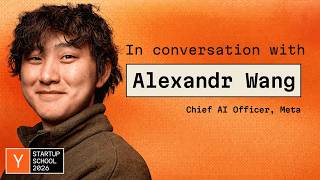
In a candid discussion, Alexandr Wang, the visionary founder of Scale AI, articulated a profound perspective on the current state and future trajectory of artificial intelligence. He painted a picture of an era ripe with unprecedented opportunity, emphasizing that the world stands at a pivotal moment where AI's impact is not just significant but civilization-defining.
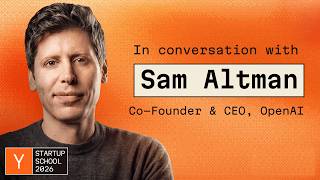
In a compelling address, OpenAI CEO Sam Altman declared that there has 'never been a better time to do a startup,' emphasizing the transformative power of artificial intelligence. Drawing parallels between the early, challenging days of Y Combinator and the current AI revolution, Altman outlined why founders are uniquely positioned to tackle ambitious projects and shape the future economy.
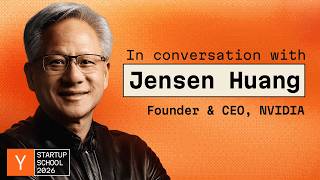
Jensen Huang, the visionary CEO of NVIDIA, offers a rare glimpse into the company's tumultuous beginnings, revealing how a fundamental misstep in technology choice nearly ended their journey before it began. His candid reflections provide invaluable lessons on adaptability, the power of a unique perspective, and the relentless pursuit of innovation that transformed NVIDIA into a trillion-dollar AI giant.
In a world where technological progress often feels stagnant, Blake Scholl, CEO of Boom Supersonic, is challenging the status quo. His mission? To bring back the awe-inspiring speed of supersonic passenger travel, a future once thought lost. Scholl's journey from a software engineer to an aerospace visionary reveals a powerful narrative of ambition, resilience, and unconventional strategies in a traditionally slow-moving industry.
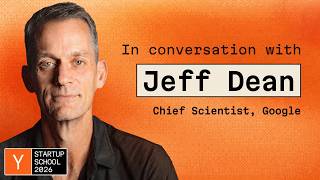
In a captivating session, Google's AI luminary Jeff Dean offered a profound look into the current state and future trajectory of artificial intelligence. From bold predictions about AI's evolving capabilities to the foundational hardware shifts driving innovation, Dean provided invaluable insights for engineers and aspiring founders alike. He emphasized the critical role of 'napkin math' in identifying bottlenecks and the strategic importance of 'taste' in problem selection.