- NASA aims for a robust lunar economy by establishing sustainable operations.
- A novel 'Cost O' model provides accurate cost estimation directly from mission simulations.
- Lunar oxygen production could be significantly cheaper than transporting it from Earth.
- Projections indicate a potential $47.2 billion profit over 10 years from lunar ISRU.
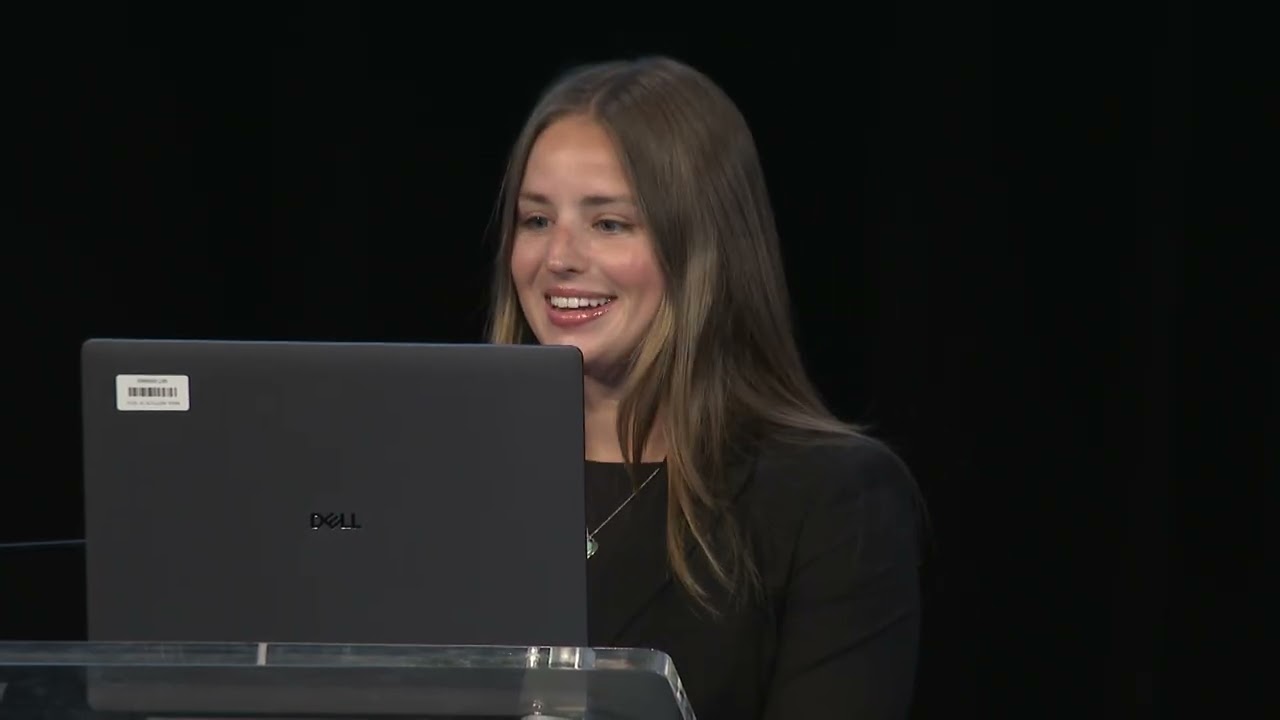
The dream of a thriving lunar economy is closer than ever, thanks to advancements in space resource utilization. Ireland Brown, a Draper Scholar and PhD student, unveiled a new cost estimation technique at SpaceTech 2026, demonstrating the profound commercial viability of producing oxygen on the Moon. Her research offers a critical framework for understanding and achieving profitability in future space endeavors.
NASA's ambitious goal of establishing a robust lunar economy hinges on several key factors, with profitability being paramount. Traditional cost estimation methods often fall short for nascent space industries due to a lack of comparable historical data. Brown's innovative 'Cost O' (Cost Model for Space System Operations) addresses this by deriving cost inputs directly from detailed mission architecture modeling and simulation, allowing for iterative design processes that are highly cost-sensitive.
Brown applied her model to NASA's carbothermal reactor system, a technology already tested to produce 20 metric tons of oxygen per year and slated for commissioning as early as 2027. Using the SpaceNet application for logistics and supply chain modeling, she simulated various mission scenarios, treating each element – astronauts, rockets, and the oxygen generation system – as both consumers and producers of resources. This allowed her to identify feasible trade spaces and iterate on critical logistics-based decision variables, such as initial resource stockpiles, reactor system types (closed-loop vs. open-loop), launch vehicles, and reduction agents.
The analysis revealed that only three out of eight scenarios were feasible, with transportation vehicles and reduction agents being primary enablers. Crucially, the most cost-optimal scenario projected a production cost of approximately $960,000 USD per kilogram of oxygen. This figure is notably lower than the current cost of transporting oxygen from Earth, which stands at about $1.2 million USD per kilogram. The research highlighted that crew transportation remains the largest mission design cost driver, largely due to safety requirements, while the choice between closed-loop and open-loop reactor systems significantly impacts resupply emissions and overall system costs.
Modeling the break-even and cash flow, Brown's findings suggest that if lunar oxygen were sold at the current market price of transport, the system would be profitable immediately. Over a 10-year period, the total projected profit could reach an astounding $47.2 billion, representing nearly 2.5 times the initial investment. The return on investment (ROI) is estimated to occur within a single year of steady-state operations, even accounting for an in-space assembly period. This compelling economic outlook positions lunar in-situ resource utilization not just as a technological possibility, but as a market-competitive, profitability-enabling service essential for the future of space exploration and commercialization.
“I'd like to argue that lunar ISRU could be a market competitive profitability enabling service.”