- Traditional visible cameras are rendered useless during orbital eclipses.
- LiDAR offers illumination robustness but is often too bulky and power-intensive for many missions.
- Visible-thermal image fusion provides an order of magnitude improvement in navigation accuracy.
- New techniques like silhouette matching promise even greater precision for future space operations.
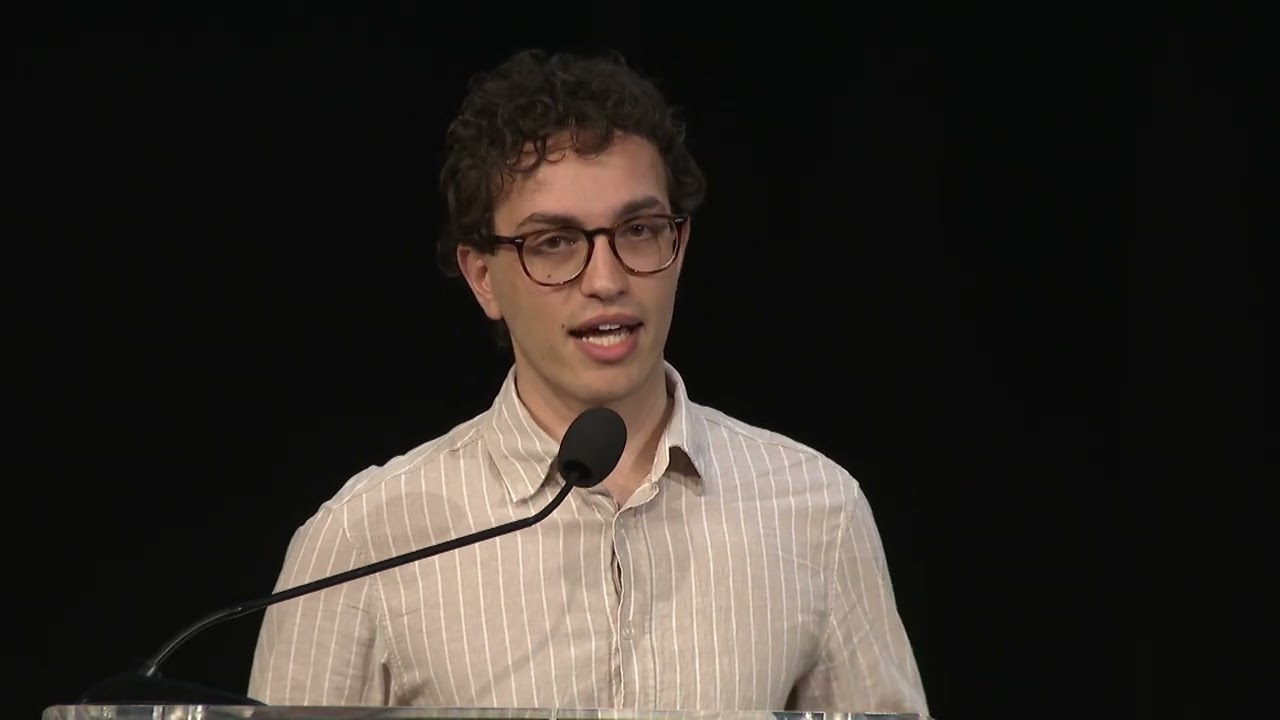
In the vast expanse of space, where orbital mechanics dictate rapid transitions between blinding sunlight and complete darkness, navigating around unknown objects presents a formidable challenge. Eric Elias, a master's student in aerospace controls, unveiled a groundbreaking solution at SpaceTech 2026: visible-thermal image fusion, a technology poised to revolutionize how we interact with space objects, even when they're shrouded in shadow.
Elias highlighted the critical limitations of conventional visible cameras, which become effectively blind when a spacecraft enters Earth's shadow, a period that can last up to 40% of an orbit in low Earth orbit. This 'eclipse problem' makes inspection, servicing, or debris removal missions incredibly difficult and prone to significant navigation errors. While LiDAR offers an illumination-robust alternative, its inherent bulkiness and high power consumption often make it impractical for smaller, more agile spacecraft.
The core of Elias's research lies in combining the strengths of both visible and thermal cameras. Visible cameras provide high-resolution texture when illuminated, while thermal cameras, though lower resolution and noisier, offer consistent data regardless of light conditions. By fusing these two data streams, his team created a composite image that retains the best aspects of each, offering both detailed texture and illumination robustness. This innovative approach addresses the long-standing challenge of maintaining precise relative navigation in dynamic lighting environments.
Through rigorous testing across six diverse orbital scenarios, each reflecting real-world dynamics and varying illumination conditions, the fused imagery demonstrated a remarkable improvement. The navigation algorithm, when fed with the fused data, achieved almost an order of magnitude better position error compared to using visible cameras alone. This significant leap in accuracy is attributed to the fused imagery's ability to provide reliable feature tracking and 3D mapping throughout the entire orbit, including the challenging eclipse phases.
Looking ahead, Elias is exploring advanced techniques such as real-time silhouette matching using thermal camera data. By comparing current silhouettes with past observations, this method promises to further reduce navigation errors, pushing the boundaries of autonomous space operations. This robust navigation capability is not just an academic achievement; it's a foundational technology for critical future applications, from on-orbit servicing and manufacturing to active debris removal and even deep-space asteroid exploration, ensuring a safer and more accessible orbital environment.
“But thermal cameras are robust and when coupled with visible cameras, that gives us a really reliable way on smaller platforms to do this kind of navigation.”