- University of Victoria leads multi-university LEO satellite research.
- New techniques reveal Starlink's 6 million global users and 15-second satellite handovers.
- Innovations improve network protocols and enable mobile/airborne satellite internet.
- Future plans include CubeSats with laser communication and community gateways.
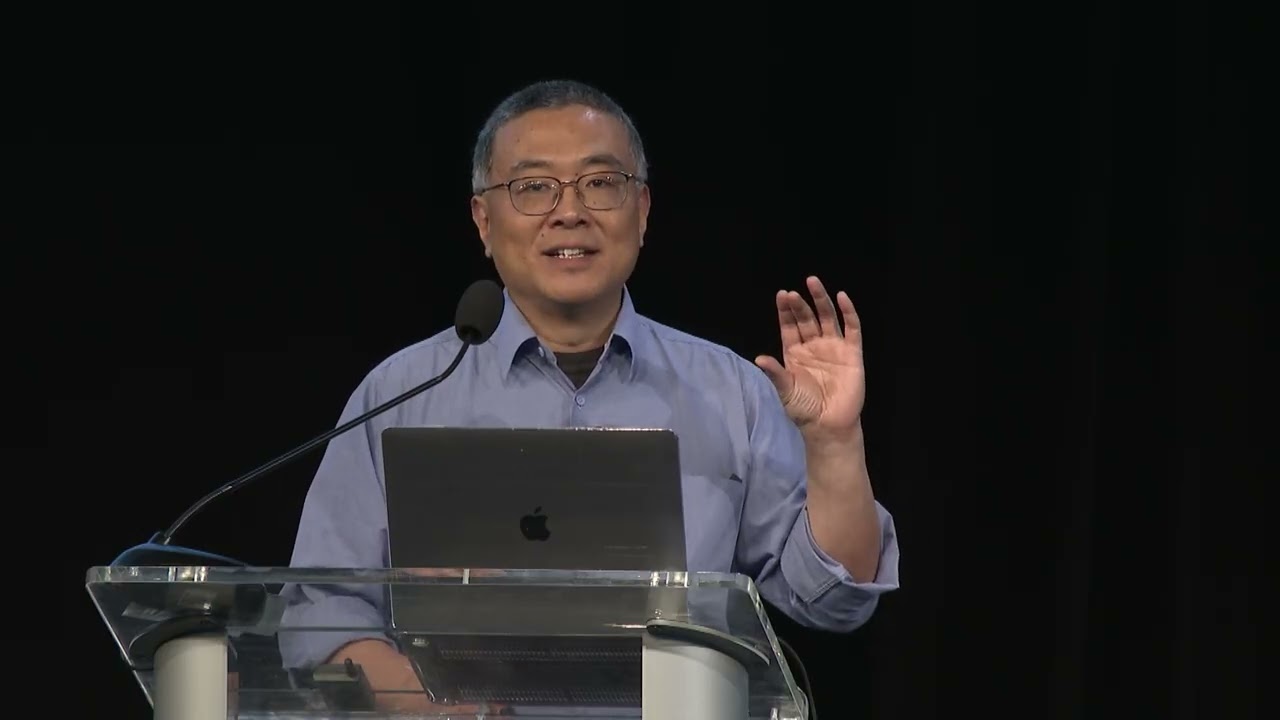
Dr. Jianping Pan, a distinguished Professor of Computer Science at the University of Victoria, presented a captivating overview of his team's extensive research into Low Earth Orbit (LEO) satellite networks, particularly Starlink. His talk at SpaceTech 2026 unveiled critical insights into network performance, user distribution, and the innovative applications poised to transform global connectivity.
The research began by tackling the challenge of understanding Starlink's vast user base. Through a specialized internet technique, Dr. Pan's team successfully measured and mapped approximately 6 million Starlink users globally, revealing a significant concentration in North and South America. This data goes beyond what Starlink publicly shares, providing invaluable geographical distribution insights. Further studies extended to extreme environments, with Starlink dishes deployed in Antarctic research stations and the Arctic Circle, demonstrating dramatically improved connectivity for scientists in remote locations.
One of the most surprising discoveries was Starlink's dynamic satellite handover mechanism. Contrary to initial assumptions of handovers occurring every few minutes, the research revealed a synchronized 15-second satellite switch across all dishes in a region. This rapid handover, while efficient for load balancing across thousands of satellites, introduced new challenges for traditional network protocols. Dr. Pan's team identified 'useless' handovers that caused latency spikes and packet reordering, leading to reduced TCP throughput. By communicating these findings to Starlink, these inefficiencies were addressed, improving overall network stability and performance.
The implications of this research extend to a wide array of applications. The team developed solutions to optimize video streaming over LEO networks, creating a 'mini-Netflix' in their lab to test improvements in quality and latency. Beyond stationary dishes, the research explored mobile applications, deploying Starlink on school buses in remote areas of Vancouver Island to provide internet access to indigenous students. This initiative, coupled with collaborations for mobile dishes in urban and diverse terrains, highlights the potential for ubiquitous connectivity. The research also ventured into airborne applications, demonstrating significant improvements in throughput and latency for aircraft moving from traditional Geostationary (GEO) satellites to LEO systems.
Looking ahead, Dr. Pan detailed the development of high-performance community gateways, offering symmetric 10 Gbit/s links for small communities and large vessels like cruise ships, providing superior bandwidth and less competition compared to consumer dishes. The ultimate frontier involves launching a CubeSat by the end of next year, equipped with laser communication links, to collect data from space, air, and ground, further pushing the boundaries of LEO network understanding and development. The project encourages collaboration, offering public access to its extensive datasets and tools.
“We identified the root cause of the problem. The fix actually is quite simple because we just need to know we're going to have a regular handover right now. We're going to freeze our congestion control algorithm for a little bit of while about 100 milliseconds.”