- Pioneering active control for space telescopes
- Student projects lead to real-world NASA missions
- Shaping the future of in-space assembly and exploration
- Inspiring next-generation aerospace engineers
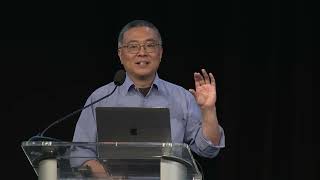
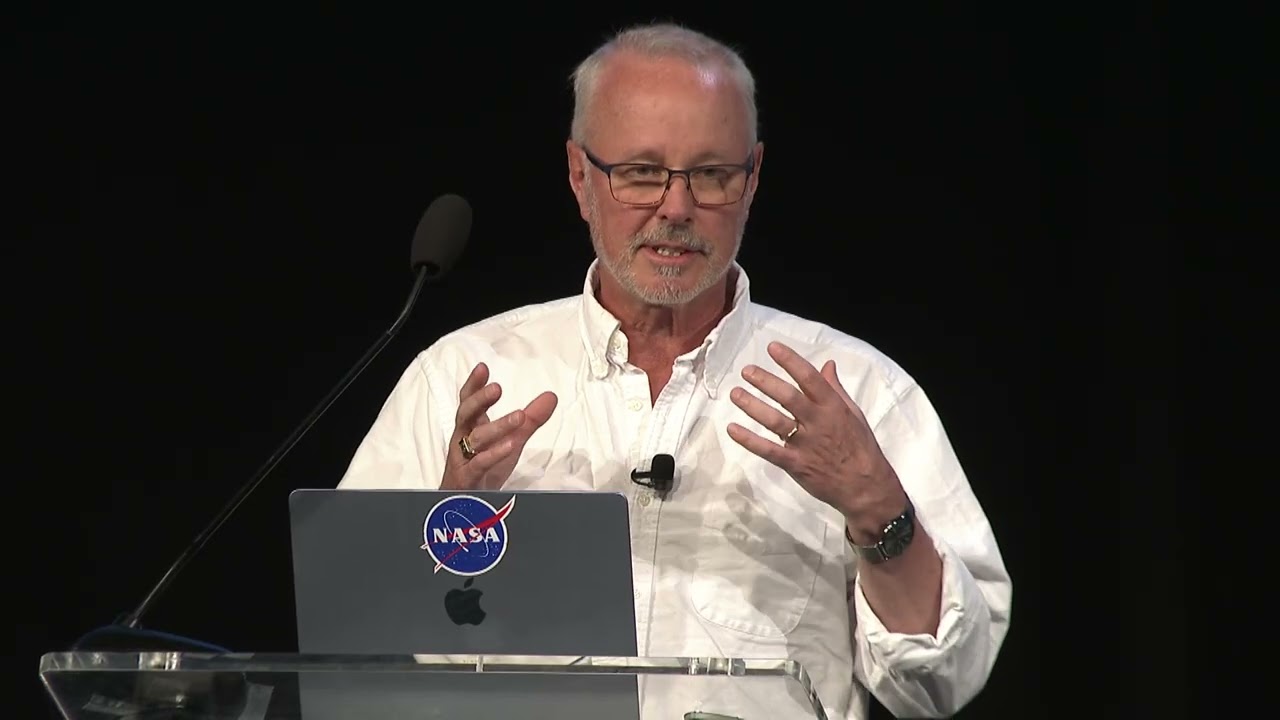
Professor David Miller's keynote at SpaceTech 2026 offered a captivating retrospective on three decades of groundbreaking work at MIT's Space Systems Lab (SSL). From the early days of shuttle experiments to contributing to the James Webb Space Telescope and Mars rover landings, the SSL has consistently pushed the boundaries of aerospace engineering, often with students at the helm.
Miller began by highlighting his mother's pioneering spirit as a co-founder of the Society of Women Engineers, instilling in him a passion for technology and space exploration. This early influence, combined with a philosophy of embracing intimidating opportunities and reinventing oneself, laid the foundation for a career marked by significant contributions to NASA and the aerospace industry. His journey from MIT graduate student to NASA Chief Technologist and now JPL Chief Technologist underscores a commitment to both cutting-edge research and the development of future talent.
A cornerstone of the SSL's success has been its embrace of the 'Conceive, Design, Implement, Operate' (CDIO) framework, particularly through hands-on, multi-semester design-build classes. Early shuttle experiments like MACE (Middeck Active Control Experiment) proved instrumental, unexpectedly becoming the 'pathfinder' for verifying the James Webb Space Telescope's complex dynamics in a 1G environment. The ability to iterate on controllers in real-time during shuttle missions provided invaluable data, demonstrating the critical importance of testing under both nominal and off-nominal conditions, akin to a space-based wind tunnel.
The SSL's impact expanded significantly with projects like SPHERES (Synchronized Position Hold, Engage, Reorient, Experimental Satellites), the first free-flying robots on the ISS, which were conceived and built by students. This program, along with the subsequent Zero Robotics competition, transformed how students engage with space hardware, allowing them to program satellites and see their code executed in orbit. This educational model has inspired similar programs globally and directly influenced missions like Cassini and the Delta IV Heavy. Further innovations include propellantless formation flight using electromagnetic forces for in-space assembly, a concept crucial for future large-scale space telescopes.
More recently, SSL graduates have played a pivotal role in the Mars Perseverance rover's entry, descent, and landing (EDL), famously known as the 'seven minutes of terror.' The Rexus (Regolith X-ray Imaging Spectrometer) instrument, built by MIT and Harvard students, is currently en route to asteroid Apophis after its mission to Bennu with Osiris Rex, showcasing the lab's continued influence on interplanetary science. As humanity looks towards a permanent lunar presence, Miller emphasizes new challenges in life sciences, radio astronomy from the Moon's far side, and in-situ resource utilization (ISRU) – all areas where the next generation of engineers, forged in the crucible of the Space Systems Lab, will undoubtedly lead the way.
“The biggest thing I've learned while working on Rexus is really that that instruments like this and spacecraft like Osiris Rex are very very complex. There's a lot of dependencies, a lot of requirements, a lot of relationships, a lot of design decisions that all impact one another.”