MIT's Billion-Dollar Secret: Why Your Idea Isn't Enough
The "SpaceTech 2026 Panel: MIT’s Innovation Network" brought together leading minds from MIT to dissect the intricate world of deep tech entrepreneurship, particularly within the burgeoning space economy. The panelists emphasized that true innovation transcends mere invention, hinging instead on strategic commercialization and the strength of a diverse, adaptable team.
“Innovation equals invention times commercialization. Repeat in innovation something that creates impact for the world that makes money that provides positive return for a company value equals invention.”
Discover how MIT cultivates groundbreaking ventures, from lab-based deep tech to the burgeoning space economy. Learn the critical difference between invention and commercialization, and why your team is more important than your initial idea.
So the the way we want to talk broadly about um innovation entrepreneurship at MIT and so the way we're going to do this is I'm I'm going to ask each of them to briefly I briefly introduce themselves and then I have some specific questions for them. uh and and then there's a general question if if we're liking questions but but then we I'm going to open it up to all of you to ask questions of that. Okay. So so first of all why don't you introduce yourself? So Paulo who are you?
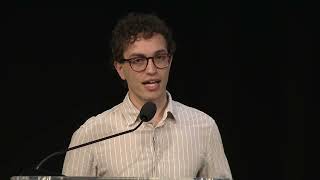
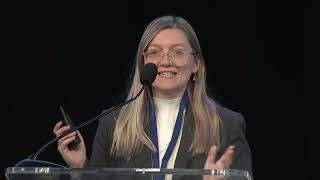
>> Oh I'm Paulo Lozano. I'm a faculty member in the department of aastro here at MIT and I have been at MIT for 30 years starting as a student and uh actually one of my first meetings at MIT was with you. Oh, okay. >> And probably you don't remember that. >> Was I was I at least was I pleasant at least? >> Yeah. Very pleasant. Uh and I run the space propulsion lab in my >> Okay, my turn. All right. I'm Fiona Murray. Uh I'm a professor here at the school of management uh where I teach deep tech ventures, defense and dual use ventures and a whole bunch of classes focused on entrepreneurship especially the sort of lab tomarket flavor. I'm also chair of something called the NATO Innovation Fund, which is a venture capital fund uh set up by NATO uh which includes amongst its investments uh a bunch of companies that are focused on space tech. >> Yeah, Bill. >> Yeah, Bill. >> My name is Billlette. I'm the Ethernet inventors professor of the practice, which means >> I'm not a real professor. I'm a professor of the practice and I'm an entrepreneur by design and an accidental academic. And I've been teaching entrepreneurship here for 20 years. And I'm uh spun three companies out of MIT. Um first one not successful, second one infinitely more successful because anything divided by zero is infinity. Uh >> it's good at math at MIT. They like math jokes >> even in the afternoon. >> In the afternoon [laughter] and and the third one uh was a company called Vas which was incredibly successful in two and a half years. And um and I worked less hard in that one than I did in the previous two. And I realized entrepreneurship is something that could be taught and actually you can learn it and you can it's not that difficult if you take an engineering approach. >> Let me just say it's great to be here. >> I feel like an aerastro person in and out. >> Yep. Ali Dwek, David Mandel, I've been working with uh Julie Shaw and Dava Newman. >> Yeah. Paulo, I I feel like I I deserve an honorary doctorate >> almost. >> almost. >> Actually, I don't deserve anything, but I feel like I'm part of the family. >> Okay, I'm going to start with you, Paul.
Question. Um, you've been associated with a number of companies, Axion, Revolution, Electro, Electrophy, right? >> Electrify. >> Electrify. >> Electrify. >> Tell tell us about your your experiences there. Now, tell you should tell them what they are, right? Well, you know, these are uh ideas that start in the laboratory and then they end up uh as companies. Uh and uh I think that the uh it's a different story for every every different uh company. Uh but in in my case I I believe that everything started with the passion of research and innovation and and for example the story of uh action systems >> uh came from really research that I did very early on on something called electrosprain that could potentially be used for propulsion in space. And uh you know the idea actually looked pretty neat and uh and some of my students actually had a very strong interest in entrepreneurship and and they decided to form a company and we had a whole bunch of uh IP uh that we submitted to the TLO here at MIT and uh which actually you know the the the ecosystem at MIT was very helpful in allowing uh the students to you know to get the support that they require to form a company and uh acquired the IP the licensing and uh and move forward in creating something that could be scalable for applications in in space. Uh and that story actually was uh very successful in the sense that you know they they they pushed the technology forward. Um there are a lot of lessons that you know I can if you ask me I can I can say a few stories there if you like but you know the main lesson with action system that now actually is called the revolution space because it was acquired is that you know it's always very important to have the the technology ready uh not as a finished product 9 kind of product uh but it's very important to have a clear path of how the technology works what it needs uh e even before you start to actually get into the uh whole labyrinth of uh you know entrepreneurship uh I think that sometimes the the the technological aspect how ready is a technology is not really taken into consideration so but I think that that's very important in the in the other case of electrify you know it's very different uh from Axion because in that case. It was the passion of a group of a student really in my group who actually had a very clear vision of how to connect the dots between the technical work that he was doing for propulsion and the need in a field that is completely different. I'm talking about uh you know in in pharma basically >> and but you know he was able to make the connections and move forward and that had a very strong entrepreneurial spirit and uh and that company was also acquired recently very successfully and I I maybe Bill will talk a little bit about that. Yeah. >> Well, let let me ask Fiona now. Uh you
you teach this deep tech ventures course here. >> Yep. >> Yep. >> Um on how to build, fund and scale ventures uh such as many for space economy which people here are interested in. >> Um tell us about that and what what you've learned and what you see. >> Sure. So look, I mean when I first got to MIT, I think it was still a period and that was 20 something. I'm not even going to say the number because it's more than 20 years ago. um you know teaching entrepreneurship as Bill rightly said is something that was I think still people were skeptical about but increasingly there is a view and I think it's exactly right that there are a whole bunch of tools and techniques that we can teach one of the things that became really clear to me in particularly in working with a lot of these sort of lab-based spinouts and and things where people have significant sort of new technology at the frontier of science and technology is that when you're not working in software you're working in hardware the capital requirements are very significant there's a tremendous amount of risk. There's of course market and customer risk. Do you have real customers? But there's also technical risk. There's regulation and there's scaling. You've got to be able to produce things at scale. You've got to be able to build the value chains, the supply chains, and increasingly deal with the geopolitics. And so teaching a course on deep tech ventures was about you know how do you go from understanding the foundations in entrepreneurship to then applying them in these labtomarket kinds of companies where you really are doing something that will take you know the word deep is really about the deep wells of risk but the deep wells of time and patience that you need. So how do you go about doing that really in a capital efficient kind of way? But interestingly I think in the course you know one of the places where we begin is about the people that it would be very easy to talk about this in the abstract but it's always about the people that you put together. It's about the technical individuals the people who understand markets who understand the customer journey and trying to sort of build those teams so that you can then really go on this quite long and complex journey together including with your investors. And so the course is really designed to kind of take those lessons and kind of sort of develop them in with some really specific examples whether or not we're applying them in energy and climate systems and the space economy and defense and security and in health but again in areas where there's a lot of capital needed to really solve these incredibly large challenges. And so we talk about some space companies. We talk about planets. We were just speak I was talking to Ollie about them earlier but also companies like issa aerospace which is a German space launch company. Impulsion which is another propulsionbased company that spun out of um was founded by a friend and former student of mine uh from the European Space Agency. And so it's I think the space economy has many of the characteristics of the kinds of businesses we're thinking about. Uh and the other course that I think is part of this series of ventures courses um Bill set up the energy ventures kind of course and has really led that health tech ventures. We've we're now teaching a defense and dual use ventures class. There's particularly for companies that are in the defense and dual use space because dealing with government as customer is a really difficult thing. you have to be quite patient and when you're trying to do both and that's often true in space then there are some really particular things that are worth talking about and worth learning. >> So what tell us about the students who come to your class. >> So in that course we have a combination we have a whole bunch of MBA students and it's quite fun for me. I spent a while teaching our mid-career exec MBAs. I now teach the MBAs again which I'm really enjoying. um as well as the sort of mid-career executive MBAs and then I have quite a lot of masters students from um SDM as well as PhDs from all across campus um who occasionally spontaneously will sort of stand up if you ask them and help theu other colleagues and other students understand you know quantum sensing or something. It's so it's that special thing I think about being here that ability to sort of crossregister across campus and we even have some folks who come from Harvard um is what makes the classroom dynamic I think really interesting. We work on projects with some of the existing deep tech ventures in this ecosystem and having these mixed teams is logistically complicated but really I think fantastic for for cross institute learning. >> All right great. So, Bill, you run the
Martin Trust Center. Uh, first of all, tell us more about that and secondly, what have you seen in terms of successes and failures with the students who come through there? >> Yeah. So, the trust center is um MIT is a very decentralized place and that's has good news and bad news to it. Uh, the good news is is it lets a thousand flowers bloom. Uh, the bad news is sometimes you got to weed the garden. [laughter] It's not clear what are gu what are we read weeds and what are what are flowers but it has created this this dynamic of lots of fastm moving innovation and uh the trust center has become kind of the umbrella the largest one you know we're kind of been around for ge since 1961 Ed Roberts for those you don't know who he was he he kind of set it up and um we kind of connect the students to what resources they need we um teach many courses is um we run extracurricular programs like Delta V which uh Natalyia for Axion went through and and um so we're kind of uh a hub. We're also teach classes. We do extracurricular programs but we'll connect to the technology licensing office to venture mentoring service dashbond whatever. Um so, uh I think the interesting question is what makes for successful entrepreneurs in in this space >> and and it was funny because when you sent this out last night and then I got this morning and started thinking about it was like I always like specificity because entrepreneurship is not about generalities, it's about specificity. So I went back and I went to Axion and Paulo and I were just talking with us. Went back to the founders and talked to them and talked to what other space tech things do we have? We have Brian Sang who's who who started company called Shield.ai which I don't know how many of you know what Shield AI is. Do you know what that is? >> Yeah. >> Yeah. >> Yeah. It's a Deca Unicorn now. It's worth 13 billion dollars. Um another student Ian Cinnamon just started this company called Apex which has just become a Deca Unicorn. And uh ironically this company called Electrify, which no one's heard of that that you were just talking about, which came out of Aerero Aastro and you know it's not about money, it's about impact at MIT. >> But impact has relationship to the value of the company and what makes for these companies to be successful. Um and it goes back to a simple equation that uh we talk about in in in my book.
Innovation equals invention times commercialization. Repeat in innovation something that creates impact for the world that makes money that provides positive return for a company value equals invention. Invention is a patent a technology. Those things cost you money. They don't make you money. Let me be clear. Most patents in the world are never used for anything. They're only valuable. They only become innovation if they are commercialized and somebody figures out what they're useful for. And I think this this simple equation is an oversimplification. And Einstein seeks simplicity and distrust it. But I think you've got to have both invention and commercialization. And entrepreneurship is a commercialization. And if we look at these the best the best invention does not create the most innovation >> and and uh and and this electrify is electrify is an electrifying example of this if I can use the pun. Electrify comes out of Paulo's lab. It's a propulsion technology that was used for Axion. Axion is this great company gets all this interest and basically if I if we can be blunt here it's actually sold for the government contract even more than the technology it got a big government contract and this is why it's it's sold to Cberus and it has great technology electrify on the other hand looks at this technology and says you know we could use this for bandages we could you know we could create these bandages you know spray-on bandages they go around they they hire people to do is they go what c the dogs aren't eating the dog food they don't want this [laughter] this is a problem that they think needs to be solved but that's not what the customers want and so in one of the interviews they they're speaking to Fizer and Fizer said wait a second is there a way to use this to apply drugs subcutaneously as opposed to through IV >> they're like no we want bandages and someone says wait listen to the customer. Listen to [laughter] the customer. You what you're what you're selling they don't want. They're not going to pay for it. Sounds like Fizer will pay for this. And they go back and fight. We'd absolutely pay for this. And so to just go forward and make a fast a story faster. Electrify is sold for essentially a billion dollars and they haven't even gone through because they solve a real problem the customers want for the spraying technology and it is not what is not what Chase and Jason sent out to solve right Paul it's not what you guys thought at the beginning and this is the nature of entrepreneurship is you've got to listen to the customers and solve the problem they want and so going back to your question Dan is and I could go through these other examples of is Apex a great technology? It is not. It is just repackaged technology, but it's what the customers want and they're worth a billion dollars and they're having a tremendous impact basically, you know, >> uh doing space stuff using car manufacturing, >> right? >> right? >> Um but I I I tell you that story because we at MIT overindex for the importance of invention and we underindex for the value of a commercialization. And you don't need to take that from me. Uh >> you take that from a guy named Ben Holmstrom who was over in E52. He he he walks around with a medal. Um [laughter] uh it's called a Nobel Prize. [snorts] He actually doesn't walk around with it, but I see it every time I see him. And he says innovative technology is overrated in praise of imitation. And over 90% of the value in the world is created by people who take an existing invention and figure out how to apply this to a market. This is exactly what Steve Jobs did at Apple. He did not invent the the Wii Windows icon. You he took that out of Xerox Park, but they had invention, but they had no commercialization. >> So great invention time zero equals zero. But what he did is he laterally innovated that means steel um the invention from Xerox Park and figured out who was the customer for it. And then he did the same thing with MP3 technology. And he goes on to say great artist steel. Oh no. He said good artists create great artist steel which that very quote is stolen from Pablo Picasso. Um I'm sorry laterally innovated from Pablo Picasso. But here here's the point >> translated [laughter] >> translated [laughter] >> translated >> translated true true to be correct but my point
here is is that what I see is that people who get obsessed with technology >> people who get obsessed with a product are less successful I'm not saying they never succeed >> their odds of success are much lower than people who get obsessed with solving a customer problem. >> Yeah. And if you get obsessed with solving a customer problem, turns out your odds of being a successful entrepreneur in terms of impact are much much higher. >> Yeah. And don't you think that that's the reason why the people matters at the team matters? That's 100% >> is that sort of if you've got the right team of people, your ability to actually listen and to question and to go on that journey of finding the exactly the best way to create value from this, you know, often from these underlying technologies is so much dependent on the human beings because it's not a formula. You can't actually just sort of assume this pathway. The pathway kind of evolves that it really is about the group of people which is why I think this this notion that it's all about the humans involved is really key. >> Yeah. The number the the the least important thing in a startup is the original idea. [snorts] [snorts] >> Okay. >> Okay. >> The most important thing is the team. >> Yeah. >> When you look at success over time and Matt Marx and Nasaman and Ed Roberts have done this research and the team is the most important thing. Give me a great team with a mediocre idea and they'll beat they'll beat a great technology with a mediocre team every day of the weekend twice and Saturday and Sunday. >> All right. Well, so before we open up to general questions, so let's just probe
that a bit. There are a number of students here. Uh suppose there is a student who has an idea, mediocre or great [laughter] also perhaps they have some idea of forming a team and they think they know what the what the customer space might be. What what should they do here? I mean how would they then move forward here at MIT? Um, you know, I I would say I'm completely in agreement of what Bill just said and I think that it's just not thinking that these things are done in a vacuum >> and there are >> coming from you space propulsion in a vacuum >> in a vacuum. [laughter] >> They are operating in a vacuum. It doesn't mean they are you know the you know teaming up is the most important part of course you know you need and and that's why I suppose that there is no recipe really to create a successful company >> you know or a successful project because every every time that you want to do this is going to depend on who's behind it. >> Yeah. >> Yeah. >> And I I you know I think that you have to be willing to let some of your ego go and uh and really team up >> Yeah. and uh and create the same amount of passion that you have for a project and try to be contagious about that and and you know find people that resonate with that idea and people to challenge you to >> you know because uh also finding the the weak spots on on your ideas is also very important. So I I think that overall if you have a great idea is run it through someone. I mean you have to find someone that you trust and uh and also again being aware of all the resources that you have available to you to actually bring your ideas to fruition. >> Yeah. I mean one one thing I would just add to that is this point about sharing it with people. You know the number of times that students will walk in to my office or elsewhere and say you I have this really really good idea but I can't tell you [laughter] >> yet. >> yet. Okay so it's a fantastic idea but I can't tell you. Will you sign a non-disclosure agreement? And I literally laugh. I mean, it's a if your idea is that good, then the fact very the fact that you've just described it to me isn't the be all and the end all, right? The the idea is more complex. There's probably quite a lot of tacet knowledge associated with it. And it is just as Bill said, the start of a journey. And so being willing to talk to other people about it, to go and get advice, and if you can't convince anyone um that your idea has some sort of resonance, that it's a journey that you and and the plan that you have is worth pursuing, then that's probably a signal as well to you that um you might want to sort of go away and and and rethink and reimagine or bring other because if you can bring a few pe you've got to bring people on your journey, right? You've got to bring other students. You've got to bring faculty advisers. You have to persuade some people in the trust center who will give you some tough love about whether this makes sense. Ultimately on this journey, you've then going to have to go and persuade other employees to come and join you to give up their time and the alternatives to come and be part of what you're doing. And so that tells us a few things, right? It says got to be willing to share and describe and adapt and listen, gather information from other people. really need to, I think, be willing to be open to how your idea will adapt and evolve. And it's also fine at some point to say, you know what, this particular pathway isn't for me. This idea is not the one that I'm going to spend the next three years on. I'm going to stop. I might join somebody else's project. I might carry on take a job in some amazing other company and then a little later in my career. I think there are many moments at which you can both start and stop an entrepreneurial journey. And sometimes the art is actually in knowing when to stop because it's not a brilliant use of your time. But all the resources here on campus, I think absolutely focus on this being not only for you to build amazing businesses if you want to, but actually to be educated, right? We are an educational institution. Our job is not actually to create as many businesses as possible, although we do like to count those things and measure them, but frankly, it's to make sure that everybody here gets the best education and support, whether it's faculty and their journeys or students. And so, I think everything that we try to do on campus is in service of that. So, you're kind of learning in general while you're working on your particular project. And I think the trust center is a place where that definitely happens. And what Fiona said, we we always just say stealthy is unhealthy. >> You know, this this idea that that that someone overheard your conversation at a coffee shop and and they created a billion dollar company. If that's true, you're just a loser. I mean, it's about execution. It's it's it's not about like the idea. Uh and and there's this great By the way, how many of you are students here? >> Yeah. Here's my advice. Sign up for the Aereroastro certificate, right, Ali? Do you still have room in the program? >> Yeah. Sign up for the Aeroastro. You get an adviser. You get structure around it. It will help you. You're all entrepreneurs. You can become better entre human beings are born entrepreneurial. You should become whether you start a company or not. You should become a better entrepreneur because Paulo's an entrepreneur, but he's an academic entrepreneur. There's uppercase E entrepreneurs who go out and start found you know venture-backed startups and then there's lowercase E who are very entrepreneurial and we can really get into this. This is a mindset skill set and way of operating that in a fastmoving world every human being can have and should have and if you don't you're crazy. Let me repeat to all you students you're crazy if you don't take entrepreneurship while you're here. Otherwise, you're just going to become job seekers when you have an opportunity to become job creators. You can create your own job and you can control your own destiny or you can go seek a job from somebody else. It's much better to be able to create your own job. So, I would strongly encou I would strongly encourage you to do that. >> So, on on that note, let's open it up to questions from the audience. There should be a microphone somewhere that goes around. questions questions and you can direct it to any of them or all of them question right then out of the student row. >> We like that. [clears throat] >> Hello. Um so I feel like um a big
>> why why don't you introduce yourself? >> Oh u my name is Carol. Um I'm a first year grad student here and um >> in Aereroastro. >> In Aerrowastro. >> In Aerrowastro. >> Yeah. Um, and I think like one big barrier to like starting a business, at least for me or for I feel like a lot of people, is like fear of failure. Um, do you have any recommendations on getting past like that mental hurdle or Yeah. techniques for doing that? >> Yeah. Do you know the safest place for a boat is in the harbor? >> That's not what boats are for. >> That's not what boats are built for. [snorts] >> There's a song. >> Is it a song? >> Oh, yeah. I love it. I'm going to give it to you later. Will you sing it for us? >> He says, "Maybe I laterally innovated it without knowing [laughter] it." >> Look again. >> Wait, what? What? What is the song? >> My Robertson. My Robertson song. >> Really? >> Yeah. Ships are safe at harbor. >> Yeah. >> You didn't come to MIT to just be mediocre, right? You wanted to be You want to be a leader. I I I tell you, we're just doing this this um committee for um Sally Cornbluth and Ananta, the pre president now. And we're doing we're doing done over hundred interviews. And it's really really interesting because a lot of these people who go out and start these ventureback companies are what we call well-informed, well-resourced people. What's that mean? That means they come from rich families where their parents talk to them about venture capital and term sheets and valuations at home. But over 30% of the of the of the uh undergraduate population at MIT is first generation lowincome. And that is MIT. Just to be clear, MIT is the number one social mobility school in the elite universities by far. By far. >> You don't get in here because your mommy and daddy are rich. You get in here because you're smart. You have a unique story. It's a beautiful thing. And so you look at these students when they first get here and they're like,"I want security. I want security and they think entrepreneurship is risky." But but if you but if we teach them entrepreneurship, do you know what the percent of people who go through our Delta B program who are in business 5 years later is? This is people like yourself. They go through our they they go through all our programs. The survival rate five years later is 69%. >> Very good. >> Very good. >> Let me write that 69%. And the people who don't start those companies, those companies they don't pursue are actually more successful than the people who stick with their original company because the second time you do it, as research shows, you're more likely to be successful because you know more. I don't know the number, but if you go get a secure job at a corporate place like Amazon, do you think you're going to be working there 5 years later at at the rate of 69%. I would say you would not be. You could get a fabulously secure job at the US Postal Service and you will probably be out of a job in in five years. Again, I'll go back to the best the best way to get security in your life. The best way to be a leader is to become an entrepreneur. And so, so is failure part of the process? Failure is a 100% of the process. Do you you run experiments? Do you run experiments? Do they all work? What do you learn more from? From the ones that work or ones that don't work, the failures, right? And that's what if you want to be great, you've got to be do that. As Fiona will probably tell you, I'm an elite basketball player. You probably all [laughter] know that. >> What are you laughing about? What? What are you laughing about? >> It was the elite part. I think I was [laughter] You used to be an elite basketball player, but you're still a basketball player. [laughter] >> Watch. >> Watch. >> Tough love. Tough love. >> I have like half a leg, so you know an ankle, so I can't do it. >> Don't make me pull out my gold medal. [laughter] All right. So, you talk to any great person, they will tell you, you don't get great by fearing failure. You You don't like failure. Let me be clear. If you like failure, you're a loser. Don't let failure sucks. If you like failure, become a New York Mets fan. It is the worst thing in the world, right? [snorts] [laughter] You got to hate failure, but you know it's part of the process. It happens on Tuesday and you get up and say, "I'm not going to let that happen on Wednesday." Do you know where the safest place to fail is? >> Yeah. Yeah. >> Right here. >> Right here. >> That's what I was gonna say. >> This is that there will never be a safer space for you to fail than right here. And we will help you. And I wish I had done this. My first company, I'm sorry, I'll I'll shorten this. My first company was called Cambridge Decision Dynamics. It is in deep, deep stealth mode. Do you know what that means? It's out of business. And my wife used to say, "Why do you call this a job? In a job, money comes into the household. In your job, money is just going out of the household." Do you know what the best education I ever got was? It wasn't my useless undergraduate engineering degree from Harvard. It was not my degree from MIT. It was my starting Cambridge decision dynamics because I learned so much about that >> and say Paula will tell you the people who start the companies Jason and Chase they they got PhDs in business now right? >> Y yeah >> Y yeah >> that's the only way you learn it. You got to get on the field and get your nose bloodied and there's never a better time to do it. The support structure going to what everybody said is fantastic here. That's what I was going to say. It's look I I think if you some people will say well we don't have an idea we want to work on but the people around you do and so there's that there's working with joining a team and being part of that and working in these programs as leading a team and as Bill said and I agree with him and I think we all see this because this is an educational institution you get to try things out and I think it's the trying things out that's incredibly important. We know that when people take their next step in their careers, they're kind of trying things out for size. And so they're sort of saying, does this fit me? How do I want to be? What kind of role do I want in the startup? Right? Do I want to be the CEO? Do I want to be the CTO? Am I going to focus on the business side, the technical side? And I think trying out those different things, even some of the classes we teach, people go off and do projects with existing startups. That also gives you a little bit of a sense of that culture. And the more you build that up then I think the more it becomes something that you get to say do I want to then lead this with my own particular idea but absolutely there's so many resources on campus I mean Bill's right you have to be an entrepreneur to navigate your way around those resources but increasingly I think they have become more accessible more comprehensible and this is a this is the brilliant place to try and to learn >> all right >> all right >> I just can I just make two quick points Fiona just agreed with me so that means I I'm an elite basketball player. >> It really does, doesn't it? You know, [snorts] you really are. >> And secondly, just see me afterwards. There there's this there's a fabulous book here called The New Lunar Society written by David Mandel, which is not the book I'm going to give you, but it's a great book, but I'll give you this book right here. >> Oh, yeah. I have I have the book. Yeah. >> Very good. >> I gave you a little play there, David. I saw you walk back in the room. I recognized the customer. All right, other questions. >> Hello. Uh, my name is Quinton Mlette. I'm a secondy year PhD student in strategic management. Um, in entrepreneurship, oftentimes you'll have to pivot from an idea or close a venture
or even kill a project or experiment. Do you guys have any thoughts on when is like the right when is the right time to either move on from a venture or a project or kill an experiment? >> You do experiments. >> Well, if you let us speak, we'll take all the time. [laughter] Right. All the time. I I you know, I think that that's the I I totally get what you're saying because, you know, it sometimes it's a little bit unpredictable when things are going to work. uh but you know I think that that's part of an answer of the previous question too right because you cannot be uh just thinking that there is a a linear progression of success and try to project uh on it right uh it's always going to be like this and but what I would say is that you that's what you need a team for you you really need to be able to see all the factors together of why something might not work and uh and what's the right time to actually get rid of it. Um but at the same time you really have to try and because otherwise things won't happen and you have to be able to you know again as the previous question was be able to support failure and uh and be comfortable with it as long as you don't make a habit of it. uh and uh you know the quick answer is I don't know right I don't know exactly when you want to to to kill an idea but what I know is that many of the ideas that we have we feel very passionate about >> and uh and detachment is the problem you know sometimes we don't want to let go uh so we that's why I'm saying that we need a team around us that tell us you know at this point you have to let go of this thing that you love so Yeah. >> Because otherwise it's very hard to do it ourselves. >> Yeah. >> Yeah. >> Yeah. >> Yeah. >> I mean, humans have this thing called confirmation bias, right? When you, you know, you see something, your idea is your baby. You think it's the most beautiful thing you've ever seen. And I think there's this really interesting tension and important that we all experience with things that we're working on, which has to do with, you know, how long do I pursue it? Because I'm absolutely convinced and I've got that sense of conviction and commitment to something. But when all the evidence is pointing the other way and again I think the team is a hugely important piece of that in entrepreneurship investors a part of that now you have to if you can't convince anybody then at some point if you need external capital you have to really think about what signal the market is sending you if you can't convince customers to buy I mean that's probably the single most important thing um and so and the other thing I sort of think about both for my own work and the work I do with the fund that I I chair and so on is just to sort of remind us all that our time your time is the most valuable thing you have. And so if you think about the the value of your time stopping is often the most valuable thing you can do because then you have the time to try the next thing and to work on the next thing. >> I'll make two points. First of all, just building off what was just said there. There's this perception that entrepreneurship is this solo mercurial thing. You gotta be Elon Musk or you gotta be Steve Jobs where you're this superhero. >> Yeah, >> Yeah, >> that is the technical term is >> right? >> Entrepreneurship is a team sport. Individuals don't get much done in this world. >> Almost nothing. It's teams that get stuff done. And if you don't have a team >> that's kind of checking you out on this whole thing, you're not going to be successful. You're you're you're really odds are just so so low. So don't believe those movies and stuff that you read. And the thing about Steve Jobs is he wrote rewrote history. He wrote out Waznjak. He wrote out Mark Mccula. He wrote out a lot of people to make it seem like it was it was a a sol. And we know that from research that teams think about how complex it is today. You've got to have regulation. You got to have technology. You got to have more complicated finances than ever. You've got to have go to market. You've got to incorporate. You've got to have a team. So as you So that's the first thing. The second point I'd make is there's a great book that we have our our our students read called That Will Never Work. That will never work. It's a it's a book by a guy named Mark Randolph who was a co-founder of Netflix who by the way going to be one of our uh coaches, mentors in in um the Delta V program this year, which is now $75,000. But he he he said he has this idea for Netflix. He goes, "Blockbuster, what a stupid idea. Why don't we mail this out? And he goes home and he's he tells his wife. Are you married, sir? So So you don't understand this. Anytime you have a new idea and you tell your spouse of a new idea, that's a stupid idea. That's just called being married. And and then so he goes home and tells his wife, she goes, "That's a stupid idea. That will never work." And he goes, "Oh, well." So you go through this whole book and Netflix is going public and he and at the end of the book, he he's going to go home and you're like, "All right." He's going to tell his wife, "See, it worked." And he and he he he's at the end of the book, he goes, "My wife was so right. The original idea we had was so wrong in so many ways. We didn't know what we didn't know." And the whole point of Netflix is nobody knows anything. All you can do is come up with intelligent hypotheses that you test over and over and over again, and you iterate on them. And if you have that humility, you're going to be a lot better off because then you're going to be able to say, "I'm going to let the data I'm going to let the customer lead me where to go." And the last point is I'll just say is in our class, we play this song, The Gambler by Kenny Rogers. You got to know when to hold and when to fold. >> The worst advice you can give to a startup person is never give up. Never give up. Never give up. Because the nature of startup is you're always giving up on bad hypotheses and trying to figure out what the right one is. And if you can't give up on it, then you're a problem. And the question really isn't is this idea not going to work. It's when you look around the room and you look around at the team and you say, "This team is not going to work." That's when you give up on it. But Electrify's idea did not work. But they looked around the room and they said, "This team will find a new thing and they found a new thing and they sell the company for a billion dollars." [snorts] >> So there always problems to solve if you have a good team. >> Let's just probe that a little bit. So
you've talked repeatedly about a team. What are the kind of skills and people you want on your team if you're thinking of starting something? >> Oh, I'll talk all day. >> Basketball players. [snorts] >> Elite basketball players. elite basketball players, but certainly somebody who understands sports analogies, which leaves some of us, particularly foreigners, a little bit, you know, um, having a little bit of a difficult time. I mean, look, I I think that, you know, you know, there are lots of programs, I mean, we run them at Sloan, the Gordon Engineering Leadership Center. I mean, there's there's a lot of work, I think, around leadership more broadly, that's really important. And much of that has to do with, you know, how do you engage with other humans? How do you listen well? But how do you lead and make hard decisions on behalf of teams and and listen to information and be very informed about that? I think having a team that the probably the worst thing to do is the thing that is the easiest, right? Birds of a feather flock together. We know that we are all much more comfortable with people who are like us. So if we left ourselves as humans to our own devices and we built a team, we basically build a team made up of people who are basically our friends. And our friends tend to be more like us. they will have similar social backgrounds. They'll have similar sort of pastimes that they like to do and so on. If you do that, you're very likely to end up in a kind of group think where the information that you're getting, the networks that you connect to are exactly the same. And so you're actually really narrowing the scope of information that you're bringing in and the perspectives that you're bringing in. And so what we know about the best performing teams is that they are the ones that have the most diverse types of humans. And by that I mean people who come from different backgrounds with different lived experiences with different skill sets often with different personalities who will see the world differently to one another. We also know that those teams are the most difficult. So they are when they perform well they are the most high performing. They're also the ones that are the most likely to implode because the frictions that you have with people who are really different from you are really high. And so it's a difficult and uncomfortable thing to build a really high performing team, but they tend to have people who are they focus on a shared goal, but they come at it in very very different ways. I don't know if that's how you build your lab. >> I I totally agree and you need someone in your team that is the glue. >> Yeah. >> You know, someone that is able to eliminate some of that friction >> or learn how to handle it. And that's you need a person person. >> Uh and but I I I I agree. You need the diversity of ideas and you need an eterogeneous group. If everybody's thinking the same, you know, you convince yourself and you convince yourself of all your wrong ideas. >> Yeah, I I I I totally agree. But at the same time, if it's uh if it's too too much friction, >> then it's very hard to work with your team and the team ends up fragmenting. >> Uh and sometimes that naturally happens and it's a good thing, you know, the people find their own right balance. Uh but in the process can be very um >> it's difficult. >> Yeah, it's very difficult. >> Doing a startup is like getting married. >> It it is it is a >> lot of work. >> What? >> No. No. It it's not whether you like someone or not like them. That's not the that's not the question. The question is >> do you produce something great? >> Yeah. >> And and to do that you have to get you have to get different skills on a team. Like you can't have like let's just say you're playing soccer. We can understand soccer. >> You might have five of the best goalies in the world. That doesn't make a great team, right? You've got to have someone who scores goals, someone who plays midfield, someone who who's a great goalie, if I can use that sports analogy. >> Also, defense. You need a good defense. >> Yeah, you need a good whatever it is. The I I think there's there's three things. First of all, you have to have at the most fundamental level, you have to have to get innovation, you have to have someone who's a good inventor, you have to have Chase in the electrify and then you have to have Jason on the business side. That doesn't mean the business person's the CEO, by the way. >> But you need someone who's good at commercialization, someone who's good at invention. You must also need someone who's good at policy. Like in in energy, you need someone who's good at policy. So you need people who play different positions here and but they need to be respectful of each other and they need to be able to get along with each other. The second thing I would say is what high performance teams is we see three things. One they have a common vision. They're like we want to we want to democratize education. We want to end food scarcity. We want to you know uh make the world a more socially equitable place. Whatever that you have to have a common vision. That does not mean product. That means we're solving this big problem. Then they have to have shared values. If they don't trust each other, you don't have a high performance team. >> So you have to have this cultural question here of shared values. The third thing is the complimentary skills. >> You have to have people. Someone's a hustler, someone's a hacker, someone's a hipster about design, someone's a wonk who cares about policy. The last thing I'll say that that even you can do all those rational things but you have to have energy amplification and by that I mean 1 + 1 in a startup with when it comes to human beings never equals two. >> If if he you and I are going to work together we're not like roommates who can ignore each other and just you take this part of the refrigerator I take that part of the refrigerator. If if I have if you have a bad day, it affects me. If I have a bad day, it affects you. If we don't get along, this this this this baby called the company isn't going to get is going to be successful. And so 1 plus 1 has to equal four at least, hopefully five or six or seven. But 1 plus 1 never equals two. If you think 1 plus 1 equals 2, you're getting no energy amplification. You have a poor impedance match. And 1 plus 1 definitely equals less than two. So you've got to find those entrepreneurial soulmates where even all this rational stuff can be true. But if you don't have energy amplification, you don't have a high performance team. And that's something that you do not find out until you're under stress. And in our classes, we try to put people under stress. >> And we say at the end of the class, we say, "Hey, that doesn't mean you you all, you know, don't like each other. It just means you shouldn't start a company with each other." Just like when you're getting married, you don't marry everyone you like. I hope. [laughter] Right. You only marry people where you get that energy amplification. >> Right. Well, we've only got three minutes left. So, [laughter] >> don't start another question. >> No, I'm not burn that down. >> Okay. Final words, Paul.
>> Uh, the final words is uh, you know, if you feel passionate about an idea, again, look for the resources that you have available to you. Erh, be open to discuss these ideas with your peers. Find your teams. Find people well they might not be your teams but just find people that you think synchronize with your ideas and your vision as Bill was saying >> and uh and you know and look for those resources I mean the the ecosystem that you have available >> and there's a lot of them here at MIT. >> Yeah. Yeah. you know, but again, I think a lot of the ability to connect uh different ideas uh that you might have together with ideas that some other people might have in your lab or outside of it and and as long as you are open to uh you know combine things that way, I think that there's more chances for to be successful. >> Yeah. Final words. So, I was very fortunate to hear Ollie talk to my executive MBA students recently about the space economy and I was incredibly struck by how large this opportunity is. But I was also struck by the fact that space for the sake of it is not actually going to be the place to build and launch the most extraordinary business. It's being in space to solve really really big problems. And the reason I think that today the space economy is growing so massively is that space is a place a context in which we can solve massive problems whether it's space-based solar because of energy resilience whether it's data centers in space and so on and so forth whether it's space launch and imaging because of the conflicts that we're in. So I suppose what I would say is if you're really thinking about space tech just trying to keep focused on not space for its own sake but to really think through what are the big global challenges that this can afford us um the solution to is really really important. >> All right, Bill, final words. >> I don't know anything about space tech. >> Here's what I know is the world will never be slower than it is today. That's what I know. In 2018, Brexit happened. We were like, "Holy cow, that's insane. I can't wait till we go back to the world before Brexit." >> Yeah. >> Yeah. >> Jesus Christ. If Brexit was our only problem today, [laughter] you know, it was like 45 days ago we invented invaded Venezuela. That also seems it almost seems like a rational thing where where we are today, right? I don't want to get political, but the world just keeps going faster and faster and faster and it never goes slower. It does ne it never goes backwards. >> Yeah. >> And and if you think you know what's going to happen tomorrow, you're wrong. And you know what entrepreneurship is? Entrepreneurship is people who thrive in times of change. Every one of you was born an entrepreneur. Every single person. That we wouldn't have survived if we weren't. And it the question is will you bring that out? Will you be a leader of tomorrow by being that person who when there is change you can lead to do that and that's what entrepreneurship is. Entrepreneurship is not about making money. It's about how do you deal with change? Do you see change as an opportunity or do you try to if there's a storm do you run inside and say let's wait till the storm's over because the storms are just going to get more and more. You got to go out. You got to it's raining outside. Let's go out and dance in the rain and figure out we're not going to survive this the change. We're going to thrive in change. And so I would tell all of you, embrace entrepreneurship. That is what's going to make the difference. If you think you found a safe place where there's no risk, you're wrong. Change is coming for you. And you need to be able to handle it. Get out there, embrace invention times commercialization to come up with innovation and be an entrepreneur. >> Great. So let's thank our panel. >> [applause]
Top Moments
Listen to your customers!
Invention isn't enough!
Your idea is overrated!
No solo superheroes!
Hardware ventures are tough!
Embrace failure now!
Lab to market!
Up Next