Space Innovation Secrets: What MIT's SSL Taught the World
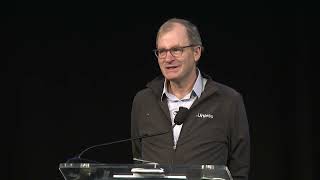
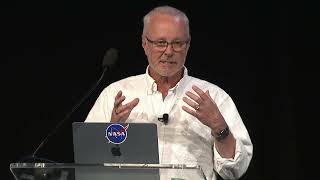
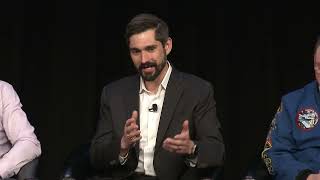
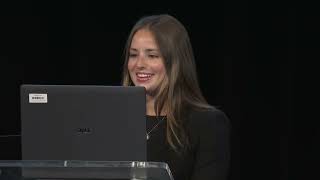
The 'SpaceTech 2026 Panel: Space Systems Lab: Roots and Branches of Innovation' brought together distinguished alumni to delve into the profound legacy of MIT's Space Systems Laboratory (SSL). Moderated by Ali Dvec, a former PhD student of Dave Miller, the panel explored how the SSL's unique culture of technical ambition, hands-on experimentation, and education through building has shaped generations of students and researchers, propagating innovative ideas across industry, academia, and government.
“The real legacy of the SSL is not the hardware or the PhD thesis. It's the uncountable number of papers. It's all that intellectual bulk that got developed there that went off and spread all over the industry, not just landing rovers on Mars, but doing startups and all this other innovation.”
Uncover the unique culture of MIT's Space Systems Lab (SSL) and its profound impact on aerospace innovation. Hear from former students and researchers who carried its legacy into industry, academia, and government. This panel reveals how SSL's 'build-to-learn' philosophy shaped generations of space pioneers.
you gave us exactly the right frame for this next conversation. Not only the history of the space systems laboratory but its culture, the combination of technical ambition, hands-on experimentation, systems thinking and education through building that through building that has shaped generations of students and researchers. We'll now move into our panel space systems lab roots and branches of innovation. The goal of this discussion is to reflect on how the SSL grew over time, what made it distinctive, and how uh its ideas and people propagated outward into industry, academia, government, and new forms of space innovation. Uh let me invite our panelists to join in. So we have Rebecca Masterson. She's at the she's a program office director at the Smithsonian Astrophysical Observatory at Harvard as well. Javier de Lewis, founder and um former president of payload systems. Sununjo Chung, he's the Bren professor of control and dynamical systems at Caltech. And then Alvar Sansotero, who is an associate teaching professor of aeronautics and astronautics at the University of Washington in Seattle. Please welcome them with a warm round of applause. I'm Ali Dvec, the program professor of astronautics here at MIT and I was a PhD student of Daves and really it's an honor to moderate this panel. So uh I've
asked each panelist to begin with a short opening reflection roughly three minutes each on their personal connection to the space system lab why they joined what drew them in and what technical or scientific questions uh animated their work there and after that I'll ask each of them a focused question and then uh we might have a cross panel discussion and then it's your time to ask questions to the panel and what we're hoping to do here is to paint a live picture of a timeline line not just of projects but ways of thinking how ideas moved from concept to hardware very much what Dave showed us in his keynote from lab to orbit but also from one generation to the next so let's begin with some opening reflections and I think we're going to start with uh
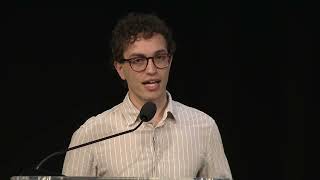
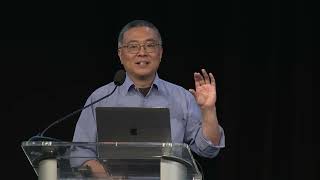
Javier so um Dave and I were um office mates as PhD students so we ca we came in at about the same time it was a little bit later And um I guess that why I joined the lab was for very much for the same reasons that um that Dave did. We had this opportunity to fly something in on the space shuttle in relatively short order. And we have to remember this was a while ago where space experiments tended to take many many many years. And here we were with Mode and then Mace that we could do and make it ours and do it from soup to nuts sort of. And that was a very unique opportunity for a recently graduated PhD uh student that that one that I couldn't find anywhere else. And so I jumped at the chance and uh we then created this partnership that went several decades and flew all these things uh each time building on what we had done before. So I think it was a very satisfying very uh very successful in in the way we did it. >> Thanks. Thanks Javier Becky over to you.
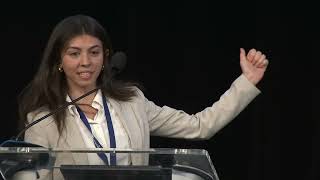
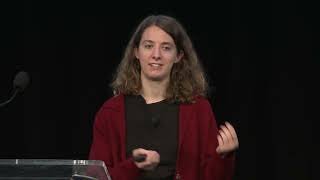
Thanks. You forgot to mention in your email about what we're going to talk about that I'd have to follow a very um emotional display of my entire career and time, all the people I worked with. Thank you. I'm totally ready for this now. But um >> we're here. We're here for you, Becky. >> Um anyway, uh I actually came to SSL in 97. So I learned today that that was the first um decade. I had no idea at at the time. And uh I was a mechanical engineering undergrad who decided it'd be fun to play uh you know beach volleyball during summer like lunches. So I went to intern out in Los Angeles and I met someone there who who had been working uh um uh I guess with Dave and when I decided to go for uh for my masters I had always been interested in space but had decided to go into mechanical engineering he connected me with Dave and I think at the time Dave was sort of like who is this person like this a mechanical engineering student? I don't know. But the guy was like, "No, no, she should just take her or whatever." So, I I came and um it was it was like a life, you know, changing experience for me. Um uh I was in SSL for two years as a master student, went out to Los Angeles to work for for, you know, for one year and then returned for my doctorate. Uh went into industry uh over to Draper, which is not really leaving MIT, but I count it. And then um I actually came back to MIT in 2012 to work with Dave again. and uh the supportive environment in SSL. I I'll say too when I was first working as uh the uh um this graduate student, I was all like modeling and you know the simulation and I felt like I wasn't a real engineer because I didn't build anything but I I was really into I I got really hooked into the idea of like can you can you can you like model something and then see it act actually work out that way. That was super fun. Then when I went to work and I returned to SSL, I got to actually build the hardware for Rexus and I got to do that part as well. And I was like, "Oh my god, I forgot to do simulation. I'm not a real engineer." Um, but it was it was a fascinating environment to be able to do all of the things that one one needs to do uh to to see things uh you succeed in an environment like space. And it just kind of hooked me on doing like really hard things. So, uh, it's an experience that really defines me. >> Thanks, Becky. That was that was amazing. Thank you. Uh, Sunjo,
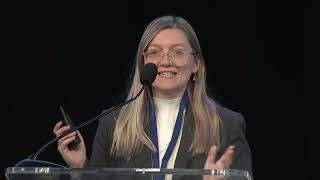
>> yes. Actually, um, I didn't choose to, um, come to SSL. Actually, I was chosen by Dave and I think uh, >> so the opposite of me. >> Yeah. No, I think it's just uh, in my opinion, it was kind of miracle. I was really fresh off the boat. I was my first uh, city in the states. I uh, arrived in Luban International Airport. That was my first time in the states. I uh didn't speak any proper English at the time. You know, actually I was picked up by Oolie. Uh Ollie was my first office mate. And Dave actually was kind enough to send Oolie. And I think uh I want to just say uh a few words about what I learned from Dave and what kind of advisor Dave was and a few episodes. Um uh maybe one is that um I think Dave's SSL was one of the most active groups at at the time when I was there and I think uh when Dave was retired still that was the case but you know funding is really tough sometimes so it was fluctuating then I really saw the Dave writing of his personal check for uh actually to send his students to Trevor. I think that was amazing thing as adviser can do. Um and they and um Dave actually created us some basically a playground for us. Uh Dave uh created a vision and then he gave us 100% freedom to pursue our ideas. But Dave was not 100% hands off. Uh he's hands-on adviser. I remember clearly um uh he worked on some math equation on Sunday and he delivered that hey I solved this problem. So I try to mimic that uh uh sometimes to surprise my students but Dave was really uh like a father figure to me, brother figure to me uh friend. So he was wonderful uh wonderful advisor and I learned a lot and the proof is that uh when I talk to my uh students hey I have this crazy idea do you think it's possible or not and then I think about the someone um from Korea and now I'm a cha professor Kartak and the chances of be becoming uh working with the Dave and trying to work hard to get recognition from uh Dave that was my motivation to continue to uh impress Dave uh and then I became a chair professor Kak. I think the chance of that compared to what research vision I'm talking about. I think that's a lot slimmer. So that motivates me. I can make it anything happen. So I learned a lot from Dave. Thank you so much. >> Thank you. Thank you Sunjo. Amazing Alvar. And thank you both Sununjo and
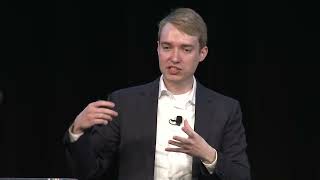
Alvar to coming over from the west coast. We appreciate that. But uh different part of the west coast, right, Alvar? >> Yeah. Yeah. Um north part versus south. though where um but still the west and it's very different. Um so I I actually wanted to start not talking about Dave to answer your question. Um and I'm hoping I'm preaching to the choir. Why did I end up at the SSL? It's called Europe. So for those of you undergrads, I hope I'm preaching to the choir because last I knew 95% of MIT undergrads to Europe. For those of you grad students, I check out the last. For those of you faculty, keep hiring Europs. That's what makes MIT MIT because it's this faculty undergrads. And then right in the middle is the grad students. And grad students, if you never had a Europe, get one. And I'm sure if you heard me, I didn't say, "Hey faculty, get Europs." No, no. grad students get your Europs to help you with your project so that you can then do all your work for the faculty and it's amazing and that's why I ended up in the SSL because of Europe because of this opportunity this structure that MIT creates so that freshmen can be working on things for space um at any year and if you're a senior and have never done a Europe do it now um And why do I talk about grad students? Because it was uh Greg, my uh mentor who ultimately introduced me to our faculty member because as an undergrad from sophomore, junior and senior year. I think I met the faculty member four times. So that is Dave. He spends all the time with the grad students which is amazing. Actually, even though I met him over four years, maybe four times as an undergrad, it was inspiring. It was there. They did not have to be in the meeting with me and Greg to get us to do to do do more stuff. It just happens. So, it's the inspiration. It's the inspiration that the SSL created for many decades. >> Great. Thank you, Alvar. Wonderful. So now uh each of you um is going to get a specific question to sort of explore a little deeper uh your relationship with the SSL and and and how you work
together. So Javier um the relationship between payload systems inc and the SSL was truly special. It created a bridge between student design work, university research and the actual space qualified hardware. That is not easy to do and it remains one of the hardest transitions in aerospace innovation. From your perspective, what made that relationship work? What were your key takeaways and recommendations for how we can continue to translate ideas from classes and university labs into flight ready systems in the future? >> So, I I think it's important to answer there. I think there are two parts to my answer. The first part is that as you saw for some of the early videos, we were a lot younger then and it was a long time ago and got it's hard to think of it right now when we have things like cubats and nanoracks and all these platforms that exist to facilitate getting onto space station or getting into orbit. At the time when we started this, none of that existed. We were basically just a few years removed from Skylab kind of era and you sort of everything was new. you know, we were doing everything for the first time and that's a lot to ask of a graduate student who, believe it or not, hopefully expects to graduate in a reasonable amount of time. And so, um, the SS, uh, Dave and and Ed Cwley before that recognized that and brought in payload systems to sort of to basically handle that part of the work. But that's that's really hard to do if you don't in do the interfacing properly, you know. You you got to remember that uh an an a university research program not only has science objectives, it also has pedagogical objectives. Very few people come to MIT, I think, to get a PhD in NASA documentation and safety procedures. It's good that you know about them, but that's not why you're here, right? You're here to push the boundaries of human knowledge. And so, um that's where payload systems came in. We would engage with uh the the the uh students, the graduate students, the researchers on campus very early in the program to understand fundamentally what they wanted to do. And then as they continued in the ground development, we would try to translate that into flight qualifiable sets of hards and procedures. And that's really the key. You ask what's the key? I think the key is that you have to make sure that whoever you're interfacing with really understands fundamentally what you want to do because I've seen so many projects that you know I that one of two things happens they fly it's great but they don't get the data that the researcher ultimately needed or they fly and they don't work. In order for that well that neither of those things to happen you really have to have that interface start at the very beginning at the concept of the experiment and so that so that that is maintained throughout now the world has changed there are a lot of platforms and and and e it's easier in many ways to get on to get on into space however I would offer that if your experiment doesn't quite fit into the box of a cube set not figuratively and literally or into a nanorack or whatever If you're pushing the boundaries, which almost by definition, most of the stuff around here does, uh it's very it's the the the interfacing and integration with the spaceflight environment becomes exponentially hard really really fast. And so uh even with the facilities that exist today, I think there is still a role to be played for organizations like what I we used to have at payload because otherwise you spend a lot of time um uh the university has the the students will spend a lot of time doing things that really they shouldn't be doing. Things like mace, for example, even today, I would offer would be quite a challenge to integrate uh an experiment that big that can shake itself apart and bang an astronaut on the head with a 20 pound the gimbaling payload. So >> great. >> great. >> Not sure exactly how we actually managed to get that flown, but we did. >> But you did and multiple times even. So thank you, Javier. Becky, over to you.
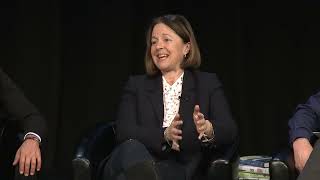
>> Our favorite topic, the rel right the the relationship between program managers and systems engineers. It's often described in very simplified terms. Program management worries about cost and schedule. System engineers worry about requirements and technical scope. But in practice, of course, the relationship is a lot richer and sometimes more tense than that. Um, is it really that simple? How do you think about those interactions? >> Yeah, I love this question. I think about this pretty much every day. Um I think that f first thing to think about is absolutely it's very simple to think of uh the uh you get the program manager over here who's only thinking about about about the money and the when and you have the system systems engineer over here who is thinking about the requirements and the technical scope and there's a sort of of tugof war happening happening you know between them sure I think though the question is actually missing the third uh point here which is the principle which is it which is the scientist so or the PI so if we're talking a science instrument you don't have, you know, a line with the PM here and the SE here. You have a um equilateral hopefully uh triangle with the PI here and the PM and the SE. And this triangle is is very necessary and the mission lives you like in the middle. And you might ask, well, who's in charge in this? The answer is it's the mission that's in charge. We are all trying to serve the mission. And the PI is bringing you the why. Why? Why are we doing this? What is the point? Um, so Swati said it actually really really well in that video where she said, "This is the most dangerous crater that we could go to, but this is where the scientists want to see. So why where what is the where is the bang for the dollars? Why why are we doing this?" And that's great, but you also then need the system engineer who is the holder of the technical uh, you know, commitment. They're sort of looking at okay well how are we going to make that happen? What are the requirements? How do we take the scientist's um you know vision and actually translate that into a system that we're able um to build? How do we manage scope and risk? Risk is also super uh is what the system engineer has to has to worry about. But then you have the project manager and they're holding basically the commitment. Okay, we have this vision. We know how we're going to get there, but we need a certain amount of dollars and we need to get to the launchpad because, you know, Bennu is only coming so close to Earth once every the, you know, five years. You got to get there. And so, if you don't have these three parts of the triangle, it's very very hard to get to a successful mission in the middle. There is a certain amount of uh healthy um tension that needs to exist. Uh I mean, I could tell you stories about, you know, uh basically Rexus and I'll tell it short, which is more about me and the PI. I will say so Mark was my systems engineer. You saw him. He's the one that never went out. Um he was our systems engineer >> and he's the longest bar on the chart. He >> is the longest bar on the Rexus Gant chart. Yes. Yes. Um he did never go out but he was amazing. But anyway um but I sort of had to serve as both the technical um um um sort of lead as well as the project manager. So I did a little bit of both of those roles there. uh in the PI there was a point at the end where we weren't going to get the science that we wanted to get. We had a problem with our dete um with um basically noise on the circuit board because I'm a mechie. So turns out um and um I was like well it's a level one our level one requirements were to just educate students. We did that. Let's bolt this thing on and go. The students deserve for this thing um you get to fly. And the PI, you know, Rick Benzel said no. and Rick and I worked together hand in hand for six for six six uh for six years. But it was a tough a tough a tough like moment. Um we both had to advocate like I was trying to advocate for cost and schedule and requirements and Rick was trying to advocate you know for science and we got at the end to the right spot. We did bring the instrument back. I may have cried once or twice. We did take it apart. We fixed the board. We put it back through Vibe and we got it up there and we were able to actually open it up and observe X-rays with it. So, that was the right answer, but neither one of us could have gotten to it all on our own. We needed that healthy tension and uh the trust and respect of each other's uh perspective to get us to success. So I do think that the relationship is more interwined and it's so important to both stay in your lane but also to respect what you're being you know uh what you're hearing from your counterparts. >> Thank you. Thanks Becky. Amazing. Thank you for sharing. Um, Sununjo, Sununjo,
your work um, spans uh, a lot of different disciplines. Optics as we heard about, you know, the the FA the arrays, the optical arrays, you work in robotics, autonomy, controls, and AI as well. And so um as work that crosses multiple professional communities, we haven't talked a lot yet today about um the the professional communities AIAA, SPIE, ILE E and there's some others. So in that kind of multi-disiplinary landscape, how do you determine the center of gravity of a research program? Um how did you decide that for yourself like uh the unifying questions so that uh the work of a lab remains coherent rather than just broad? >> Yeah, thank you uh for the question. I learned all that from the I'm just trying to copy what they taught me. Well, I didn't know anything about the optics. I was traditionally trained in aerospace engineering before I u came to MIT. But I think uh as you can see from all these different project uh you need to go beyond your traditional conventional knowledge base whether it's mathematics or computer science or aerospace engineering um and in particular these days um uh in my subd discipline of control and autonomy uh a lot of exciting things are happening in the robotics world and many of actually aerospace people of present there. So it was kind of natural and by the way robotic spirit uh likes to see this spheres. So basically uh in CDIO implement and operate uh that's actually heavily appreciated sometimes even in aerospace uh doesn't do that uh in terms of uh uh this basically uh genres and conferences. So it was kind of natural for me to connect to uh robotics. Um I think one um important question I keep asking is that we are going through revolution in my opinion in engineering. I just uh keep challenged. there are so many things to learn and I just sorry for my uh grasp you know actually telling that I mean it's a lot more difficult for them to get a PhD thesis these days because I mean whatever we uh have to know like a dynamics and control and all the fundamental and we call that good old-fashioned engineering uh it's not going anywhere it's still very important but still we need to learn so much about machine learning AI and so many other things. So it's a challenge. Um so I try to still apply what I learned from Dave uh Sununju when I was grad student. Dave was telling me PhD research is all about um original novel innovative research. So I think uh we can still compete with the AI on that. Um for example um uh my department in kitech is now called the computing and mathematical science is composed of my discipline control and dynamical systems computer science and machine learning and applied math. So um one answer is that there is no boundary. Uh I mean I think still we need a department uh because we share some interest for example we have a passion for space and aerospace applications but in terms of a core engineering study and so on I I I do challenge the whether we really need a traditional definitions of aerospace engineering mechanical engineering computer science. Um so that's I just keep thinking about and um I I I'm happy to be uh part of this group so that I can learn from all these different uh uh thinkings. For example, uh a lot of innovation in aerial robotics which is in our field called drones autonomous aircraft uh some of the innovative research is happening on low world and some of them uh do not do do not have any formal training in aerospace. So we go out and learn from them but at the same time we need to also teach them uh details of aircraft dynamics. So basically um I my u motivation was to reach out to the uh different subd disciplines and disciplines and we share the knowledge. So it was natural for me to connect with the different societies. >> Thanks. Thanks Joe. Amazing. Um, Alvar,
Alvar, you were the heart and soul of the spheres program, uh, which became one of the iconic SSL efforts. We saw it in Dave's presentation, 14 years on orbit. uh an extraordinary platform for experimentation, uh student experiments, astronaut interaction, and longduration technology development on the ISS with the International Space Station currently scheduled for de-orbit 2030 and 2032 sometime. How do you see the future ofdriven microgravity experiments once the ISS is gone? What comes next? And what should universities and agencies be doing now to prepare for that transition? >> Great. Okay. Um so um >> no no softballs on this panel. I I I was actually inspired by our opening remarks with um Dave Mandel um uh to to to be a part of this question which is let's look at history of what happened and then look forward right and actually uh that that question is interesting because we were in the middle of spheres when the space shuttle retired and we went through that and there were some amazing parts of that happened because the shuttle retired and there were some horrible parts and I think that the space shuttle retirement tells us a lot about maybe we should plan better. We should have things a little bit more ready because we went through many years of the US having no human capability to space many of them. And there were some very optimistic people that private industry could just make it happen almost immediately and we didn't and that did affect things. And on the other hand, we can see it right now and actually I can tell you that when the space shuttle retired, my first year was all angry and was I was fierce and we couldn't it was so hard to send batteries and tanks up there. It it hurt our program. But about a year in, I I realized, wait, wait, the United States is the first country that can go to space with private industry. We're still going to space, but it's not private industry. It's not the government. And you think about it up to now, not there's no other country in the world that goes there without the government. I know the little things like the fact that NASA sort of pays most of the budget for SpaceX and Blue Origins, but they pay a lot less. So, let's learn from that and let's look forward. I think we're a little bit late. Like, we are not going to be ready for space station to be the off mission. We are going to go a few years without space station there. But if we let it happen and we are ready at least to have the same infusion from private industry from hopefully half of you guys because this is about creating space right there's a lot of entrepreneurs in here I think well let's infuse the private industry space station and maybe we'll get the same leaps and bounds because now SpaceX is landing blue origins is landing back we have tons of startups for small business for for small for cube tube set launches. The same can happen with space station. And I say more importantly in my head as a researcher as a sort of like let's let's learn about new things. If we want to go to Mars, low Earth orbit has to be private. In order for for for we as a country and hopefully as a humanity, we can truly get to Mars. Low Earth orbit has cannot be a big deal anymore. As much as it sounds, as much as it's awesome to go to to space station, it should be boring. Then we can go to Mars. And I think space stationing, retiring will lead us there. >> Great. Awesome. So, we're we're doing really well on time. So, I want to uh inject a cross panel discussion question, kind of a meta question before we go to to the audience questions. So
we heard about the SSL from Dave and we discussed uh the individual experiences with it. Um the theme of today Space Tech 2026 is uh innovation in aerospace and it's an amazing time. So if we think of the SSL not just as a laboratory either on Earth or in space, but if we think of the SSL as an innovation model, what's really distinctive about it? Um, you know, the hands-on flight heritage, the systems perspective, the willingness to trust students with real responsibility, the closeness to missiondriven requirements, or something else. In other words, if we take a meta perspective, what can we learn from the SSL as an innovation model to carry to the future? And anybody feel free to jump in. I think that um you know all of the above that you listed uh to be but if I were to pick one that I would highlight it would be the mission focus of the research that was done on SSL and you you know a lot of labs get created because they got one big mission you know we're going to put one big satellite up or whatever at SSL and at CIRC before that you know there was always a lot of lit a lot of different irons in the fire and that allowed a lot of cross-pollination between the programs a lot of crossplation between the students. Uh I mean I think that the real legacy of the SSL is not the the hardware or it's not it's it's the 50 or so or PhD thesis. It's the it's the uncountable number of papers. It's all that that all that uh all that uh intellectual bulk that got developed there that went off and spread all over the industry, not just landing rovers on Mars, but doing startups and and all this other innovation. Um but you know, you it that's a really difficult thing to tell someone that's not that's hasn't gone through it that it's going to work. Everyone wants a plan. You know, what's your ROI? what's your you know what's your seven five year you can't do that with this with this kind of stuff but yet if you look back not just the SSL but other examples of other laboratories or similar organizations that's their secret sauce right they put a bunch of motivated reasonably smart people together give them um but and let them go but having the missions prevents it from just becoming an open-ended sandbox having the missions the fact that venue only arrives every five here. You know, nothing like being hung tomorrow morning to focus your night your mind the night before. Right. That is really what what what helps us. >> Now, you said it's not about the hardware. However, the hardware will be on exhibit at the Smithsonian. That's right. Okay. So, I don't know how many labs can say that that their their hardware will be on display at the National Air and Space Museum. >> Right. Mode. >> So, please tell us a little bit about
that. Uh because Dave did not mention that in his modesty. >> Sure. I'll u um I I I um mode mace and spheres will be on display in the Smithsonian and their permanent collection and in the wing that's been remodeled to be f to focus on shuttle and station. If anybody remembers going to the Smithsonian before, it's where the McDonald's used to be. McDonald's is no longer there. And the funny part was when I I got asked to find all the hardware and I found it go in the bowels of MIT and I shipped it down >> and then they said, "Well, how do we put this together?" And I discovered that there's a very bright line that's that's drawn around 1995 or so, whereas before then, but after that, you can find anything on the internet. So, I can find any procedure for any, but before then, you just can't find anything. So, I said, "You know what? I'm just going to fly out. I'm going to show you." And I saw I looked at the old videos and I reminded myself how I was and I went down there into the Uberhazi. It's sort of like the room at the end of Raiders of the Lost Arc, you know, where they keep all the stuff. And I got on the floor and I put the the things together, praying that I wouldn't break it. And amazingly enough, after 25 years, it still all went together. >> Oh, thank you. >> I Yeah, I would just want to add um I think >> Yeah, let's let's give a hint for that. That's amazing.
So Dave said in his uh in his presentation that that he learned I think from Ed um that if opportunity, you know, knocks that you always um um just say yes. And I kind of joke that that Dave is the person that he could ask me to put an instrument on the spacecraft going to an asteroid and I'd be like sure. Like I basically say yes to whatever he asks me to do. Um, and I think that's actually really important like that he would give like I kind of had no business running Rexus. I'm not going to lie. And um, you know, he I remember he called me into his office. I had just gotten back. I didn't write the uh, you proposal. He said, you know, Beck, I just I need someone to liaz with Goddard on this. It's it's not a big deal. Don't worry about it. I I just need you to liaz. And I was like, all right, fine, Dave. I can leaz. Sure. And I go to my first meeting and I'm like, oh my god, what are we doing? and I went back to his office. I said, "You need more than liazing." And um but you know, he he put me in that position and he just trusted me to do it. And I think there's something there's a secret, you know, sauce there. This sort of giving people the autonomy but also the support. Like when I was a newrad student, I had some dark days. There were times when I was unhappy and I would set up a meeting with Dave and I'd go in and I'd leave the meeting and I always felt better. Sometimes I'd be like, I think he just hoodwinged me, but I always felt better at the end of it. And so he had this way of like giving you the impossible, but making you feel like you could do it. And I think in any like innovation uh you know that's an important part of what allows people to innovate is you have to know that it's hard and you have to know that you have cover of the people that are supporting you so that you can fail so that you can screw up but you can also succeed. And I think Dave really got that just rights. >> Great. Should we uh go to audience questions? >> Yes. >> Sure. >> Sure. >> Let's do it. All right. Uh, your time, please. Um, no softball questions. And we need a mic right there. Yep. Thank you. Yep. Thank you. And if you would uh introduce yourself
and then also is the question for the whole panel or a specific person? >> Yeah. So, my name is Chase Kalin. I'm a first year LJGO Aereroastro here at MIT. The question for the entire panel is kind of building off a question that you'd already asked Ali on a lot of the work that you guys built your career on in the SSL was in partnership with NASA and as we have moved towards more privatization of space. What role do you think the university, the institute and industry have in building and continuing to foster that so that we can learn not just those generic procedures but how do we continue to innovate in industry? >> Okay, go ahead. Well, um that that's actually a very loaded question because um industry loves hiring the people that come out of the these places, but someone has to pay for that. And I I personally believe that and what that while industry is taking a more bigger and bigger role in lower earth orbit like Alvar said and all that the role of the of NASA and other organizations like that cannot disappear and I mean and it's the it's the role that at least since World War II the federal government has always done which is the funding of low TRL low technology readiness level research from which all these great things eventually come, but they're hard to predict. So, um, you know, industry, it's it's really hard to get industry uh at le especially small industry, startup industry to cough up money for low level uh research and student uh stipens and things like that. A little bit easier for big companies, I guess. Uh, so I don't see the government role going away in the funding of organizations at here. I I mean it's it's just it it's just not the way that that industry especially startups and all that are are are able to operate. >> Yeah. Um, so without trying to get big political, just skipping into to our industry, I if you've been paying attention closely, which not everybody has to, this is not a a shame anybody. Um, our industry as a whole has not seen a drop on funding by the government because it is one of the industries that is known to advance technology constantly. And what I have seen over the past year since since shuttle retired like I mentioned all the way through space station um uh Danielle Wood is out there still running serial robotics in space station and and working on space station that is now handled privately. The government NASA uh even DoD has really embraced the idea of let private industry do it cheaper and we'll help fund it with projects with what to do with it. So this is absolutely in my mind a don't despair situation. The opposite is figure out how are we going to embrace private industry doing for less money because the government will help us if we use that path. If we try to keep going the path of hey NASA give me $200 million they won't do it. But if we go to the path of hey give me a few hundred,000 to go through private industry actually that they will do. So don't I would look positive towards it. We are actually in that good part of the world right now for for us living the restite. Great. We have other questions in the back.
>> Uh this is Himer Ramirez. Uh I'm a graduate from uh the uh the core 16 and uh 2010 PhD. Yeah. Um and uh my my question uh I think is is more related to I don't see in the panel a lot of representation of uh kind of the the defense uh industry base and I think >> the SSL also provided kind of some some role in making some connections with the with the defense industrial base uh at some point and I I want to hear from your perspective kind of your experiences and and what was the role of of supporting um kind of that that important part of of the ecosystem. >> Yeah. Um, of course, I mean, SSL has a strong connection to uh supporting the education program uh with the Air Force. Actually my personal anecdote is that u there's a major major uh uh uh uh Matt McCormack u I actually didn't remember when he was at the grass but he when he was a test pilot school he uh uh connected me and for some collaboration and there are ton of people uh in uh DoD um uh who actually graduate from um SSR um so I just wanted to share that >> on the ex side >> maybe Mike Jones right >> yeah well more than Mike Jones I On the Rexus side, we had a number of uh mostly Air Force folks. Uh one of my students was from the Army. Uh later, I guess he wasn't Rexus, though. Sorry, I get very I'm getting a little lipid old I think. But anyway, but we had a lot of Air Force students come through Rexus. Um they would come off of the Falconat um um the program at the at the Air Force Academy and they'd come over and continue doing um some flight hardware um um to work with us. And it I mean there was Yamite Jones, there was David um Larte, uh there was Kevin Stout, uh there was sort of a uh the Halmmet kind of went on and on. So that was I think mostly the way I think of how the SSL supported the DoD world was through the education of the Air Force uh students. I I've really enjoyed um getting a view and I'm not going to tell the story about in my basement, but I'm really close to wanting to anyway. So yes, we uh I really enjoyed working with them and I was always really happy that we had that connection uh with that part of of the government as well. It's important >> and if I could just add a reflection on that um you know I came here as an international student right from Switzerland and I felt that u and Dave shared about you know he was on the air force scientific advisory board. A lot of the technologies that you heard about this morning of course have dual use you know in remote sensing and precision pointing and all of that and it is a challenge I think going forward to balance you know the the research funding and the challenges coming from the DoD side versus science and um I think Dave has done an exceptionally good job balancing that and also maintaining a really welcoming environment for uh international students in particular so I think we should recognize that >> they've keeps telling me that I had Alvar University because I kept bringing in a lot of international students for their masters. European >> uh universities like to have their masters done outside the university. So I I mean okay yes I had maybe a dozen international masters through mystery program but if they had stayed here and not been doing all the other stuff you safa would have closed and we would have become the United States Air Force Academy for aerospace because they had so many uh uh military cadetses at the masters and graduate level. So >> great. >> Um yeah. All right, final question and then we'll close the panel. And go in once, go in twice. Here on the corner. >> Hi. Uh, >> is that you Evan? >> Yeah. >> Our master astro urban astrophotographer. >> That's right. >> That's right. >> That's you. >> That's you. >> Hi everyone. Evan Kramer, current postto at Caltech. Uh, Dave, PhD student, graduate, uh, last year. uh question is we've talked about increasing privatization of a lot of the things in our industry and so if we take one example like uh commercial companies operating let's say earth observation satellites in orbit these companies now operate the assets that collect the data that are of tremendous value to people like us in the research public good education spaces how do we work to convince them or how Do we operate our own levers to get them to play nice with us? >> We need their data to do the work we do and you know we don't necessarily have huge bags of money to pay them with >> any thoughts I the the best thing that I could the the yeah you don't have metric bags of money and that that's the real that's the real problem. Spheres for example, if I were to have if we had had to actually pay for all the resources that we use on ISS, it would have been a hundred million dollar program and it was, you know, orders of magnitude less than that. Um, but private companies expect to get paid. Silly them. Um, I think that that the uh the only avenue open to uh universities and and and we're seeing this, you know, not just in aerospace, but the only avenue open is to hopefully um obtain some funding and uh and try to uh come up with partnerships with them of what you're going to use the research for that would somehow benefit them. That's the most successful thing that I've seen. But I mean I wish there was a better answer. I but that is a big that is a big problem. I mean all these when they talk about private space stations uh that's great. I I think it I think we're going to go in that direction but how it's going to be paid for for universities that's still that's still to be decided. I think there are a couple of oh there are a couple of existing I'm speaking now uh through my existing um uh um through the role that I have now but there are a couple of missions I think uh some methane um sat is one that comes to mind and tempo maybe although I can't remember if that was a private spacecraft or not where you see this this model between um like a Smithsonian um scientist and then the spacecraft is is pretty sure that methane sat was privately was need a private company. So I don't I don't run those um the programs and I don't know a lot about them. So I'm speaking a little bit out of expertise here. But I do think there are starting to be some some partnerships or some like examples of that. So one thing I would do is to go look at at those examples and and sort of see where that's going. But I you know agreed that there is a conundrum here because it's sort of what Javier had said earlier. We need the government funding because uh you need that that seed money for when it's not profitable, right? There's no uh like uh the profit isn't there, but the scientific um uh but the gain is. And how do we how do we make that case? >> Yeah. And um I I I have an answer maybe more uh not all the way to a postoc level uh to the undergrad level um and uh in two words is industry capstone. It's actually what I've experienced it now at the University of Washington. Um uh and that's the universities starting at the very beginning now need to start thinking more of how they answer to what industry wants not only to what the government wants. Um and the industry is interested. It's hard. It it's also hard. Um but we are we achieve bringing in three or four industry partners every year to help us with undergraduate capstone. And if because we answer one of their questions, they want to spend a little bit of money for them and get an answer quickly, right? So we are going to have to be different. They they want it cheaper and faster and NASA already tried that. So we need to not repeat the same thing. Going back to not repeating the same thing. So >> great, >> wonderful. Um, we are at time. So, uh, let me close with one brief reflection. Uh, what this panel makes clear is that the space systems lab, the SSL, was never only about a set of projects. It was and is a way of connecting ideas to hardware, students to responsibility, and research to real missions. Its roots are deep, but its branches continue to spread through all of your work and our work through the many people that uh Dave you've influenced and that you showed us. So um please join me in thanking our panelists uh Rebecca Masterson, Javier De Lewis, Sunjou Chong, and Alvar Sansotero. With that, we're going to take a brief break and then reconvene at 11:30. Thank you. >> Sorry.
Top Moments
Advisor's personal check!
Defining career paths!
Science vs. schedule!
Undergrads in space!
Ideas to industry!
No CubeSats then!
Space shuttle access!
Up Next