Institutional Research & Development
Showcases cutting-edge research and development efforts from leading academic institutions and government agencies. Sessions feature specific projects, collaborative initiatives, career pathways, and the role of university and national labs in advancing space science and engineering.
Viral Moments
17
Advisor's personal check!
Defining career paths!
Science vs. schedule!
Beyond classroom limits!
Lab breakthrough, space impact!
Find your space passion!
Undergrads in space!
Ideas to industry!
JWST's hidden testing origin!
No CubeSats then!
Bold visionaries needed!
Space shuttle access!
Big projects, on budget!
Playtime in zero-G!
Complexity of space instruments!
Canada's LEO network lab!
Lab to market!
Key Quotes
5
“The biggest thing I've learned while working on Rexus is really that that instruments like this and spacecraft like Osiris Rex are very very complex. There's a lot of dependencies, a lot of requirements, a lot of relationships, a lot of design decisions that all impact one another.”
“We identified the root cause of the problem. The fix actually is quite simple because we just need to know we're going to have a regular handover right now. We're going to freeze our congestion control algorithm for a little bit of while about 100 milliseconds.”
“Innovation is not a moment or a single invention. But I think as we'll see today... it's a layering of generations of people who work together and build on each other's work.”
“Innovation equals invention times commercialization. Repeat in innovation something that creates impact for the world that makes money that provides positive return for a company value equals invention.”
“The Habitable Worlds Observatory, this is like the next James Web Space Telescope. This is going to be a huge observatory that is going to be sent out to space with the goal of characterizing and finding signs of life.”
Chapters
34
Articles
5
Professor David Miller's keynote at SpaceTech 2026 offered a captivating retrospective on three decades of groundbreaking work at MIT's Space Systems Lab (SSL). From the early days of shuttle experiments to contributing to the James Webb Space Telescope and Mars rover landings, the SSL has consistently pushed the boundaries of aerospace engineering, often with students at the helm.
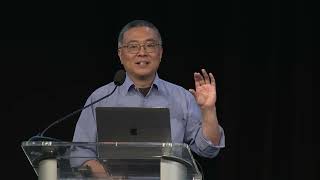
Dr. Jianping Pan, a distinguished Professor of Computer Science at the University of Victoria, presented a captivating overview of his team's extensive research into Low Earth Orbit (LEO) satellite networks, particularly Starlink. His talk at SpaceTech 2026 unveiled critical insights into network performance, user distribution, and the innovative applications poised to transform global connectivity.
The Space Tech 2026 conference at MIT opened with an electrifying atmosphere, as Professors Julie Shah and David Mindell underscored the current golden age of space exploration and innovation. From humanity's furthest journey yet with Artemis 2 to the pervasive influence of aerospace engineering across diverse industries, the session highlighted MIT's critical role in shaping the future.
The "SpaceTech 2026 Panel: MIT’s Innovation Network" brought together leading minds from MIT to dissect the intricate world of deep tech entrepreneurship, particularly within the burgeoning space economy. The panelists emphasized that true innovation transcends mere invention, hinging instead on strategic commercialization and the strength of a diverse, adaptable team.
The quest to find life beyond Earth hinges on our ability to detect and characterize exoplanets, especially those resembling our own. Dr. Rachel Morgan of NASA's Astropic project is at the forefront of this challenge, developing a groundbreaking integrated photonic coronagraph that promises to make the search for habitable worlds more efficient and robust than ever before.
Sessions
8