AI Strategy & Adoption
Addresses the strategic planning, foundational principles, and successful adoption of artificial intelligence and machine learning initiatives across public sector agencies.
Viral Moments
21
Months to days!
AI-driven fraud detection
Inaction is risky
Evaluation-driven development
NLP for policies
Efficiency, not reduction!
Billions saved with AI!
AI is a MUST!
AI model transparency
Fearless AI exploration!
AI for data governance.
Billions in savings possible!
Data First Funding!
Accountability in AI
AI in production
Public sector dilemma
Data Strategy Revolution!
Trust and collaboration are key.
Lab vs. real-world AI.
Trust is everything
AI needs context
Key Quotes
7
“Peatlands hold more carbon than all of the other vegetation types in the world combined.”
“Generative AI has come to traffic management in the state in a way that does not exist in any other state in America.”
“We are only able to get to 20% of our data. Our data is we can't even process all of that data that's currently coming in. There's no capacity, there's no horsepower processing power at all to do any of this stuff.”
“These are not use cases of talking about how somebody could click on more ads more effectively, but things that really transform kind of life and society as well.”
“Data is the new ammunition in our arsenal that improves decision making and connects the DoD's boardroom and battlespace.”
“Every fraudulent dollar stopped becomes a dollar invested in care and trust earned in our citizens.”
“AI has moved from hype to business requirement. You must deploy AI at scale.”
Chapters
57
Articles
7
Natural England, in collaboration with Defra and Databricks, is pioneering a groundbreaking approach to peatland restoration across England. By harnessing the power of Artificial Intelligence and advanced data platforms, they are dramatically accelerating efforts to map, protect, and restore these crucial wetland habitats, which are vital for biodiversity, water quality, and climate regulation.
A pioneering state, spearheaded by a visionary governor, has embarked on an ambitious journey to redefine public services through the strategic implementation of data and generative AI. This initiative, launched with an executive order in September 2023, showcases a fearless commitment to innovation, partnering with private sector leaders like Databricks and academia to deliver long-lasting benefits to its residents.
In an era demanding agility and efficiency, government agencies face an uphill battle against outdated data infrastructure and fragmented information silos. This session, 'Reinvent Government in a Data Intelligence Era,' presented by Eric Papawitch of Databricks and Ricky Aurora of Minnesota Metro Council, unveiled a transformative approach using the Databricks Data Intelligence Platform to overcome these challenges and accelerate the adoption of data and AI in the public sector.
The public sector, often perceived as lagging in technological adoption, is undergoing a profound digital transformation. Driven by the urgent need to deliver more with less and meet rising citizen expectations, government agencies are embracing advanced data analytics and artificial intelligence. This shift is not just about technology; it's about fundamentally reimagining how public services are delivered, enhancing security, and fostering unprecedented collaboration.
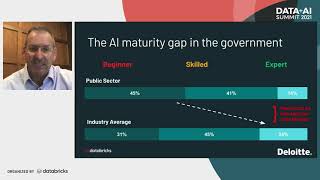
The public sector is undergoing a profound transformation, driven by an urgent need to leverage data and artificial intelligence for better citizen services, enhanced national security, and operational efficiency. Leaders from agencies like the FBI, Department of Defense (DoD), Department of Veterans Affairs (VA), and Hennepin County shared their journeys at the Data + AI Summit 2021, highlighting both the immense potential and the significant challenges in this digital evolution.
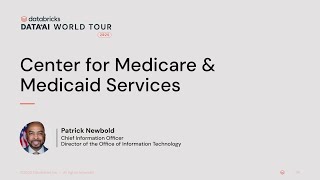
The Centers for Medicare & Medicaid Services (CMS) is embarking on an ambitious journey to become an AI-native organization by 2026. This transformation is not merely about adopting new technologies but fundamentally reshaping how government delivers value, enhances patient care, and safeguards taxpayer dollars against pervasive fraud.
The public sector is undergoing a profound transformation, driven by an urgent need for enhanced efficiency, improved services, and robust data intelligence. A 'renaissance' in data strategy is sweeping across federal and state agencies, propelled by executive orders and directives that mandate a data-first approach to mission outcomes. This shift is not merely about technology adoption, but about fundamentally reimagining how government operates to serve its citizens better.
Sessions
10