DEI Under Fire: Why Event Leaders MUST Fight Back!
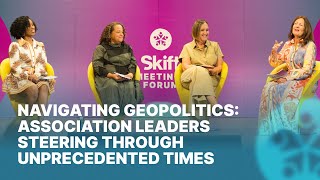
In an era where Diversity, Equity, and Inclusion (DEI) has become a politicized battleground, event industry leaders are confronting unprecedented challenges. Far from being a fleeting trend, DEI is being championed as the essential framework for building resilient communities, fostering economic growth, and designing truly impactful events. This session explores how pioneering leaders are navigating these complexities, from empowering local economies to cultivating the next generation of diverse talent.
“Talent goes to where diversity is. Women, people who look like me, people from the gay community, Hispanic Latinos, they want diversity. the Jenzers, they don't want one-sided.”
- Al Hutchinson, Former President & CEO of Visit Baltimore
DEI is under attack, but its principles are more vital than ever for the events industry. Discover how leaders are championing diversity, equity, and inclusion to create impactful and welcoming experiences. Learn practical strategies for fostering true community and economic growth.
So, we're going from AI to DEI, but um it's no secret that DEI has been in the crosshairs of recent months, years. And um it's so important in the programs we plan, in the way we design our programs, and in the way we program our events. So, I wanted to start with you, Al. It's no secret that DEI has become a politicized word, almost scary to some. What do you think about that? >> Yeah. Well, first, thank you, Andrea, for the invite. Always good to be with my good friend Martha to have this conversation. And look, I'm in a room
with a bunch of leaders and we we need to have a really serious conversation about how to take care of one another. And DEI, as all of us know, we're at home in 2020 when it sort of bubbled up to the top once George Floyd was murdered. We saw it on TV and all of a sudden DEI became sort of a household word. The reality though is DEI has always been an issue in this country since the evolution of it as a America being an experiment. We've always struggled with how to take care of each other especially people who don't look like you, who don't speak like you, who don't see the world like you. And we've always struggled with that as a country in America. But what we need to do now because we've allowed our politicians to poo poo the word and they've scared us into thinking that DEI represents a face maybe like mine or it represents a certain community whether it's women, whether it's gay, whether it's Latino individuals, they've labeled it and scared people >> and scared us. And we've gotten away from the work. The work is about taking care of each other. And so we, everybody in this room and your colleagues, we have to get back to helping each other from a loving perspective and rebuild these communities. And I think that's what we need to be looking at now.
>> Thank you. So Martha, there's some destination organizations that have scrubbed their websites of the word diversity, of the word inclusivity, and even have gotten rid of their LGBTQ pages. What do you think about that? >> Obviously, I'm horrified. Right. I I also want to thank you for having us, and I hate that I have to follow Al, but um I'll try and hold my own. You know, I come from a city where it is inclusive. I mean, it's had a reputation, by the way, for many, many decades of of struggles in this area, but we've really come a long way. I come from a state with a an incredible female governor, female mayor, um, a lot of diversity and leadership in in our residents. So, you know, when you hear about what's happening in our industry in particular, in places like in southern states, I'm not going to specifically name. I think you all know what some of those states are where their funding is being threatened if they have words like diverse, inclusive, LGBTQ pages in on their websites. Um, people are searching, they're being sought out, and if you have those words, you will risk losing your funding. And for us, that's a real challenge because as much as we want to stand on our principles and I get the privilege of doing that in a city like Boston and Al did the same in Baltimore, when you're in a place like I'll say Florida, Texas, you're very conflicted because you want to save your organization. You want to make sure you have the resources necessary to bring visitors to your community, but your funding is being threatened. So, it's it's a terrible balancing act. It's a I wouldn't want to have to walk that line to be honest with you. I'm I'm fortunate that I don't have to. Um but we're definitely at a crossroads in our industry right now.
>> And Andrew, if I could piggyback on Martha's statement, um the reality we're in unbalanced time right now. We're in an upside down world quite frankly. And so I'm in I'm on the consulting side now. And I just left the deep southern states doing some work. And it's almost like we're in two different countries to be real honest with you. Because to Martha's point, those leaders in some of these states, they want to take care of each other, too. But they can't talk about some of the things Martha can do in Boston and I can do in Baltimore. That's the piece of the puzzle that as leaders, we got to figure that one out because all we have is us. Nobody's coming from out the sky to save this place. So we have to figure out in this landscape how do we talk to each other in a way that I can value you although I may disagree with you but it's not always easy because in my earlier session I had Karen from the National Kidney Foundation and she said sometimes there's attendees that will not go to certain cities because the social beliefs aren't their social beliefs. So that's tough because then who gets hurt? the housekeepers, the you know the people that work in that destination. So you need to find a way to meet in the destination even if the social beliefs aren't the same. It's you're right. It's a balancing act. And I'm not condoning any of the issues. If you don't want to deal with me because of the way I look or if I'm gay, you don't want to go to that community. I understand that. I totally get it. But the question becomes as leaders, what's the bigger answer? What can we do to address some of that disconnect? And I'm not so sure at the big picture, boycotting is the true answer because mommy and daddy who maybe look like me in one of those states try and take care of their family >> and you don't go there and they may be unemployed the next day, >> right? >> And if you don't have an education, what do they do? They go in the street and they take advantage of you. So, we got to have a broader conversation as great thinking people. It's not an easy answer. It's very complex, but we can figure this out and we got we have to talk to each other more, not against each other. >> And I know one of the ways you've both
accomplished having diversity is by having smaller businesses that are minority owned, at your trade shows, at your events. Tell me a little bit about that. >> Well, I I'll start because uh >> because I copied you. So, one of the things when um back in 2018 that I felt we needed to do in Baltimore, I'm in a majority black city and there are a lot of small blackowned businesses, womenowned businesses that didn't feel a part of the tourism um community. And I felt in my leadership it was extremely important for me to embrace these small business owners, black, latino, gay women, and they should be a part of the Baltimore story. Why? because they got stake in the ground. They had a business in that community. They hire people. They should be a part of my story. So, we bought those folks in, the creatives, the entrepreneurs. They helped us with the story of Baltimore. And we started not only bringing them in our rebrand. They were part of our rebrand message. We didn't hire actors and actresses. We hired Baltimoreians. And then we took them on the road with us to trade shows. the lady who owns a tea shop, the cand candle making company in Baltimore, someone who makes books, take them on the road so they can tell the story of your community, but also get paid, get compensated, and then that way as event planners, you get the true Baltimore story. You don't get it cookie cutter. You talking to someone who has a business in their community. That's what I believe destinations should do if they're telling the real story. Hire people who look like you, who have a message that they can go out and help event planners feel the soul of the community. >> And isn't that how diverse leadership
then leads to diverse meetings and diverse programs? >> Well, we we do what Al does as well. We work with our um small business owners in the community. um instead of doing standard amenities anymore at conferences, we bring in shops where we have their their goods available um give them a bag and say fill it up. We do the same thing at trade shows. But we've actually become because I know that the title of this session is really about diverse leadership both from a the perspective of meeting planners but also how we engaging suppliers. We've taken it to an another level completely in Boston. We're developing a new supplier diversity program because not only do we want those small mom and pop creators to be part of our universe. We want suppliers that are already in the community that may not be fully outfitted to work with largecale meetings and conventions to have a bite at that apple. So, we're developing and we're working with a company in Atlanta called Nectar IQ, but we're actually developing a CRM software where we can put in that software um diverse owned businesses that service our industry, not just creators. So, I'm talking transportation companies and florists and decorators, the whole nine yards. And we are making sure that this ultimately when it launches that the meeting planners that come into our community to do business will be able to put their RFP right through this system and check off. I want to be able to make sure I get uh prop proposal responses from this comp this kind of company, you know, womenowned, blackowned, like depending on the conference, they have preferences, right? But and then concurrently, and I know you're going to ask me about NAACP later, but I'm going to bring it up now because this really did come about when we hosted the NAACP in Boston a few years ago. A lot of these businesses aren't ready for prime time yet because they haven't been invited into our space. So, we got to invite them into our space, but we have to make sure they have the tools and the skills and the the team members available to so they succeed. So, we did that with NAACP. We had a we had a a transportation vendor who needed support. But, you know what? We hired him. It was a $350,000 contract. Now, he's getting contracts all the time in Boston. Same thing with transportation vendors. So, it's very intentional, but it's it's expanding the tent even more beyond what we're talking about with using small businesses to tell our story. It's really it's literally helping generational wealth in our community because the these people are going to be successful and we're going to work with them each and every day to make sure they are.
>> Yeah. And I would just say to you, especially event planners in the audience, use your destinations to help you identify who can be a good spokesperson for your conference in that particular city. And I'll give you an example to to Marthur's point. We had a gentleman in Baltimore who's a spoken word artist. He helped us with a a poem when we were doing our rebrand named Kwani Fidel, 60 26 year old gentleman at the time. But the diabetes association wanted to meet in Baltimore, but they wanted to have a speaker to talk about the impact of diabetes on the African-American community. So they hired Konduani. Kundan is a spoken word artist. He's like, I've never spoken in front of more than 10 people. What am I going to do, Al? They hired him. He was a keynote speaker in Baltimore. >> He kicked it, killed it, and then they hired him for a future conference in LA. >> That's exactly. So that's that's the space that all of us need to be thinking about because that helps spread the word of great people in our communities who need that kind of love and that inspiration. >> That brings up the question as to next
generation event leaders. How do we make sure there is a career path open to those from underserved communities? I'm going to credit Al with uh this right now because Al um as chair of DI and and working up through the chairs created a fund uh through our foundation which I'm now chairing um happy to take that mantle and the fund is scholarship money for specifically for students at H.B.CU colleges and universities that want to pursue a career in tourism. So I had the privilege this year of speaking with and meeting with over a dozen of them at the annual convention. We bring them to the convention. We show them firsthand. And again, these are students in colleges that may never have been exposed to our industry before, but we are walking that walk and showing them firsthand. This is what it's like to be an event planner or to be a destination marketing expert or whatever it might be in this industry. We're helping them along with financial support for their college and university years. And that's a way we we hope that we're going to nurture the next generation of meeting planners and destination marketers. >> Oh, that's great. >> I think we um look, all of us in this
audience, you have to say somebody help you. Not unless you're just a real special person, but somebody had to help you to get started, right? I just come from the space that I believe it's important for us to give back to help the next generation. How many of you all in here ever heard of a guy named Dr. Vivic Murthy used to be the surgeon general for this country for 10 years? If you don't know him, research him. He has a article out called the prescription for America. What we need to do to get better. He's a doctor and he talked about one of the things that hurts us as a community. We have broken communities right now and we're talking about DEI, but it's bigger than just DEI. We can't talk to each other because our communities are broke and now we have fear. We like to turn away from each other instead of turning toward each other. So, I would challenge us as we talk about this DEI and you take back to your communities, we should begin to talk about how do we rebuild each other? Have conversations. You're going to love your family. You're going to love the folks who go to church with you. But how do you love people who don't agree with you? >> How do how do you love people who come from a different perspective than you? How do you love people who don't look like you? They may be dreaded up, tattooed up, pierced up. How do you love them? And that's the challenge in America right now. And you're talking about helping young people. We got to help all young people. But there are certain communities that we've been afraid of to help. whether they're black, Latino, poor, white, gay, as a leader, we got to figure out now how to help everybody. Bring people together because we have a human problem. We don't have a race problem. We have a problem with not loving one another because we look different or I speak different than you or I'm not from New York. How do we figure out that question in 2025? And don't leave it to the politicians. It's on us to fix this. You know, I want [Applause] So
So many DMOs right now are still led by white men and in this industry, I feel as if we've become more diverse, but leadership hasn't. Why do you feel that's the case? >> We are making strides. I will say that. Um, when I took my job in Boston, I was one of two, I think two females to be leading a major first tier destination uh, uh, DMO. Um, I I served alongside my friend Julie from Philadelphia who is now here in New York. Yes. Yes. Yes. Yes. But, um, but I will say we've we've made huge strides. We have Chicago now. And when we we we talk about them, the women in my group, it's like a conquest, right? We have Chicago, we have Seattle, we have New York City, we have Boston, we have Orlando. It's like, yes, we're getting there. I think the challenge has been I do think it's mobility. And I think the same thing is true in the hotel industry. I I'm going to be embarrassed to tell you that in my city of Boston, I can count on one hand and less than five fingers how many female general hotel general managers we have. That is sad. But the problem is mobility. It's the real realization and the reality that if you are a working mother and you're married and have children, you have a very difficult time a more difficult time uprooting than men do. And I I respect all of my male colleagues, but if I ask a lot of the male um leaders in my industry, not that not that stay-at-home mom is a bad thing, but if I ask them, "What does your wife do for a career?" Most of the wives have been uprooted so much that they've never been able to settle into a career of their own. So, I think that's what's really been the challenge to be honest with you in female leadership, not just in my industry, but in a lot of industries, the guys are just more willing to pack up the things and move and, you know, uproot themselves. And for for women, it's been a little bit more difficult. I think it's getting better. I mean, I've been the primary bread winner in my family um pretty much my whole career. So, you know, that would have that's not a an issue for me, but for a lot of women, it really is an issue. So I think again it's a paradigm shift. We have to get that mindset >> in into such a place that it's okay for women to do that too to for women to take the lead and say I got a new job. I'm moving. You know it's just been difficult. It's it's just the reality of of our society. >> I moved six times and around the country and uprooted my wife and she went with me and she had to start over again. Right. But to Martha's point that is that is a challenge for for a lot of women. But I would also add another challenge of why we still see mostly white men in CEO leadership seauers is because the boards of these organizations are mostly white men >> and they make the decisions. >> They're hotel general managers by >> Exactly. And so so what happens and there's nothing wrong with white men in those spaces, but it's about you need to make sure you bring more diversity of thought to the table. And just because you're a white man and have always been in leadership, that doesn't mean your thinking is the right way. And if you want your organizations to win in the future, I challenge you with this. You stay whitewashed one way. And you see if you can uh attract the best talent. Talent goes to where diversity is. Women, people who look like me, people from the gay community, his Hispanic Latinos, they want diversity. the Jenzers, they don't want one-sided. And so you can continue to lead that way and have your board one way and look one way and the talent is going next door. They're not coming because you they don't feel as a young folk say, I don't feel you. I don't feel where you're coming from. So we have to do better with leadership and we have to diversify leadership completely. It cannot be just all white men making decisions because maybe you don't have all the answers. >> Maybe somebody else can help you with that thinking. You should be at the table, but it shouldn't be just all one way.
So, I know you both had networks where you go to for peer-to-peer support. I was hoping you could share that with the audience. [Laughter] [Laughter] I'm gonna make you say it. >> I know. Well, I So about about when we recognized this this like big um void of female leadership in our industry, um me and it was actually led by my counterpart Tammy um Canavan out in Seattle. There was about five of us, Mora Gast in Texas. And we started a networking organization. There was probably five of us at the beginning and then expanded to maybe 15. I mean, it's called smart women who get done, not stuff And it, you know, amazingly, we used to just like, okay, we're going to be at the Marriott Marquee in this city for our annual convention. We're going to have a cocktail there and 15 of us would show up. Then it became, you know, I was the chair of a board or Tammy or someone. We're going to have, you know, a cocktail hour for, you know, 30 or 40 of us in someone's suite. Now, have you been to one of ours? Have you been sworn in? >> Hundreds. >> Are you sworn in? >> Not yet. >> Okay. Now, now we have hundreds of women. We actually use a fullscale meeting room and we are sponsored by some of the biggest um corporations in the DMO space. And yes, yes, yes. It's amazing. And um my friend Tammy, she um she issues the oath to new members that you have to um be willing to you don't have to swear, but you have to be able to tolerate those that do. So anyway, it's an incredible network. We have a Facebook group. We get have little subgroups that get together. I've got this issue and it's just such a great resource for us to uh and literally um there are no no men allowed at our events. Some tried to sneak in. just started as phone calls, right? >> It was just a group of people that would hang out like five of us that were kind of working our way up the ladder and and now it's every level though. Now we're you know you you don't have to be a CEO. You can you can just be starting out so it's become a really fun even mentoring um group as well. >> Love it. And how about you Al? Well,
being a person of color in this industry, I've had to lean on everyone. Definitely from my community, people who I respected and looked up to, but I see Paul with NPI in the room. He's been a great leader, someone I could could lean on and have conversations with. I had to lean on everybody because I want to be around the best and brightest to help me. I know where my gaps are. And so, I want to lean on people who are trying to make a difference for everybody. And that that that was important to me. So, a lot of great people have helped me in this industry. And I'll just say this to you as I know we're coming up on time, too. But back to the community again, and I'm about building community. And and and Dr. King said years ago, if you want a really lasting community, it can't be built about hatred toward other people. So, we have to be able to love each other. My new company's theme is lead with love. not from a soft way, but be respectful of each other regardless of if you come from a different perspective. That's a challenge that we have because we all think we're right all the time. So, I would say to you, try to try to keep working on yourself. Not on who's on the left or the right, but on you. How do you get better so you can think better and make difference in your community, your associations, but make a difference for you and your family? Well, that is all the time we have and I want to thank you and I say let's lead with love. >> Thank you. >> You're the best. >> Sorry. Group hug. Group hug.
Top Moments
Local stories, real impact
The difficult truth
Beyond small businesses
Nurturing future leaders
Beyond the buzzwords
Funding vs. Values
Up Next