AI & Human Insight: The Unseen Power-Up for Your Events!
In an era where artificial intelligence is rapidly reshaping industries, the event management sector is discovering powerful synergies between human insight and AI capabilities. A recent session featuring leaders from American City Business Journals and VOK DAMS unveiled practical applications, strategic gains, and crucial considerations for integrating AI into event planning and execution.
“You have to be meticulous in how you review the output because it we we're subject to human error just as much as it could be subject to hallucinating.”
- Miguel Neves, Editor-in-Chief at Skift Meetings
Discover how leading organizations like American City Business Journals and VOK DAMS are revolutionizing event strategy with AI. Learn practical applications, overcome common pitfalls, and unlock unprecedented efficiency and personalization.
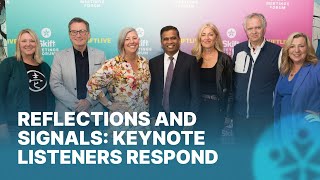
be just a conversation, uh, about AI from a very practical perspective. I think you already gave a lot of examples, but I want to dig into some things. Uh, I wanted to do a short introduction for Collia. Actually, you saw him speak, but I wanted to make sure you understand who Collia is and what he does. You have a 50-year-old agency that I think was created by your father 50 years ago, right? And uh, one of the largest in Germany, about 300 people or 350, something like that. But you're not just in Germany, you have 19 offices around the world, including quite a large office in China and an office in Barcelona that we're going to talk about a little bit because they have a very special function, right? So, super interesting. and Matt, thank you for joining us today. Uh, very different situation for you, very different setup. So, you're working at the American City Business Journals, you're doing strategy, uh, or events, and you have teams in 45 different cities across the US, right? Really interesting. And we're going to get into some of the practical stuff that you're doing around AI. And I'll start with that. So, you've been
telling me about how you're deploying AI across your 45 teams and different destinations. you're doing um awards ceremonies, you're doing a lot of different events that you sort of replicate across the different cities, but a lot of that is, you know, duplicated efforts and a lot of kind of admin work. And you've kind of brought in AI to really make that smoother, faster, etc. And if you I'm sure a lot of people in the audience will understand what I'm saying about strategic meetings management, SMM, rolling that out across different teams. I believe what you're doing is strategic AI meetings management, right? because you've added this AI element into deploying that. So, where do you see it really working for you? >> Yeah, and that it's interesting to hear. That's a good coin term for that because with the business journals, we have 40 event directors who our ultimate goal is to make these things scalable and achievable as opposed to shoving a lot of information in their face and saying, "Okay, go figure it out. How to make that work for your audience." So um one
of the easiest ways and probably a lot of us in the room gravitated to this when we started experimenting with generative AI you know 18 months ago whenever um which was how can we offload administrative tasks that are very repetitive you know they take up a lot of time we want our event directors or event managers to be focused on the day of experience we want them to be focused on the relationships and the contract negotiations and things that have so much interpersonal skills to where when it comes to sponsor toolkits, when it comes to the event brief, when it comes to our content outline, what could AI's role be to take off the cognitive load of those event directors? And we are seeing gains there. You know, similar to Brendan earlier in his uh segment when he was talking about on the sponsorship side, probably the anecdote that has been most surprising for us is the timeliness and how pre-sale we can get a proposal in front of them that is catered specifically to their needs. Um, but also post sale when we're in the pre-event process. Um, you know, we can knock off two or three business days from our turnaround time with a localized content guide for a road show event that we're deploying in five plus markets, which is really special. Um, you know, obviously like Kalia said, the hamburger method is well at work there and it's something that took a while to get the trust in those projects to where the output was accurate. Um, but we feel like we are there. I mean, we're seeing gains from it. So, it's it's really encouraging to see and and we want, you know, our event directors to feel empowered to try it. And
>> what does that localization look like? Is that you kind of saying, "Hey, here's a script that we used in New York. Could we get a script for, I don't know, Dallas?" Is that what we're looking for? >> Yeah, that could exactly be a use case of it. Um, it could go a little bit deeper when we're looking for localized insights on microeconomic conditions in a specific city. Uh a lot of the content that we focus on is heavy on the economy, the local business economy, translating that to what's happening in the national space. Um you know, we have great writers and reporters who tell us what kind of events to do. Sometimes though, the event director on our more customized programs where an advertiser is helping us drive that discussion, um we have a separation of church and state there and then the editorial involvement falls way off. So it it falls on our event resources. AI is a great brainstorm uh partner for us on that front and it takes again a lot of the cognitive load off of them to where it's not something that they're stressing about when they got five other events to execute in Q3.
>> Okay. I don't want to always paint a rosy picture of AI because there are times it doesn't work right and uh do you have any times that come to mind where you sort of like have done this and it's like oh wait a second we really need to backtrack a little bit here. Yeah, fortunately it it's getting pretty good, which is kind of scary in itself that I'm not seeing as much of the crazy hallucinations. I just a couple weeks ago we were working on some sample marketing plans kind of taking inspiration from your digital doppelgangers. Um where we were looking at timing for some sense and I got an output that told me October 32 and I was looking at that and I would be all in favor of unlocking a new day that none of you could host an event on but only the business journals. Um, I have to say now that in looking at the prompt, it was my mistake. So, it wasn't actually AI. It did its job. It just replicated a typo that I had. So, um, again, like the hamburger model is such a crucial thing to drive through when we're trying to make sure our teams are compliant with how they use AI. That is the number one thing we're trying to get across is that you have to be meticulous in how you review the output because it we we're subject to human error just as much as it could be subject to hallucinating. >> Interesting. Um if you have questions please use the app so we can have them here. But Kia, you know, you talked about the hamburger model as well, but
you have this team in Barcelona that's dedicated to AI research. How does that work? Do they come up to you and say, "Hey, this is the best tool. You should use this." Is it a dialogue? Do they ask AI? How does it work? >> We actually have a very bold approach to this. So um every Monday we have a 30 minute um show and tell where everyone dials in and they show everyone shows what they just found and what they would like to share with the group and or a task they had and they're looking for an AI to solve this task. And then I believe it's key we build it up a sandbox because it's extremely for us tricky. You cannot just use client data and just put it in some random tool and see what happens with this. So therefore we spend quite some time on creating fake data that we use >> to test AI tools before we go into using real data. >> Have you seen any spectacular failures? Um, interesting that you say that. There are some absolutely simple failures. Like I'm wearing a digital um um watch like most people, but one of our clients is a watch manufacturer with very high-end expensive um um watches. And um
a couple weeks ago, we tried to create AI pictures of the watch face at a certain time of an analog watch. And all the models couldn't do that because all of them had the smiley face like the 10 to2. Um um if you see watches in cataloges, they always have the smiley face. And so the AI models couldn't create an analog watch time. And that is kind of embarrassing. >> Yeah, >> it may have changed in the last two weeks. >> Super interesting. And when you do your your calls, I think that's a really interesting idea. I'm sure we could all kind of relate to that and maybe use that in our companies. But do you only talk about the successes or do you talk about the failures as well with your team? >> We also talk about the failures and they are big failures especially if you um are trying to for example change something in a video or something and by the end of the time you spend more time trying to do it with AI tools than you would have done it the original way. And um >> so these things happen. Well, let's talk
about that. I mean, we talk about AI being this great enabler. How have you tracked the success of AI? How much has it actually saved your team's time? Do you track that all? And I'll start with you, Matt. Do you track it? Do you figure out what is the productivity increase of AI? >> Yeah, that that's muddy waters for us because a lot of it we see locally is very subjective. What what I like to see locally on the time saving time time saving with event directors would be that in their attendee feedback scores, they're getting elevated scores based off of the experience and being able to try things more outside of the box because they have the time to source those activations and make an impactful experience. You know, I can say when we look at the gains we've seen from email marketing and on that side, we can assign a dollar to that. AI has been able to unlock much better personalization for us when we segment our lists. That's some some it's a place we had to step up our game big time really coming into last year and we have seen improved engagement there, improved conversion rates. Um, so, you know, there's qualitative and quantitative things we can piece apart there. Um, but where my eye is going to be really careful is on the attendee feedback side. Um, I know we'll probably talk about that at some point in our conversation, which I'm very passionate about, but that's what I want to see a change in is how sentiment is changing with our audience. Um, especially when we're tactile about finding those things to address in the feedback. >> Let's go there. Keep going. Keep going. Where where are you? >> This is a space I get pumped about
because I think it's such a cool thing. And um, you know, to give you the scale of the business journal events, we host over 800 events each year. Uh we reach over 160,000 total RSVPs. Um and the feedback we collect is through MPS, which I sure I'm I'm assuming most in the room have a standardized way. They're using MPS or feedback uh to collect collect it after their events. And for us, you know, we're approaching 14,000 total comments in there. Um the uniqueness of our business is that across all 45 of our markets, there's brands that we will host in most of them like a 40 under 40 or a best places to work or a mentoring Monday. Um which we want to know across all of our markets. What's the collective sentiment there? And and like I believe it was uh Cat earlier with HubSpot, she was talking about inbound, how you know that's a fiveweek process in the past to comb through all of that information. um and you want those insights immediately when the event gets done. Well, now we can get that done within a week to see those insights and um it's leading to real takeaways that we can apply downstream to make the event better uh in the coming year. So, I I challenge everyone in here, even if it's not as wide encompassing as like 5,000 comments that we might see, uh, plug your feedback into a tool like Claude, and ask it some very strategic questions about of my detractors and my audience, where are we missing biggest with our events? Um, it's a great way to audit yourself in your events and and it's a it's humbling at times for sure. So, prepare yourself for that. But um that's a necessary step to grow and improve. >> Okay, Kia, question for you. Millie
vanilla effect. We heard Mark Cuban talk about this a few weeks ago, a few months ago. This idea that we're seeing so much fake stuff now that events are going to benefit from being a live in-person form of communication that you can't fake in many ways. Is that really happening? >> It is. We're actually feeling um a rising demand worldwide. The marketing budgets are under pressure, but the amount of marketing money going into live events is rising and we have more and more companies, more and more clients of us that um move sustainably more into live events. Another reason driving this I believe is big tech because if you want to be in this white noise, you only have like a handful of companies you can give your money to and they are just rising up the bar and therefore I do believe um we will see more money going into corporate events in the next years. >> Interesting. What about your Chinese
office? They have access to different AI tools. what are they seeing that maybe we're not seeing in the west? >> Um it's interesting. China is having a totally different approach to um also AI more um um um a very fast approach and they do have a different let me put like this creepy line. So um a creepy line in um in Europe the creepy line is very high. Everyone is extremely afraid someone is going to do something about their data. Still they put all their data on LinkedIn. Um but um um but >> events that doesn't exist anymore. >> But this creepy line in China is um um extremely um um extremely high. So no one has a worry with something like face recognition when walking into an event is like um everyone will use it if it gives them an efficiency as it will help them and it is seems like we have everything we have here in the west is mirrored in China. So like everything from um Facebook to Tik Tok, we have an equivalent in China at the same time and this is >> happening with AI as well. >> This is happening with AI as well. >> Yeah. And are there any things that you've seen in China, any uses of AI that you're thinking this is coming to Europe pretty soon? they are um uses of AI that I'm extremely um um of course that the AI helps to track you also in the offline world. I know it sounds scary but think about it. you are just in um um a perfume shop just holding up a bottle and taking a look at it and placing it back and the second you go out you receive a discount voucher for exactly this thing what you just had in your hand and >> okay so who thinks that's scary and who thinks so scary hands up >> awesome thinks it's awesome all right so it's a bit mixed right yeah that stuff is it's it's fascinating but fascinating in that in that weird line, right? Yeah. Super good. >> Um, wanted to cut to a couple of audience questions. Um, I had an
interesting question here from Bonnie Scapowski. Uh, what are your suggestions for effectively using AI without losing your unique voices? Matt, do you want to have a go at that? >> Yeah, I you know, at the business journals, um, we kind of put our editorial side of our business kind of first and foremost with determining what acceptable use is on the content side. And for us right now that that isn't producing content. We still have human reporters. We don't see a replacement for that with what we do. Um so naturally on the event side, we want to mimic where they are at with that and be complacent with it. So um in terms of the voice, you know, that's something that could come up when it comes to uh trying to craft a unique custom event idea where we're throwing out some ideas to see what sticks to a sponsor. Um, but you know, admittedly that's few and far between. So on a voice side, my recommendation would be there is that if you're going to take that approach, you need to have a trained chat that really understands your brand, understands what your goals are, what your uh maybe some of your limitations or hesitations you might have about how you position yourselves and operate within that. Um, but for us personally, it's not a space that, you know, we're really trying to get too deep in on the event side. >> Yeah. Calia, any thoughts on unique voices? And I mean, you mentioned this in your presentation earlier, right, that everything's the same. How do you avoid that? >> The um this age of average, I believe it's um that you continue to do stuff yourself um at certain times for spell check. Um in very basic stuff, it's extremely helpful. Meeting minutes, it's extremely helpful and it cuts down time. But preparing meeting minutes also is a leadership move because you can move stuff in perspective in there. So therefore um um we in certain teams um um don't allow our team members to use AI so that they learn how to do it especially junior people and then switch to AI so they can judge the outcome um of what the AI is doing by the end of the day. >> Yeah, super interesting. I was having a
chat actually over lunch about that exact thing which is this idea that AI seems to be taking away or reducing the availability of junior roles within companies because a lot of the uh work that would normally go to a junior role is now being done by AI or at least a lot of companies are claiming that >> is that going to be a problem going forward do you think >> I don't think so because um at the same time the workload is just going to be bigger and more stuff to do in less time so therefore I'm not afraid that we run out of junior tasks. >> You're always going to find some junior tasks for the junior people. Matt, do you agree? >> I I would agree with that because at least in the event side, we we there is no AI agent that can take the place of anybody on Skiff's team to make this pull off. Um, now granted, I can't speak for all industries. I know that's already happening where, you know, it could affect junior roles in a way, but fortunately for us, there's no that's not on the horizon for us at all. >> Okay. We had a we reported on an event recently, Gamescon in Germany actually in Cologne. They had a big event 340,000 people come B2B B2C event um you know on in the gaming space and they used AI for matchmaking but they let the AI make the meetings book the meetings and confirm the meetings and so a number of people were panicking because like I have a full calendar of meetings that I had no control over. So there are situations where it's going a little bit crazy, right? But talking just to wrap up
future things in AI that you think are really going to make a difference that maybe aren't quite there yet, but you think in the future going to kind of overcome the challenges that we have right now? I'll start with you Kalia because you you probably already mentioned a few in your presentation, but what do you think is is coming around? the digital doppelganger and I believe this is going to be the next big thing that you basically get your personas to life and discuss with them what is going to come next because how did we do it in the old days we get did surveys and I just remember a year ago we did a survey for 15,000 people event then you get feedback 30% fill out the forms and tick the boxes and you get a net promoter war, but then going through like you said the um open questions. Then you sort the open questions and you end up with maybe from um 15,000 people with like 17 people saying something. And now you're working on this 17 people that put something in a questionnaire to change an reoccurring event for 15,000 people. And you may be losing total focus of what you're doing. And I believe this is not going to happen to you with digital doppelgangers. And I know in very many industries from pharmaceutical to everyone is working on this to get their potential clients in a digital format to discuss stuff with them. This going to change how we do events. >> You may have heard it here first. Using AI to not lose focus. That's probably the first time I've ever heard anybody say that. So appreciate it. Matt, call you. >> Yeah, I think I think uh just real quick for me, what we're looking forward to is um how can we prove value prop better for our sponsors and our attendees. You all probably saw in the Skiff meetings app when you scroll down to the bottom that there were suggestions on who we should meet and who we should set up meetings with. uh we want to we want to get into that space for sure because we don't have we're at too big a scale to have apps for every event we do but how can we personalize email communications to say you know John here is five connections we recommend you meet at this event uh because you know that's beneficial for we we know through our attendee uh feedback um last year's survey that the top two reasons people come to our business events number one networking number two to earn new business it's the same thing really when you break it Um, but that's what we're trying to enhance and address. >> Perfect. Matt Collia, appreciate your time with us today. Thank you so much. Thank you.
Top Moments
Unlock audience sentiment!
Watch out for typos!
Test with fake data!
Offload repetitive tasks!
Reduce cognitive load!
Local insights, fast!
Up Next