Unlock Event Success: HubSpot & GPJ Reveal Future-Proof Strategies!
In an increasingly digitized world, the power of in-person connections and authentic brand experiences is more vital than ever. This sentiment was echoed by industry leaders Cat Tulie from HubSpot and Brendan Brown from GPJ, who recently shared their insights on delivering event activations that truly elevate brands.
“Experiential marketing as a craft was really only named about 15-20 years ago where it's like we're going to call this what we're doing planning events strategy around events meeting people in person underneath the moniker of experiential.”
- Miguel Neves, Editor-in-Chief at Skift Meetings
Discover how top brands like HubSpot are redefining event activations and sponsorships. Learn why experiential marketing is more critical than ever in the age of AI, and get actionable strategies from industry leaders.
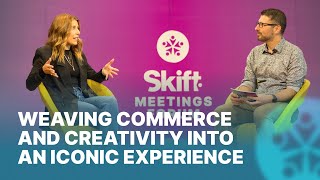
So, as we settle in, I just want to give you a little bit of context. This is a session about sponsorship, about brands, and how they really want to be, how they want to activate events in 2025. As we all know, sponsorship and working with brands is super important to make events work financially, but also just to make it all come together. And uh we have Cat Tulie with us who has just wrapped up HubSpot Inbound in San Francisco two weeks ago. >> Yes, two weeks ago. Glad to be in New York today. It's definitely showing off for us. So, >> perfect. And uh Brendan Brown, you GPJ, you have offices right across the street, but you're actually based in Boston. based in Boston. >> Yeah. >> Yes. Yes, sir. >> Well, thank you very much. So, we have the brand and the agency on stage. Hopefully, that'll give us kind of different contexts for for what we're going to be talking about. But, Kat, I
want to talk about Inbounds. Uh kind of an iconic event. You went to San Francisco. You're usually in Boston, correct? For the last 10 or so years, right? >> Boston based brand. You went to San Francisco, which is a a town that's normally associated with another company that we won't mention, but with like a light blue color. You're orange. >> I'm sure we're going to mention it with a >> Yes. You're orange. You showed up. I saw the images online. You had orange all over the subway in the streets and you made a bit of a statement going to San Francisco. Is that right? >> Yeah. I mean, that was that was the point. Um, yeah. So, we uh we decided a few years ago that we were going to uh send Inbound to San Francisco for a special edition for one year. Um and we decided that we were going to really kind of take over the town in Orange with the leadup to it. So, that month leadup going into the event, we were going to spend uh out of home dollars. Um just making sure that our presence was known there. Um, San Francisco is not a place where we spend uh a lot of out ofome dollars because of um so much competition in the area. We're, you know, a Boston based brand, but um yeah, we really wanted to show a presence there um outside of just the event. Uh and I think we accomplished it. So, >> who's heard of HubSpot Inbound the conference? Okay. Who's been to inbound before? >> Okay, >> Okay, >> you guys got >> interesting. So one of the things so it's it's a 12 12 13,000 person conference >> 13,000 this year. Yeah. >> You went from a sort of a larger 20some thousand before co but after co you made this conscious decision to like >> focus would you call that a focus?
>> Yeah absolutely. Um yeah we decided to lower the attendance coming out of co uh in uh early planning or early planning in late 2021. Uh, one of the reasons why we did was just for safety measures, right? Um, we didn't feel comfortable in 2022 producing an event with 20,000 people. Um, but it gave us a really big advantage too and we've kind of kept that model. We fluctuated it, you know, up some. We've been able to accommodate 13. Um, but it brought a lot of focus around the content, around the type of attendees that were there. It really provided more of a birds of a feather feel because we could really focus in on the persona and the ideal customer or ideal attendee attendee that we wanted there versus trying to hit that big number of 20,000. So, um, it alleviated some of that pressure and really allowed us to focus and there's more focused content, there's more focused networking. Um, and we really are also focusing on the customers who want to be there all three days. Um, and creating really well-rounded experience that we were not able to do at 20,000. >> I can see all the advantages, but I'm
sure your finance officer looked at it and went, "How do we make this number here be just as big as it was before?" you make it work because you give more value to the customer or attendee. Um, and you're able to, you know, raise ticket prices. You're able to, um, show them, uh, why they should spend that type of money attending your event. Uh, and you're able to deliver that, um, I would say a a lot more meaningfully. Uh, it's a better return on investment. So, there's advantage out there of lowering your attendance numbers, increasing your ticket prices, giving the customer, the attendee more than what they've asked for. Um, and creating that loyalty. >> And were you able to balance the income? I mean, I I know you probably won't want to share numbers, but you got there. >> Absolutely. Yes. Yes. >> Good. Well, congrats. I think that's super impressive. I wanted to mention one other thing, inbound. I saw that
there was um we we talk a lot in events and maybe you can relate to this that you have these big marketing conferences and marketing is taking over events a lot of times but there doesn't tend to be many sessions about events at marketing conferences but you started to do small bits but you started to do a little bit at inbound why is that like marketing people just don't think about events or is there a bit of like oh this is for the event people let them do whatever they want >> I have a couple different theories about this so first I I think ex obviously events and experiences have been around since the dawn of time. Um I think experiential marketing as a craft was really only named about 15 20 years ago where it's like we're going to call this what we're doing planning events strategy around events meeting people in person underneath the moniker of experiential. So I think the idea of experiential marketing is still something new with a lot of brands. Um for us uh on HubSpot side we actually
believe that experiential and event marketing is going to be more important than ever uh with the age of AI and the disruption of AI. Um so one of the things that Yamin Rangan our CEO really talked about from the stage was our new loop marketing playbook. Um and part three of that is called amplify and and part of step three of that playbook is actually around >> meeting your customers in an authentic voice in space because AI is going to has really you know democratized digital marketing. It's going to be more important than ever to meet your customers face to face to show that brand authenticity to show that product you know realness. Um, so I I actually believe events are we all believe on HubSpot that events are going to become more important than ever. So I think you're going to see event marketing and experiential marketing become a really big part um of a lot of marketing conferences moving forward. >> Super interesting to see a software company essentially that's all focused about cookies and attracting people inbound into your website. But you're saying hey events are a big part of this loop marketing. >> Absolutely. Because it's not just about inbound marketing anymore. You can't just depend on inbound. You got to you you need to talk about outbound. You need to talk about allbound. Like your customers are everywhere. You have to meet them there as well. So it's not just enough to sit there and wait for them to come to you. You've got to go to them. And a big part of doing that is through event marketing. >> All right. Perfect segue. Brendan, you're working with all sorts of brands. They're coming to you and they're like, "Get me more business. We want to show up at events. We want booths. We want design. What are you hearing? Like it's 2025. We have the AI. We have all these things happening. We have budgets are a little tight. What are you hearing from brands? How do brands want to show up
and meet their customers? >> Yeah, it's it's a good question and uh each brand will be different. Each situation will be different. I think it's important to take like couple steps back quickly and think about the you know as Cat was just talking about the role of experiential when it comes to the broader marketing mix will be getting more and more important more and more intention more integrated into the broader marketing mix. Um so I think it's going to be experiential and the world we're in is going to be asked to do a lot more heavy lifting than than in the past. So I think brands good news for you, right? >> It's good good news. You know, nothing like a good challenge, right? So um in the broader scheme of things, I think we're going to see experiential being asked to do a lot more heavy lifting, especially as uh you know, there's all sorts of challenges with with online. It's a a spamier, sloppier, noisier web than ever. So where can you meet, where can you connect experiences? I think for people too, there's um the role of experiential is changing for us too. you know, we we live in relationship to technology and society and as those those things change, what we look for from the experiences we go to evolve as well. So from a human standpoint, we were talking earlier just about it's a chance to hard, you know, like hardwire connection with someone in person when you can finally get there. You're talking about um new people within industries trying to learn and level up and uh where do you get that? If you're not going into the office as much, maybe experiential is going to be asked to do more and more. So I think all of that combined, the opportunity for sponsorships to become more meaningful, impactful, good for people,
good for brands, good for sponsors, um I think is out there. It definitely requires some shift in in in mindset, right? like it's one where you're shifting from thinking about sponsorship maybe as a a revenue driver or um or even a commodity in some some sense to thinking about sponsors as not just partners but co-creators of experiences >> with you. I I think the you know so that means >> are the brands coming to you with these with this kind of idea already set or is this kind of your role to kind of go yeah I know you want to you know >> connect with people but have you thought about this >> it depends I would say on the new business side so we're you know we'll we've got tons and tons of requests for proposals that we look out every week the number of large brands who are looking at experiential as like tip of the spear for how they go to market how they build brand how they develop campaigns is increasing So I would say the nature of the ask for us as an agency is changing. Experiential is much more the center of gravity than it was 5 years ago for sure. >> Sounds like a more mature market. Would you say that in terms of the brands coming to you? >> I would say a more mature market. Maybe we're in puberty right now. We're trying to get mature. It's a little awkward. There's some good parts. there's some but I think there's a lot of you know if you look at what big agencies are doing and what the the sort of expectations that have been developed by online marketing there's a desire for greater precision with uh what what you're measuring how you're proving the impact of the experiences so we're growing up we're moving uh but I think there's a recognition especially as you know the the rest of the marketing mix begins to decay a bit >> okay I know one thing you talk about is
this idea of native sponsorship uh we call that brand talks or branded content. The idea that >> content delivering content at at events is part of how the brand shows up, right? >> Is that like is that a big part of your the work that you're doing and how do you frame that in a way that really works for brands? Yeah, I I would say like just thinking about SP sponsorship more more broadly, there's a obviously I think you probably have felt it or seen it, a desire for some more flexibility within the within the sponsorships that are offered, unwillingness to invest in something that's cookie cutter. If you've seen before, if you've probably felt that if you're you're you're in our business, right? So there's there's a few ways to think about one way I think about maybe is less about native sponsorship, but it's just if you think about space and time, one way you can develop more flexibility within your sponsorship is just think about how does that sponsorship play out over time. Think outside of the event, the broader experience, the anticipation, the reflection afterwards. So the long-term impact, >> the longer term. Yeah. but also integrating within communications and the potential to play a part over time, but also in space. You know, the expo and what's happening there is changing. So, how do you help your partners move outside of the expo floor, maybe into other elements of of your experience? So, that could be to satellites and surrounds. Um the native side of it is more thinking about it less like um logos on land logo slapping in and more intentional integration into the content or the story or the actual experience you're creating for the the most important. >> Give me an example in terms of like expose. You're showing up at expos big brand wants to do something. Are you working with the event organizers in terms of stages that you can work with that you can present content at or do you sort of have to build your own stage within the booth and kind of figure everything out yourself? >> It's a mix. Okay. >> I think you're going to say that. >> Yeah. Yeah. It's a mix. Depends who the client is and what the situation >> budget, right? Depends on the budget. Yeah, for sure.
>> All right. Well, let's talk a little bit about Guerilla Marketing there. Questions. Please use the app to ask questions. We are seeing the questions on the screen and upvote questions that you like. We'd love to get some questions from you. Guerilla marketing surrounding events, side events, the idea that you have a main event and then there's brands that want to do events around your event that don't necessarily aren't necessarily going to pay you money, right? How do you deal with that at Inbound? >> Uh so >> Uh so our belief at HubSpot is we welcome it. So um we're we see um in Beyond especially but all of our events as just kind of being the center um of a larger ecosystem or ecosphere of events that can happen across those three days. So for us like we want Inve to be the central kind of event that you know you attend day over day. Uh but we welcome our solutions partners, our customers, various brands, even competitors to an extent to activate around our event because I think that it widens our scale um and it brings more attention and it offers value to our customers. They get to do something um other than our event during the day. So we want to be able to provide that variety to them. It also helps us scale in terms of our budget, our bandwidth, what we can produce internally on our own if other uh teams and brands want to come in and activate as well. So, we welcome it. Um I know every kind of brand is different or every event is different. Um some brands, you know, want to kind of control the space around their event uh and really be very particular about the narrative or uh you know, the different brands that are coming in for us. Um we we have a little more lava approach uh and it works for us. >> Super interesting. Brandon, when you're working with brands, I know brands have sort of a different level of comfort with guerilla activations, that kind of thing. >> Yeah. >> Yeah. >> How do you deal with that? Are you pushing to be more gorilla? Are you telling them, "Hey, maybe this is a bad idea. You're going to get blacklisted." How do you manage that? >> Yeah, it I mean it all again does it all it all depends at the uh at the end of the day. I think the first if it's happening to you at your event first you should be flattered like there's enough energy and momentum there where someone wants to hijack the attention and the right so that that's a you can be flattered I think um in a lot of business right now the sort of transformation that needs to happen is going to require ecosystems of partners and and teams. So I think encouraging that sort of bringing the ecosystem together letting them express in their own way can be really helpful especially for certain types of business. Um, for our clients, it's a great way, a great tactic if you don't have a lot of money, the the hijacking of intention. So, when we're doing it, I love it when it happens to our clients. I don't like it. Um, >> okay. >> okay. >> I think back to everybody, right? >> We had a we had a couple of uh I would say more gorilla stunts that happened in front of Mosone and and we worked with the building. We didn't want anything like directly in front of our building, but um at the same time, there's like public sidewalks and walkways. We can't control those, nor do it nor do we want to, right? Um, so I will say one one tactic in particular after a couple hours we went out there and we were like >> listen it's been great but you've been out here for three hours and they were like it's okay we'll move along and so like they got there like you know two three hours and they were very respectful of us and they were like we understand we'll move along. So I think everyone's just trying to like >> have a little piece of the pie right and like who's who are we to gate um >> the experience in that way. So so yeah we welcome it. I think that's interesting process. >> I was just like as you're talking about I'm thinking it's like great kind of like free R&D. >> Oh yeah. >> You like going out and figuring out what is working, what is attracting people. And it seems like you know um >> one of one of those things where maybe that's that's happening because there's opportunity within the sponsorship to get more flexible and enable different ways of brands coming and being their authentic self in your experience. So what you're saying is you should learn from the guerilla marketing tactics and include those in the sponsorship perspectives for the following year >> and what not to do as well. >> What not to do as well. Great. You
mentioned AI earlier, Cat. I mean, you know, we're in this place where it's hard to really tell online what's real and what's not. And I think everybody feels like that's going to get harder. >> Yeah. >> And live events seem to be the antidote to that. >> Yeah. Yeah. >> Are you already seeing that in terms of, you know, obviously you're very online as a company and then you're doing the in-person >> right >> right >> presence of that. Are you seeing that a lot? >> Yeah, absolutely. I mean, if you were to go on LinkedIn and look at job openings right now, I guarantee you a lot of them are going to be from AI companies um around events uh or experiential marketers because they also see value in that. Uh they know that again the the internet is becoming really democratized. there's a lot of content out there. You don't know what's real, what's not. Um, so depending on event marketing and community marketing especially is going to be more important than ever even for AI companies. Uh, so, uh, yes, and I think from from a brand sponsorship standpoint, there's a big opportunity there to come into event spaces and even help sponsor or support um, better AI tech stack, things like that within the event space. Um, I will say like event technology, um, is
probably, you know, lagging a little bit behind where I would like to see it. I think that there's a big opportunity with AI out there to like also disrupt the way that we register, that we build agendas, that we, you know, uh, experience the event on site. And I think there's a big opportunity there for brands to come in and help underwrite or experiment uh through with those uh technology aspects and be able to put their name out there in the ecosphere of AI. >> AI agenda builder was awesome. >> Thank you. >> I don't know if anyone saw that but the the >> which was created with cloud, right? It wasn't a hub. >> Yeah. So, so we uh partnered with uh Anthropic um and then our uh webdev team. Uh we also hired a company called Mass. So, between Mass, HubSpot Event Technology, and Anthropic, we built um a beta version of an AI agenda builder for conferences. Um as far as I know, I think we were first to market with it. Uh it's only going to get better. It definitely had some hiccups, but it worked really, really well for what it was. Um, and we actually sprinted that work and built it in six weeks. So, >> that's awesome. Interesting. I know we have a person in the room from one tech company that built one then two days later, I think, after that came out. >> That's the beauty of AI. Um, it's all about vibe coding. You can do it real fast. >> Quick question to dive a little bit deeper. When you look at your tech stack for running inbound, how much of it is your own HubSpot, you know, with working that and how much do you actually need event tech to make it work? Um I think uh it depends on the size of your event. For an event, the size of inbound, we absolutely need to bring in uh some outside or out of the box solutions that has a level of customization that we can um also build on top of. For our smaller events, you can run those within HubSpot. But um yeah, I would say that for an event the size of Inbound, probably I'd say 70% of our event tech stack uh is uh housed in other companies that we bring in and we really treat them as an almost an extension of HubSpot uh during the full year >> and they do a lot of customization. >> Okay, coming back to the AI question and I mean how are you looking at using AI? Is it is it a sort of like you're positioning events as the antidote or are you actually bringing it all together? >> I was like what should I talk about on stage today? Chat GPT. Uh no. Uh how how are we using how am I using it? How are we using it? Um well I think like relevant to this room the conversation around sponsorship. I mean one of the things I think is really interesting is on the pitch side of our business when you're trying to sell your time to pitch ready concepts is way quicker. So, if you're like in in the sponsorship business and and looking to get some more tailored or custom packages together, it might have taken weeks before with a large large team, it's much quicker to get to something that you can get in front of a client that looks good enough to talk about and figure out this meets meets their needs. So, I would say AI in some ways is enabling teams to get to more creative work, get to bigger and better ideas faster, which is really great. I also feel like it's disrupted industry so much that it's created all sorts of new paths and tracks within conferences that are sponsorable uh opportunities to create more value by bringing your actual expertise into an experience and helping that sponsorship be less of a transaction and more of like part of a transformational journey for someone. So I think AI, you know, does have the opportunity to create all sorts of new ways for brands to show up in person at events. Uh >> yeah, create more. I would be remiss if
we didn't talk about as a marketer didn't talk about AI and like really finding your audience and like the segmentation power behind it too. So um you know with uh with data enrichment especially through AI of your contact records you're able to really hone in on the type of industry you want to t target the type of brands that are spending money in event marketing spaces or experiential marketing. really getting like very for your sales team getting very very small about like actually here are the customers I want to spend my time going after versus um you know kind of this this wide variety. So AI segmentation >> is really helping on the sales side of sponsorships as well. >> That's sorry I was just going to one area we we invested heavily in in the last couple years has been building out a decision science practice. So AI is fueled by data. We have a whole team that's able to ingest a bunch of data, help our clients make better design and business decisions with it. So I would say that's also sponsorships, your ability to prove the impact of the experience using data analytics and AI. >> Absolutely. >> Yeah. >> We're running quickly out of time, but I just wanted to check one thing. You talked about AI and data enrichment. That's very much an online thing. >> Yeah. >> How do you deal with the data you get at the event? You know that people go to a certain session, they do that. How do you then bring that back into HubSpot in a meaningful way that really works? >> Yeah, I mean we intake all that pretty immediate immediately and then we
actually um are able to read it quite fast in a few hours actually with the support of AI. So we can actually make real-time improvements overnight to our event. Um and then postevent we can very quickly uh see kind of overall NPS not only of our attendees but our sponsors and making sure that our sponsors had a good time and uh if not is there anything we can address pretty immediately and making those decisions shortterm and long term but all that is you know our event surveys are ran on HubSpot filtered back through our AI mechanism called Breeze >> we're able to see really fast um way faster than what it was before. I remember in 2022 it would take us like two weeks to go through the NPS information. It takes me five hours now. Uh so it's pretty incredible. >> It's a very real use of AI. Yeah. >> Cat Brennan, thank you so much for the conversation. Appreciate it. Thank you. Thank you.
Top Moments
Welcome the competition!
AI's unexpected impact!
Less is more?
Boost ROI now!
Rethink your sponsors!
Orange everywhere!
Up Next