Corporate America's Event Crisis: Surviving Uncertainty
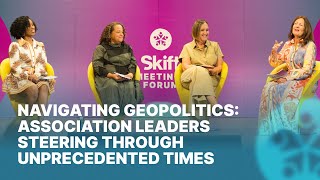
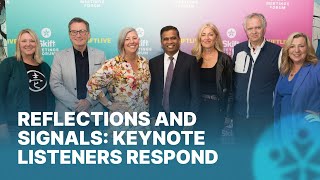
In an era defined by global volatility, corporate event planners are grappling with unprecedented challenges. From sudden civil unrest to escalating tariffs and complex visa restrictions, the landscape for large-scale gatherings is more unpredictable than ever. This session brought together leaders from Forrester and Prudential to share their strategies for navigating this new reality, emphasizing resilience, adaptability, and a renewed focus on both financial prudence and team well-being.
“You just can't predict this environment. It's it's it's volatile. At any given day, something could happen.”
- Barbara Scofidio, Editor at Skift Meetings
Uncertainty is the new normal for corporate event planning. Discover how industry leaders from Forrester and Prudential are adapting strategies, managing budgets, and protecting their teams amidst global volatility. Get actionable insights to navigate today's unpredictable landscape.
I love seeing so many familiar faces in the audience. So, thanks for being here. Uh, we're going to start with another one of those word clouds because we like the word clouds. And, um, Miguel was speaking about what are the biggest challenges you're facing. I'd like to talk to you all about how you're feeling because I know how I'm feeling. So, are you feeling stress? Oh, they're already coming up. Stressed. I didn't have to. I can just sit here worried, stressed, concerned, challenged, hopeful. Okay, >> man. >> man. >> I I almost made a bet with one of my colleagues. What? What? >> I thought this was a fun industry. Gez, >> it used to be >> okay. Uncertainty. That's one I didn't think of when I was preparing this. But yeah, the and and that's the title of our of our talk today is corporate America and what we're dealing with the the many uncertainties. I'm so excited because I have two very different perspectives here on stage. My fellow Barbara >> is uh comes from the procurement sourcing side and then Tavar is from the marketing global events side. So you know they they are just a wealth of knowledge. So we're just going to get rolling. So, thank you for that. Barbara has a great story to tell. So, why don't we start with that?
>> Good morning, everyone. Thanks for being thanks for allowing me to be here and I'd like to share my story to kind of demonstrate the complexity of what I am faced with in my environment um for global sourcing and procurement. So, earlier this year in March, I had an incentive meeting that was about to deploy. Three days before the meeting, the event planning team came to me and said, "Barbara, we all have received international SOS warnings for the destination country. We're we're concerned and should we bring this to leadership?" So, naturally, what was my first reaction? I went straight to the news. CBS had published an a headline article on civil unrest in the country. So of course we at that point instituted internal security protocols. We contacted our security teams. We contacted the head of event management and explained the situation before we brought it to that business leadership. After some quick turnaround and investigation at the destination country by reaching out to local police enforcement part our hotel partners to see their security teams what they had to say as well as what was actually happening in the country from a secret service perspective. Um after all of that information was quickly you know understood and ascertained um we then shared it with leadership. At that point leadership said let's cancel the meeting. and Barbara, go back to the hotel, let them know that we're going to cancel the meeting. It's too risky. We don't, this is an incentive. It's supposed to be a good time. We don't want to endanger anyone's lives and so forth. So, I went back to my hotel partner, explained the situation, shared the international SOS, shared the security debrief, not only from their security team at the hotel, but as well as from my security team with that information. And then I also shared the CBS news link. With that information, they explained that there was no threat, that the news link was quote fake news. Here we go with fake news. We don't even know. I had so hard with all of this social media with fake news. Anyway, they were like, folks are getting here. They can still get here. It's there's no unrest. Well, my company is riskaverse. It's an insurance company, of course. Yeah. we're not we're not moving forward. So with that, you know, we negotiated back and forth. You know, we they went to their teams and had discussions. We found more information and collaborated. I mean, it was back and forth for a couple of weeks after we engaged that cancellation. But this demonstrates like you just can't predict this environment. It's it's it's volatile. At any given day, something could happen. and those security warnings, whatever it is, a tsunami, a shooting, like there's every day there's something that we're faced with that we're going to have to work with our partners to negotiate out of. And and we all need to work together because we're not in this alone. We're a partnership, right? And so I think that the biggest thing I can leave with is how do we all walk away from this and you know predict the unpredictable yet build strategies to partner together for our future in this volatile world. So thank you. >> Right. Right. And probably most of you in the room have stories to tell. And so I was going to ask start by asking you
how's how's business? How are your jobs doing? But, you know, we we kind of know how much things have changed. What I'd like to hear is how um you know, how is your meeting volume and what about your destination choices? How have they changed? >> Um meeting volume hasn't gone down. >> Okay. >> Um >> Um destination choices, luckily at Forester, we have major events in every region, so we don't require too much international travel. Um but selecting destinations has been a little bit more difficult. Um because you do have to ask yourself a few additional questions and uh clarify and quantify the risk of any decisions that you make. Um so it takes longer. Um >> so you said question. >> Yeah. Give me an idea. >> Like uh what >> like you said additional questions. Yeah, like so for example, uh how many people if I choose this destination, how easy is it for people to come in and out of that destination? Like for example, um we just moved our CX Summit from London to Amsterdam. >> Um because most people find it easier to travel within Europe versus traveling into the UK. >> Um so it's things like that that we have to address. Um, but I also think that when we think of
uncertainty in the corporate in in the corporate work space, we don't think enough of our teams and the impact that it has on our teams. And so I've been spending a lot of time lately thinking about my team. Um, uncertainty probes us to think about budgets, impact on budget, uh, planning, destinations. These are the common things that we talk about. But in an industry like events where we are running up against the challenge of attracting new talent and keeping talent, I find myself spending more time thinking about what is the volatility and the uncertainty doing to my team. Um the longer that you have a a plan B, um it costs it costs mind share of your team. Um it costs effort um it's stressful. And so I always try to tell people that a plan B can't be plan B forever. Eventually your plan B has to become a plan A. Um and so I'm going to pivot from what she said and I'm going to focus on team. >> Um because I think that's a big opportunity for everyone in this room. If you lead an events team to keep talent and attract talent, you have to weigh what the uncertainty is doing to your team. Um, so that's that's the that's the focus I've been having. And I think as you grow in your career um, and you become a more senior events executive, you have to think that way. You have to start thinking about longevity, success, succession planning. Um, and all of that is part of the uncertainty in corporate America, >> right? What a time to enter this industry. >> I mean, you showed us on the slido thing. It's just not that fun. Um >> you were telling me you have a huge volume of meetings. I do. How many events do you do? >> We have 10 global summits. >> Okay. >> Um every year um and that's not including our field marketing events and our salesdriven events. So >> And how many are at the global summits attendance? >> Uh smallest one is about 500. Largest is about >> 2,500. Yeah. >> B2B summit. >> Okay. So, you know, you actually um are doing the same number of meetings as well, which is interesting and I'm hearing that a lot. >> Can you want to talk a little bit about your business? >> Yeah. So, I think our meeting volume has increased actually. Um Okay. >> Over the last couple years out of COVID, more people are meeting. They've gotten back to their annual conferences and events. Um but for sure that list due to you know the volatility going on in the world is shortened list and where we're going location destinations is certainly looked at. It's highly considered before we're you know enacting um destination countries for uh international meetings and so forth. >> So >> have you made changes um destination changes? >> We have. We're pretty much saying US- ccentric. I mean, >> okay. >> Um, we're not international, not much. Um, hopefully that changes. We, you know, I mean, again, it's being risk averse, trying to keep everything copathetic and calm and >> but I think >> not stressed. >> I I I think like how many people in the room >> I was just >> Yeah. How many people in the room are investing I think I know the answer, but how many people in the room are
investing more budget in micro events? >> Micro events, smaller, more regional events. Okay. >> Right. So, it's like it's interesting because the world of this uncertainty in corporate America is actually meeting what event consumers want anyway, which is they don't want to travel. They want things that are local in their major cities. So, it's almost like they're coming together in this weird cool way. Um to your point, there's this uh new mindset around picking cities, picking destinations, picking venues, but then at the same time, it's like you're picking more, but you're picking more with intentionality because you're wanting to go where people are. >> Um so it's it's funny how the the the two uncertainties are kind of colliding. >> I'm curious about how many people are staying USbased and cancelling international. I see one hand. Okay, that's interesting. That's interesting. >> We've got a very global group in the room. So, our now I'm going to move to a we have a limited amount of time. I could spend a day talking about this. the idea, you know, the idea that budgets are anything like and costs are anything like what they were three years ago. They it was tough before inflation and policies around tariffs have added uncertainty and just really really taken it to a whole other level. What about you uh costwise? How are you adjusting to rising costs? What what
what is it like? >> It goes back to what I was saying before. It's just it's proper planning. Um >> yeah, >> yeah, >> but again, I'm I'm really being super intentional myself and my team to not spend too much time living in a plan B mindset. Um I I've I've seen over the years how having a team stretch their mindsets between what the the plan A that we actually need to execute against, but also keeping the wheels turning about a plan B. Granted, to be a successful events planner, you have to have a plan A, B, C, D, E, FG. Um, but I'm I'm I'm pushing my team to think with a little bit more intentionality of how can you turn that plan B into a plan A? Um, how can you reduce the amount of time you're spending thinking in two different abstracts? Um, our costs honestly have not we haven't seen a significant increase this year. Um, but I do anticipate next year we're going to see some increase. Um, and so we're just planning it in our budgets, you know, like most people do. You have a x% um that you kind of tuck away just in case there's some unexpected costs, right? We all do that. Um, but at the same time, I don't have money to waste, right? So, and that and that goes back to what I was saying before is when you have that plan A and that plan B and plan B lives for too long, you actually end up wasting money. Um, and we're not no one no one's getting budgets back. >> I think one of the challenges is the uncertainty of the impact of the tariffs >> is making it very hard to plan. >> Yeah. Everyone's nervous. Everyone no one knows what's going to happen. And so >> um I also think that comes with a little bit of um knee-jerk reactions and and and and sometimes um not intentional thinking. Um, so I always, you know, try to tell people, you know, breathe, take a moment to like really think it through. Don't don't live too much in the maybe. Um, cuz I I'm I'm quite sure that um the idea of tariffs and what they're going to do to the industry is way more scary than what you're actually dealing with, right? So, you know, >> yeah, >> breathe. You'll be all right. >> You're a calm leader. I can tell. My my old chief sales officer used to say, "Tavar, you're unsappable. The ceiling could be coming down and and and you would just have it all under control." I'm like, "That's what you think." My heart is pumping out of my chest by now. >> Barbara, what are you dealing with so far as far as the impact? >> So, budgets are the same, right? There's
no increase in budgets, but yet air prices, food and beverage prices, everything's hitting our budgets hard. So, not only from a contracting perspective am I negotiating hard on those food and beverage discounts and anywhere I can save the company money, but in addition to that, we're also relooking at food and beverage like getting rid of the breaks, getting rid of all the all day coffee. I mean, do we really need it? Do we really need donuts at 10:00? You know, there's just so many things that we're reasking and dependent on, you know, and undoing that have been just status quo. Um, and it's saving money. So, it's just it's a harder time to plan, but I agree with Tavar. You know, there's always plan B, but you know, you have to focus on plan A and move forward and and focus on that budget and so forth. And if you're overbudget, we as planners look bad. So, it's, you know, definitely top of mind, but I think it starts from the contracting perspective, making sure you have the discounts in the contract and, you know, making sure those discounts are carried through from execution. So, >> and and being under budget is risky too in this economy, right? >> Uh because >> for example, I'm in 2026 planning right now and I'm sitting with my VP of FPNA. >> Oh, Tavar, you know, you guys saved X amount of dollars on this summit. You don't need that next year, do you? I'm like, >> yeah, >> yeah, >> doesn't work that way. Um, so I think that's another thing that we have to be aware of is um, everyone is still struggling with budgets and and finding money to do this and to do that. And every once in a while, yes, you'll come under budget, but you got to be careful before you wave that green flag because uh, companies are taking back money left, right, and center, >> right? Anywhere they can. What about all of you? Let's uh, who wants to share a story about how costs are impacting your roles um, and your budgets? Anybody got anything? Anes? Anes? >> Sure. >> Sure. >> Sure. You want to introduce yourself? >> Sure. Um, I'm ask I go by AC. I work for >> Oh, she's coming with a mic. >> My voice used to project until I got a couple years ago. And now I've lost my voice. Um, hello everybody. Happy to be here. I'm Anes Cana, born and raised in France. I go by AC. I work for Empy as event marketing manager and have spent the majority of my career working international. Um, and I have the
privilege of not only just managing meetings but I also do exhibits uh for our company. So I have seen uh the tariff situation um impact us uh quite a bit. For instance, even our friendly neighbors of Canada while uh the administration was uh talking with Canada about tariffs. We had a um conference that we were attending and we had booth assets that we were shipping and we went back to the drawing board and strapped everything and we actually sourced our booth locally. >> Why? For two things. One, retaliatory. we don't know what how that country is perceiving what's happening that's being uh incited by the United States. So you have no idea whether your stuff is going to get there on time or not. So uh one thing I would strongly recommend is a custom broker. Um also when you're doing programs internationally so right now there's uh there is u obviously a lot of contention between uh China and India where we import a tremendous amount of meeting supplies quote unquote right but Europe is actually brokering deals directly with those countries and bypassing the US altogether. So when you're planning meetings internationally, I would strongly recommend if you previously um have shipped things uh overseas, first you're importing them, right? You're you're purchasing in the US imported goods and then you're going to export them again to your international destination. Try to and that of course entails uh more preparation timeline. Um add a couple weeks to do a couple of research, but that's when you really need to look at the country that you're going to be working in and seeing if you are able to secure some of those goods um in a way that is going to ensure that they're going to get there and they're going to get there at the right price and not with that 25% search charge. >> And then you know in terms of all what we're saying about budgets and how it's not impacting us um hate to be contrarian but what about you know the price of coffee per gallon? Yeah, >> coffee right now >> has gone up uh because of of tariffs, right? We're importing it from Brazil and there's tariffs in place. So, it's it's creeping it's creeping into our budget. >> It's creeping. I I had a planner once say to me um that's what he used is the supermarket when he was trying to get the message across about how his costs were rising. you know, he just said to his CEO, "Have you like, you know, shopped lately at the supermarket?" You know, it's the same situation. we could um there are so many topics we had to really narrow down what we were going to talk about on stage today but we also wanted to get to attendance because I know that's a concern of so many people here and you are both impacted >> certainly um you have been uh you want to share a little bit about how uh attendance has with the current geopolitical situation and the borders and everything um >> exactly well I think it's the attendees
coming to the different destinations we're considering their perspective effective as they travel to our destinations that we're holding our meetings in and we're you know monitoring that concern. What are their concerns? Are there visa challenges and so forth? So what is the best country for that meeting if we are going international based on the visas? What the political unrest whatever is happening in that country today. So again like I said earlier our list gets smaller and smaller each day because there's something new every day happening in the news. So we are definitely risk averse and you know moving forward in that fashion. So >> uh yeah I mean same same thing in many ways. Um again because we have major events in every ma major market. It's it's not as much of crossing borders and things of that sort but you do have for example in North America the Canada US >> tension. Yeah. Yeah. That's that's the toughest one. But for the most part, we've been we're lucky that we've been able to kind of navigate that. But yeah. >> Yeah. >> I I'm sure some people in the audience probably have stories to tell about attendance. If you want to share, >> Lori. Yeah. No, right up front. Yeah. >> There you go. >> Hey, good morning. So good to see faces um that I haven't seen in a while. Thanks for having us. Um my name is Lorie Allen. I am head of global events at a uh co industry similar to yours uh insurance and financial services and we do business globally and so crossing borders is part of something that we have to do and what we want to do and our particularly for incentive programs we find that that's part of the sizzle and the secret sauce. Um but for one of our events it's an inbound US event for um some of our uh team MIA and we we're accustomed to doing all the appropriate paperwork, the many many pages of documentation that are required to be able to let people be able to, you know, successfully get their visas. Um, and for an inbound US event, obviously something we talk about from the very beginning. If we're going to make this decision, let's get ahead of it. Let's get started now. Well, about a month ago, we were talking to our markets in the Middle East, and the next available visa appointment for our Middle Eastern markets for the United States is next September. Wow. >> Um, my meetings in July, but I was getting started early. Um, so then I had to go into conversations with our hotel partner um about half of my group >> is from the Middle East. they're not even going to be able to get a visa appointment much less actually get the visa before the time the meeting is actually going to operationalize right so we need to talk about what is our plan B um and move it to a plan A pretty quickly um because that's you know certainly doesn't accomplish the objectives of the meeting if half the group can't travel right so so if you've got any any inbound business I' I'd really encourage you if you've not yet to to start looking with those you know inbound And it's not just because of FIFA, right? It's a it's a whole variety of reasons why the visa appointments are so late. So, >> wow, that is a lot of people affected. >> Yeah. Yeah. Um there is the ability to to ask a question. I actually have two minutes to to take a couple. I'm going to take a chance. Um I I would love to. This person has asked Jen, "Have you
used AI to help identify and assess potential risks with new locations?" Oh, so you do use it. >> Can you share a little bit about >> Oh, I just I asked >> you just >> But it's all about the prompt. >> I do a little double-checking and you know, but for the most part, I I start there and and see >> you start there and see what >> are people using AI audience for destination. Um, okay. Okay, I'm seeing a lot of a lot of nodding heads. >> Okay, >> I think it gives you a quick summary of what's happening in the country. It's top of mind. It's current. It scans all the news articles. It's great. It's amazing tool. >> Okay. >> But you do need to double check. >> I was going to say uh we've got time for one more um which could be a session in itself. >> Oh yeah, let's do it. Okay. >> Hi. >> Good morning. I'm Bethany Roger. I'm the founder and owner of Strategic Event Design. Okay. Um been in the business for over 30 years. Um just building on
the last comment. Um we do a lot of we did a lot of government events. um especially with the NIH and we had a lot of scientists trying to come into the country for these meetings that we were having in the US and they couldn't get in or they didn't even want to try to attempt to get in. So that was the problem. Um and then we got the letter from Mr. Musk totally canceling like 5 million in NIH conferences. And these conferences were scientists coming to the United States to work on the next pandemic um to work on um airborne disease and um so while we're talking about corporate and the inbound, it's also so much broader um >> and very industry specific and that industry has just been hammered. Correct. And it also affects hotelers and >> airport you airlines and workers and companies like mine >> where we pivoted to government work during after co I've been doing corporate events for 30 years. I was in banking doing events. I was a global head of a you know a movement during co we pivoted because the government was spending 84 billion dollars on events meetings and events a year and it wasn't you know they're not just they're not parties they're major conferences they're you know a lot of different sector specific events but they've all gone away so um just just to build on >> yeah thank you for sharing that perspective and you know we we've been doing a lot of reporting on that um at gift meetings and we will continue to be tapping all of you so that we're on top of everything that's happening in your lives and and >> scary because affect they do they do and so anyway >> thank you and we are out of time but thank you all so much for your [Applause]
Top Moments
Visa Delays Crisis
Plan B to Plan A
Protect Your Team
Tariff Impact
Fake News Impact
Micro-Events Rising
AI Risk Assessment
Up Next