Sell Your Event Business: The Secret to a 5X Profit!
The event industry is experiencing an unprecedented surge in mergers and acquisitions, creating a vibrant seller's market. Howard Givner, a seasoned entrepreneur who has successfully sold three businesses, including the Event Leadership Institute to PCMA, offers critical insights into navigating this dynamic landscape. His expertise reveals why investors are flocking to events and what owners must do to prepare for a lucrative exit.
“At the end of the day, the takeaway is you're selling the future. You're explaining the past and you're selling the future.”
- Howard Givner, CEO of Heathcote Advisory Group
Unlock the secrets to a successful exit for your event business. Howard Givner, a three-time successful seller, reveals why the market is booming and how private equity is transforming the landscape. Learn the critical steps to prepare your company for a lucrative sale.
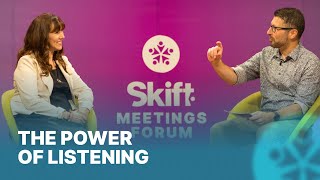
actually sort of a two-part session. So, we had the first part with that you saw and now we're going to be talking about the exit strategy, the selling of companies, which Howard is kind of a specialist in because you've sold three times now, three companies, two event companies, and one learning online business, the event leadership institute. you sold to PCMA in January 23 and then you were with PCMA for a little while and now you advise businesses on M&A selling etc. So super interesting time. Thank you for and you have a newsletter which is fascinating. We're reading that. Um who in the audience has ever thought about selling a business or creating a business themselves? >> All right, so you have like a third of the audience here. So not bad. Okay, so let's jump into it. All right, let's get let's get into this matter. What what
does the market look like right now? Right, we're talking about these people selling businesses, different event companies. So, you might have a an event, but you might have an agency, different things. >> Yeah. >> What does the market look like right now? >> So, it it's very robust. The market to buy event businesses is very robust, and there's different sectors to it. So um Cassandra and Robin own or or Cassandra sold but she owned an event like a proprietary event trade show conference and so that type of business has always had a strong market for it. So you got companies like Informa, Reed, Clarant, Questex, Emerald, close, you know, the whole group. Um they've always been a very uh vibrant market to buy and in fact um I see Vinnie Pledo sitting there. Uh so Vinnie's the CEO of CYO, Society of Independent Show organizers, and I was at their CEO summit in April. And so you got all the CEOs of these big companies plus you got all the people, you know, like Robin who are starting up these events. And you can sort of see like when if someone's on stage like, "Yeah, we started this new event and we're having like triple digit growth and our margins are great." You could see like afterwards the people from all those big companies are eyeing around. They're they're looking for like the they're like the lions on the Serengeti looking for the gazelle with the bum leg and they're kind of surrounding them. So that a good side, right? >> It is. Yeah. So that market's always been vibrant, but even that is is even more so right now. Mhm.
>> What I think has changed and has been really interesting to observe in the last year or so is the market for all the other event businesses, particularly agencies, production companies, support services, some other, you know, service providers in the space. And part of that's been powered by an increase in private equity money into the into the industry. So, as an example, earlier this year, HIG Capital, which is a private equity firm, bought two DMC's, 360 DMC and CSI DMC, and they combine them together to make a big company. Why is that interesting? For two reasons. One, HJ has never invested in the event space. Like, you go on their website, it's like chemicals and transportation and logistics and, you know, oil rigging, you know, whatever. Never been in the space. They're really bullish about the space. I've spoken to a lot of those people. they're very high on it. The other reason that's interesting is they're now using that as a platform to go and acquire other companies. So that PE money that's coming in is giving everything sort of a a boost. >> But also, you've got a whole cohort of
people who started businesses 20, 30 years ago. They're getting to the point where they're thinking, what do I do with this? Am I going to retire? Am I going to give it to my kids? Do my kids even want it? And you've also got a group of people that have had businesses through COVID, inflation, supply chains, the ups and downs, and they're like really kind of burnt out. And so they're looking for a way to either cash out or join a large organization where they don't have to deal with all the back office stuff. So you put all that together and there's just there's been a a significant increase. I think by the end of this year, you're going to see a number of deals announced, particularly on the agency and production company side. >> Okay, so lots of deals coming up. Um but
why is PE so private equity private money looking to make an investment and then sell on right for a bigger amount? How why are they so bullish on this? What are you hearing that they're saying? You know, do they know the market go like this is a great market. >> So they it's really you'll tell you you know we live in our own bubble, right? We go to all these industry events like, oh, events are this, events are that, and we're all around cheerleaders. But then to hear these really, really savvy investors talk parrot back that same stuff, you know, human connection in the age of AI, of inperson events are like a source of trust and digital overload and, you know, I'm just uh I I need to kind of reconnect with my people and my trust. They're spouting that back to us. And these are people who don't they don't like care about events for events. like they'll go wherever the money is and the fact that they're now starting to pay attention to it and are interested in it. They're very bullish on the space for a number of reasons. All the things we talk about, they also talk about things like a lot of the business is asset light, meaning there's not a lot of investment in inventory and gear except for like production companies. The cash flow, as you know, Robin was saying is really good. You get, you know, for events, you get money up front and it's also a relatively fragmented space. So there's still smaller players that can be consolidated, have economies of scale, and they feel like if they make an investment and they put money in and they give management expertise, they look for opportunities where they can add fuel to the fire and take a company that they pay X for and sell it for three, four, 5x. >> Okay. You talk a little bit about
strategic buyers and financial buyers. Can you just make sure we kind of get the picture, two sides of that? >> Okay. So there's the two different kinds of buyers would be a financial buyer is somebody who's just an investor in the business. And I we mentioned private equity firms because they're like the the quintessential financial investor. They're buying a business to get a return. It's sort of like you buy a stock, right? And you buy Google, you're buying it because whatever you pay now, you think it's going to be worth more money down the line. Mhm. >> They're looking to generally sell that business in five, six, seven years and make a significant profit on it. Generally speaking, they're going to keep the business intact, right? They're going to give you investment. They're going to upgrade your marketing, your tech stack, whatever, help you expand, but the business kind of stays more or less where it is. If you own one, if you own a company that is bought by a financial buyer, um, chances are you're going to maintain some equity in the new business, maybe 10, 20, 30%. Because the buyer wants you to have an incentive to grow the business as well. >> And they don't tend to kind of change the business, right? Or not. >> They want it to grow. They want it to grow. And there's this big fear of private equity is going to come in and they're going to like all over my company and squeeze all the money out. The truth is and maybe they do that for some things like local newspapers or you know whatever but for the event business they they want these things to grow. They want to give the owners the tools they need. They want to power the growth and they want to help them you know generally expand. So you're if you sell to a financial buyer you're going to get tools to grow. You're going to keep some equity and ultimately when the company sells down the road you get what's called a second buy of the apple. The other type of buyer is a strategic
buyer. >> All right. So I mentioned HIG buys um you know 360 and CSI. So that was a financial buyer. When they in turn now buy other companies they're a strategic buyer. So if one event a so earlier this year Opus Group which is a large agency acquired the company we keep in in Australia. That's a strategic even though Opus is owned by a private equity firm that's really a strategic acquisition because the the company we keep that's actually the name of the company. So >> that's a bit confusing, but yes. >> Right. So that company now has access to Opus' systems and sales and marketing. >> Opus understands the business. They can help them. >> Yeah. They get it and they they're going to become uh basically Opus in Apac because Opus sees it and they're like, "These guys, they're doing what we're doing. They're on the ground. We're going to help them." >> So synergies across. >> Yeah. Yeah. And it could also be like, let's say you own a sourcing company, right? and you just do site selection and sourcing, maybe a full service agency buys you because sourcing is done really really early and maybe they look at it and say, you know what, this is going to get us in the door at the very very start of the planning process. So, it's much much more strategic. >> Yeah. And I'm I'm assuming you have to speak different languages to these people, right? If you speak if you're dealing with financial buyer, you have to really speak finance. When you're dealing with a strategic buyer, it's a bit more this is the business, this is what we do, these are our clients, etc. Things like that. >> Yeah. And I I think the strategic buyers, you might have different categories of strategic buyers and being able to say, "Here's how my business could help you. Here's how my business could help power the growth of your business." Okay? >> And just if I could throw something out to the keynote listeners out there, which I think is a great idea. I'm really anxious to hear what they have to say. And it made me think, okay, what do I want to say that's going to make them, you know, repeat these little pearls of wisdom. So, I have a little egg for >> capital KL on my on my notes. KL. So, you know, one of the things I would say to think about >> and you >> and that's all the time we have for Thank you so much. >> See you next week. Yeah. >> Um is is is growth, right? People, you
buy a stock today and you're not buying it based on what it's done. You're buying it because you think it's going to make more money. So, at the end of the day, the takeaway is you're selling the future. You're explaining the past and you're selling the future. Your past numbers are important only to the extent that they help the buyer believe your ability to hit those projection numbers. And so the ability to look at your your how you can grow, right? So my last company, Event Leadership Institute, we we had we were education business and our the lifetime value of our customer was like $700. It was very low. The most expensive product we had to sell was like a $1,000 course. And they weren't buying like 70 of them. they'd buy maybe a few. But I looked at that and I said, "Okay, who are the buyers of this?" Right. And there those are people who were basically spending $50 to $100,000 on virtual event tech. So I'm going back to like 2022. >> Yeah. >> I thought, okay, the same corporate planner who is worth $700 to me is potentially worth $70,000 to Hoppin back when they had billions of dollars of valuation. So the the thought of like strategic is like how does my business help these buyers? And being able to paint that picture of like, hey, I've got this great service, our clients love us, we just suck at marketing. If you can help boost our marketing, we can grow and you know, we'll we'll help you grow. >> Selling the potential. Okay. So let's
say you have a a business. Uh you're doing good and you're positioning for a sale. What should you try to do to make it look more appealing? You obviously have to explain where the profit's going to come from type of clients. But what are things that you should do to do that properly so that buyers look at it with good eyes. >> Yeah. So there's a bunch of things. I
think one of the one of the important things is to you have to have clean books, right? Your financials have to be pretty clean. And you as the >> everybody has to have clean books, right? >> Yeah. But you you'd be amazed like people I have conversations with people and they're like rock solid. Oh my god, this this is such a great business. People are going to love this. And they're like, "So, can you explain like the the P&L the profit from 2024? You had said it was 800,000. On this thing that says 200,000, you know, did I get an old version?" They'll be, "Huh, let me look into that." Like, how do you how do you not know that if people don't know it? So, a buyer's going to have to do um what's called due diligence, right? You could say, "Hey, we did this, this, this, and this, and here's what we're going to do." And nobody's going to say, "Great, here's a check." They're gonna give you a letter of intent and then they're going to bring in their accountants and they're going to like crawl under the hood and they're gonna cross-check your bank statements and make sure everything checks out. If your books are impossible to follow, if they're not transparent, if it's like, you know, a rat's nest of mishmash, I mean, it could be on a paper napkin, but if it's clean and it's easy to understand, people can work with that. So, I think having um clean books, generally knowing your numbers, right? Like you don't it doesn't have to be perfect and your business doesn't have to always be perfect. Like you can have a down year as long as you can explain it and say, "Hey, we had a you know, a client that we lost for this reason, we came back, or we had a one-time bump the year before." People buyers get that. They understand that. Um but I I think they they want to be able to >> Do the financial buyers understand it as well? >> Yeah, they do. They really do. they they get it. They don't want to be misled, right? And so if if you say, "Hey, we're doing great." And then suddenly your numbers, you know, drop, that loses confidence in them. So like that's
that's actually a big reason why some deals collapse. Um and so like through my newsletter, I talked to a bunch of private equity people to get them to so I can kind of really get under the hood with them, get them to share their insights. And I asked most them like, you know, what do you look for? What do you look to avoid? Why do deals collapse? And and the number one reason that I've been given is when you miss your projections while you're in market. So in other words, if you're thinking of buying my company and I'm saying, "Here's our past numbers. Here's what we're going to do this year and here's what we're going to do next year and then there's great growth future ahead. So you should give me a lot of money." while we're talking, if I miss my Q2 numbers >> by 50% and we're still in due diligence, they're gonna be like, >> "What else is he full of crap about >> making up these numbers?" >> It under it totally undermines the integrity. And so whatever you're projecting the business is going to do, you have to be prepared to make that happen because there's a good chance you're going to get what's called an earnout where part of the price of the purchase price is going to be pegged on your ability to actually do all the stuff that you're telling the buyer that you're going to do. >> Yeah. And we talked a little bit about cleaning the books, but also saying, you know, you kind of delaying profits, things like that. But when you're selling, you don't want to do any of that, right? You want to have everything clean. Well, you might be sort of, you know, kind of hiding things in the books to make it like you're you're you're you have less profits. You want to actually show good profits when you're selling, >> right? Well, but that's that's pretty standard that most >> businesses that are going to be sold are are private companies
>> and they're privately owned and so you you run the business to minimize taxes. So, you try to show try to make as much money as you can. You try to report as little as you can so you pay low tax all legally, right? That doesn't look good for buyers. >> It it's fine. But you when you go to market the the books are converted to what's called adjusted IBIDA. IBIDA is earnings before interest, taxes, depreciation and basically like net profit with a few adjustments. Your IBIDA is going to look like X and then you you need to convert the books and this is something an adviser will do with you to adjusted IBIDA. So if you lease a Maserati for 1,200 a month or whatever Maseratis go for and you're like I don't really need it. My accountant says I can get away with it. So that and sudden your profit is depressed by that amount of money. That gets added back in and there's a little note says here's why we added that money back in. If you put your spouse on the payroll and not really doing that much work, you know that that comes out. Yeah. On the flip side, I spoke to someone last week who um you know they're doing okay and then it turns out she's not taking a salary. And I said, "Well, are you working in the company every day?" She says, "Yeah, I'm like doing everything." I go, "We need now add salary in for you because the buyer is going to have to pay somebody there and I hate to break it to you, but now you've lost money." So, it's really just
trueing up the numbers. And it's totally normal that financial everybody gets that you want to minimize your taxes legally and then you're gonna sort of rightsize the numbers to bring it to market. >> So the good news you you could still lease a Maserati and sell your business. You just have to do it in the right order and get the book straight. Well, where where where it becomes a problem is if if you lease it and you're saying, "Hey, I want to add back, you know, 20 grand a year because of the Maserati and like and I want to get a multiple of five, six, seven times earnings for that extra money that the business made that I kind of took out." If you get that, you can't then turn around and say, "You're going to pay for my Maserati though, right?" Like, you can't you can't have both ways. >> Good. Howard, thank you so much for being with us today and sharing all this information. >> Yeah, this is great. This is great. Thanks for having me.
Top Moments
Future is everything!
Human connection wins!
Don't miss projections!
PE money surge!
Clean books critical!
Market is robust!
Know your buyer!
Up Next