Advanced Aerospace Engineering
Covers fundamental and cutting-edge engineering principles applied to spacecraft, launch vehicles, and orbital infrastructure. Topics include structural integrity, thermal management, advanced materials, and in-space construction techniques.
Viral Moments
16
Game-changing scaling law!
Find alien life faster!
No more alignment nightmares!
Safer space launches
Unlock mass optimization!
Faster, lighter, stronger!
Protecting lives abroad
Absorb vibrations now!
No fuel, no problem!
Autonomous self-assembly
Rethink space design!
Playtime in zero-G!
Grand piano in space?
Vibration control secrets!
Complexity of space instruments!
Safety in space!
Key Quotes
4
“The real legacy of the SSL is not the hardware or the PhD thesis. It's the uncountable number of papers. It's all that intellectual bulk that got developed there that went off and spread all over the industry, not just landing rovers on Mars, but doing startups and all this other innovation.”
“Innovation is not a moment or a single invention. But I think as we'll see today... it's a layering of generations of people who work together and build on each other's work.”
“But there are a few design paradigms that I think need a little bit more questioning and one of those is the stiffness of the structure.”
“We showed that we can achieve GPS-like performance at Mars with these types of systems.”
Chapters
38
Articles
4
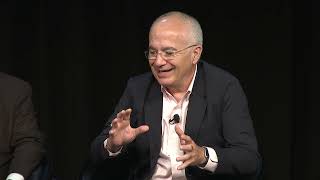
The 'SpaceTech 2026 Panel: Space Systems Lab: Roots and Branches of Innovation' brought together distinguished alumni to delve into the profound legacy of MIT's Space Systems Laboratory (SSL). Moderated by Ali Dvec, a former PhD student of Dave Miller, the panel explored how the SSL's unique culture of technical ambition, hands-on experimentation, and education through building has shaped generations of students and researchers, propagating innovative ideas across industry, academia, and government.
The Space Tech 2026 conference at MIT opened with an electrifying atmosphere, as Professors Julie Shah and David Mindell underscored the current golden age of space exploration and innovation. From humanity's furthest journey yet with Artemis 2 to the pervasive influence of aerospace engineering across diverse industries, the session highlighted MIT's critical role in shaping the future.
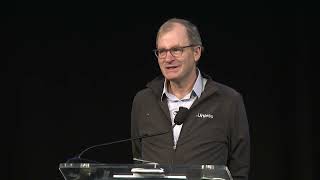
For decades, the design of space telescopes has largely followed principles established for their ground-based counterparts. However, as Carol Klingler highlights in her compelling lightning talk, this conventional wisdom may be holding back the next generation of space exploration. In a zero-gravity environment, the emphasis on structural stiffness, crucial for Earth-bound observatories, becomes a design constraint rather than a benefit.
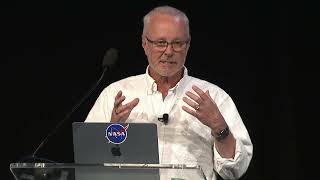
As humanity sets its sights on deeper and more complex missions to Mars, the need for robust and scalable navigation systems becomes paramount. Current vision-based techniques, while effective for localized operations, falter in degraded environments and lack the global reach required for extensive exploration. This presents a critical challenge that Daniel Gochenaur and his team at the Engineering Systems Lab are addressing with a groundbreaking approach: three-dimensional aero capture.