Geopolitical Storms: Is Your Next Event at Risk?
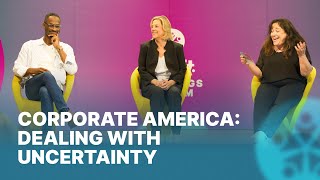
The world of association events is facing unprecedented headwinds, from economic pressures like tariffs and funding cuts to social and political sensitivities. Industry leaders are grappling with declining attendance, late registrations, and the challenge of maintaining relevance in a rapidly changing global environment. This session brought together experts to share their strategies for resilience and adaptation.
“I think it's just about meeting our members and our attendees where they're at. ... We just have to be able to roll with the punches that keep coming.”
- Andrea Doyle, Executive Editor at Skift Meetings
Uncertainty is the new normal for association events. Discover how industry leaders are tackling visa delays, funding cuts, and social values to keep their conferences thriving. Get actionable strategies to protect your next big gathering.
Oh, the headwinds. I know everyone in this room know a little bit about headwinds. Be it tariffs, visa delays, funding issues, and that's what we're here to talk about. If there is one overarching theme, it is uncertainty. And that's what we've been chatting backstage. So, let's get started with you, Marilyn. You recently had your conference in Los Angeles, and your numbers were down. Can you explain a little bit why?
>> Yeah, I think well um as been much in the news um there's a lot of headwinds facing museums from funding to censorship. Museums are unsure of what they can and can't do. Um their federal funding has been cut or rescended. Um and they're not sure where their corporate support is either. So I we saw uh definitely um softness in our attendance and uh what we heard was that they they just literally couldn't afford to send people to the conference. >> Okay. And I know Karen, you had a similar issue this year in Boston. >> Yes. Yes, I had the same issue. Um Boston is uh one of our um popular cities, popular markets for pharma and medical um associations and we usually draw a big number there and it was a big dip for us uh going into the conference and we did hear it's because approvals were not there, funding was not there um and so people were just hesitant to attend um conferences. And we talk we talked about the dip in international attendance in particular and your dip was pretty substantial, wasn't it? >> Correct. We we have you know a small percentage about 8% international and it dipped to maybe 2% or even maybe non-existent. Um a lot of our attendees or international attendees come from um Canada. So that was a big challenge for them to travel to the US to attend our program. >> And Marilyn, you had issues with visas. Yeah, we absolutely did. Um, China is one of the fastest growing museum markets and we were expecting a very large contingent from China and about 40% of them were able to get visas. And we also saw um our our museum expo uh vendors from Canada um resend their their their place on the floor. >> We're gonna bring this up a little. It's not going to be all depressing,
but we are going to talk about tariffs now. So, you gather 30,000 every year in Las Vegas every year and um your attendees are in the retail industry which is getting hit particularly particularly hard by tariffs. >> Yes. >> How has that impacted your conference? Yes. I think that uncertainty is the name of the game when it comes to to to tariffs specifically. Um, our members are in the retail and real estate industry. They, um, you know, Vegas in particular has a a nice reputation of being like a tentpole of our of IC and and an industry event. But we have we've run over a hundred events uh throughout the year that we have seen a softening or I'll I'll use your word, Karen, a hesitancy um among people just because they don't know. They don't know what they don't know. um you know, a line item for, you know, discretionary budget to attend events or to sponsor events, to exhibit that had always been there and maybe hadn't been looked at is now like maybe we'll take a look at that and we're going to put a pin in it and we'll let you know two weeks before the event. >> And so there's a little spike before uh you know before the event gets underway um and some on-site registrations, but um >> people don't know and so they're waiting. >> And that has been another trend, hasn't it been? Late registrations. Yeah, >> Karine, you really experienced that this year, didn't you? >> Yes. Yes. Um because Boston is so accessible, um we usually do have on-site registrations, but this year we saw a really big jump in on-site registration and again that is because of the hesitancy of individuals to register and then late approvals as well, late funding. So all of that um contributed to our late registration and we were very um you know grateful to work with our um hotel brands and hotel partners to um adjust the um negotiated rate for these late registrations and and then we had to you know uh prep our staff to um for the influx that'll be coming in for on-site registration. So yeah, >> and Marilyn, your association is cultural institutions, so funding has been a real issue, hasn't it been? >> Yeah, absolutely. Um I mean all almost the majority of federal funding has been rescended or put in place. We don't know if um key institutions like uh Institute of Museum and Library Services or the NEA or the NE are going to be funded again for FY26. So all of that's up in the air and we know about 40% of museums in this country receive some level of f federal funding. >> How is that going to impact your upcoming conventions? [Laughter] >> Um yeah, you know, everybody's been holding their breath. I just came back from a conference in San Francisco was the Association of Science and Technology Centers. Um and they their numbers were pretty steady. Um, and I think that because there's so much uncertainty and and and chaos that people actually are seeming to try to find the money because they need to be in community to solve some of these problems together. So, we've also um seen that. And so, I'm hoping that our next conference is going to be in Philadelphia >> and uh and which is local. There's a lot of museums in that. New York, Philadelphia, DC, even Boston corridor. Um they can just take the train down. Pittsburgh has a big museum community. So we're hoping we'll have strong numbers. >> Okay. So another issue has been social
and Karen, we talked about the fact that you have some attendees who are not comfortable meeting in certain locations that don't go along with their polit with their social beliefs. >> Yes. Yeah. We've uh encountered a a few attendees, not just a few, but more than a few that have um told us like they're, you know, they're disappointed if we're having a program in Texas. We have one coming up in Florida, you know, so they let us know that they're disappointed because those states do not align with their social values and and you know, their social values align with ours. And so we try to assure them that um we will make sure to elevate the social mission and values that we have at NKF in these cities and then implement them within the communities as well, right? Do CSRs, um do work with the dialysis centers, bring in some kidney patients, um work with the nefologists within local hospitals. So things like that we try to implement within our conference for cities that are um un you know unlikable for our attendees. So I mean we're so lucky to have three amazing association executives here from such different industries. So please if you have questions use your app and we might have some time at the end to get to them. And um has so social is an issue and then
there's you know another headwind is definitely politics. You knew we were going to say the P word. So, um I know you Janine, you had an issue where a speaker went rogue. Yes. >> Can you tell us a little bit about this? >> Unfortunately, yes, we have had speakers um once they get a mic in their hand, you know, all bets are off. You don't know what someone's going to say and it it can be very awkward when you're live to to curtail what they're saying. Luckily, we had some great senior leadership and some very good um volunteer partners who who defayed the situation. But it's really led to us re-examining how we um how we scrutinize our speakers and how we who we are giving a platform to. Um making sure that their you know their values and what they're bringing to the table align with ICE's mission. Um and making sure that you know we're there to to elevate the real estate and retail industry. Um, and that's what we're all doing. But we've we've had to institute a pretty robust um, speaker scrutiny process, I'll say. Um, and then, you know, unfortunately, it's led to increased security at events. Um, so we've we've also reminded our member base of our code of conduct and what we're we're all there to accomplish. And um, we're a huge organization and by and large everybody abides, but there's always a few >> and I would assume politics is off the table as far as your speakers are concerned. There are there are some, you know, areas of our industry where that bleed into politics naturally, but I leave that to our our GPP team in DC to handle. >> Okay. Um, so what I'd like to really get
out of this session is to offer some practical insights that our attendees can take away when it comes to navigating these headwinds. >> So, do you have anything you can share? like where can you start because this looks like it's going to be the new normal for a while. >> Um well me personally um I with my
annual conference I schedule those five years in advance. So I am learning to add wording into clauses in the contract. Um for example within the force majour I add um epidemic pandemic health crisises you know to that because that that is very impactful for us um at NKF and also um I learned from another planner that there is a social responsibility clause that you can add to the contract as well. So adding these things to the contract um is is how I'm trying to combat it um uh for for the future as as I do you know five years ahead of time. So, >> and then I also found it interesting that you have an upcoming conference in Canada, don't you? >> Yes, I do. I do. We recently signed a 2030 contract in in Canada. And you know, my executives were very hesitant to do that because they don't know what the relationship would be would be uh with Canada and how it is now. So it really was a big push for for the Toronto team to come to us and present and let them know that the relationship with client or their mo the most important thing for them. Um so it it was a little um a little extra effort on their part to convince my executives to book uh Toronto, but we did it there.
>> So Marilyn, if you had one piece of insight you could share, what would that be? Well, you know, we're a 120 year old organization and some of you may work for organizations that have that um have been around for a while. And I think for us, what I'm really pushing the team on is we need to remind our first of all, we need to make sure that we're building a conference that has a lot of value for the attendees. They're making a huge investment to come. Um and we can't just because we're the largest museum conference in the world, we can't assume that people are going to come. And so, what is our value proposition? What are people going to get out of it? Segmentation. Um, with such a big conference, it's easy to feel lost in the conference, to feel like, oh, this conference isn't for me. I'm a small museum. I'm a rural I'm a rural museum. I'm a specialty museum. But really building in um, you know, those call to actions and that testimony from all types of museums and what they were able to get out of the conference and all types of museum professionals. So, that's what I'm leaning back on is, you know, we want to be the most um important, most riveting conference for a museum professional to come to and make sure that they're really getting something out of it that they can take home and improve their practice. >> So, it's important to make everyone feel welcome. >> Okay. All size museums. And then, um in the green room, we were chatting about the fact that you're also promoting the fact that um museums are great event venues, aren't they? Yeah. So, um you know that's museums. It's a very complicated uh business. One of their income streams is rentals and we um have focused um not only when we go to a destination but also we have sessions on how do you improve that revenue stream for your museum >> and I guess especially with losing revenue that's one way >> to pick it up. >> Yeah. >> So send your RFPs. >> Yes. There the there's 22,000 museums in this country and all of them almost all of them rent their spaces out, >> right? I was recently at an event at the Museum of Natural History was incredible. >> But I didn't want to network. I wanted to look at the exhibits. So, you know, you have that yin-yang. >> What would be one actionable insight you would offer? Um to piggyback on Karen's uh suggestion of looking at contracts,
that is something that we have really really dove deep into is um it's going to sound uh like not at odds. What I'm saying, but is to we we haven't normally booked multi-year contracts. we can where we where we we will where we can. But looking at doing that to kind of give our members um confidence that we are going to be here and we're going to be creating spaces for you to come together and to network and we're not going to be wishy-washy. Are we having an event next year? Are we? You know, so we are trying to book multi-year. Um but really really looking at those contracts and building in really tight clauses so we can pivot very quickly if we need to if the attendance is not there, if the vibe has shifted. Um, so building in performance clauses, out clauses where we can, um, change the nature and size of the event, um, has been really helpful. And I think it's just about meeting our members and our attendees where they're at. Um, we've heard from them. Um, I mean, they show us how by their behavior at events and and whether they're not attending events, not staying for as long. Um but for us kind of re taking a closer look at events that may have been very rinse and repeat and seeing where can we deliver the same exact value but um be more nimble as an association to to again pivot very quickly and make you know things that were 7-day events maybe they're a three-day event now. And so we're reducing the attendees costs and travel and hotels and food, reducing our costs that we can pass along to them in, you know, in terms of registration and uh, you know, all our other fees. >> So the headwinds the industry are dealing with are going to change your conference. >> Yeah. Oh, for sure. And we're also
offering new um like new product offerings, new event product offerings that we previously maybe had piloted in the past that didn't didn't really go and we've just you know kept with our calendar that has been tried and true and now we're bringing back um events that I don't want to say cater but are um more focused on millennials and Gen Z in the workforce because they behave differently at conferences than right >> some of our uh older older membership base. Um, and a lot of what we've seen is them focusing on, you know, more um, engaging tactile events, I want to say, but less less focused on drinking and um, happy hour events, which is really interesting. So, we really had to pivot. >> Winery. >> Yeah. As a city winery, >> More activations. Yes. More um, face-toface uh, you know, daytime morning events. They have very clear boundaries. I'm learning um on uh their their work and and personal time and so events that are during the day and not after work, not focused on drinking. >> So you can't pack the schedule with session after session. >> Right. Right. >> Okay. >> So we're doing pickle ball tournaments. >> Wow. >> At 9:00 a.m. instead of 700 p.m. happy hour events. >> Is that is interesting. >> Yeah. >> How have your events evolved? Um well,
you know, my annual conference and most of my big uh scientific uh events are educational, so it's hard to add fun stuff to it. Um we try I try to do things different with, you know, catering, try to add the city um cuisine into um our buffets, our um um meal times. Um, with our a larger conference, the exhibitors, pharmaceuticals really go all out. Uh, this year we had a pet pin, which was like the most popular thing. Excuse me. We had a um a wheel a will a wind machine, which is supposed to um give you the stimulation of having dialysis. So, it was a lot of fun things that the exhibitors brought in that really um um made the attendees like really excited. Definitely not pickle ball. >> Uh, no pickle ball. No pickle ball. >> Marilyn, how how do you envision your event evolving? >> Um, well, interestingly enough, we um past couple years have had like a health and wellness area where people can come do yoga. They can um we had the the silent disco and and different things like that. Um just to give people an opportunity to, you know, um not be sitting in a chair all day in a conference room. Um, and we found that that's really popular. I think as one of the things that we're doing is because again we are a museum conference and we really partnering with our city museums to create really interesting events and showcase their offerings. So our conference does go all day. There's usually um events in the evening. There's workshops that we ask the museums to put on and we're even beginning to go outside of that and partner with the city cultural department on things like that isn't traditionally a museum but we're going to Philadelphia next year. So, we're looking at building in a um mural tour because murals are Philadelphia is one of the biggest mural communities in the country. And so, looking like expanding what we typically think of as a museum experience um to a more like community uh you know, based in the city type of experience. >> All right, I can't help myself. What's your favorite museum? >> Oh my gosh, I can't I can't say that. >> It's like it's like who's your favorite child? Well, I will say that my favorite exhibit and this is um I worked at the Museum of Science and Industry as the director of marketing and I opened the U505 exhibit which if you haven't been there's actually a full German submarine in a building and um I was there when we built it and I opened it and um to this day every time I go see that exhibit I cry. It is just um such a poignant story of of uh the impact of World War II on the country and on on the US and the world and how um these and we we were lucky enough to to be able to include them in the exhibit. um these men that jumped on the submarine as it was sinking to save it. And their their statues are in the and their you can listen to their story of what they thought what they were thinking as they jumped off their boat onto a sinking submarine that they thought could be booby trapped to try to save it to take the technology off of it so that they could, you know, impact the war. >> But it's still stunning to this day. >> On my bucket list. >> And since I'm totally off the cuff, Janine, what's your favorite retail store? Um, >> oh, this is really putting me on the >> All right, let's let's take a question. You think >> I'll think about it. I'll talk by the end. >> So, this was an interesting question and
this is for you, Karen. >> Are you No, that's not it. >> With these types of challenges and impacts on conferences, how can or where do planners report? That's not it neither. >> I think that was the first one. >> All right. Well, so with these kinds of challenges and impacts on conferences, how and where do planners report these impacts? Is there a way to get the these numbers collectively? >> That's a great question. Thank you. I >> um I don't believe there if there is I am not aware of where us planners can report this, but I know um talking to other planners also help, right? I'm part of PCMA which is a meeting planner association and we talk about this all the time when we get together like oh my gosh you know I'm down 500 I'm down 600 and this is why and that is why well what did you do what you know things like that we talk amongst ourselves for solutions um I you know I wish there was a place where we could document it and then it goes out into you know whoever needs to see it um I know there's like a tourism report but not sure about the um decrease in attend attendees for conferences. Maybe that's something we should start. >> Well, that's when you turn to skiff meetings to read all those articles. >> No, skiff meeting. That's a good that's a good thing to start. >> Thank you. Yeah. >> So, um Janine, this is for you. Um >> and it went away. It had to do with the workforce and how um you know retail is an area that's being impacted >> and how are you dealing with work forth workforce issues >> in the in the retail in in your conferences and then in retail. Yeah, I mean I guess we're, you know, we're real estate and retail and so we've got the developers who are developing shopping centers and so you know economic climate of of course affects those retailers directly whether they get their goods from overseas tariffs wise or not but um you know I think it depends on the region of the country that you're in and mostly we serve the US and Canada but um there are regions of the country where new shopping centers just aren't aren't being built just by virtue of the fact that there isn't much more land so it's a lot of redevelopment. Um so we've kind of you know based our events and programming around that a little bit and which we've been able to do for the past you know past few years um through our research we you know we have a very um strong research aspect of IC2 but um yeah I mean I think again it goes all back to meeting the attendee where they're where they're at and we're lucky enough that we hold enough events that I'm face to face and I try to go to as many of them as we as we can to to hear direct feedback because you know they're there and they'll tell you and um allowing a space for them to be very honest with you about what they need and what they want. Um because events aren't going to go away. We learned that during COVID, but we just have to be able to to roll with the punches >> that keep coming.
>> And there's another interesting question. While navigating political readiness and consequences from executive government actions, how do you maintain an aolitical stance internally and in your external PR? I I would say that um you know we we so our association um organization one of our pillars is advocacy and we are advocating on behalf of museums and we are advocating for um funding. We're advocating for uh uh freedom to put on ex to put on the types of exhibits. So, we're fighting censorship. And so, we, you know, that's who we are. And, and we know that, um, our research has told us that regardless of what side of the aisle you sit on, uh, museums are popular. Something like 96% of Americans, regardless of what political party they they sit in, believe that museums are important civic institutions and should be funded by the government. That's right. Um and uh so that's those are our values and that's our our messaging and and we uh we you know if you go on our website you'll see where we stand as an organization and what we're doing um at the federal and state level to ensure that museum funding continues. >> Okay, that's beautiful.
>> And um this is interesting too. as a result of all these headwinds. Are you reducing your hotel room and guarantees for future events based on the current issues that we're dealing with? >> Well, I myself I'm conservative when I book my contracts anyway. Um and when you do book so far out, they do they do have an expectation of, you know, a big block, but um I try to increase it by 100 if that. um uh just to satisfy my partners. But I do try to stay conservative. You know, my my uh conservative room peak is 1,700. And so if I go a little above, I'll do like, you know, 1850. And uh I mean, we pick up way more than that. But um um just to cover ourselves because of the uncertainty, whether it's five years out, six years out, I still, you know, stay with the same conservative um pattern. And Janine, you're using multiple hotels in Las Vegas for a group of your size. How are you dealing with your hotel contracts? >> Yeah, again, Vegas has been lucky enough to enjoy a very, you know, steady and flat registration. Um, same with our New York show, which is our two biggest premiere events, but uh for the smaller regional shows, we've we've been very conservative and as low as we can go, basically. But um some of the natures of of our the nature of our smaller trade shows are that they're they're very regional. So people drive in um and are so we might have 4,000 people and I might need 10,000 rooms, which is not a very attractive offer to a lot of hotels and convention centers. And so we're often um you know the last in line for for an attractive piece of business for for the city. So, it's creating relationships with those cities, with the CBBS, with the locations that we're going and the destinations to say, "Hey, we're good for it. We're going to get the pickup, but I just can't sign it >> right >> now and guarantee it." Um and luckily we we we have a very you know we have enough of a track record in most of the country in US that we can >> what's interesting is there's been so many articles about um Las Vegas and how it's leisure tourism is down but next year um conventions are through the roof. >> Yeah. >> Yeah. >> And um I interviewed Steve Hill and he said honestly he believes 2026 will be the best convention year Las Vegas has ever had. >> Happy to hear it. We'll take it. >> So, um, we just have a few more minutes.
So, if there was one more piece of advice you could offer about navigating headwinds, what would that be? >> Um, I mean, I say read your contract, uh, word for word. Um, if it's not in the contract, it's not part of the deal. That's how I see it. So, I try to add words, you know, maybe they'll see it, maybe they won't, type of thing. And then I'll sign it like, "Yeah, here you go." Um, it's just a little trick for me to you. I'm going to remember that my eye contact. But yeah, but that's just my uh I think the contract >> is everything. Yeah. >> So, I guess in times like this, your contract is more important than ever. >> Uh, yes. Yes. Absolutely. Because that that gives you the um the the ability to pivot if you need to, right? I know that's a word that we use in exhaustion, but it's true, right? It gives you the opportunity to change it up. If we need to go lower, if we need to uh move it to another year, another month, it gives you that ability to do so. So, yes. >> Marilyn, do you have a piece of advice? >> Yeah, I think it's keep evolving your conference. Like, don't let it get stale. Like, what's new, what's different, how do people want to learn? I think folks were talking about the different generations in the workforce, what they like to do differently, making sure that you um are meeting the needs of your attendees. M okay. >> And Janine, >> yeah, I was going to say when you're contracting, but also when you're sourcing, you can take a look at, you know, you you might have a a space that can flex. So, I might need 30,000 square feet, but I might need 10,000 square feet. So, if I got this room that's got air walls and I can make this really intimate if I only get one-third of the attendance that we were hoping to get, then it's not going to look like we're in this cavernous room. And then, again, to Marilyn's point, you just um you have to evolve. You have to be ready to >> right >> to to change with with the changing, you know, a younger workforce and and uh not letting anything get >> stale. Well, with these headwinds wi with resiliency, we're all going to come out ahead and I thank you all so much for joining me. This has been incredible. Thank you.
Top Moments
New generation, new events!
Where to host? It matters!
Contract clauses are key!
Speaker went rogue!
Yoga at conferences? Yes!
Visa issues? Big problem!
Museums in crisis!
Up Next